Flatbed vs. Deckover Trailers: Key Differences and Buying Guide
Discover the key differences between flatbed and deckover trailers. Learn which trailer type offers the best payload capacity, deck width, and loading efficiency.
Prime Trail Trailers Published 2026-09-30Updated 2026-09-30T07:02:35.979000
Choosing between a flatbed and a deckover trailer depends on your cargo width and loading requirements.
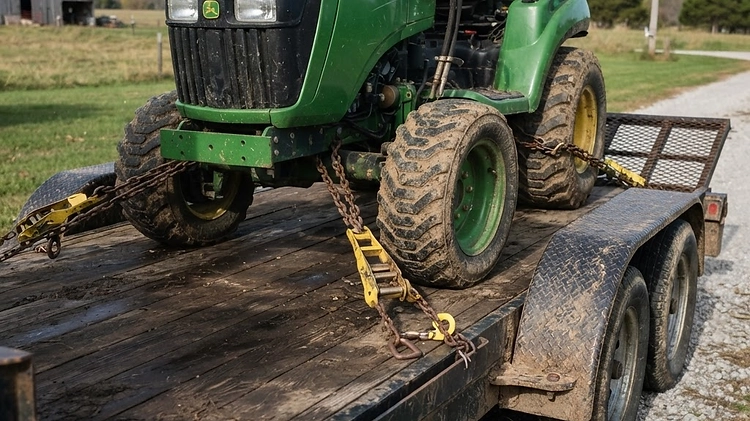
<p>Choosing the right trailer for your commercial hauling operation often comes down to a critical decision: flatbed or deckover? Both trailer types are essential workhorses for transporting heavy equipment, building materials, and oversized freight, but their distinct structural designs make them suited for entirely different applications. Making the wrong choice can lead to loading bottlenecks, compromised stability, or even regulatory compliance issues on the highway.</p><p>In this comprehensive guide, we will break down the engineering differences, payload capacities, and ideal use cases for both flatbed and deckover trailers. Whether you are hauling lumber across state lines or moving skid steers to a local jobsite, understanding these key specifications will ensure you invest in the right asset for your fleet.</p><h2>What is a Standard Flatbed Trailer?</h2><p>A standard flatbed trailer, often referred to as an equipment trailer or car hauler, features a deck that sits low to the ground, positioned directly between the wheel wells. This design inherently limits the maximum width of the usable deck space to the distance between the fenders, which is typically around 82 to 84 inches.</p>
Standard flatbeds feature a low deck height, ideal for hauling vehicles and standard equipment.
<p>The primary advantage of this configuration is its low center of gravity. Because the deck is closer to the pavement, standard flatbeds offer superior stability at highway speeds, significantly reducing the risk of trailer sway when hauling tall or top-heavy loads. The lower deck height also creates a gentler loading angle, making it much easier to drive vehicles, tractors, or low-clearance equipment up the ramps without bottoming out.</p><p>For businesses looking for <a href="https://primetrailtrailers.com/locations/trailers-for-sale-in-texas/">trailers for sale in Texas</a> or other high-demand regions, standard flatbeds are often the go-to choice for hotshot operators hauling standard-width freight. If you are considering this style, you can explore our extensive inventory of <a href="https://primetrailtrailers.com/trailers/flatbed-trailers/">flatbed trailers</a> to find the right fit.</p><h2>What is a Deckover Trailer?</h2><p>As the name implies, a deckover trailer features a cargo deck that is elevated to sit completely above the wheels. By eliminating the wheel wells from the cargo area, deckover trailers provide a fully unobstructed, flat surface that spans the maximum legal width of the trailer—typically 102 inches (8.5 feet).</p>
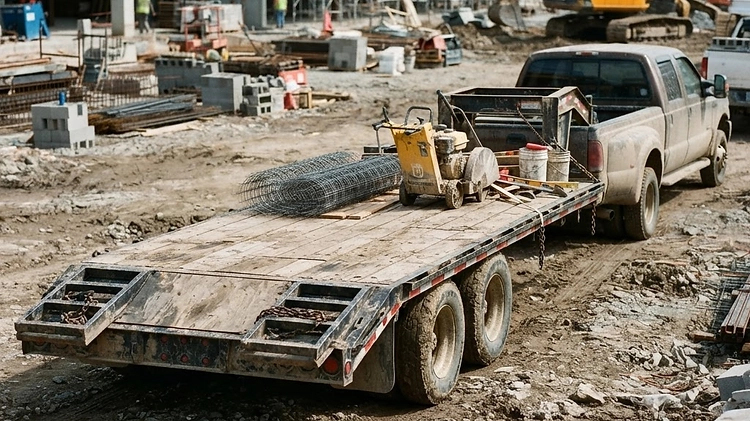
Deckover trailers provide a full 102-inch wide deck by elevating the cargo area above the wheels.
<p>This expansive deck space is a game-changer for commercial haulers. It allows for easy side-loading with a forklift, making it the preferred choice for transporting palletized goods, wide agricultural machinery, and oversized construction materials. Because there are no fenders in the way, you can maximize every square inch of the deck, often fitting two standard pallets side-by-side.</p><p>However, the elevated deck means a higher center of gravity, which requires careful load securement and weight distribution. If you frequently haul wide loads, a deckover is indispensable. Check out our selection of <a href="https://primetrailtrailers.com/trailers/deckover-trailers/">deckover trailers</a>, including heavy-duty models like the <a href="https://primetrailtrailers.com/shop/2026-pj-trailers-l6-85x24-10k-deckover-straight-deck-pull-out-ramps-f10k824p/">2026 PJ Trailers L6 8.5X24 10k Deckover</a>.</p><h2>Flatbed vs. Deckover: Key Specifications and Differences</h2><p>To make an informed decision, it is crucial to compare the core specifications of both trailer types side-by-side. Here is a breakdown of how they stack up:</p><ul><li><strong>Deck Height:</strong> Flatbeds typically have a deck height of 18-24 inches, while deckovers sit much higher at 32-36 inches.</li><li><strong>Usable Width:</strong> Flatbeds are limited to 82-84 inches between the fenders. Deckovers offer a full 102 inches of unobstructed width.</li><li><strong>Loading Angle:</strong> Flatbeds provide a low, gradual incline ideal for vehicles. Deckovers have a steeper angle, often requiring longer ramps or a dovetail for wheeled equipment.</li><li><strong>Center of Gravity:</strong> Flatbeds offer a lower center of gravity for better stability with tall loads. Deckovers have a higher center of gravity, requiring more cautious cornering.</li><li><strong>Side Loading:</strong> Flatbeds are difficult to side-load due to the fenders. Deckovers are perfectly designed for forklift side-loading.</li></ul><p>For more insights on trailer mechanics, you can read our guide on <a href="https://primetrailtrailers.com/guides/scissor-hoist-vs-telescopic-cylinder-dump-trailers/">Scissor Hoist vs. Telescopic Cylinder Dump Trailers</a> or explore <a href="https://primetrailtrailers.com/guides/tilt-trailer-vs-ramps-equipment-hauling/">Tilt Trailer vs. Ramps: Which Is Best for Hauling Heavy Equipment?</a>.</p><h2>When to Choose a Flatbed Trailer</h2><p>A standard flatbed trailer is the optimal choice when your primary cargo consists of vehicles, standard-width equipment, or tall freight that requires a low center of gravity. Landscapers, auto haulers, and general contractors often prefer flatbeds because the low deck height makes loading and unloading safer and more efficient.</p>
The unobstructed deck of a deckover trailer allows for easy side-loading with a forklift.
<p>If you are hauling a skid steer or a mini excavator, the low clearance of a flatbed ensures the machine's tracks or tires won't struggle against a steep ramp angle. Additionally, if you are operating in urban environments like <a href="https://primetrailtrailers.com/locations/houston-tx/">Houston, TX</a>, the lower profile can help navigate under low-hanging branches or bridges. For proper loading techniques, review our guide on <a href="https://primetrailtrailers.com/guides/how-to-safely-load-flatbed-trailer-weight-distribution/">How to Safely Load a Flatbed Trailer: Weight Distribution & Axle Limits</a>.</p><h2>When to Choose a Deckover Trailer</h2><p>You should opt for a deckover trailer if your business relies on hauling wide, bulky, or palletized freight. The 102-inch wide deck is essential for transporting large tractors, dually trucks, or multiple pallets of roofing materials. The ability to load from the side with a forklift drastically reduces turnaround times at the warehouse or jobsite.</p><p>Deckovers are particularly popular in the agricultural and commercial freight sectors. If you are looking for <a href="https://primetrailtrailers.com/locations/trailers-for-sale-in-florida/">trailers for sale in Florida</a> for hauling wide construction materials, a deckover is the superior choice. To understand more about the benefits of this design, read our article on <a href="https://primetrailtrailers.com/guides/when-deck-over-trailers-make-loading-equipment-easier/">When Deck Over Trailers Make Loading Equipment Easier</a>.</p><h2>What to Look For When Buying</h2><p>Regardless of which style you choose, there are several key features to evaluate before making a purchase. First, consider the Gross Vehicle Weight Rating (GVWR) and ensure the trailer's payload capacity exceeds your heaviest anticipated load. Look for heavy-duty axles, such as dual 10K or 12K Dexter axles, for commercial applications.</p><p>Next, evaluate the ramp system. For deckovers, a hydraulic dovetail or extra-long slide-in ramps are crucial to mitigate the steep loading angle. For flatbeds, stand-up ramps or a gravity tilt deck can enhance efficiency. Finally, inspect the frame construction—pierced beam frames on deckovers can help lower the deck height slightly, offering the best of both worlds. If you are outfitting a tow vehicle, consider upgrading to a robust flatbed truck bed, such as the <a href="https://primetrailtrailers.com/shop/2026-bedboss-dually-armorbed-flatbed-truck-bed-86-l-x-97-30k-gooseneck-midnight-black-dflatbb/">2026 BEDBOSS Dually ArmorBed Flatbed Truck Bed</a>.</p><h2>Bottom Line</h2><p>The choice between a flatbed and a deckover trailer ultimately hinges on the dimensions of your cargo and your preferred loading method. If you need a low center of gravity and a gentle loading angle for vehicles and standard equipment, a flatbed is the way to go. If you require maximum deck width and the ability to side-load pallets with a forklift, a deckover is the clear winner.</p><p>Ready to upgrade your hauling capabilities? Browse our complete inventory at the <a href="https://primetrailtrailers.com/shop/">Prime Trail Trailers shop</a> or visit our <a href="https://primetrailtrailers.com/guides/">guides hub</a> for more expert advice on selecting the perfect trailer for your business.</p>
Still unsure which trailer fits your needs, or need specs, pricing or delivery advice? The Prime Trail Trailers team is ready to answer your questions and help you find the right rig.