
2026 Food Trailer Licensing & Regulations: The Complete MFU Compliance Guide
Navigate 2026 food trailer regulations, from Texas FVV updates to Florida DBPR rules. Learn how to pass health inspections and secure your mobile food license.
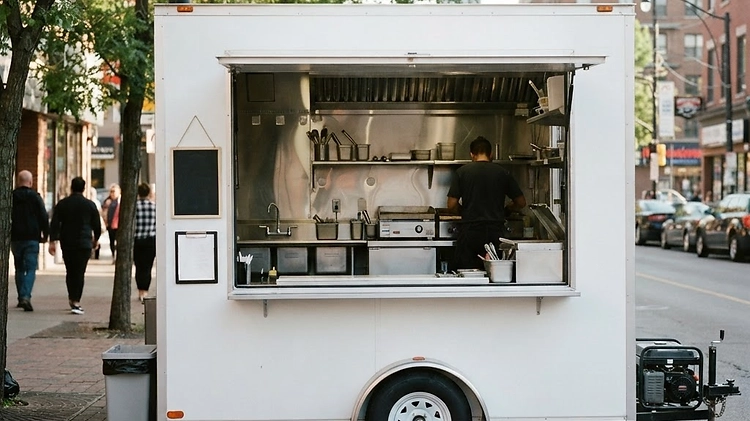
The mobile food industry is booming, but navigating the maze of state, county, and municipal regulations can stall your business before you ever serve your first customer. From the new 2026 Texas Department of State Health Services (DSHS) licensing changes to Florida's strict DBPR requirements, understanding mobile food unit (MFU) compliance is the most critical step in launching your culinary venture. Building a profitable business starts with a trailer that meets every code on day one.
The 2026 Landscape of Food Trailer Regulations
Regulatory bodies across the country are updating their frameworks to better manage the explosion of mobile food vendors. In 2026, we are seeing a distinct shift toward more rigorous fire safety inspections, standardized plumbing requirements, and updated terminology that impacts how you apply for permits.

For example, recent updates in Texas have officially transitioned the terminology from "Mobile Food Unit (MFU)" to "Food Vending Vehicle (FVV)." According to the Texas DSHS, an FVV is defined as a self-enclosed food service establishment designed to be readily movable. Understanding these legal definitions is crucial when submitting your plan review. Whether you are looking at trailers for sale in Texas or expanding a fleet nationwide, your trailer's classification dictates your required sink setup, fresh water capacity, and ventilation standards. To ensure your foundational setup is correct, review our comprehensive Mobile Kitchen Trailer Utilities Guide: Electrical, Plumbing, and Ventilation Setup.
State-by-State Mobile Food Unit (MFU) Compliance
Because food trailer regulations are enforced at the local health department level, a trailer that passes inspection in one state might fail in another. It is vital to consult your specific county's environmental health department before purchasing a unit.

In Florida, mobile food establishments are regulated by two different entities depending on what you serve. The Florida Department of Agriculture and Consumer Services (FDACS) handles vendors selling prepackaged or non-potentially hazardous foods (like coffee or popcorn). However, if you are cooking and serving temperature-controlled food, you must be permitted by the Department of Business and Professional Regulation (DBPR) as a Mobile Food Dispensing Vehicle (MFDV). Vendors searching for trailers for sale in Florida must ensure their unit meets DBPR's stringent plan review requirements before applying for a license.
Similarly, major metropolitan areas have their own layers of bureaucracy. Operating in Chicago, IL requires a Mobile Food License that must be renewed every two years, complete with mandatory consultations with the Chicago Department of Public Health and rigorous reinspections by the Chicago Fire Department.
Commissary Kitchens and Operational Requirements
Almost every jurisdiction in the United States requires food trailers to operate in conjunction with a licensed commissary kitchen. A commissary is a fixed, permitted commercial kitchen where mobile vendors must report daily to prep food, wash large equipment, dispose of wastewater, and refill fresh water tanks.

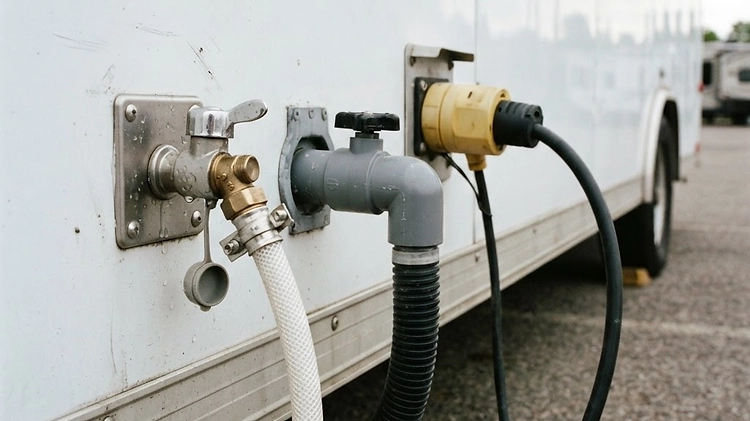
When you submit your application for a food trailer permit, you will almost always need to provide a signed commissary agreement. Health inspectors want to see a clear operational plan: where are you dumping your gray water, and where are you storing your food overnight? Your trailer must be equipped with the proper external hookups to interface with the commissary's utilities. For a deep dive into the exact equipment you need to pass these operational checks, read our Mobile Kitchen Trailer Requirements: Equipment, Ventilation & Compliance Guide.
Key Specifications for a Compliant Food Trailer
When browsing kitchen trailers or enclosed trailers to convert, you must ensure the build sheet aligns with health codes. Retrofitting a non-compliant trailer is incredibly expensive.
Here is a checklist of standard requirements you should look for:
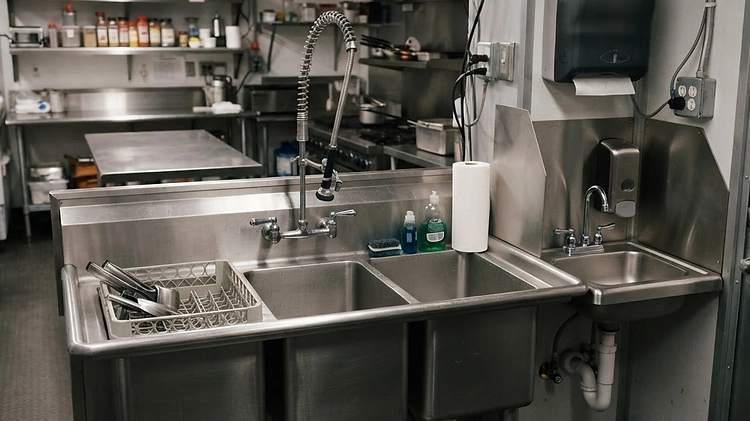
- Three-Compartment Sink: Mandatory for washing, rinsing, and sanitizing utensils. Must have dual drainboards.
- Handwashing Sink: Must be separate from the three-compartment sink, equipped with splash guards, and provide hot water (usually at least 100°F).
- Water Tanks: The wastewater (gray water) tank must typically be at least 15% larger than the fresh water tank.
- Surfaces: All floors, walls, and ceilings must be smooth, durable, and easily cleanable (e.g., stainless steel, FRP board, diamond plate aluminum).
- Ventilation: A commercial Type 1 hood with a fire suppression system (like an Ansul system) is required if you are producing grease-laden vapors.
If you are looking for a turnkey solution that meets these rigorous standards, models like the 8.5 x 14 White Custom Enclosed Kitchen Concession Trailer or the compact FT27 77-inch Food Vending Trailer are engineered with compliance in mind.
Navigating the Permitting and Inspection Process
Getting your food trailer on the road involves a multi-step process. First, you must submit a detailed plan review to your local health department. This packet usually includes your menu, standard operating procedures, a scaled floor plan of the trailer, equipment specification sheets, and your commissary agreement.
Once the plan review is approved, you can finalize your trailer build or purchase. The final step is the physical inspection, where health officials will test your water temperatures, check your refrigeration units, and ensure all surfaces are sealed. Concurrently, the local fire marshal will inspect your propane lines, generator setup, and fire suppression systems.
Bottom Line
Building a successful mobile food business requires more than just a great menu; it requires a deep understanding of local regulations and a trailer built to pass inspection. By familiarizing yourself with the latest 2026 licensing changes and partnering with a reputable dealer, you can avoid costly delays and get straight to serving your customers.
Ready to find a compliant unit for your business? Explore our full inventory in the Prime Trail Trailers shop or browse our extensive trailer guides to learn more about optimizing your commercial hauling setup.
FAQ
Have Questions? We're Here to Help
Still unsure which trailer fits your needs, or need specs, pricing or delivery advice? The Prime Trail Trailers team is ready to answer your questions and help you find the right rig.