
The Payload Bottleneck: Why Your Truck Can't Tow Its Maximum Rating in 2026
Discover why payload capacity, not max tow rating, is the true bottleneck for safe hauling, and learn how to calculate your real-world towing limits.
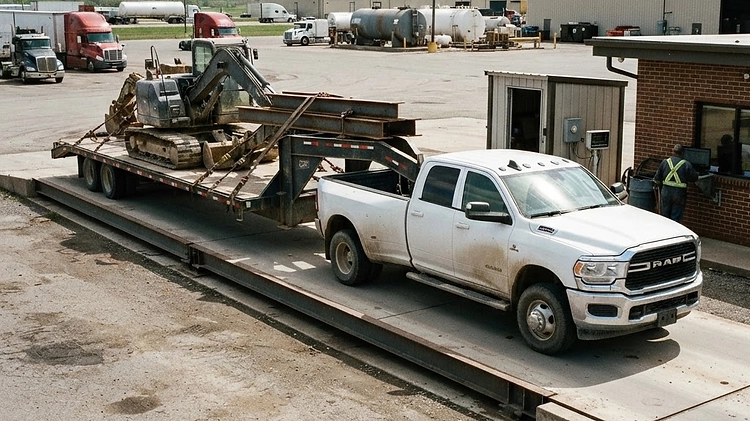
Every year, truck manufacturers boast higher and higher maximum towing capacities, leading many trailer buyers to believe their half-ton or three-quarter-ton pickup can safely haul massive loads. However, the reality of safe towing is dictated by a much less advertised number: your vehicle's payload capacity. Understanding the critical difference between payload and towing capacity is the key to keeping your equipment, your cargo, and yourself safe on the road. This comprehensive guide breaks down the payload bottleneck and shows you exactly how to calculate your real-world towing limits.<h2>The Great Towing Capacity Myth</h2>When you see a truck advertised with a "14,000-pound max towing capacity," that number is achieved under highly specific, idealized conditions. It typically assumes a base-model truck with no options, a 150-pound driver, and absolutely zero additional cargo or passengers.
In the real world, you are hauling tools, passengers, aftermarket accessories, and a heavy trailer tongue. The moment you add weight to the cab or the bed of the truck, your actual towing capacity begins to plummet. This is because the downward force of the trailer (the tongue weight) consumes a massive portion of your truck's payload capacity. If you exceed your payload limit, it doesn't matter if you are thousands of pounds under your max tow rating—your vehicle is overloaded, unsafe, and potentially illegal to operate. For a deeper dive into how these weights interact, check out our guide on <a href="https://primetrailtrailers.com/guides/gcwr-vs-gvwr-towing-capacity-guide/">Gross Combined Weight Rating (GCWR) vs. GVWR</a>.<h2>Payload Capacity vs. Towing Capacity: What's the Difference?</h2>To master safe hauling, you must understand the distinct roles of these two metrics. <strong>Towing Capacity</strong> is the maximum amount of weight your vehicle can pull horizontally behind it. <strong>Payload Capacity</strong> is the maximum amount of weight your vehicle can carry vertically, resting on its axles. Payload includes the weight of all passengers, cargo in the bed, aftermarket additions (like a heavy-duty bumper or toolbox), and crucially, the tongue weight of your trailer. If you are looking at <a href="https://primetrailtrailers.com/trailers/dump-trailers/">dump trailers</a> or heavy-duty haulers, the tongue weight alone can easily max out a half-ton truck's payload before you even step into the driver's seat.<h2>Why Tongue Weight Eats Your Payload</h2>Tongue weight is the downward force that the tongue of the trailer exerts on the hitch of the tow vehicle. For a conventional bumper-pull trailer, safe towing requires a tongue weight of 10% to 15% of the total loaded trailer weight. For gooseneck or fifth-wheel trailers, this jumps to 20% to 25%.

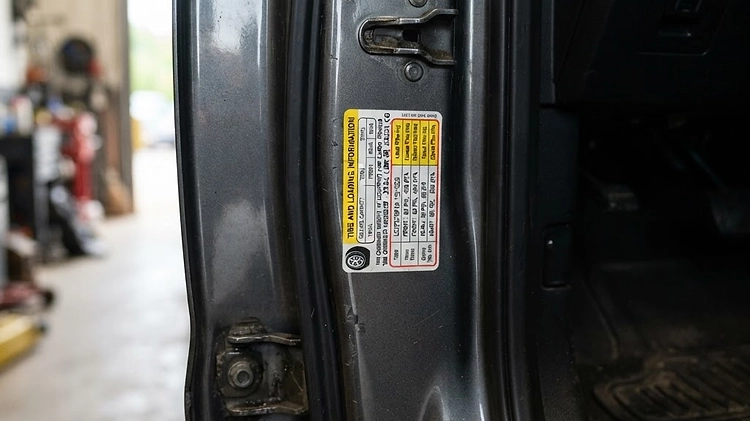
Let's look at the math. Suppose you have a truck with a payload capacity of 1,500 lbs and a max tow rating of 10,000 lbs. You want to tow an 8,000 lb loaded trailer. At a 12% tongue weight, the trailer places 960 lbs of downward force on your hitch. You now subtract that 960 lbs from your 1,500 lb payload capacity, leaving you with just 540 lbs for yourself, your passengers, and any gear in the truck. If you have a family of four and a bed full of tools, you will easily exceed that 540 lbs, meaning your truck is overloaded despite the trailer being 2,000 lbs under the max tow rating. Proper <a href="https://primetrailtrailers.com/guides/trailer-axle-weight-distribution-guide/">trailer axle weight distribution</a> is essential to managing this balance.<h2>How to Calculate Your Real-World Towing Limit</h2>To find out what you can actually tow, you need to work backward from your payload capacity. Step 1: Find your truck's payload capacity on the tire and loading information sticker inside the driver's side door jamb. Step 2: Weigh all passengers, cargo, and accessories that will be in the truck. Step 3: Subtract the total passenger and cargo weight from your payload capacity. The remaining number is your maximum allowable tongue weight. Step 4: Divide that maximum tongue weight by 0.12 (for a 12% bumper pull average) or 0.20 (for a 20% gooseneck average) to find your maximum loaded trailer weight. If you need help getting accurate numbers, read our guide on <a href="https://primetrailtrailers.com/guides/how-to-weigh-trailer-public-scale-payload-guide/">how to weigh a trailer at a public scale</a>.<h2>The Impact of Passengers, Cargo, and Aftermarket Gear</h2>Many truck owners forget that the payload capacity listed on the door sticker applies to the vehicle as it rolled off the assembly line. If you have added a spray-in bedliner, a tonneau cover, larger all-terrain tires, or a heavy steel bumper, you have permanently reduced your available payload.


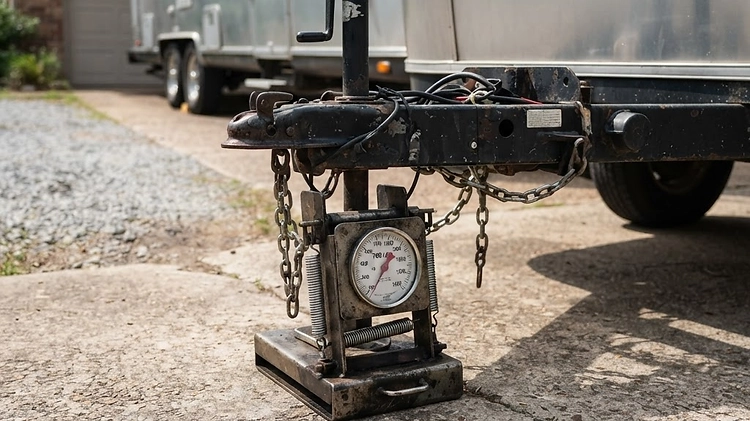
When outfitting a rig for commercial use, such as hauling a <a href="https://primetrailtrailers.com/shop/2027-maxx-d-ydx-85x32-225k-gooseneck-hydraulic-dovetail-dual-10k-dexter-axles-hydraulic-jacks-wirele/">2027 MAXX-D YDX 8.5x32 Gooseneck</a> or a <a href="https://primetrailtrailers.com/shop/2027-pj-t6-7x20-gooseneck-gravity-tilt-equipment-trailer-156k-gvwr-torsion-axles-dampened-tilt-deck-/">2027 PJ T6 7x20 Tilt Trailer</a>, every pound in the truck bed is a pound you cannot put on the trailer tongue. This is especially critical for hotshot drivers operating <a href="https://primetrailtrailers.com/locations/trailers-for-sale-in-texas/">trailers for sale in Texas</a> or navigating heavy traffic in <a href="https://primetrailtrailers.com/locations/dallas-tx/">Dallas, TX</a>, where DOT enforcement is strict. Always calibrate your setup using a <a href="https://primetrailtrailers.com/guides/trailer-tongue-weight-calibration-diy-guide/">DIY tongue weight scale</a> to ensure compliance.<h2>Key Specifications to Check Before You Hitch</h2><ul><li><strong>GVWR (Gross Vehicle Weight Rating):</strong> The maximum allowable weight of the fully loaded vehicle, including passengers, cargo, and tongue weight.</li><li><strong>GCWR (Gross Combined Weight Rating):</strong> The maximum allowable weight of the loaded tow vehicle and the loaded trailer combined.</li><li><strong>GAWR (Gross Axle Weight Rating):</strong> The maximum weight that can be safely placed on a single axle. Tongue weight heavily impacts the rear GAWR. Learn more in our <a href="https://primetrailtrailers.com/guides/trailer-axle-weight-ratings-gawr-explained/">GAWR explanation guide</a>.</li></ul><h2>Bottom Line</h2>Your truck's maximum towing capacity is a performance ceiling, but your payload capacity is the true bottleneck that dictates real-world safety. By understanding how tongue weight consumes payload, you can make informed decisions when loading your rig or shopping for a new trailer. For more expert advice, visit our <a href="https://primetrailtrailers.com/guides/">guides hub</a> or browse our extensive inventory of <a href="https://primetrailtrailers.com/trailers/gooseneck-trailers/">gooseneck trailers</a> at the Prime Trail Trailers <a href="https://primetrailtrailers.com/shop/">shop</a>.
FAQ
Have Questions? We're Here to Help
Still unsure which trailer fits your needs, or need specs, pricing or delivery advice? The Prime Trail Trailers team is ready to answer your questions and help you find the right rig.