
How to Weigh a Trailer at a Public Scale: Calculate True Payload
Learn how to weigh your truck and trailer at a public CAT scale to determine true curb weight, tongue weight, and safe payload capacity for towing.

Knowing your trailer's theoretical payload capacity is one thing, but knowing its actual weight on the road is another. Whether you are hauling heavy machinery across state lines or loading up a dump trailer for a local job, guessing your weight can lead to blown tires, suspension failure, or hefty DOT fines. The only way to guarantee you are within your Gross Vehicle Weight Rating (GVWR) and Gross Combined Weight Rating (GCWR) is to weigh your setup at a certified public scale.
In this comprehensive guide, we will walk you through exactly how to use a public CAT scale, how to calculate your true payload capacity, and how to ensure your load is perfectly balanced for safe towing.
Why You Need to Weigh Your Trailer at a Public Scale
Relying solely on the manufacturer's stated curb weight (empty weight) is a common mistake. The sticker weight often excludes optional upgrades, aftermarket accessories, spare tires, toolboxes, and heavy decking materials.
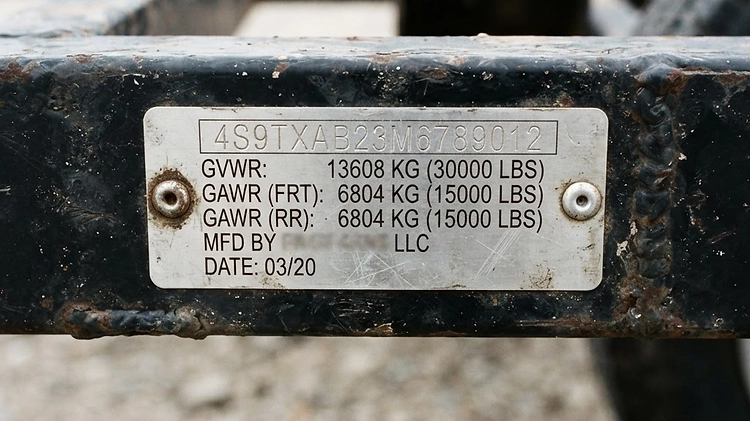
If you assume your trailer weighs 3,000 pounds empty, but it actually weighs 3,800 pounds with your added gear, you have instantly lost 800 pounds of payload capacity. For commercial haulers looking for trailers for sale in Texas, knowing exact weights is critical to passing DOT inspections and avoiding out-of-service violations. Weighing your rig provides the baseline numbers needed to calculate your true towing limits.
Understanding the Key Weight Ratings Before You Weigh
Before pulling onto the scale, you need to understand the acronyms stamped on your trailer's VIN plate and your tow vehicle's door jamb.
- GVWR (Gross Vehicle Weight Rating): The absolute maximum your trailer can weigh fully loaded.
- GCWR (Gross Combined Weight Rating): The maximum allowable weight of your fully loaded tow vehicle and fully loaded trailer combined. Learn more in our GCWR vs. GVWR towing math guide.
- GAWR (Gross Axle Weight Rating): The maximum weight a single axle can support. See our trailer axle weight ratings guide for dual-axle calculations.
- Payload Capacity: The actual weight of the cargo you can safely put on or in the trailer.
For a deeper dive into how these numbers interact, check out our towing capacity vs. payload capacity guide.
How to Prepare for the Weigh-In
To get accurate numbers, you need to weigh your rig exactly as it will be driven on the highway.

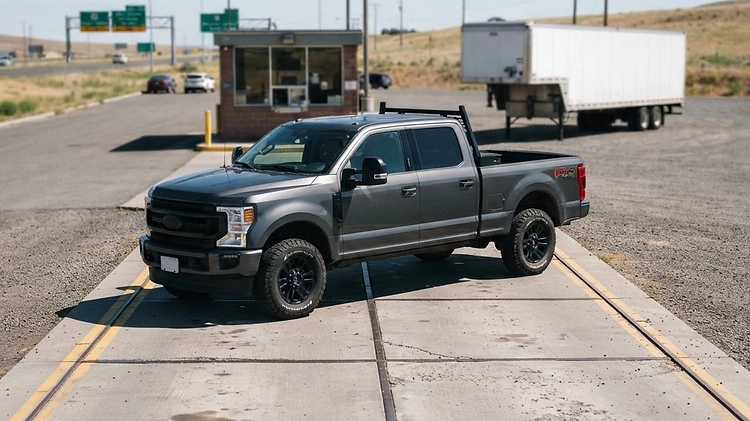
Fill your tow vehicle's gas tank to 100%. Fuel weighs roughly 6 pounds per gallon, so a 36-gallon tank adds over 200 pounds to your truck's weight. Load your truck with the passengers, tools, and gear that will normally be inside the cab or bed. If you are towing equipment trailers, ensure your chains, binders, and ramps are stowed in their normal travel positions.
Step-by-Step: How to Weigh Your Truck and Trailer at a CAT Scale
Public CAT scales are segmented into three platforms to measure your steer axle, drive axle, and trailer axles simultaneously. Here is the three-step process to get all the numbers you need.
Pass 1: Weighing the Fully Loaded Rig
Pull onto the scale so that your truck's front wheels are on platform 1, your truck's rear wheels are on platform 2, and your trailer's wheels are on platform 3. Press the call button and tell the operator you need a first weigh. This ticket will give you your Gross Combined Weight (GCW) and individual axle weights to check against your GAWR.
Pass 2: Weighing the Truck Only
Drop your trailer in the parking lot (ensure it is secure and legal to do so). Drive your truck back onto the scale with the front wheels on platform 1 and rear wheels on platform 2. This gives you the true loaded weight of your tow vehicle.
Pass 3: Doing the Math
Subtract the truck-only weight (Pass 2) from the total combined weight (Pass 1). The result is the exact weight of your fully loaded trailer. To find your tongue weight, subtract the truck's rear axle weight (Pass 2) from the truck's rear axle weight when the trailer was attached (Pass 1). For more on balancing this weight, read our trailer tongue weight calibration guide.
Calculating Your True Trailer Payload Capacity
Once you know your trailer's true empty weight (curb weight), calculating your actual payload capacity is simple.


Formula: Trailer GVWR - True Trailer Curb Weight = Actual Payload Capacity.
Example Weight Calculations
| Trailer Type | Stated GVWR | True Weighed Curb Weight | Actual Payload Capacity | | :--- | :--- | :--- | :--- | | 14K Dump Trailer | 14,000 lbs | 4,500 lbs | 9,500 lbs | | 10K Utility Trailer | 9,990 lbs | 2,800 lbs | 7,190 lbs | | 22.5K Gooseneck | 22,500 lbs | 6,200 lbs | 16,300 lbs |
If you are hauling heavy loads in Houston, TX, knowing these exact figures ensures you don't overload your axles when picking up materials.
What to Look For: Signs You Are Overloaded
Even if you haven't hit the scales yet, your rig will tell you if it is overloaded or improperly balanced. Look for these warning signs:
- Severe Tow Vehicle Squat: If your truck's rear end is sagging and the front end is pointing upward, your tongue weight is too high or you have exceeded your truck's payload.
- Sluggish Braking: If your trailer pushes your truck during stops, your trailer brakes may be inadequate for the load, or you are over your GCWR.
- Excessive Trailer Sway: Often caused by too little tongue weight (less than 10% of the total trailer weight).
The Bottom Line
Guessing your trailer's weight is a gamble you can't afford to take. By taking 30 minutes to visit a public scale, you gain the exact data needed to calculate your true payload capacity, balance your tongue weight, and tow with absolute confidence.
Ready to upgrade to a trailer with a higher payload capacity? Explore our full inventory of heavy-duty dump trailers or check out specific models like the 2027 PJ T6 7x20 Gooseneck Gravity Tilt Equipment Trailer and the 2026 BEDBOSS Dually ArmorBed Flatbed Truck Bed at the Prime Trail Trailers shop. For more expert advice, visit our towing guides hub.
FAQ
Have Questions? We're Here to Help
Still unsure which trailer fits your needs, or need specs, pricing or delivery advice? The Prime Trail Trailers team is ready to answer your questions and help you find the right rig.