
Towing Capacity vs. Payload Capacity: The Complete Hauling & Sizing Guide
Learn the critical differences between towing capacity and payload capacity, how to calculate them, and why they matter for safe trailer hauling.

Towing a trailer safely requires more than just a strong truck and a sturdy hitch. It demands a clear understanding of your vehicle's limits, specifically the difference between towing capacity and payload capacity. Misunderstanding these two metrics is one of the most common causes of towing accidents, premature vehicle wear, and unsafe driving conditions.
In this comprehensive guide, we will break down exactly what towing and payload capacities mean, how to calculate them for your specific setup, and why getting these numbers right is essential for every haul.
Understanding Towing Capacity
Towing capacity is the maximum amount of weight your vehicle can safely pull behind it. This number is determined by the manufacturer and takes into account the vehicle's engine, transmission, brakes, frame, and suspension.
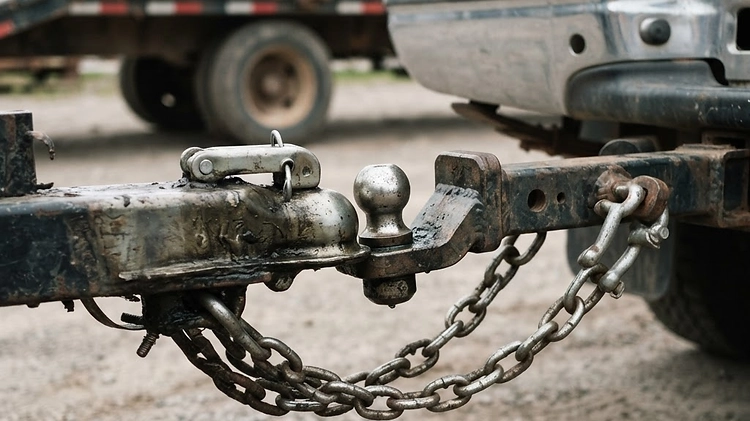
It's important to note that towing capacity is not a static number. It can change based on how your vehicle is equipped. For example, a truck with a specific axle ratio or a factory-installed tow package will often have a higher towing capacity than the exact same model without those features.
Gross Combined Weight Rating (GCWR)
To truly understand your towing capacity, you must first understand your Gross Combined Weight Rating (GCWR). The GCWR is the absolute maximum allowable weight of your fully loaded tow vehicle and your fully loaded trailer combined. This includes the weight of the truck, the trailer, all passengers, cargo, fuel, and fluids.
Understanding Payload Capacity
While towing capacity is about what you can pull, payload capacity is about what you can carry. Payload capacity is the maximum amount of weight your vehicle can safely hold in its cabin and bed.

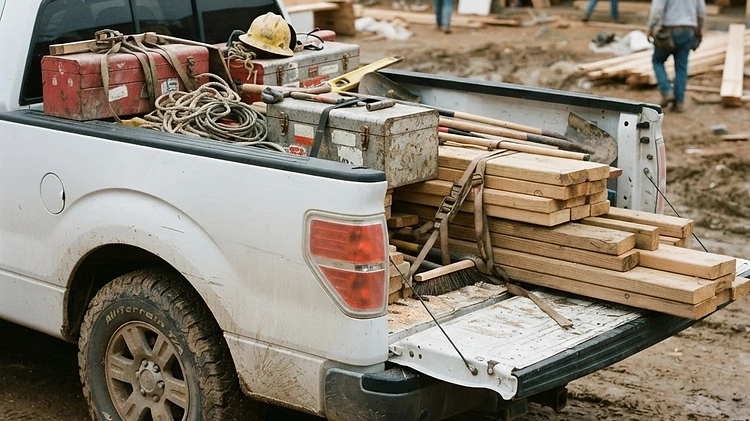
This includes the weight of the driver, all passengers, any cargo in the bed or trunk, and—crucially for towing—the tongue weight of the trailer.
Gross Vehicle Weight Rating (GVWR)
Payload capacity is directly tied to your Gross Vehicle Weight Rating (GVWR). The GVWR is the maximum allowable weight of the vehicle itself, fully loaded. To calculate your payload capacity, you subtract the vehicle's curb weight (its weight when empty but full of fluids) from its GVWR.
The Critical Intersection: Tongue Weight
The point where towing capacity and payload capacity intersect is the tongue weight. Tongue weight is the downward force that the tongue of the trailer exerts on the hitch of the tow vehicle.

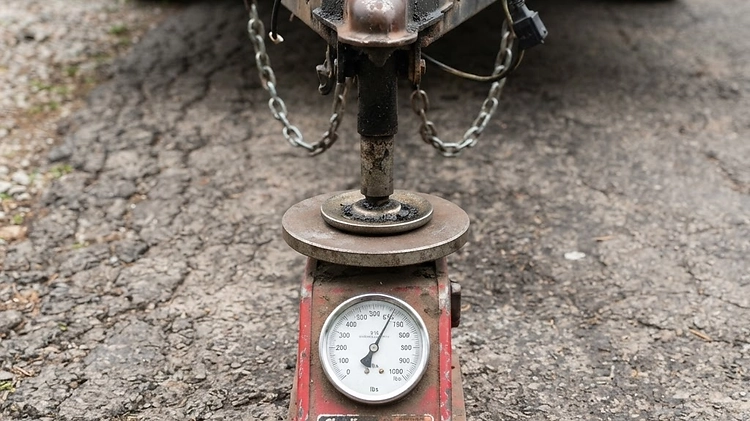
For a conventional bumper-pull trailer, the tongue weight should typically be between 10% and 15% of the total loaded trailer weight. For a gooseneck or fifth-wheel trailer, it's usually between 15% and 25%.
Here is the critical rule: Tongue weight counts against your payload capacity.
If your truck has a payload capacity of 1,500 lbs, and you have 500 lbs of passengers and gear in the truck, you only have 1,000 lbs of payload capacity remaining for tongue weight. If your trailer's tongue weight exceeds 1,000 lbs, you are overloaded, even if the total trailer weight is well below your maximum towing capacity.
How to Calculate Your Safe Towing Limits
To ensure you are towing safely, follow these steps:
- Find your vehicle's ratings: Locate the GVWR, GCWR, and payload capacity on the sticker inside the driver's side door jamb or in the owner's manual.
- Determine your loaded vehicle weight: Weigh your tow vehicle with all passengers, cargo, and a full tank of gas.
- Calculate available payload: Subtract your loaded vehicle weight from the GVWR. This is the maximum tongue weight you can handle.
- Determine your loaded trailer weight: Weigh your fully loaded trailer.
- Calculate tongue weight: Ensure the tongue weight is within the safe percentage range (10-15% for bumper pull) and does not exceed your available payload.
- Check GCWR: Add the loaded vehicle weight and the loaded trailer weight together. Ensure this total does not exceed your GCWR.
Bottom Line
Understanding the relationship between towing capacity and payload capacity is non-negotiable for safe hauling. Always prioritize payload limits, as they are often the first threshold you will cross when loading a truck and trailer. By carefully calculating your weights and staying within your vehicle's ratings, you ensure a safer ride, better handling, and a longer lifespan for your equipment.
Ready to find the perfect trailer for your hauling needs? Explore our extensive inventory of utility trailers and equipment trailers at Prime Trail Trailers, or visit our shop to see our latest models.
FAQ
Have Questions? We're Here to Help
Still unsure which trailer fits your needs, or need specs, pricing or delivery advice? The Prime Trail Trailers team is ready to answer your questions and help you find the right rig.