
Weight Distribution Hitches Explained: When Do You Need One for Safe Towing?
Learn how weight distribution hitches work, when they are required for safe towing, and how to choose the right system for your trailer and tow vehicle.
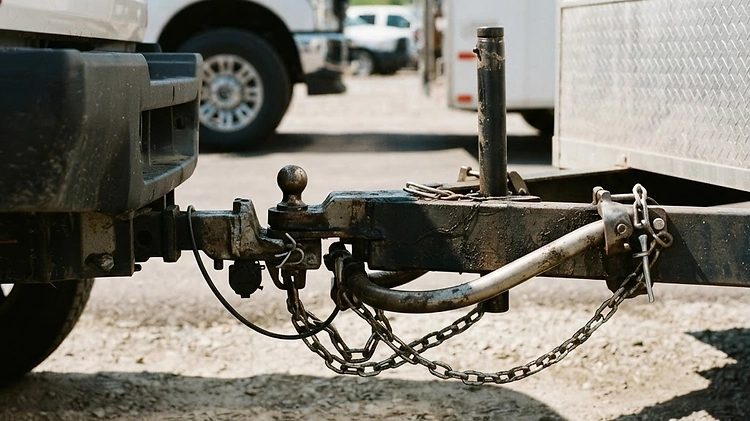
Towing a heavy load requires more than just a powerful truck and a sturdy ball mount. When you drop a massive trailer onto your hitch, the rear suspension of your tow vehicle compresses, lifting the front wheels and compromising your steering, braking, and overall stability. This is where a weight distribution hitch (WDH) becomes an essential piece of towing equipment.
Whether you are hauling heavy machinery on equipment trailers or transporting valuable cargo across state lines, understanding how to properly distribute tongue weight is critical for safety and compliance. In this guide, we will break down exactly how weight distribution hitches work, when you are required to use one, and how to select the right system for your specific hauling needs.
What is a Weight Distribution Hitch (WDH)?
A weight distribution hitch is a specialized towing system designed to evenly distribute the tongue weight of a trailer across all axles of the tow vehicle and the trailer itself. Unlike a standard weight-carrying hitch that places the entire downward force directly on the rear bumper or receiver, a WDH uses spring bars to leverage that weight forward.
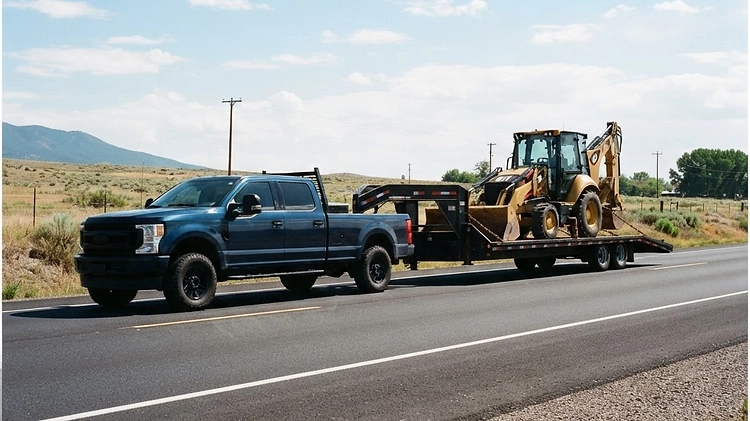
By transferring a portion of the tongue weight to the front axle of the tow vehicle, a WDH restores a level ride height. This ensures that your front tires maintain proper contact with the road, which is vital for steering control and effective braking. For commercial haulers looking for trailers for sale in Texas, investing in a quality WDH is often the first step toward safer, more efficient transport.
How a Weight Distribution Hitch Works (Physics of Towing)
The physics behind a weight distribution hitch rely on tension and leverage. The system consists of a specialized hitch head, a shank that slides into your receiver, and two spring bars (either trunnion or round bar style) that connect the hitch head to brackets mounted on the trailer frame.
When you hook up the trailer and engage the spring bars, they act like wheelbarrow handles. They apply upward pressure on the rear of the tow vehicle and downward pressure on the front axle. This mechanical leverage counteracts the rear-end sag caused by heavy tongue weights. If you are calculating your load using our Trailer Tongue Weight Calculator Guide, you will see that maintaining that perfect 10-15% tongue weight is much easier to manage when a WDH is actively balancing the load.
When is a Weight Distribution Hitch Required?
Not every trailer requires a weight distribution hitch, but there are specific thresholds where it becomes mandatory for safe operation. The general rule of thumb is that you need a WDH if your trailer's gross weight is more than 50% of your tow vehicle's weight.


Additionally, you should consult your vehicle's owner's manual. Most half-ton trucks (like the F-150 or Silverado 1500) require a weight distribution hitch when towing anything over 5,000 pounds or when the tongue weight exceeds 500 pounds. If you are hauling a heavy load on a 2026 PJ Trailers L6 8.5X24 10k Deckover, a WDH is almost certainly required to stay within safe operating limits. For a deeper dive into capacity limits, review our guide on Towing Capacity vs. Payload Capacity.
Weight Distribution vs. Sway Control: Understanding the Difference
It is a common misconception that weight distribution and sway control are the same thing. While they often work together, they serve different primary functions. Weight distribution levels the load, while sway control prevents the trailer from fishtailing due to crosswinds, passing semi-trucks, or uneven roads.
Many modern WDH systems come with integrated sway control, utilizing friction material within the hitch head or the spring bar brackets to resist lateral movement. If you are towing large, flat-sided enclosed trailers through windy areas like Denver, CO, an integrated sway control system is highly recommended. Proper loading is also crucial for sway prevention; always follow the 60/40 Rule for Utility Trailer Weight Distribution.
How to Choose the Right Weight Distribution Hitch for Your Trailer
Selecting the correct WDH requires knowing two critical numbers: your Gross Trailer Weight (GTW) and your fully loaded Tongue Weight (TW). Buying a hitch that is rated too low will result in a system that cannot effectively level the load, while buying one rated too high will create a stiff, rigid ride that can damage your trailer frame.

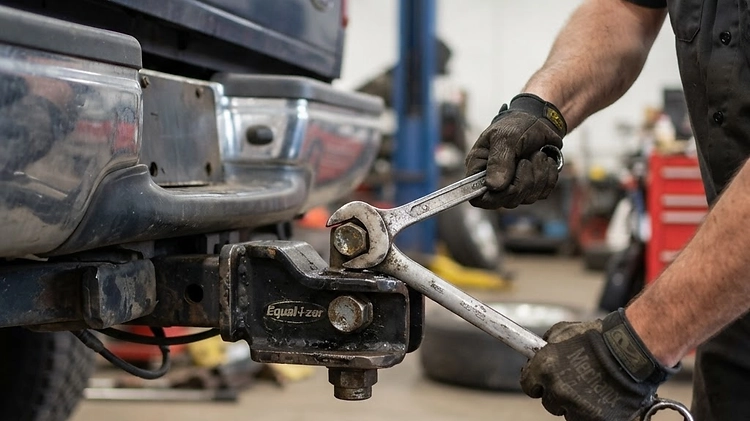
When sizing your hitch, always factor in the weight of cargo loaded behind the rear axle of the tow vehicle, as this acts as additional tongue weight. If you are upgrading your towing setup, ensure your braking system is also up to par by consulting our Trailer Brake Controller Setup Guide.
Key Specifications to Look For
- Trunnion Bar vs. Round Bar: Trunnion bars slide into the side of the hitch head and offer better ground clearance, making them ideal for low-riding trailers. Round bars slide up into the bottom of the hitch head and are generally more affordable.
- Integrated Sway Control: Look for systems that use 4-point friction sway control rather than add-on friction sway bars, which must be disconnected before backing up.
- Shank Drop/Rise: Ensure the shank provides enough drop or rise to keep your trailer level when hitched to your specific tow vehicle.
Bottom Line
A weight distribution hitch is not just an optional accessory; for heavy loads, it is a critical safety component that protects your tow vehicle, your cargo, and other drivers on the road. By restoring steering control and braking power, a WDH ensures you arrive at your destination safely.
Ready to upgrade your hauling capabilities? Explore our full inventory of heavy-duty trailers, including the 2027 Horizon HET 8.5x20 Gravity Tilt Equipment Trailer, at the Prime Trail Trailers Shop. For more expert advice on safe hauling, visit our Guides Hub and check out our comprehensive breakdown of Trailer Axle Weight Ratings (GAWR).
FAQ
Have Questions? We're Here to Help
Still unsure which trailer fits your needs, or need specs, pricing or delivery advice? The Prime Trail Trailers team is ready to answer your questions and help you find the right rig.