

The 60/40 Rule: How to Safely Load a Utility Trailer for Perfect Weight Distribution
Master the 60/40 rule for utility trailer weight distribution. Learn how to properly load cargo, calculate tongue weight, and prevent dangerous trailer sway.


Properly loading a utility trailer is the single most important factor in safe towing, yet it is often misunderstood. Whether you are hauling landscaping equipment, building materials, or ATVs, poor weight distribution can lead to catastrophic trailer sway, blown tires, or loss of vehicle control.
To tow safely and protect your equipment, you must master the 60/40 rule and understand how cargo placement affects your trailer's tongue weight and axle load. This comprehensive guide covers everything you need to know about utility trailer weight distribution, ensuring your next haul is stable, compliant, and safe.
Understanding the 60/40 Rule for Utility Trailers
The golden rule of trailer loading is the 60/40 rule: 60% of the cargo weight should be loaded in front of the trailer axle (towards the tow vehicle), and 40% should be loaded behind the axle.


This specific ratio ensures that the trailer applies the correct amount of downward force on the tow vehicle's hitch, known as tongue weight. When 60% of the weight is forward, it naturally creates a tongue weight that is roughly 10% to 15% of the total loaded trailer weight (Gross Trailer Weight or GTW).
Why 60/40 Matters
- Too Much Weight Forward (Over 60%): Excessive tongue weight pushes the rear of the tow vehicle down and lifts the front wheels. This reduces steering control, impairs braking performance, and can overload the tow vehicle's rear axle and suspension.
- Too Much Weight Rearward (Under 60%): Insufficient tongue weight (less than 10% of GTW) is the primary cause of trailer sway. When the rear of the trailer is too heavy, it acts like a pendulum, causing the trailer to whip violently side-to-side at highway speeds.
Step-by-Step Guide to Loading Your Utility Trailer
Achieving the perfect 60/40 split requires a strategic approach to loading. Follow these steps to ensure your cargo is balanced and secure.
1. Know Your Weight Limits
Before loading, you must know your trailer's Gross Vehicle Weight Rating (GVWR) and its empty weight. Subtract the empty weight from the GVWR to find your maximum payload capacity. Never exceed this limit. You must also ensure your tow vehicle is rated to handle the total loaded weight.
2. Load Heavy Items First
Start by placing the heaviest items—such as riding mowers, pallets of material, or large toolboxes—just ahead of the trailer axle. Center these items side-to-side to ensure the trailer tracks straight and tire wear is even.

3. Distribute Lighter Cargo
Once the heavy items are positioned, distribute lighter cargo around them to achieve the 60/40 balance. Place medium-weight items toward the front and the lightest items toward the rear.
4. Secure the Load
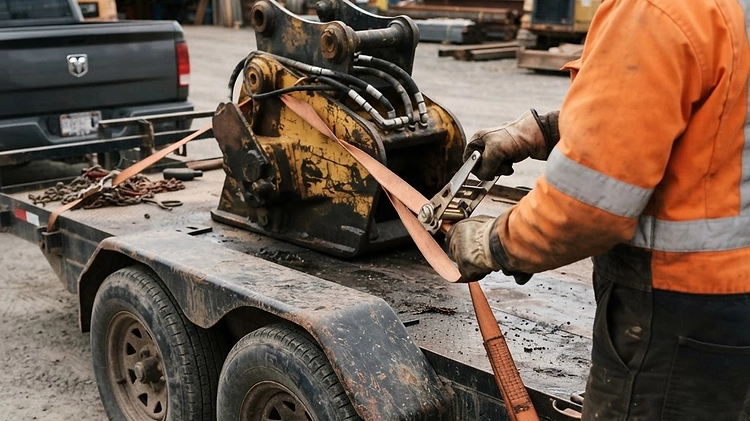
Proper weight distribution is useless if the cargo shifts during transit. Use heavy-duty ratchet straps, chains, or D-rings to secure the load. Ensure the tie-downs are rated for the weight of the cargo and pull in opposing directions to prevent movement.
Measuring and Verifying Tongue Weight
Guessing your tongue weight is a dangerous game. To ensure you have hit the 10-15% target, you should measure it accurately.
Methods for Measuring Tongue Weight
- Tongue Weight Scale: The most accurate method is using a dedicated tongue weight scale placed directly under the trailer coupler.
- Bathroom Scale Method: For lighter utility trailers (under 3,000 lbs GTW), you can use a standard bathroom scale supported by a sturdy block of wood.
- Commercial Weigh Station: For heavy loads, visit a CAT scale. Weigh the tow vehicle and trailer together, then weigh the tow vehicle alone. The difference in the tow vehicle's rear axle weight will give you a close approximation of the tongue weight.
The Physics of Trailer Sway and How to Stop It
Trailer sway, or "fishtailing," occurs when lateral forces (like wind gusts, passing semi-trucks, or sudden steering inputs) push the trailer sideways. If the trailer is loaded correctly (60/40), the tongue weight acts as a stabilizing force, pulling the trailer back into line.


If the trailer is tail-heavy, the center of gravity shifts behind the axle. The lateral force causes the trailer to pivot on the hitch, amplifying the sway until the driver loses control. If you experience sway, do not slam on the tow vehicle's brakes. Instead, manually apply the trailer brakes using your brake controller and gradually ease off the accelerator until the sway subsides.
Bottom Line
Mastering the 60/40 rule and proper weight distribution is essential for anyone towing a utility trailer. By loading 60% of your cargo ahead of the axle, securing it properly, and verifying your tongue weight, you protect your equipment, your vehicle, and yourself on the road.
Ready to upgrade your hauling capabilities? Explore our extensive inventory of utility trailers or check out our equipment trailers for heavier loads. For more expert advice, visit our guides hub.
Shop Related Trailers
FAQ
Have Questions? We're Here to Help
Still unsure which trailer fits your needs, or need specs, pricing or delivery advice? The Prime Trail Trailers team is ready to answer your questions and help you find the right rig.