
Trailer Tongue Weight Calculator Guide: Achieving the Perfect 10-15% Balance
Learn how to calculate and measure trailer tongue weight to hit the ideal 10-15% balance, prevent trailer sway, and ensure safe towing for any load.
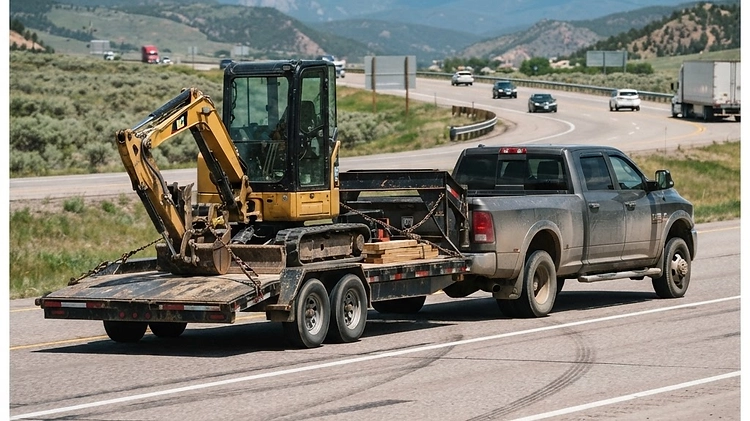
Proper trailer tongue weight can make the difference between a safe, controlled haul and a dangerous, sway-inducing nightmare. Whether you are hauling a skid steer across town or transporting a classic car across the country, understanding how much downward force your trailer applies to your hitch is non-negotiable.
In this comprehensive guide, we will break down how to use a trailer tongue weight calculator, the proven methods for measuring it accurately, and why hitting that golden 10% to 15% ratio is critical for your safety on the road. For more foundational towing knowledge, be sure to visit our towing and capacity guides hub.
What is Trailer Tongue Weight?
Trailer tongue weight (TW) is the downward force that the tongue of a fully loaded trailer exerts on the hitch of the tow vehicle. It is a critical component of your overall towing setup, directly impacting how your tow vehicle handles, brakes, and accelerates.
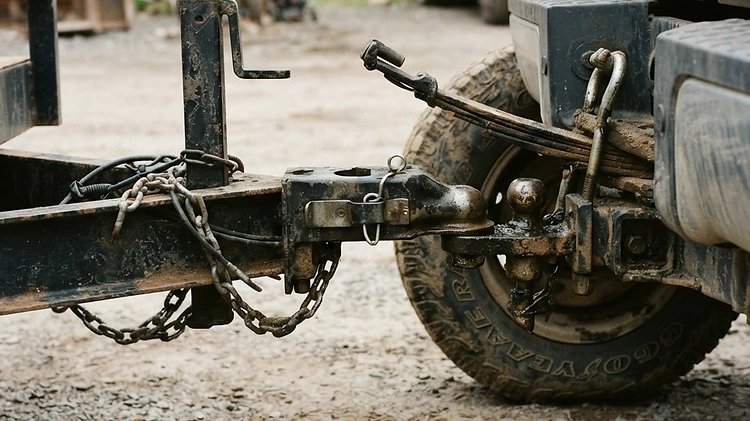
If the tongue weight is too light (under 10%), the trailer is prone to dangerous sway, often referred to as "fishtailing." If the tongue weight is too heavy (over 15%), it pushes the rear of the tow vehicle down, lifting the front wheels. This reduces steering control, compromises braking efficiency, and can blind oncoming drivers by aiming your headlights into the sky. Understanding towing capacity vs. payload capacity is essential to keeping these forces in check.
Why the 10-15% Rule is Critical for Safe Towing
Industry standards and the Federal Motor Carrier Safety Administration (FMCSA) dictate that for conventional bumper-pull trailers, the ideal tongue weight should be between 10% and 15% of the Gross Trailer Weight (GTW). For gooseneck and fifth-wheel trailers, this number increases to 15% to 25% due to the hitch's placement over the rear axle.
Maintaining this balance provides several key benefits:
- Stable Handling: Keeps trailer sway to a minimum (less than 1 degree of roll).
- Optimal Stopping Distance: Allows the tow vehicle's front brakes (which handle up to 70% of braking force) to maintain traction.
- Vehicle Longevity: Reduces unnecessary wear on your suspension, rear axle, and tires.
If you are hauling heavy equipment in places like trailers for sale in Texas, where highway speeds are high and crosswinds are common, adhering to the physics of trailer sway is your best defense against accidents.
How to Use a Trailer Tongue Weight Calculator
Calculating your target tongue weight is a straightforward mathematical process. You need to know your Gross Trailer Weight (GTW)—the total weight of your trailer fully loaded with cargo, fluids, and gear.


The Formula:
- Minimum Target: GTW x 0.10
- Maximum Target: GTW x 0.15
For example, if you are towing a loaded utility trailer that weighs 7,000 lbs:
- 7,000 x 0.10 = 700 lbs (Minimum Tongue Weight)
- 7,000 x 0.15 = 1,050 lbs (Maximum Tongue Weight)
If you are using a 2026 PJ Trailers L6 8.5X16 10k Deckover, you must ensure your cargo is positioned to hit this exact window. For a deeper dive into axle limits, review our guide on trailer axle weight ratings (GAWR).
4 Proven Methods to Measure Tongue Weight
Knowing the math is only half the battle; you must verify the actual weight before hitting the road. Here are the most reliable methods:
1. The Commercial Scale Method (CAT Scale)
This is the most accurate method. Pull your rig onto a commercial scale (common at truck stops in hubs like Houston, TX).
- Weigh your tow vehicle with the trailer attached (but trailer wheels off the scale) to get the weight on the tow vehicle's axles.
- Disconnect the trailer and weigh the tow vehicle alone.
- Subtract the second weight from the first. The difference is your exact tongue weight.
2. Tongue Weight Scale
Specialized scales, such as those made by Sherline, are placed directly under the trailer jack. You simply lower the jack onto the scale to get an instant, accurate reading. This is highly recommended for frequent haulers.
3. Weigh Safe Hitch
Modern technology has introduced drop hitches with built-in hydraulic scales. As you lower the trailer onto the ball, a dial on the side of the hitch displays the exact tongue weight.
4. The Bathroom Scale Method (For Light Trailers)
For small trailers (under 3,000 lbs GTW), you can use a standard bathroom scale. Place a block of wood on the scale to distribute the load, and lower the trailer jack onto it. For heavier trailers, you can use a pipe-and-board lever system to reduce the weight on the scale by a factor of three or four, though this requires careful setup.
How to Adjust and Distribute Cargo for Perfect Balance
If your measurement falls outside the 10-15% range, you must adjust your load. The general rule of thumb is the 60/40 rule: place 60% of the cargo weight in front of the trailer axles and 40% behind them.

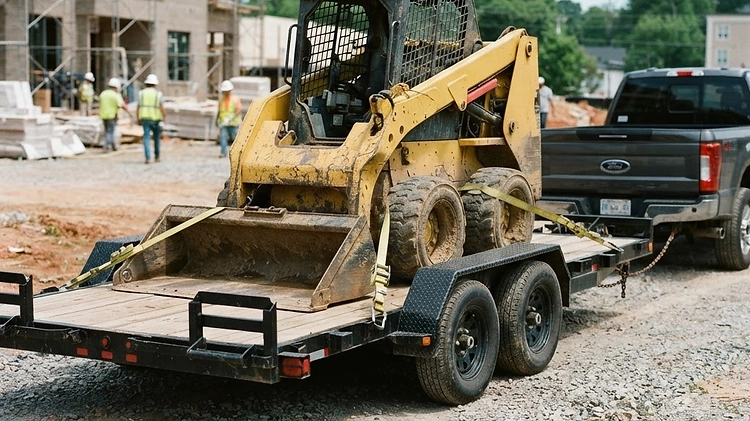
- If Tongue Weight is Too Low: Move heavy items forward, closer to the tow vehicle. This is critical when loading a flatbed trailer.
- If Tongue Weight is Too High: Shift cargo rearward, but be careful not to put too much weight behind the axles, which induces sway.
Always secure your load properly once balanced. Refer to the DOT trailer safety chain requirements to ensure your connection is legally compliant.
Key Specifications and Towing Capacities to Monitor
Never exceed the lowest-rated component in your towing system. You must check:
- Tow Vehicle Payload Capacity: Tongue weight counts against your truck's payload. If you have a 1,500 lb tongue weight and a truck payload of 2,000 lbs, you only have 500 lbs left for passengers and gear.
- Hitch Receiver Rating: Ensure your Class III, IV, or V receiver is rated for the tongue weight you are applying.
- Trailer GVWR: Never load the trailer beyond its Gross Vehicle Weight Rating.
For those upgrading their tow rigs, consider a dedicated utility truck bed like the 2026 Wil-Ro Utility Truck Bed to handle heavier tongue weights with ease.
Bottom Line
Mastering your trailer tongue weight is the single most effective way to ensure a safe, stable towing experience. By utilizing a tongue weight calculator, measuring accurately, and adjusting your cargo to hit the 10-15% sweet spot, you protect your equipment, your vehicle, and everyone else on the road.
Ready to upgrade your hauling capabilities? Browse our full inventory of professional-grade trailers at the Prime Trail Trailers Shop today.
FAQ
Have Questions? We're Here to Help
Still unsure which trailer fits your needs, or need specs, pricing or delivery advice? The Prime Trail Trailers team is ready to answer your questions and help you find the right rig.