
Towing Capacity vs. Payload Capacity: The Complete Hauling & Sizing Guide
Learn the critical differences between towing capacity and payload capacity, how tongue weight impacts your truck, and how to safely size your trailer load.
Quick Summary
Learn the critical differences between towing capacity and payload capacity, how tongue weight impacts your truck, and how to safely size your trailer load.
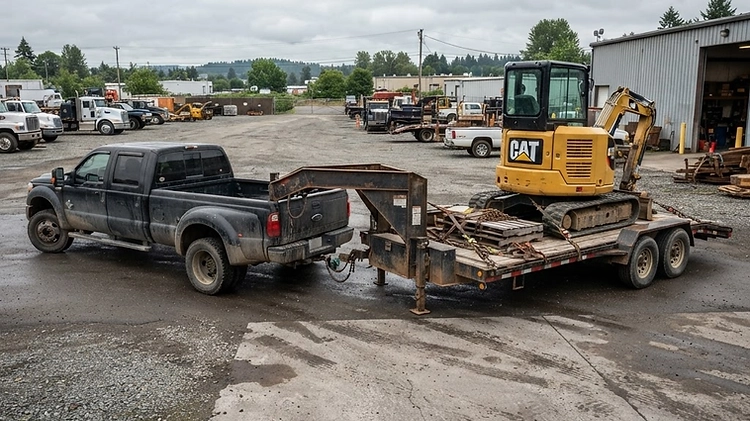
Tow ratings advertised on television brochures look impressive, but real-world hauling requires looking far past a truck's headline numbers. Many haulers hook up a trailer that sits comfortably under their vehicle's maximum tow rating, only to suffer severe rear suspension sag, wandering steering, and dangerously overheated brakes. The root cause is almost always confusing towing capacity with payload capacity—or failing to account for how the two interact through hitch tongue weight.
Whether you are hauling skid steers on commercial equipment trailers or moving gravel in a heavy-duty dump trailer, calculating your exact capacities keeps your rig compliant with Department of Transportation (DOT) standards and safe at highway speeds. Explore our comprehensive collection of trailering knowledge at the Prime Trail Trailers guides hub to build rock-solid hauling practices from the ground up.
What Is Payload Capacity vs. Towing Capacity?
To manage loads safely, you must understand the mechanical distinction between carrying weight directly on a vehicle's frame versus pulling weight supported across external axles. These two ratings measure entirely different stresses on a chassis, powertrain, suspension, and braking setup.


Payload capacity represents the maximum operating weight a tow vehicle can carry inside its cab, across its bed, and directly over its axles. This figure includes passengers, driver weight, aftermarket accessories like toolboxes or bed caps, fuel, loose gear, and crucial tongue weight exerted by your trailer coupler. In mathematical terms:
Payload Capacity = Gross Vehicle Weight Rating (GVWR) - Curb Weight
Towing capacity, on the other hand, indicates the maximum gross weight a vehicle can safely pull behind it when properly hitched. Because the vast majority of a loaded trailer's mass rests on its own suspension and axles rather than solely on the truck, towing ratings are significantly higher than payload limits. For example, a heavy 3/4-ton truck might carry a payload rating of 3,500 pounds but boast a maximum towing capacity of over 18,000 pounds.
Crucially, towing eats directly into your remaining payload. The downward force applied at the receiver hitch or gooseneck ball—termed tongue weight or pin weight—acts as direct payload on the tow vehicle's rear axle. If your truck has a payload limit of 1,800 pounds and your bumper-pull trailer applies 900 pounds of tongue weight, you have only 900 pounds left for your driver, crew, tools, and cargo inside the truck cab and bed.
Understanding the Core Weight Ratings: GVWR, GCWR, GAWR, and Curb Weight
Navigating manufacturer certification labels requires decoding several related weight acronyms. You can find these ratings on the driver's side door jamb safety placard of your tow vehicle and on the VIN tag stamped onto the front frame tongue of your trailer.
Gross Vehicle Weight Rating (GVWR)
GVWR represents the absolute maximum operating weight of the individual vehicle (or trailer) when fully loaded. It is an immutable structural limit determined by chassis engineering, spring rates, wheel bearings, tire load indexes, and braking capacity. Operating above GVWR risks catastrophic frame distortion, cracked leaf springs, and brake fade.
Gross Combined Weight Rating (GCWR)
GCWR defines the legal and mechanical ceiling for the entire combination rig—the tow vehicle, full trailer, all cargo, passengers, liquids, and hitch hardware weighed together on a certified scale. Exceeding GCWR strains the truck's engine cooling, transmission torque converter, and driveshafts.
Gross Axle Weight Rating (GAWR)
Every vehicle carries a front GAWR and rear GAWR. Even when a truck remains underneath its overall GVWR, poor tongue weight distribution can overload the rear axle while unloading the steering axle, causing loss of directional control.
Curb Weight and Dry Weight
Curb weight is the baseline weight of your truck with full fluids and engine oil, but without passengers or cargo. Dry weight refers to an empty trailer fresh off the assembly line before adding spare tires, tie-down chains, tarps, or bulk materials. Calculating realistic hauling margins requires subtracting exact curb weight from your tow vehicle's GVWR.
| Specification Acronym | Definition | What It Measures | Location of Label | | :--- | :--- | :--- | :--- | | GVWR | Gross Vehicle Weight Rating | Maximum safe total weight of single vehicle or trailer | Driver door jamb / trailer frame | | GCWR | Gross Combined Weight Rating | Maximum permitted weight of truck + trailer combined | Vehicle owner manual / tow guide | | GAWR | Gross Axle Weight Rating | Maximum allowable load on front or rear axle | Driver door jamb tire placard | | Tongue Weight (TW) | Hitch Downward Force | Vertical static weight pressing onto the hitch ball | Tongue scale / commercial scale | | Payload | Carrying Margin | Total cargo, passenger, and hitch weight allowed inside truck | Calculated: GVWR minus Curb Weight |
The Tongue Weight Factor: How Bumper-Pull and Gooseneck Loads Differ
Hitch style radically shifts how tongue weight impacts your truck's payload capacity. Standard bumper-pull trailers—such as enclosed cargo trailers or smaller bumper utility trailers—typically transfer 10% to 15% of their total loaded gross trailer weight onto the receiver hitch.

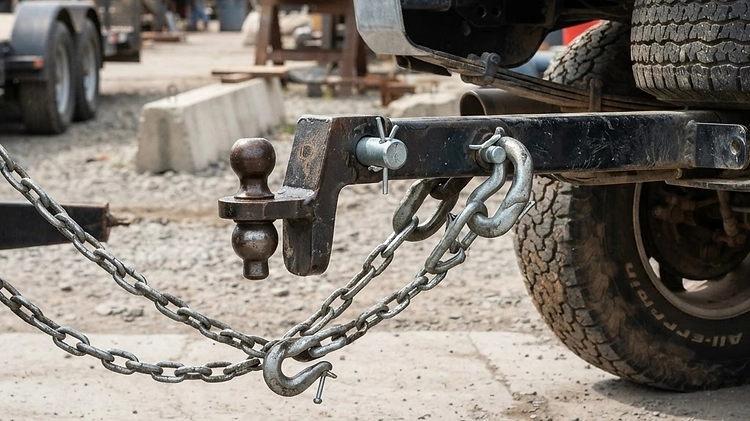
For instance, towing a tandem-axle commercial load weighing 10,000 pounds requires an ideal tongue weight between 1,000 and 1,500 pounds. Using high-strength adjustable hardware, such as the Universal Trailers Gen-Y Hitch adjustable drop hitches, ensures you can fine-tune receiver height to keep the trailer level and prevent disproportionate hitch loading.
By contrast, fifth-wheel and gooseneck configurations distribute weight directly over or slightly ahead of the truck's rear drive axle. Gooseneck trailers intentionally place 20% to 25% of their total weight onto the bed ball. While this setup delivers unmatched towing stability, crosswind resistance, and tight turning radius, it consumes payload at more than double the rate of a bumper-pull setup.
If you run heavy commercial equipment or bulk aggregate, pairing an appropriate tow platform with high-capacity haulers like our gooseneck trailers ensures your chassis can bear that vertical pin weight safely. When hauling substantial payloads, such as with a Double-A 8x16 tandem-dually gooseneck dump trailer, calculating that 20% to 25% pin weight against your truck's dual-rear-wheel payload rating is vital before filling the bed.
Step-by-Step Formula: How to Calculate Your Real-World Towing Limits
Determining whether your vehicle can legally and comfortably haul a given setup takes three straightforward calculation steps. Never rely on base tow ratings published in consumer marketing materials; always run your calculations using your vehicle's specific door jamb placard numbers.
Step 1: Calculate Usable Payload
Check the "Tire and Loading Information" sticker inside your driver's door jamb for the payload rating as manufactured. Next, subtract the real weight of everything added to the truck:
- Base payload capacity from door jamb: e.g., 2,200 lbs
- Weight of driver and two crew members: -550 lbs
- Aftermarket steel toolbox, diesel transfer tank, and tools: -400 lbs
- Heavy hitch shank and ball mount: -50 lbs
- Remaining Available Payload: 1,200 lbs
Step 2: Determine Maximum Permissible Tongue Weight
Since your remaining available payload is 1,200 pounds, your trailer's downward tongue weight cannot exceed 1,200 pounds without overloading the truck's rear suspension and GVWR.
Step 3: Calculate Safe Gross Trailer Weight (GTW)
Using the standard 10% to 15% tongue weight rule for bumper-pull setups, divide your available payload by 0.12 (targeting a balanced 12% tongue weight):
1,200 lbs / 0.12 = 10,000 lbs Max Gross Trailer Weight
Even if the truck manufacturer claims a maximum towing capacity of 13,000 pounds, your real-world limit is capped at 10,000 pounds because of payload constraints. Exceeding this figure would overload your truck's chassis, regardless of engine power.
If you frequently haul skid loaders, mini-excavators, or structural steel, explore our dedicated equipment trailers to select an axle configuration matched to your required gross weight.
Weight Distribution and the 60/40 Rule for Safe Towing
Calculating numbers is only half the battle; distributing weight across the trailer deck determines how your rig tracks down the road. An improper balance causes violent trailer sway (fishtailing) or dangerous front-axle unloading.

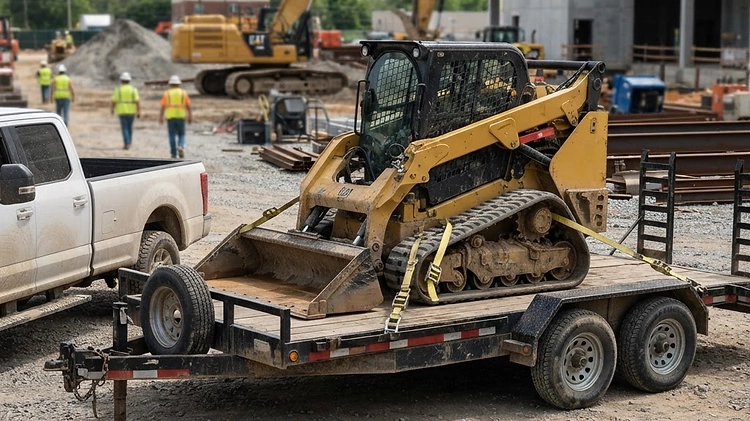
Follow the industry-standard 60/40 rule on every haul: place approximately 60% of your cargo's total weight in front of the trailer axle centerline (closer to the hitch) and 40% behind the axles. Centering the heaviest machinery or pallets directly over and slightly ahead of the axle group stabilizes the trailer's center of gravity.
Placing too much cargo behind the rear axle lightens the tongue weight below the critical 10% threshold. At highway speeds, aerodynamic turbulence or sudden lane changes will trigger uncontrolled sway that trailer electric brakes cannot always correct. Conversely, stacking excessive weight at the very front of the trailer overloads the tow vehicle's rear axle, causing the front tires to lift slightly. This compromises steering response and increases braking distance.
For compact hauling tasks, versatile rigs like the Universal Trailers Stronghaul 6x12 aluminum utility trailer make balancing lighter landscaping and powersports loads simple. For operators evaluating bed sizing and capacity tradeoffs, our guide on what size dump trailer you need breaks down bulk density figures for dirt, sand, and gravel.
Real-World Case Studies: Matching Rigs to the Job
Examining common towing combinations highlights how quickly payload limits override engine towing ratings.
Case 1: Half-Ton Truck Towing an Enclosed Contractor Trailer
A contractor owns a half-ton pickup rated to tow 9,500 pounds, with a door sticker payload of 1,650 pounds. He hooks up a fully outfitted Universal Trailers 7x14 Continental Cargo contractor edition trailer weighing 6,800 pounds loaded. At a 12% tongue weight, the trailer exerts 816 pounds on the hitch.
With two crew members (400 pounds), a bed-mounted air compressor (250 pounds), and hand tools (150 pounds), total payload consumption reaches 1,616 pounds. The truck is within 34 pounds of its legal ceiling despite being 2,700 pounds under its advertised maximum towing capacity.
Case 2: One-Ton Dually Towing a Heavy Tri-Axle Deckover Dump
A commercial excavation business operates a one-ton dually truck with an 18,000-pound bumper tow capacity and 5,400-pound payload rating. They tow a Double-A 8x16 tri-axle deckover dump trailer with a 23,000-pound GVWR. Because the trailer's loaded weight exceeds the truck's receiver limits, upgrading to a gooseneck configuration transfers the necessary 20% pin weight directly over the dually axle, operating safely within both payload and axle ratings.
If you encounter lifting challenges when dumping dense loads, consult our specialized troubleshooting guide on why your dump trailer won't lift and reference our comprehensive dump trailer maintenance checklist to keep electrical and hydraulic components performing reliably under load.
The Bottom Line
Towing capacity determines how much rolling mass your engine and transmission can pull, but payload capacity governs the actual structural weight your chassis, suspension, and tires can carry. Always treat payload as your limiting factor when sizing any trailer setup. By checking door jamb labels, calculating tongue weight accurately, and adhering to the 60/40 loading balance, you protect your equipment, ensure DOT compliance, and haul safely on every mile.
Ready to match your vehicle with the perfect commercial or utility trailer? Explore our full lineup across the Prime Trail Trailers inventory hub, or browse our premium utility trailers to find the ideal spec for your towing setup today.
Shop Related Trailers
FAQ
Have Questions? We're Here to Help
Still unsure which trailer fits your needs, or need specs, pricing or delivery advice? The Prime Trail Trailers team is ready to answer your questions and help you find the right rig.
Prime Trail Trailers
Prime Trail Trailers is a family-owned trailer dealer in Markle, Indiana, stocking utility, dump, enclosed, equipment, car hauler and gooseneck trailers with nationwide delivery. This guide is based on what our customers ask us most and the trailers we sell every day.
More about Prime Trail Trailers