
What Size Truck Do You Need to Pull a Trailer? Half-Ton vs. Heavy-Duty Guide
Learn how to match your truck size to your trailer weight. Discover the real towing differences between half-ton, 3/4-ton, and one-ton trucks for safe hauling.
Quick Summary
Learn how to match your truck size to your trailer weight. Discover the real towing differences between half-ton, 3/4-ton, and one-ton trucks for safe hauling.
Matching your truck to your trailer is the most critical decision you will make for safe, legal, and efficient hauling. While modern half-ton trucks boast massive towing numbers in their marketing materials, real-world towing involves payload limits, tongue weight, and axle capacities that quickly bottleneck those claims. Whether you are pulling a small utility trailer for weekend projects or a massive gooseneck for commercial hotshotting, understanding what size truck you actually need prevents dangerous sway, premature vehicle wear, and DOT violations.
In this comprehensive guide, we break down the true capabilities of half-ton, three-quarter-ton, and one-ton trucks. We will explore how tongue weight dictates your truck size, why payload is your real limiting factor, and how to choose the perfect tow vehicle for your specific trailer.
The Myth of Maximum Towing Capacity
It is common to see a modern half-ton truck advertised with a maximum towing capacity of 13,000 or even 14,000 pounds. However, towing capacity is only one part of the equation. The Gross Combined Weight Rating (GCWR) is the maximum weight the truck can safely get moving and stop, which includes the truck, the trailer, passengers, and cargo [1].
The real bottleneck is almost always payload capacity. For trailering purposes, the downward force the trailer exerts on the hitch counts directly against your truck's payload [5]. If your half-ton truck has a payload capacity of 1,800 pounds, and you load 400 pounds of passengers and gear, you only have 1,400 pounds of payload remaining for the trailer's tongue weight.


Half-Ton Trucks (1500 / F-150): Best for Utility and Light Cargo
Half-ton trucks are the most popular vehicles on the road, offering a comfortable ride and excellent fuel economy. They are ideal for towing lighter loads where the tongue weight will not overwhelm the truck's rear suspension.
Ideal Trailers for Half-Ton Trucks
- Single-Axle Utility Trailers: Perfect for landscaping equipment, ATVs, or motorcycles.
- Small Enclosed Cargo Trailers: Sizes up to 7x14 feet, provided they are not loaded with dense, heavy materials.
- Light Car Haulers: Aluminum car haulers with a lightweight vehicle, keeping the total weight under 7,000 pounds.
The Limitations
When towing with a half-ton, you must strictly monitor your tongue weight. A conventional bumper-pull trailer requires 10% to 15% of its loaded weight on the tongue for stability [7]. A 10,000-pound trailer will drop 1,000 to 1,500 pounds on the hitch. For most half-ton trucks, this maxes out the payload capacity before you even account for the driver. If you are looking at equipment trailers for heavy machinery, a half-ton is rarely sufficient.
Three-Quarter-Ton Trucks (2500 / F-250): The Sweet Spot
Stepping up to a three-quarter-ton truck introduces heavier frames, robust transmissions, and significantly stiffer rear suspensions. These trucks are built to handle the payload demands of heavier tongue weights, making them the sweet spot for most serious towers.
Ideal Trailers for 3/4-Ton Trucks
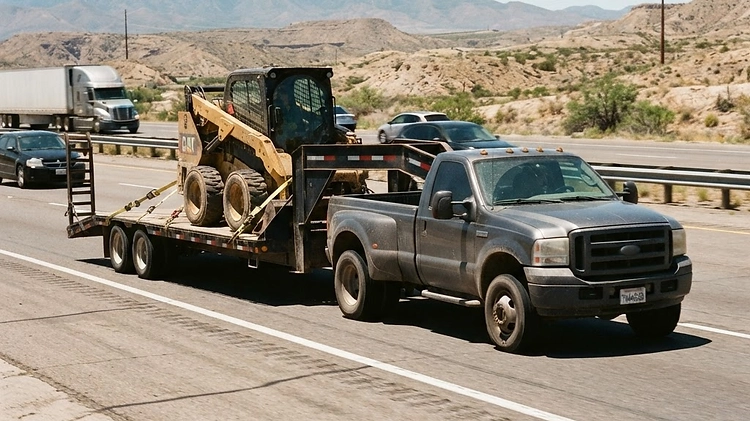
- Equipment Trailers: Capable of hauling skid steers, mini excavators, and tractors safely.
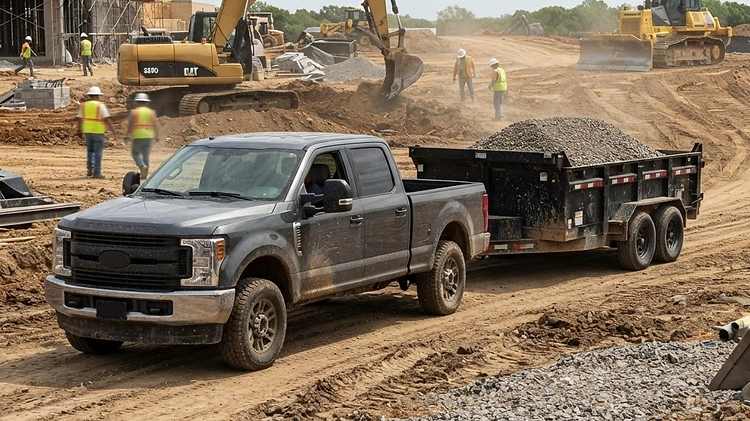
- Dump Trailers: A 14-foot dump trailer loaded with gravel can easily weigh 14,000 pounds, requiring the payload capacity of a 2500-series truck.
- Medium Gooseneck Trailers: Lighter gooseneck setups for agricultural or commercial use.

Why the 2500 Excels
Three-quarter-ton trucks often feature payload capacities ranging from 2,500 to nearly 4,000 pounds. This allows them to comfortably handle the 15% to 25% pin weight required by gooseneck and fifth-wheel trailers [10]. For example, if you are hauling a 2026 Iron Bull Trailers 7x20 TRB 10K Gravity Tilt Equipment Trailer, a 3/4-ton truck provides the stability and braking power needed for safe transport, especially when navigating busy highways or delivering trailers for sale in Texas.
One-Ton Trucks and Beyond (3500 / F-350 Dually): Heavy Commercial Hauling
When you move into the realm of one-ton trucks, particularly those with dual rear wheels (dually), you are entering commercial territory. These trucks are designed for maximum payload and stability, utilizing the dual rear wheels to distribute massive pin weights and prevent trailer sway.
Ideal Trailers for One-Ton Trucks
- Heavy Gooseneck Flatbeds: Essential for hotshot trucking and hauling multiple vehicles or large machinery.
- Large Livestock Trailers: Handling the shifting weight of live animals requires a highly stable tow vehicle.
- Massive Dump Trailers: High-capacity roll-off bins and heavy-duty dump trailers.
The Dually Advantage
If you are towing a 2027 MAXX-D YDX 8.5x32 22.5K Gooseneck, the pin weight alone could exceed 4,500 pounds. A one-ton dually provides the rear Gross Axle Weight Rating (GAWR) to support this load legally and safely. If you are running a commercial operation out of Houston, TX, a one-ton truck paired with our gooseneck trailers is the industry standard.

How Tongue Weight Dictates Your Truck Size
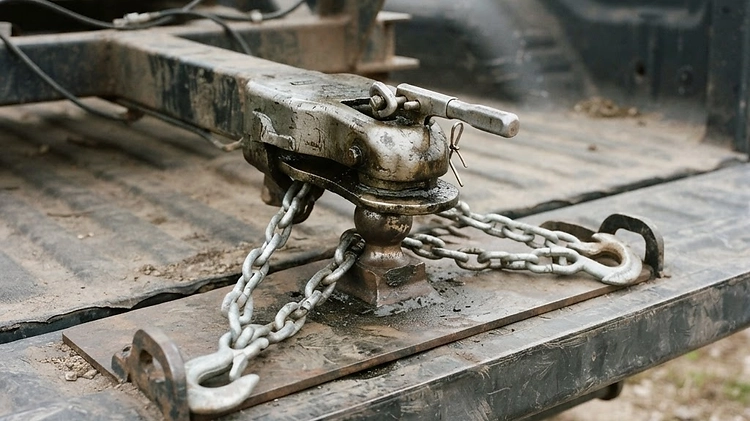
Understanding tongue weight is the key to matching your truck and trailer. Tongue weight is the downward force a trailer puts on the hitch ball. Too little tongue weight lets a trailer sway; too much overloads the rear of the tow vehicle and takes weight off the front wheels [10].
- Bumper-Pull Trailers: Require 10% to 15% of the loaded trailer weight on the tongue.
- Gooseneck/Fifth-Wheel Trailers: Require 15% to 25% of the loaded trailer weight on the pin.
To measure actual tongue load, you can disconnect the trailer and place only the tongue on a commercial scale at hitch height [2]. If you find your tongue weight exceeds your truck's payload capacity or hitch receiver rating, you must either redistribute the cargo rearward or upgrade to a larger truck. For more details on towing math, review our guide on How to Read Manufacturer Towing Guides.
Key Specifications to Check Before Upgrading
Before purchasing a new truck or trailer, always verify these numbers on the vehicle's door jamb sticker:
- Gross Vehicle Weight Rating (GVWR): The maximum allowable weight of the fully loaded truck, including tongue weight.
- Gross Combined Weight Rating (GCWR): The maximum allowable weight of the truck and trailer combined.
- Gross Axle Weight Rating (GAWR): The maximum weight the front or rear axle can support. The rear GAWR is often the limiting factor for heavy tongue weights.
- Payload Capacity: The GVWR minus the truck's curb weight. This is your true budget for passengers, cargo, and tongue weight.
Never rely on the "max towing" number in a brochure. Always calculate your specific payload requirements. For a deeper dive into safe towing limits, read our breakdown of the 80/20 Towing Rule and How to Calculate Towing Capacity.
Bottom Line
Choosing the right size truck to pull your trailer comes down to payload capacity and tongue weight, not just the advertised towing maximum. Half-ton trucks are excellent for light utility work, but stepping up to a 3/4-ton or one-ton truck is essential for heavy equipment, dump trailers, and goosenecks. Always run the numbers on your specific setup to ensure a safe, legal tow.
Ready to find the perfect trailer for your truck? Browse our extensive inventory at the Prime Trail Trailers Shop or visit our Guides Hub for more expert towing advice.
FAQ
Have Questions? We're Here to Help
Still unsure which trailer fits your needs, or need specs, pricing or delivery advice? The Prime Trail Trailers team is ready to answer your questions and help you find the right rig.
Prime Trail Trailers
Prime Trail Trailers is a family-owned trailer dealer in Markle, Indiana, stocking utility, dump, enclosed, equipment, car hauler and gooseneck trailers with nationwide delivery. This guide is based on what our customers ask us most and the trailers we sell every day.
More about Prime Trail Trailers