
How to Read Manufacturer Towing Guides: Decoding GCWR, Payload, and Trailer Ratings
Learn how to decode official manufacturer towing guides. Understand GCWR, GVWR, payload limits, and tongue weight to calculate your truck's true towing capacity.
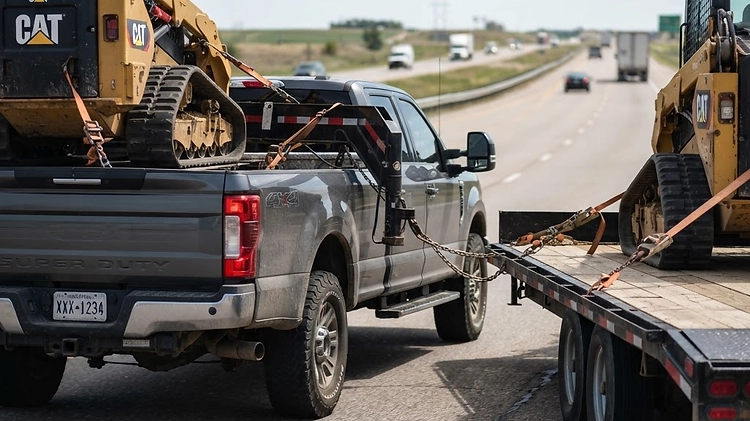
Quick Summary
Learn how to decode official manufacturer towing guides. Understand GCWR, GVWR, payload limits, and tongue weight to calculate your truck's true towing capacity.
Buying the perfect trailer means matching it safely to your tow vehicle, but the "maximum towing capacities" advertised in truck commercials are often misleading. To tow safely and legally, you need to understand how to read official manufacturer towing guides, such as the Ford RV & Trailer Towing Guide or the Chevrolet Trailering Guide. These documents contain the exact math required to keep your rig stable and compliant.
Here is your comprehensive guide to decoding the alphabet soup of towing acronyms, understanding how payload dictates your true limits, and using manufacturer guides to calculate exactly what your truck can handle.
The Danger of the "Max Towing Capacity" Myth
When a truck manufacturer advertises a 15,000-pound maximum towing capacity, that number comes with a massive asterisk. According to official towing guides, the maximum loaded trailer weight assumes a base-model towing vehicle with mandatory options, absolutely no cargo, and only a 150-pound driver.

As the 2025 Ford RV & Trailer Towing Guide explicitly states: "Weight of additional options, passengers, cargo and hitch must be deducted from this weight." If you load your truck with a family of four, a toolbox, a heavy-duty weight distribution hitch, and a full tank of fuel, your actual towing capacity drops significantly. Relying solely on the brochure's headline number is a fast track to overloaded axles and dangerous towing conditions.
Decoding the Alphabet Soup: GVWR, GCWR, and GAWR
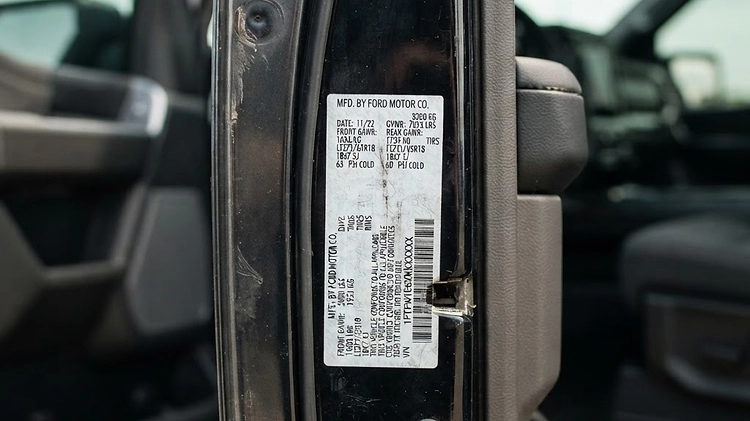
To read a towing guide effectively, you must understand the three primary weight ratings that govern your vehicle's structural limits. You can find these numbers on your truck's Safety Compliance Certification Label (usually located on the driver's side door jamb) and within the manufacturer's towing charts.
- GVWR (Gross Vehicle Weight Rating): The absolute maximum your truck can weigh when fully loaded. This includes the curb weight of the truck, all passengers, cargo, fuel, and the downward force of the trailer's tongue weight.
- GCWR (Gross Combined Weight Rating): The maximum allowable weight of the fully loaded tow vehicle and the fully loaded trailer combined. The measured Gross Combined Weight (GCW) on a scale must never exceed this number.
- GAWR (Gross Axle Weight Rating): The maximum weight a single axle can support. When towing, the Rear GAWR is critical, as the rear axle takes the brunt of the trailer's tongue weight.
For a deeper dive into how these numbers interact, review our guide on how to calculate towing capacity using the GCWR minus payload formula.
How Payload Capacity Dictates Your True Towing Limit
Payload capacity is the most common bottleneck in towing. Payload is calculated by subtracting your truck's base curb weight from its GVWR.


When you hook up a trailer, the tongue weight (the downward force on the hitch) counts directly against your truck's payload. The 2024 Chevrolet Trailering Guide notes: "The GVWR should always be greater than or equal to the weight of your vehicle, passengers, cargo and tongue weight."
If your truck has a payload capacity of 1,800 pounds, and you put 600 pounds of passengers and gear in the cab and bed, you only have 1,200 pounds of payload remaining for tongue weight. If you are towing a heavy load, you may max out your payload long before you reach the truck's advertised maximum towing capacity. Understanding this relationship is crucial when browsing equipment trailers for sale or sizing up a new rig.
Calculating Conventional vs. Gooseneck Tongue Weight
Towing guides provide strict parameters for tongue weight percentages to ensure trailer stability and prevent sway.
- Conventional (Bumper Pull) Trailers: The tongue weight should be 10% to 15% of the total loaded trailer weight.
- Gooseneck and 5th-Wheel Trailers: The pin weight should be 15% to 25% of the total loaded trailer weight.
Because gooseneck trailers transfer a higher percentage of their weight to the truck, they require tow vehicles with substantial payload capacities. If you are hauling heavy machinery in Texas or running hotshot freight out of Houston, you must account for this increased pin weight.
To measure this accurately, manufacturers recommend using a commercial scale or a specialized hydraulic trailer tongue weight scale (like a Sherline scale) placed directly under the hitch ball or kingpin. For more details on balancing these loads, see our trailer GVWR vs. payload capacity guide.
The Role of SAE J2807 Towing Standards
When reading modern towing guides from Ford, GM, or Ram, you will frequently see references to SAE J2807. This is a standardized set of testing procedures developed by the Society of Automotive Engineers to determine GCWR and calculate the Trailer Weight Rating (TWR) for tow vehicles.

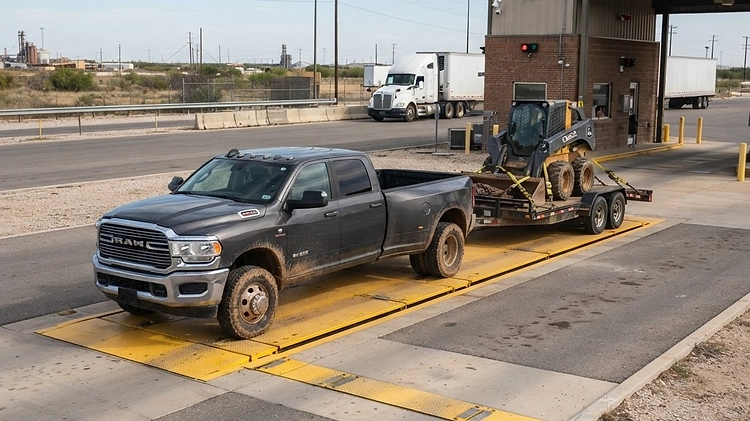
Before J2807, manufacturers used their own internal testing metrics, making it impossible to compare a Ford F-250's tow rating directly against a Chevy Silverado 2500. Today, J2807 ensures that all trucks are tested under the same grueling conditions—including acceleration, highway grade climbing (like the Davis Dam grade), and braking performance. You can learn more about these tests in our breakdown of SAE J2807 towing standards.
Step-by-Step: How to Use a Towing Guide for Your Specific Truck
To find your exact towing limits using a manufacturer guide, follow these steps:
- Identify Your Exact Configuration: Tow ratings vary wildly based on cab size (Regular, SuperCab, Crew Cab), bed length, engine type, transmission, and axle ratio. Find the exact row in the towing chart that matches your truck.
- Locate the GCWR: Find the Gross Combined Weight Rating for your specific build.
- Weigh Your Loaded Truck: Take your truck—loaded with all passengers, cargo, and your hitch hardware—to a public scale.
- Do the Math: Subtract your truck's actual loaded weight from the GCWR. The resulting number is the absolute maximum loaded trailer weight you can safely tow.
- Verify Payload and GAWR: Ensure that 10-15% of that trailer weight (for conventional towing) will not push your truck over its GVWR or Rear GAWR.
Bottom Line
Manufacturer towing guides are the ultimate authority on what your truck can safely handle. By ignoring the marketing hype and doing the math on GCWR, payload, and tongue weight, you protect your vehicle's drivetrain and ensure a safe haul.
Whether you are upgrading your tow vehicle with a 2026 BEDBOSS Dually ArmorBed Flatbed Truck Bed or investing in a heavy-duty 2027 MAXX-D YDX 22.5K Gooseneck, knowing your numbers is the first step. Explore our full guides hub for more expert towing advice, or browse our inventory of gooseneck trailers to find the perfect match for your truck's capacity.
FAQ
Have Questions? We're Here to Help
Still unsure which trailer fits your needs, or need specs, pricing or delivery advice? The Prime Trail Trailers team is ready to answer your questions and help you find the right rig.
Prime Trail Trailers
Prime Trail Trailers is a family-owned trailer dealer in Markle, Indiana, stocking utility, dump, enclosed, equipment, car hauler and gooseneck trailers with nationwide delivery. This guide is based on what our customers ask us most and the trailers we sell every day.
More about Prime Trail Trailers