
Trailer GVWR vs. Payload Capacity: Why Curb Weight Dictates Your True Hauling Limit
Learn how to calculate your trailer's true payload capacity by understanding GVWR, curb weight, and the hidden impact of accessories on your hauling limits.
Quick Summary
Learn how to calculate your trailer's true payload capacity by understanding GVWR, curb weight, and the hidden impact of accessories on your hauling limits.
When you purchase a heavy-duty trailer, the most prominent number on the spec sheet is usually the GVWR (Gross Vehicle Weight Rating). However, assuming your 14,000-pound GVWR trailer can actually haul 14,000 pounds of cargo is a dangerous and common mistake that leads to overloaded axles, blown tires, and severe accidents. To haul safely and legally, you must understand the critical relationship between GVWR, curb weight, and true payload capacity.
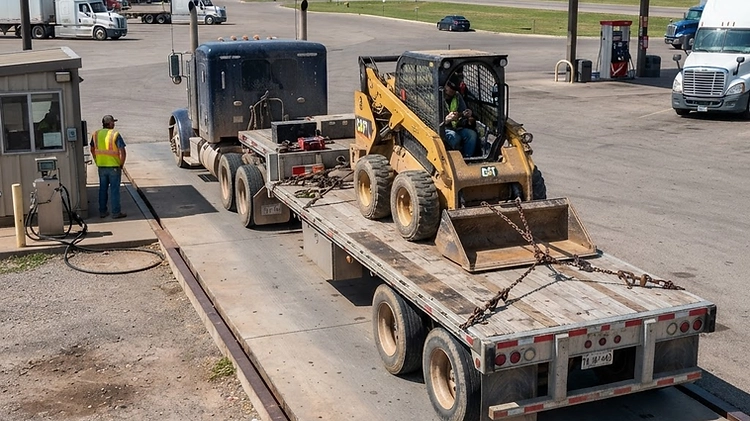
In this comprehensive guide, we will break down exactly how to calculate your trailer's actual payload limit, how aftermarket accessories eat into your hauling capacity, and why your tow vehicle's payload rating is just as important as your trailer's specs. Whether you are hauling skid steers in Texas or delivering materials across Houston, mastering these weight ratings is non-negotiable for commercial and recreational towers alike.
What is Trailer GVWR (Gross Vehicle Weight Rating)?
The Gross Vehicle Weight Rating (GVWR) is the absolute maximum safe weight of your trailer when fully loaded. This number is determined by the manufacturer's engineering team and is based on the weakest link in the trailer's construction—typically the axles, frame, suspension, or tires.

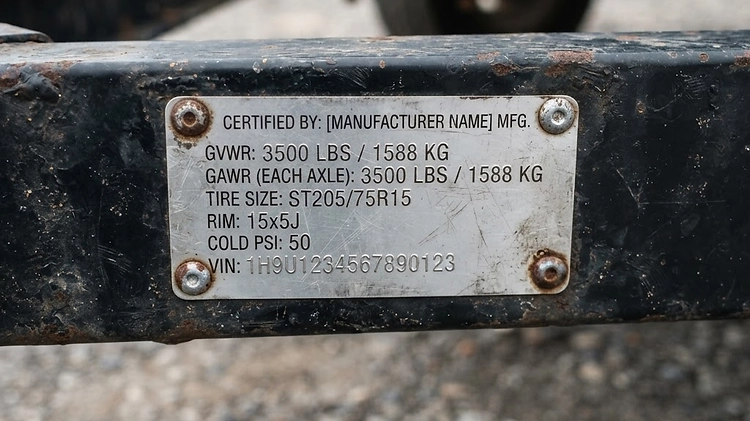
For example, if you are looking at equipment trailers with dual 7,000-pound axles, the theoretical axle capacity is 14,000 pounds. The manufacturer will assign a GVWR that reflects this limit, ensuring the frame and braking system can safely stop that amount of mass. You can always find the official GVWR on the trailer's VIN plate or federal certification label, usually located on the front driver-side frame or tongue.
It is critical to understand that GVWR is a structural limit, not a cargo limit. It includes the weight of the trailer itself. Exceeding the GVWR is illegal and voids warranties, putting immense stress on the trailer's components and your tow vehicle's braking system.
Understanding Trailer Curb Weight (Empty Weight)
To determine what you can actually put on the trailer, you first need to know what the trailer weighs when it is completely empty. This is known as the curb weight or dry weight.
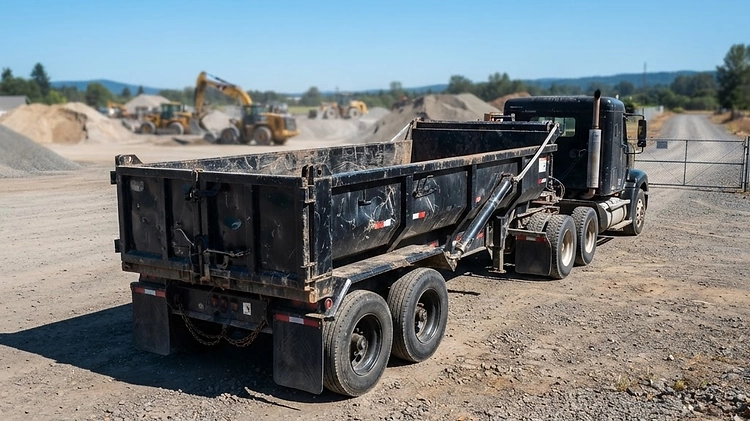
Curb weight is the total weight of the trailer as it sits on the lot, including all standard factory equipment, decking, ramps, and essential fluids (like hydraulic fluid in a dump trailer). For instance, a heavy-duty 14-foot dump trailer might have a GVWR of 14,000 pounds, but its robust steel frame, hydraulic scissor hoist, and heavy-gauge walls mean the trailer itself weighs 4,200 pounds empty.
If you are browsing dump trailers for your construction business, always check the curb weight before buying. A heavier curb weight means a stronger, more durable trailer, but it directly reduces the amount of payload you can legally carry. If you need to maximize payload, you might consider aluminum trailers, which offer a lower curb weight compared to steel, though at a higher price point.
The Formula: How to Calculate True Payload Capacity
Payload capacity is the actual weight of the cargo, tools, equipment, and accessories you can safely load onto the trailer. Calculating it requires a simple but vital formula:
GVWR - Curb Weight = True Payload Capacity

Let's look at a real-world example using the 2026 Iron Bull Trailers 7x20 TRB 10K Gravity Tilt Equipment Trailer. If this trailer has a GVWR of 10,000 pounds and a factory curb weight of 3,100 pounds, your calculation looks like this:
10,000 lbs (GVWR) - 3,100 lbs (Curb Weight) = 6,900 lbs (Payload Capacity)
This means the absolute maximum weight of the equipment you can load onto this trailer is 6,900 pounds. If you try to load an 8,000-pound skid steer onto this trailer, you will exceed the GVWR by 1,100 pounds, risking catastrophic tire blowouts or axle failure on the highway.
The Hidden Payload Killers: Accessories and Modifications
One of the most common mistakes buyers make is forgetting that aftermarket accessories count against payload capacity. The curb weight listed on the manufacturer's certificate of origin (MCO) reflects the trailer as it was built. If you add equipment after the fact, you are eating into your payload.
Common payload-reducing accessories include:
- Toolboxes and Gear: A steel tongue-mounted toolbox filled with chains, binders, and tools can easily add 150-300 pounds.
- Spare Tires: A heavy-duty 14-ply spare tire and steel wheel can weigh 75-100 pounds.
- Upgraded Decking: Replacing standard pine decking with rough oak or adding steel traction plates increases the trailer's empty weight.
- Winches and Batteries: A 12,000-pound winch and a deep-cycle marine battery will add another 120 pounds to the nose of the trailer.
If you add 500 pounds of accessories to the Iron Bull trailer mentioned above, your new usable payload capacity drops from 6,900 pounds to 6,400 pounds. Always weigh your trailer at a certified CAT scale after outfitting it for work to get your true, real-world curb weight.
Tow Vehicle Payload vs. Trailer Payload: The Tongue Weight Overlap
Understanding your trailer's payload is only half the battle; you must also account for how that loaded trailer affects your tow vehicle. This is where many hotshot drivers and contractors get into trouble.
When you load a trailer, 10% to 15% of the total loaded weight (for bumper pull trailers) or 20% to 25% (for gooseneck trailers) must rest on the hitch to prevent dangerous trailer sway. This is called tongue weight or pin weight.

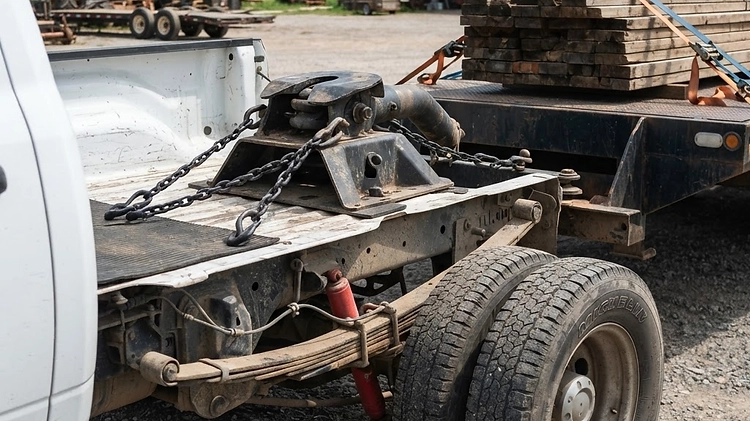
Crucially, trailer tongue weight counts against your tow vehicle's payload capacity.
For example, if you are towing a fully loaded 14,000-pound bumper pull trailer, you will have roughly 1,400 to 2,100 pounds of tongue weight pressing down on your truck's rear axle. If your half-ton pickup truck only has a payload capacity of 1,800 pounds, that tongue weight alone could max out your truck's suspension—before you even account for the driver, passengers, or tools in the truck bed.
This is why commercial haulers often upgrade to heavy-duty trucks equipped with specialized beds, such as the 2026 Wil-Ro Liberty Truck Bed, which are designed to handle massive gooseneck pin weights without sagging.
To dive deeper into how tongue weight affects your truck, read our comprehensive guide on The Payload Bottleneck: Why Your Truck Can't Tow Its Maximum Rating in 2026.
Key Specifications to Check Before Loading
Before you drive your equipment onto the deck, run through this quick checklist to ensure you are within safe operating limits:
- Verify the Trailer GVWR: Check the VIN sticker. Never guess.
- Know Your True Curb Weight: Weigh the empty trailer with all your daily tools and accessories on a commercial scale. For a deep dive on this process, see How to Weigh a Trailer at a Public Scale: Calculate True Payload.
- Calculate Payload: Subtract the true curb weight from the GVWR.
- Check Axle Ratings (GAWR): Ensure the load is balanced so neither axle exceeds its Gross Axle Weight Rating. Learn more in our Trailer Axle Weight Ratings (GAWR) Explained guide.
- Verify Tire Capacity: Ensure your tires are rated to carry the load and are inflated to the maximum cold PSI listed on the sidewall. See our Trailer Tire Ply Ratings and Load Index Explained for more details.
- Confirm Tow Vehicle GCWR: Ensure the combined weight of the loaded truck and loaded trailer does not exceed the Gross Combined Weight Rating. Read Gross Combined Weight Rating (GCWR) vs. GVWR: The Ultimate Towing Math Guide for the exact math.
Bottom Line
Your trailer's GVWR is a critical safety ceiling, but your payload capacity is the number that actually dictates what you can haul on a daily basis. By understanding the relationship between GVWR, curb weight, and accessory weight, you can prevent costly breakdowns, avoid DOT fines, and keep the roads safe.
If you are looking for a trailer with the perfect balance of durability and high payload capacity, explore our full inventory at the Prime Trail Trailers Shop. For more expert advice on towing safely, visit our Guides Hub to access our complete library of towing and capacity resources.
FAQ
Have Questions? We're Here to Help
Still unsure which trailer fits your needs, or need specs, pricing or delivery advice? The Prime Trail Trailers team is ready to answer your questions and help you find the right rig.
Prime Trail Trailers
Prime Trail Trailers is a family-owned trailer dealer in Markle, Indiana, stocking utility, dump, enclosed, equipment, car hauler and gooseneck trailers with nationwide delivery. This guide is based on what our customers ask us most and the trailers we sell every day.
More about Prime Trail Trailers