
ST vs. LT Trailer Tires: Which Is Safest for Heavy Towing in 2026?
Discover the critical differences between ST (Special Trailer) and LT (Light Truck) tires to ensure maximum safety, stability, and payload capacity.
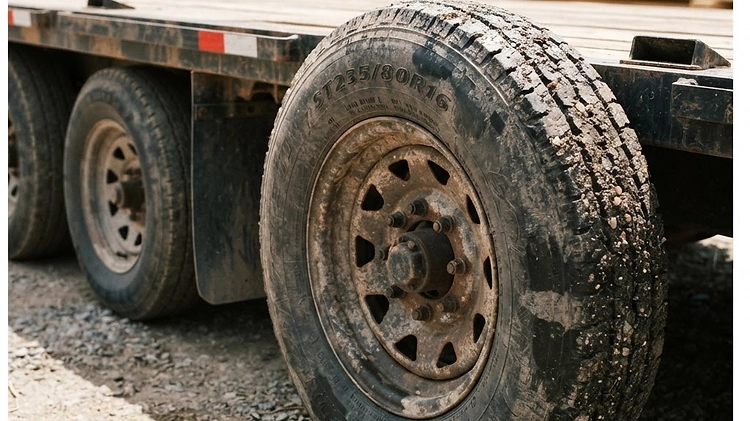
When it comes to outfitting your trailer for heavy hauling, the debate between ST (Special Trailer) and LT (Light Truck) tires is one of the most common—and consequential—discussions in the industry. Choosing the wrong tire type can lead to catastrophic blowouts, severe trailer sway, and compromised load capacities. In this comprehensive guide, we will break down the engineering differences between ST and LT tires, explain why sidewall stiffness matters for load distribution, and help you determine the safest option for your specific towing needs.\n\n## What Are ST (Special Trailer) Tires?\n\nST tires are engineered specifically for the unique demands of trailing axles. Unlike the tires on your tow vehicle, trailer tires do not need to transmit power to the ground or steer the vehicle. Instead, their primary job is to carry heavy loads with maximum stability while resisting the lateral forces that cause trailer sway.\n\n

\n\nThe most defining characteristic of an ST tire is its exceptionally stiff sidewall. This rigidity is achieved through heavy-duty polyester or steel cords that prevent the tire from flexing under heavy vertical loads. When you are hauling a skid steer on an equipment trailer or transporting a heavy load on a hotshot flatbed, that sidewall stiffness keeps the trailer tracking straight behind the tow vehicle. Furthermore, ST tires are formulated with specialized rubber compounds designed to resist UV degradation and dry rot, which is crucial since trailers often sit idle for extended periods. For a deeper dive into how these tires handle weight, check out our Trailer Tire Ply Ratings and Load Index Explained.\n\n## What Are LT (Light Truck) Tires?\n\nLT tires are designed for the drive and steer axles of heavy-duty pickup trucks and commercial vans. They are built to provide a balance of load-carrying capacity, traction, and passenger comfort.\n\nWhile LT tires are incredibly durable and often feature aggressive tread patterns for off-road or all-weather traction, their sidewalls are inherently more flexible than those of ST tires. This flexibility is necessary to absorb road impacts and provide a comfortable ride for the driver. However, when placed on a trailer, this same flexibility can become a liability. The softer sidewalls allow for more lateral movement, which can exacerbate trailer sway, especially in crosswinds or during evasive maneuvers. If you are calculating your total rig setup, understanding your truck's capabilities is just as important; see our guide on The Payload Bottleneck: Why Your Truck Can't Tow Its Maximum Rating.\n\n## ST vs. LT Tires: Key Differences in Construction and Performance\n\nUnderstanding the structural differences between these two tire types is essential for safe towing. While some hotshot truckers swear by LT tires for their high-speed durability, the vast majority of trailer manufacturers and tire engineers recommend ST tires for trailing axles.\n\n

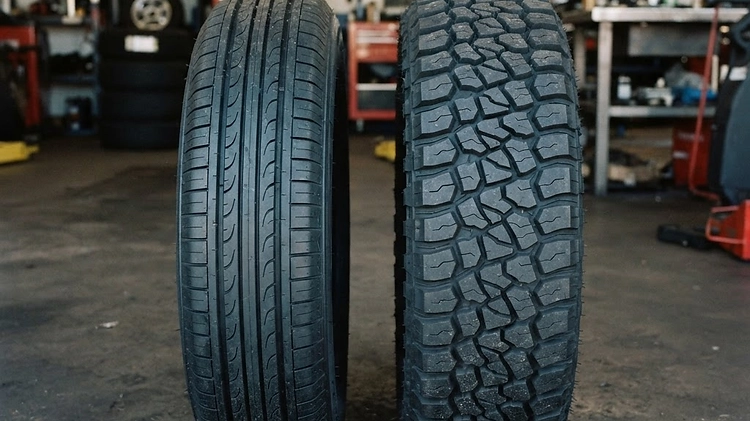
\n\nHere is a breakdown of how they compare:\n\n* Sidewall Stiffness: ST tires have rigid sidewalls to prevent sway and handle high vertical loads. LT tires have flexible sidewalls for ride comfort and traction.\n* Tread Design: ST tires feature shallow, continuous ribs that reduce rolling resistance and run cooler. LT tires have deeper, more aggressive treads that generate more heat and rolling resistance.\n* Rubber Compounds: ST tires use compounds optimized for UV resistance and anti-aging. LT tires use compounds optimized for grip, wear resistance, and heat dissipation during powered rotation.\n* Load Capacity: Size for size, ST tires generally offer a higher load capacity than LT tires because they are designed to carry weight rather than provide traction.\n* Speed Ratings: Historically, ST tires were limited to 65 mph. However, modern ST tires often carry L (75 mph) or M (81 mph) speed ratings. LT tires typically have higher speed ratings, but towing at excessive speeds remains dangerous regardless of the tire.\n\nFor more information on balancing your load across these tires, review our Trailer Axle Weight Distribution Guide and learn How to Weigh a Trailer at a Public Scale.\n\n## The Dangers of Using Passenger (P) Tires on a Trailer\n\nWhile the ST vs. LT debate has valid points on both sides depending on the application, there is zero debate when it comes to Passenger (P) tires: they should never be used on a trailer. P-metric tires are designed for lightweight sedans and SUVs. Their sidewalls are extremely thin, and their load capacities are entirely inadequate for the dynamic forces of towing.\n\nUsing P-metric tires on a trailer is a guaranteed recipe for a blowout. The sidewalls will flex violently under the weight, generating massive amounts of heat until the tire structurally fails. Always ensure your trailer is equipped with tires specifically rated for heavy loads. If you are setting up a new rig, you can browse our selection of equipment trailers and hotshot trailers which come factory-equipped with proper ST rubber. For those in high-demand areas, we frequently deliver trailers for sale in Texas and Houston, TX with upgraded 14-ply ST tires.\n\n## Key Specifications: What to Look For When Upgrading Trailer Tires\n\nWhen it is time to replace your trailer tires, you need to look beyond just the size printed on the sidewall. The load range, ply rating, and speed rating are critical specifications that dictate how much weight the tire can safely carry and at what speed.\n\n


\n\n### Load Range and Ply Rating\n\nThe load range (indicated by a letter such as C, D, E, F, or G) corresponds to the tire's ply rating and maximum load capacity at a specific tire pressure (PSI). For heavy commercial hauling, you should look for Load Range G (14-ply rated) or higher. Always inflate your tires to the maximum cold PSI listed on the sidewall to achieve the full load capacity. Proper inflation is also critical for maintaining your Trailer Tongue Weight Calibration.\n\n### Speed Rating\n\nNever exceed the speed rating of your trailer tires. Heat is the number one enemy of any tire, and driving faster than the tire is designed to handle will cause the internal components to separate. Look for modern ST tires with an M speed rating (81 mph) for an added margin of safety at highway speeds.\n\n### Matching Axle Capacity\n\nEnsure that the combined load capacity of the tires on a given axle exceeds the Gross Axle Weight Rating (GAWR). For a detailed breakdown of this math, see our guide on Trailer Axle Weight Ratings (GAWR) Explained and our comprehensive Gross Combined Weight Rating (GCWR) vs. GVWR Guide.\n\n## Bottom Line: Which Should You Choose for Your Trailer?\n\nFor 95% of towing applications, ST (Special Trailer) tires are the safest and most reliable choice. Their stiff sidewalls provide superior stability, reduce trailer sway, and offer higher load capacities size-for-size compared to LT tires. While some specialized commercial hotshot haulers may opt for all-steel LT tires for extreme highway mileage, the vast majority of utility, dump, and equipment trailers should remain on high-quality ST rubber.\n\nIf you are looking for a heavy-duty setup ready for the road, check out the 2026 Horizon FTZ 8.5x40 16k Gooseneck HotShot Trailer or the 2027 Horizon HET 8.5x20 Gravity Tilt Equipment Trailer. For more expert advice on outfitting your rig, visit our Guides Hub or explore our full Towing Capacity vs. Payload Capacity Guide. Whether you are hauling locally or looking for trailers for sale in Florida, Prime Trail Trailers has the inventory and expertise to keep you towing safely.
FAQ
Have Questions? We're Here to Help
Still unsure which trailer fits your needs, or need specs, pricing or delivery advice? The Prime Trail Trailers team is ready to answer your questions and help you find the right rig.