
Trailer Tongue Weight Calibration: The 2026 Guide to DIY Measurement & Load Balancing
Learn how to accurately measure and calibrate your trailer tongue weight using the DIY bathroom scale method to ensure safe towing and eliminate trailer sway.
Proper tongue weight calibration is the single most important factor in preventing trailer sway and ensuring a safe, stable tow. Whether you are hauling a heavy load on a flatbed or packing an enclosed cargo trailer, guessing your tongue weight is a dangerous game. When the downward force on your hitch ball is too light, the trailer becomes unstable and prone to fishtailing. When it is too heavy, it unloads your tow vehicle's front tires, compromising steering and braking. This guide breaks down exactly how to calibrate your tongue weight using simple at-home methods, including the highly accurate DIY bathroom scale technique.\n\n## What is Trailer Tongue Weight and Why Does It Matter?\n\nTongue weight is the downward force that the tongue of the trailer exerts on the hitch connected to the tow vehicle. It is a critical leverage equation that dictates how your entire rig handles at highway speeds. According to industry standards, conventional bumper-pull trailers require a tongue weight between 10% and 15% of the gross trailer weight (GTW) to track straight and brake evenly.\n\n

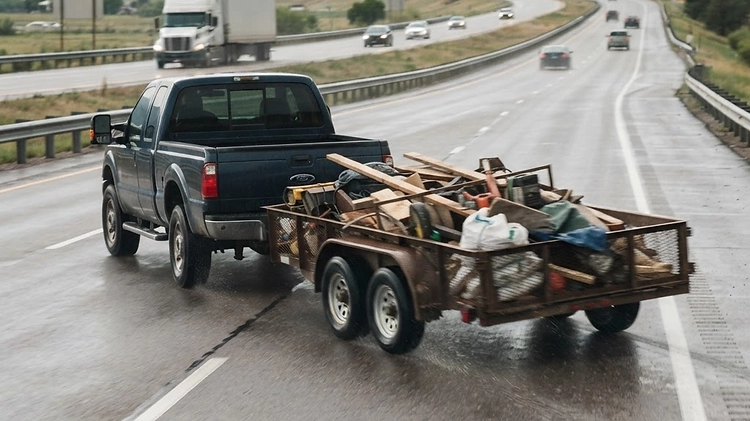
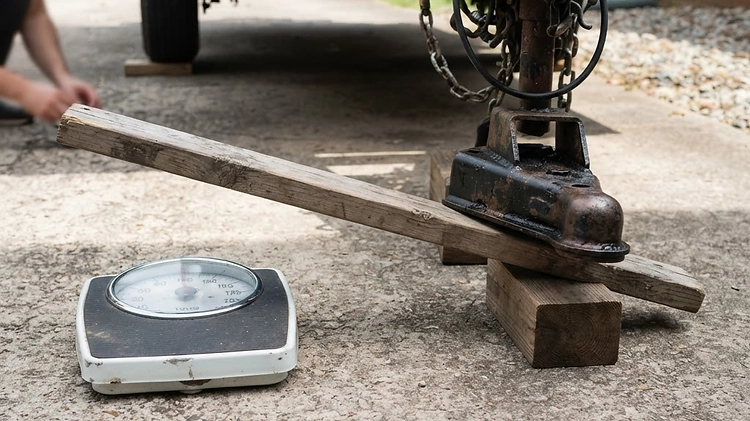
\n\nIf your tongue weight falls below 10%, the trailer's center of gravity shifts too far behind the axle. This creates an aerodynamic instability where even minor steering inputs or crosswinds can induce severe trailer sway. Conversely, if the tongue weight exceeds 15%, the rear suspension of your tow vehicle compresses excessively. This lifts the front wheels, reducing steering responsiveness and extending your stopping distance significantly. For those hauling heavy equipment on flatbed trailers or deckover trailers, getting this balance right is non-negotiable.\n\n## The 10-15% Rule: Finding Your Target Weight\n\nDifferent trailers have slightly different ideal tongue weight percentages based on their aerodynamics and axle placement. Here is a quick reference for common trailer types:\n\n* Cargo and Utility Trailers: 10% to 15% (Target 12% for optimal stability)\n* Travel Trailers: 12% to 15%\n* Boat Trailers: 7% to 10% (Due to aerodynamic hull designs)\n* Gooseneck and Fifth-Wheel Trailers: 15% to 25% (Since the load sits directly over the truck axle)\n\nFor example, if you are towing a fully loaded 2026 BEDBOSS Dually ArmorBed Flatbed Truck Bed setup with a 7,000 lb gross trailer weight, your target tongue weight should be between 700 lbs and 1,050 lbs. Always consult your guides hub and specific manufacturer recommendations for your exact model.\n\n## How to Measure Tongue Weight at Home (The Bathroom Scale Method)\n\nWhile dedicated tongue weight scales are fantastic tools, you don't need to spend hundreds of dollars to get an accurate reading. If your expected tongue weight is under 300 lbs, you can place the trailer jack directly onto a standard bathroom scale (use a small piece of plywood to protect the scale). However, for heavier loads, you can use a simple mechanical lever system to multiply the scale's capacity.\n\n


\n\n### Step-by-Step DIY Setup\n\n1. Park on a Level Surface: Ensure your trailer is on flat ground and the wheels are securely chocked.\n2. Prepare the Lever: Lay a sturdy 2x4 board (at least 3.5 feet long) flat on the ground directly below the trailer coupler.\n3. Position the Scale and Pivot: Place your bathroom scale at one end of the board and a wooden block or brick of equal height at the other end. The distance between the center of the scale and the center of the block should be exactly 3 feet.\n4. Place the Pipes: Place a short piece of pipe horizontally across the center of the scale, and another across the center of the block. Lay the 2x4 on top of these pipes.\n5. Lower the Trailer: Place a third pipe across the 2x4, exactly 1 foot away from the pipe on the block (and 2 feet away from the scale). Carefully lower the trailer jack onto this middle pipe.\n6. Calculate the Weight: Read the weight displayed on the bathroom scale and multiply it by 3. This is your actual tongue weight.\n\nThis method is highly accurate and perfect for calibrating loads before heading out to jobsites, whether you are hauling construction materials in trailers for sale in Texas or transporting vehicles across state lines.\n\n## Alternative Methods: Commercial Scales and Dedicated Hitches\n\nIf the DIY method isn't for you, there are other reliable ways to measure tongue weight:\n\n* CAT Scales (Vehicle Scales): Visit a local truck stop and weigh your tow vehicle without the trailer. Then, hook up the trailer and weigh the tow vehicle again (keeping the trailer axles off the scale). The difference between the two weights is your tongue weight.\n* Dedicated Tongue Weight Scales: Devices like the Sherline scale are placed directly under the jack and provide an instant reading.\n* Weigh Safe Hitches: These premium hitches feature a built-in hydraulic scale that displays your tongue weight in real-time, making load adjustments incredibly easy.\n\nIf you are consistently hauling heavy loads, such as a 2027 PJ T6 7x20 Gooseneck Gravity Tilt Equipment Trailer, investing in a dedicated scale or a Weigh Safe hitch is highly recommended. You can also review our Gross Combined Weight Rating (GCWR) vs. GVWR: The Ultimate Towing Math Guide for more comprehensive towing calculations.\n\n## How to Adjust and Balance Your Trailer Load\n\nIf your measurement reveals that your tongue weight is outside the 10-15% window, you must adjust your cargo. Do not rely on a weight distribution hitch to fix a poorly balanced load; these hitches are designed to level the tow vehicle, not correct improper cargo placement.\n\n

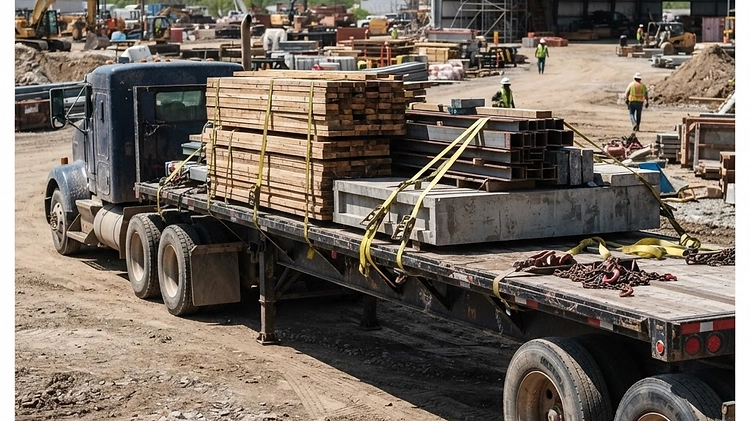
\n\nFollow the 60/40 rule: approximately 60% of your cargo weight should be positioned ahead of the trailer axles, with the remaining 40% behind. If your tongue weight is too low, move heavy items (like toolboxes, engine blocks, or generators) forward toward the coupler. If it is too high, shift some weight slightly rearward, but never place the majority of the weight behind the axles. Always re-secure your load with heavy-duty ratchet straps after making adjustments, especially if you are navigating busy highways near Atlanta, GA.\n\n## Bottom Line\n\nTongue weight calibration is not a guessing game—it is a precise measurement that dictates the safety of your tow. By utilizing the DIY bathroom scale method or visiting a commercial scale, you can ensure your load falls perfectly within the 10-15% sweet spot. Proper calibration prevents trailer sway, protects your tow vehicle's suspension, and ensures you arrive at your destination safely. For more expert advice on towing capacities and to browse our extensive inventory of heavy-duty haulers, visit the Prime Trail Trailers Shop today.
FAQ
Have Questions? We're Here to Help
Still unsure which trailer fits your needs, or need specs, pricing or delivery advice? The Prime Trail Trailers team is ready to answer your questions and help you find the right rig.