
How Trailer Accessories and Upgrades Reduce Your True Payload Capacity
Discover how aftermarket trailer accessories like toolboxes, winches, and spare tires increase your curb weight and directly reduce your true payload capacity.

Quick Summary
Discover how aftermarket trailer accessories like toolboxes, winches, and spare tires increase your curb weight and directly reduce your true payload capacity.
When you purchase a new trailer, the manufacturer provides a specific Gross Vehicle Weight Rating (GVWR) and an estimated empty weight (curb weight). However, the moment you start adding aftermarket accessories—like steel toolboxes, heavy-duty winches, or upgraded decking—you are fundamentally altering the math. Every pound of equipment permanently attached to your trailer eats directly into your available payload capacity.
Understanding how these modifications impact your hauling limits is critical for safety, legal compliance, and preventing premature wear on your suspension. In this guide, we will break down how common trailer upgrades affect your true payload capacity and how to calculate your adjusted limits before hitting the road.
The Payload Formula: Why Every Ounce Matters

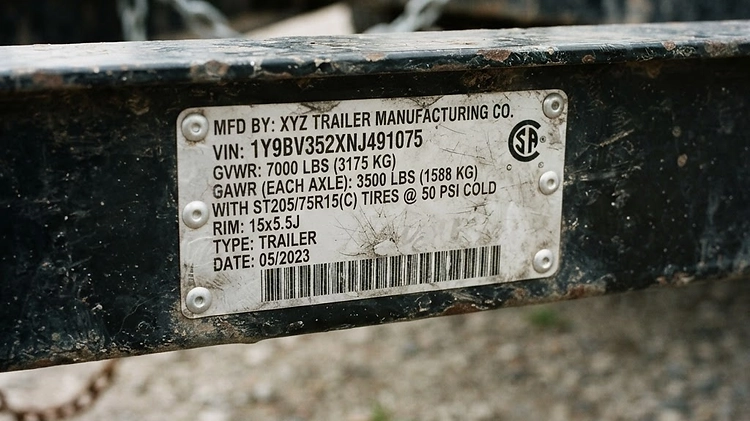
To understand how accessories impact your hauling capabilities, you first need to understand the fundamental payload formula. As outlined by industry standards, your maximum payload capacity is calculated by subtracting the trailer's empty weight from its GVWR.
GVWR – Curb Weight = True Payload Capacity
For example, if you purchase a flatbed trailer with a GVWR of 14,000 lbs and a factory curb weight of 4,000 lbs, your initial payload capacity is 10,000 lbs. However, this factory curb weight only accounts for the trailer as it rolled off the assembly line. It does not include the 300-pound steel toolbox you bolted to the tongue, the 150-pound winch, or the 100-pound spare tire mount. If you fail to account for these additions, you risk overloading your axles and tires, which can lead to catastrophic blowouts or structural failure. For a deeper dive into these baseline metrics, review our guide on Trailer GVWR vs. Payload Capacity.
Common Trailer Accessories and Their Hidden Weight Penalties

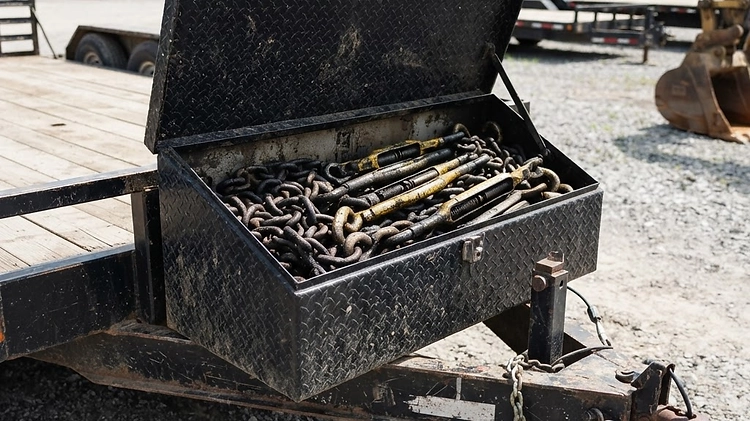
When outfitting equipment trailers for daily commercial use, it is easy to accumulate hundreds of pounds in accessories. Here is a breakdown of common upgrades and their approximate weight penalties:
- Steel Toolboxes: 150 to 300 lbs (empty). Once filled with chains, binders, and tools, a single tongue box can easily add 500 lbs to your curb weight.
- Heavy-Duty Winches and Batteries: A 12,000-lb commercial winch, mounting plate, and dedicated deep-cycle battery can add 150 to 250 lbs.
- Spare Tires and Mounts: A single 14-ply G-rated spare tire mounted on a steel wheel weighs approximately 80 to 100 lbs.
- Upgraded Decking: Replacing standard treated pine with rough oak or adding steel traction plates can increase the deck weight by 20% to 30%.
- Drive-Over Fenders: Upgrading from standard removable fenders to heavy-duty steel drive-over fenders can add 100 to 200 lbs.
If you add a toolbox, a winch, and dual spare tires to your trailer, you may inadvertently reduce your payload capacity by nearly 1,000 lbs. This is especially critical for hotshot drivers operating trailers for sale in Texas or other heavy-hauling regions where DOT scales are strictly enforced.
How Tow Vehicle Upgrades Affect GCWR and Payload

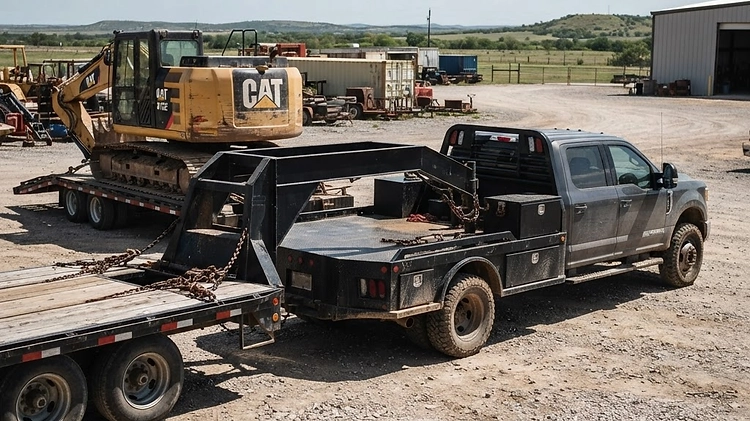
It is not just trailer accessories that impact your hauling limits; modifications to your tow vehicle also play a significant role. Your truck's Gross Combined Weight Rating (GCWR) is the maximum allowable weight of the fully loaded truck and the fully loaded trailer combined.
If you install a heavy-duty steel bumper, a headache rack, or a custom truck bed—such as the 2026 BEDBOSS Dually ArmorBed Flatbed Truck Bed—you are increasing the truck's curb weight. This reduces the truck's available payload, which in turn limits the amount of tongue weight it can safely support. Understanding the relationship between your truck's weight and your trailer's capacity is essential. For more information on combined ratings, see our GCWR vs. GVWR Towing Math Guide.
Calculating Your Adjusted Payload Capacity
The only way to know your true, adjusted payload capacity is to weigh your fully outfitted trailer on a certified scale. Relying on the manufacturer's sticker after you have made modifications is a dangerous guessing game.
- Outfit the Trailer: Install all permanent accessories, including toolboxes, winches, and spare tires. Load your toolboxes with the chains, binders, and gear you carry daily.
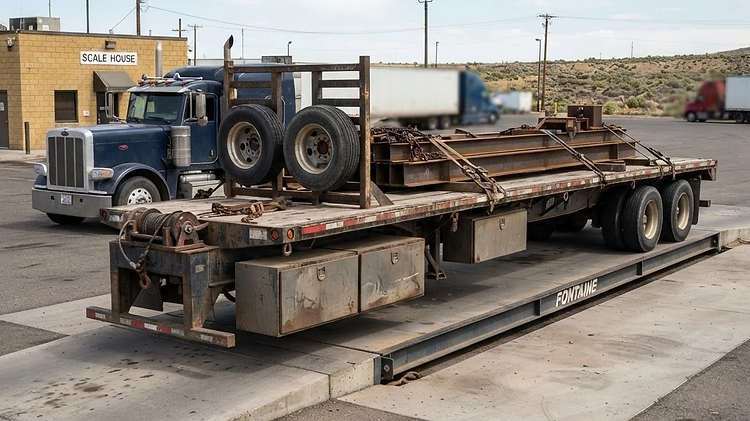
- Visit a Public Scale: Take the empty (but fully outfitted) trailer to a CAT scale or local weigh station. If you are operating near Houston, TX, there are numerous commercial scales available along major interstates.
- Weigh the Setup: Weigh the truck and trailer together, then weigh the truck alone to isolate the trailer's true curb weight. For step-by-step instructions, read our guide on How to Weigh a Trailer at a Public Scale.
- Do the Math: Subtract this new, real-world curb weight from the trailer's GVWR to find your true payload capacity.
Strategies to Maximize Payload Without Sacrificing Utility
If you find that your accessories are eating up too much of your payload capacity, there are ways to optimize your setup.
First, consider swapping heavy steel components for aluminum. An aluminum tongue box weighs significantly less than its steel counterpart while offering similar weather protection. Second, evaluate what you actually need to carry. Do you need two spare tires for local hauls, or is one sufficient? Finally, if you consistently max out your payload, it may be time to upgrade to a trailer with a higher GVWR, such as the 2026 Iron Bull 10K Gravity Tilt Equipment Trailer, which offers robust capacity for heavy machinery.
Bottom Line
Customizing your trailer with accessories makes your job easier, but it comes at the cost of payload capacity. By understanding the weight penalties of your upgrades and taking the time to weigh your fully outfitted rig, you can ensure you remain within safe and legal towing limits.
Ready to find a trailer that meets your exact payload requirements? Explore our complete inventory at the Prime Trail Trailers Shop or visit our Guides Hub for more expert towing advice.
FAQ
Have Questions? We're Here to Help
Still unsure which trailer fits your needs, or need specs, pricing or delivery advice? The Prime Trail Trailers team is ready to answer your questions and help you find the right rig.
Prime Trail Trailers
Prime Trail Trailers is a family-owned trailer dealer in Markle, Indiana, stocking utility, dump, enclosed, equipment, car hauler and gooseneck trailers with nationwide delivery. This guide is based on what our customers ask us most and the trailers we sell every day.
More about Prime Trail Trailers