
How to Read a Trailer VIN Plate: Decoding GVWR, GAWR, and Payload Limits
Learn how to decode your trailer's VIN plate to find its true GVWR, GAWR, and payload capacity for safe, legal towing in 2026.

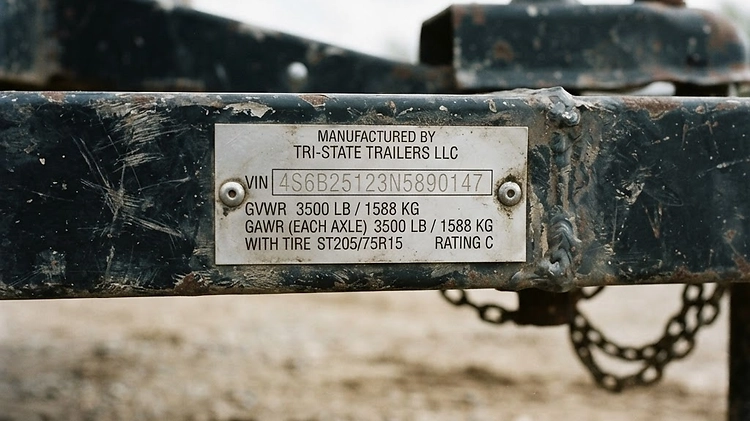
Quick Summary
Learn how to decode your trailer's VIN plate to find its true GVWR, GAWR, and payload capacity for safe, legal towing in 2026.
Every trailer sold in the United States is required by the NHTSA to have a certification label, commonly known as the VIN plate. This small metal tag or heavy-duty sticker holds the key to your trailer's legal and safe towing limits, yet it is frequently misunderstood by both novice and veteran haulers. Understanding how to read this plate is the first step in preventing overloaded axles, blown tires, and dangerous towing conditions.
What is a Trailer VIN Plate and Where to Find It
The trailer certification label is a federally mandated data plate that provides critical manufacturing and capacity information. According to FMVSS (Federal Motor Vehicle Safety Standards) regulations, this plate must be permanently affixed to the trailer.

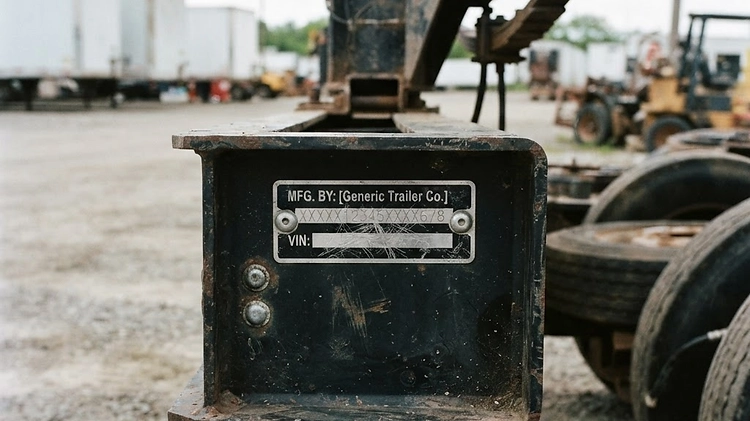
You will typically find the VIN plate riveted or adhered to the front driver's side of the trailer frame, often on the tongue or just behind it. If you are inspecting trailers for sale in Texas or anywhere else, locating and reading this plate should be your very first step. It contains the unalterable legal ratings for that specific unit, which supersede any numbers found in a sales brochure or online spec sheet.
Decoding GVWR: The Absolute Maximum Weight
The most prominent weight figure on your trailer's VIN plate is the Gross Vehicle Weight Rating (GVWR). This number represents the absolute maximum the trailer is legally allowed to weigh when fully loaded. It includes the weight of the empty trailer itself plus all cargo, fluids, accessories, and anything strapped to the deck.
For example, if you are looking at a heavy-duty unit like the 2026 Iron Bull 10K Gravity Tilt Equipment Trailer, the GVWR dictates the ceiling for your hauling operation. Exceeding this number not only puts immense stress on the trailer's frame and suspension but also creates significant legal liability in the event of an accident. If you are towing commercially, understanding this limit is critical, which is why many operators look into de-rating trailer GVWR to stay under CDL thresholds.
Understanding GAWR: Gross Axle Weight Rating
Right next to the GVWR, you will find the Gross Axle Weight Rating (GAWR). This indicates the maximum distributed weight that a single axle can safely support. If a trailer has multiple axles, the GAWR is usually listed per axle (e.g., "GAWR: 7,000 lbs each").

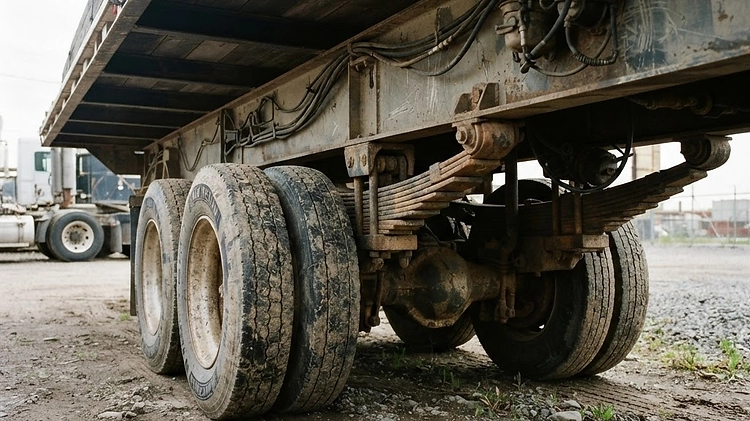
A common point of confusion is the relationship between GAWR and GVWR. You might assume that two 7,000-pound axles automatically give a trailer a 14,000-pound GVWR. While this is often true, it is not a universal rule. The GVWR can be higher than the combined GAWR because a portion of the trailer's weight is transferred to the tow vehicle via the hitch. Conversely, the GVWR might be lower than the combined axle ratings if the manufacturer determined that the frame, tires, or coupler are the limiting factors. For a deeper dive into axle specifications, review our trailer axle diameter and weight capacity guide.
How to Calculate True Payload Capacity from the VIN Plate
Your trailer's payload capacity is the actual amount of cargo weight it can carry. To calculate this, you need two numbers: the GVWR and the empty weight (also known as tare or curb weight). The formula is simple: Payload Capacity = GVWR - Empty Weight.
While the GVWR is always on the VIN plate, the empty weight is not always stamped by the manufacturer. If the empty weight is missing, the only accurate way to determine your payload is to weigh the empty trailer at a certified scale. For instance, if you are calculating loads for dump trailers, knowing the exact empty weight is crucial because the heavy hydraulic mechanisms reduce available payload. You can learn more in our dump trailer payload capacity guide.
Key Specifications to Look For on Your Certification Label
When reading a trailer VIN plate, you should be able to identify several critical pieces of information that dictate how you maintain and load the trailer.

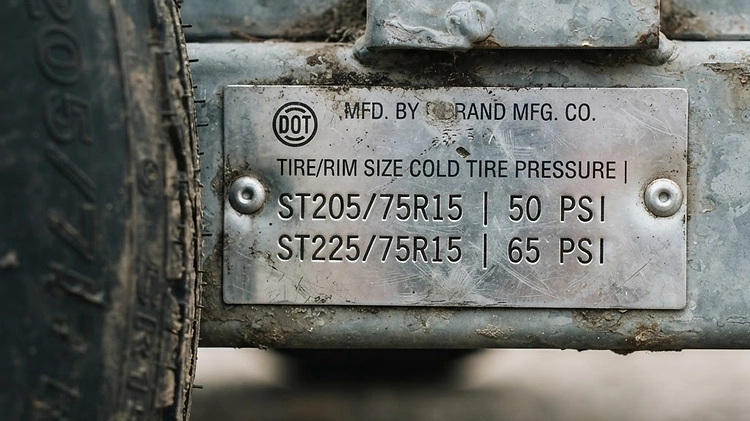
Here is what to look for:
- VIN (Vehicle Identification Number): The 17-character unique identifier for the trailer.
- Date of Manufacture: The month and year the trailer was built.
- GVWR: The maximum loaded weight of the trailer.
- GAWR: The maximum weight capacity per axle.
- Tire Size & Load Range: The specific tire dimensions and ply rating the trailer was engineered to use.
- Cold Tire Inflation Pressure: The required PSI for the tires to safely carry the stated GAWR.
- Rim Size: The required wheel dimensions.
Always ensure that replacement tires match the specifications on the VIN plate. Upgrading to a higher load range tire does not increase the trailer's legal GVWR or GAWR.
The Role of Tongue Weight in Axle Loading
Understanding the VIN plate is only half the battle; how you load the trailer determines whether you stay within those ratings. When a trailer is hitched to a tow vehicle, a percentage of the total weight is transferred to the truck's suspension. For bumper-pull utility trailers, this is typically 10% to 15% of the total loaded weight. For gooseneck setups, like those used with a 2026 BEDBOSS Dually ArmorBed Flatbed Truck Bed, pin weight can be 20% to 25%.
This weight transfer is why a trailer weighing 15,000 pounds total might only place 13,000 pounds on its tandem 7,000-pound axles, keeping the axles within their GAWR. Proper load placement is essential to achieve this balance. For strategies on balancing your cargo, consult our guide on how to adjust trailer tongue weight and our commercial trailer load placement overview.
Bottom Line
Your trailer's VIN plate is the ultimate authority on its towing limits. By understanding how to read the GVWR, GAWR, and tire specifications, you can accurately calculate your payload capacity and ensure every haul is safe and legal. Whether you are hauling equipment in Dallas, TX or moving materials cross-country, never guess your weights.
For more expert advice on maximizing your towing setup, explore our comprehensive towing guides hub. If you are in the market for a trailer with the capacity to handle your toughest jobs, browse our full shop inventory today.
FAQ
Have Questions? We're Here to Help
Still unsure which trailer fits your needs, or need specs, pricing or delivery advice? The Prime Trail Trailers team is ready to answer your questions and help you find the right rig.
Prime Trail Trailers
Prime Trail Trailers is a family-owned trailer dealer in Markle, Indiana, stocking utility, dump, enclosed, equipment, car hauler and gooseneck trailers with nationwide delivery. This guide is based on what our customers ask us most and the trailers we sell every day.
More about Prime Trail Trailers