
Dump Trailer Payload Capacity Guide: Calculating Gravel, Dirt, and Material Weights
Learn how to calculate true dump trailer payload capacity for gravel, dirt, and concrete. Understand GVWR, curb weight, and material weights to haul safely.

Quick Summary
Learn how to calculate true dump trailer payload capacity for gravel, dirt, and concrete. Understand GVWR, curb weight, and material weights to haul safely.
Guessing the weight of gravel, dirt, or concrete in your dump trailer is a fast track to overloaded axles, blown tires, and dangerous towing conditions. Whether you are a landscape contractor hauling topsoil or a construction crew moving demolition debris, understanding your exact payload limits is critical for safety and compliance. This comprehensive guide breaks down how to calculate your true dump trailer payload capacity, estimate material weights per cubic yard, and keep your towing setup perfectly balanced.
Understanding Dump Trailer GVWR vs. Payload Capacity
The most common mistake operators make is confusing Gross Vehicle Weight Rating (GVWR) with payload capacity. If you buy a 14,000-lb GVWR dump trailer, you cannot put 14,000 pounds of gravel in the bed.
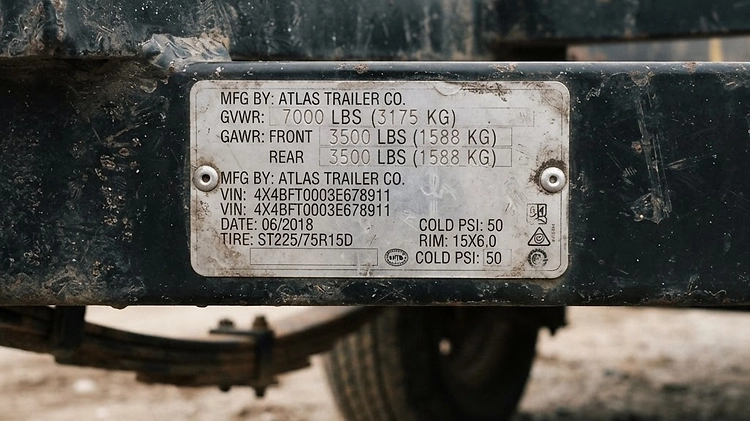
GVWR is the absolute maximum allowable weight of the trailer plus everything carried on it. To find your true payload capacity, you must subtract the trailer's empty weight (curb weight) from the GVWR. For example, a heavy-duty 14-foot steel dump trailer might weigh 4,200 pounds empty.
The Payload Formula: 14,000 lbs (GVWR) - 4,200 lbs (Empty Weight) = 9,800 lbs (Maximum Payload Capacity)
For a deeper dive into the math behind these ratings, check out our complete trailer payload math guide. Always weigh your specific trailer at a certified scale to get an accurate baseline, as factory weights often exclude dealer-installed options.
The Hidden Weight of Trailer Upgrades and Accessories
Your usable payload shrinks with every accessory you add. A generic claim that every 14K dump trailer carries 10,000 pounds is simply not dependable.
When calculating your limits, remember that taller steel sides, heavy-duty telescopic hoists, tarp kits, slide-in ramps, spare tires, and toolboxes all add to the curb weight. If you upgrade to a thicker 7-gauge steel floor for hauling concrete, you are sacrificing hundreds of pounds of payload capacity for that durability. If you are browsing dump trailers for sale in Texas, always ask the dealer for the exact weight of the trailer as equipped on the lot.
Calculating Material Weights: Gravel, Dirt, and Concrete
Volume does not equal weight. A dump trailer bed might physically hold 10 cubic yards of material, but filling it to the brim with wet dirt will massively overload the axles.


Here is a quick reference guide for common material weights (estimates can vary based on moisture content):
- Dry Topsoil: ~2,000 lbs per cubic yard
- Wet Dirt/Mud: ~3,000 lbs per cubic yard
- Crushed Gravel/Stone: ~2,700 - 2,900 lbs per cubic yard
- Sand (Dry): ~2,600 lbs per cubic yard
- Broken Concrete: ~4,000 lbs per cubic yard
If your calculated payload capacity is 9,800 lbs, you can safely haul approximately 3.5 cubic yards of crushed gravel (9,800 ÷ 2,800 = 3.5). If you are using roll-off bins like the Horizon EDZ 16 Yard Roll Off Dumpster or the MAXX-D ROX 7x14 Concrete Dumpster, you must account for the weight of the bin itself in addition to the trailer frame.
Tongue Weight and Load Distribution in Dump Trailers
Proper load placement is just as important as total weight. Tongue weight—the downward force the loaded trailer exerts on the hitch ball—should generally sit between 10% and 15% of the gross trailer weight.


If you load all the gravel at the rear of the bed, your tongue weight will be too low, leading to dangerous trailer sway at highway speeds. If you load it all at the front, you risk overloading your truck's rear axle and hitch receiver. Material often settles toward the front of a dump trailer during transit, which can increase tongue weight unexpectedly. For strategies on balancing your cargo, read our guide on how to adjust trailer tongue weight.
Tow Vehicle Limits: GCWR and Payload Bottlenecks
Even if your dump trailer is loaded perfectly within its GVWR, your tow vehicle must be rated to handle the combination. The Gross Combined Weight Rating (GCWR) is the maximum allowable weight of the loaded truck and the loaded trailer together.
Furthermore, the tongue weight of the trailer counts directly against your truck's payload capacity. If your trailer exerts 1,400 pounds of tongue weight, and your truck's payload capacity is 2,000 pounds, you only have 600 pounds left for passengers, tools, and fuel. Learn more about this critical limitation in our GVWR vs. payload capacity guide.
Key Specifications to Check Before Hauling Heavy Materials
Before you head to the quarry or job site, verify these critical specifications:
- Gross Axle Weight Rating (GAWR): Ensure the combined weight on the trailer axles does not exceed their rating (e.g., two 7,000-lb axles).
- Tire Load Range: Check that your tires are rated for the load and inflated to the maximum cold PSI listed on the sidewall.
- Hitch Receiver Rating: Verify your truck's hitch is a Class IV or Class V rated for the total gross trailer weight.
- Hoist Capacity: Ensure your hydraulic hoist (scissor or telescopic) is rated to lift the maximum payload you intend to carry.
Bottom Line
Hauling heavy materials requires precision, not guesswork. By understanding your dump trailer's true payload capacity, calculating material weights accurately, and balancing your load, you protect your equipment and ensure a safe tow. Whether you are working locally or managing a fleet out of Houston, TX, always prioritize the math before you load.
Ready to upgrade your hauling capabilities? Explore our complete inventory of heavy-duty dump trailers and commercial-grade equipment in our shop, or visit our guides hub for more expert towing advice.
Shop Related Trailers
FAQ
Have Questions? We're Here to Help
Still unsure which trailer fits your needs, or need specs, pricing or delivery advice? The Prime Trail Trailers team is ready to answer your questions and help you find the right rig.
Prime Trail Trailers
Prime Trail Trailers is a family-owned trailer dealer in Markle, Indiana, stocking utility, dump, enclosed, equipment, car hauler and gooseneck trailers with nationwide delivery. This guide is based on what our customers ask us most and the trailers we sell every day.
More about Prime Trail Trailers