
How to Adjust Trailer Tongue Weight: Cargo Placement Strategies for Safe Towing
Learn how to adjust your trailer tongue weight by shifting cargo to hit the 10-15% sweet spot, preventing trailer sway and protecting your tow vehicle's payload.
Quick Summary
Learn how to adjust your trailer tongue weight by shifting cargo to hit the 10-15% sweet spot, preventing trailer sway and protecting your tow vehicle's payload.
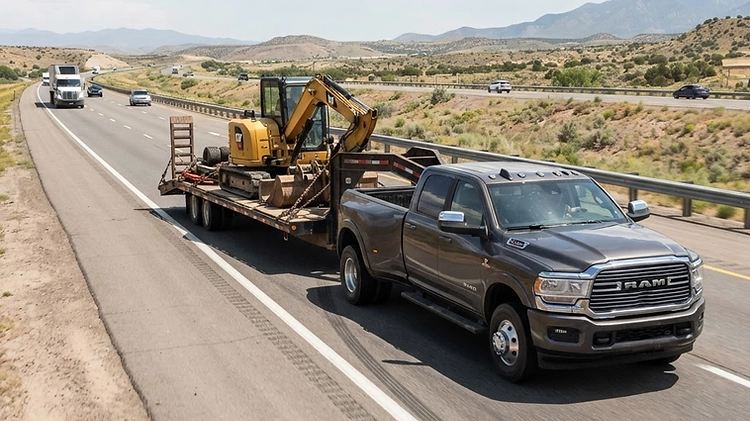
Properly loading a trailer is about much more than just making sure everything fits on the deck. The way you distribute cargo directly impacts your trailer's tongue weight—the downward force exerted on your tow vehicle's hitch. If this weight is off by even a few hundred pounds, you risk severe trailer sway, compromised steering, and dangerous braking conditions.
In this guide, we will explore exactly how to adjust your trailer tongue weight by strategically shifting cargo, ensuring you hit the critical 10-15% sweet spot for bumper pull trailers. Whether you are hauling heavy machinery or loading up for a weekend project, mastering weight distribution is the key to a safe, stable towing experience. For more comprehensive towing resources, visit our towing and payload guides hub.
What is Trailer Tongue Weight and Why Does It Matter?
Trailer tongue weight is the amount of the trailer's total loaded weight that presses down on the hitch of the tow vehicle. For conventional bumper pull trailers, industry standards dictate that this downward force should be between 10% and 15% of the gross trailer weight (GTW).

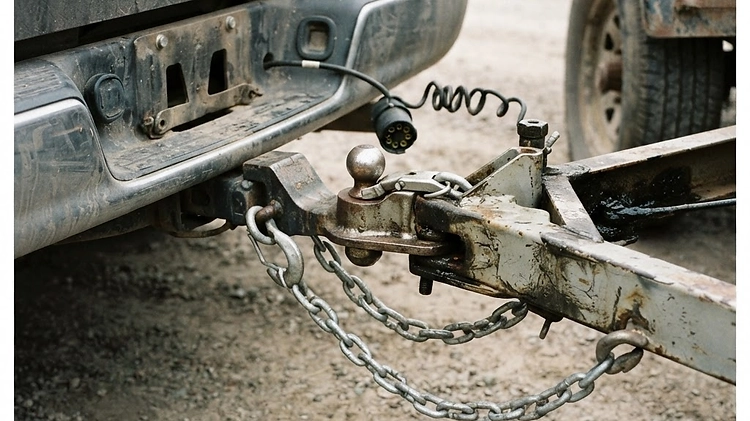
When you hook up a trailer, it acts like a lever pivoting on its axles. If you place too much weight ahead of the axles, the tongue weight increases, pushing the rear of your tow vehicle down and lifting the front wheels. This reduces your steering traction and braking effectiveness. Conversely, if you place too much weight behind the axles, the tongue weight drops below 10%, which is the primary cause of violent, uncontrollable trailer sway. Understanding this balance is critical, which is why we emphasize calculating your true towing capacity before hitting the road.
Signs Your Tongue Weight is Incorrect
Before you even hit the highway, your tow vehicle will often tell you if your tongue weight is improperly adjusted. Recognizing these signs early can save you from a dangerous situation.
Signs of Too Much Tongue Weight:
- The rear suspension of your tow vehicle sags significantly.
- The front of your tow vehicle points upward, causing headlights to blind oncoming traffic.
- Steering feels light, unresponsive, or "floaty."
- Your tow vehicle's rear axle is overloaded, potentially exceeding its Gross Axle Weight Rating (GAWR).
Signs of Too Little Tongue Weight:
- The trailer feels unstable and begins to sway side-to-side at speeds above 45 mph.
- The rear of the tow vehicle feels like it is being lifted or pushed by the trailer.
- The trailer suspension bottoms out over bumps due to excessive rear-loaded cargo.
If you experience any of these issues, pull over immediately and adjust your load. For commercial haulers, especially those looking for trailers for sale in Texas, understanding commercial trailer load placement is a daily necessity.
How to Measure Your Current Tongue Weight
You cannot accurately adjust what you have not measured. While experienced haulers might develop a "feel" for their setup, guessing is never a safe strategy when dealing with heavy loads.

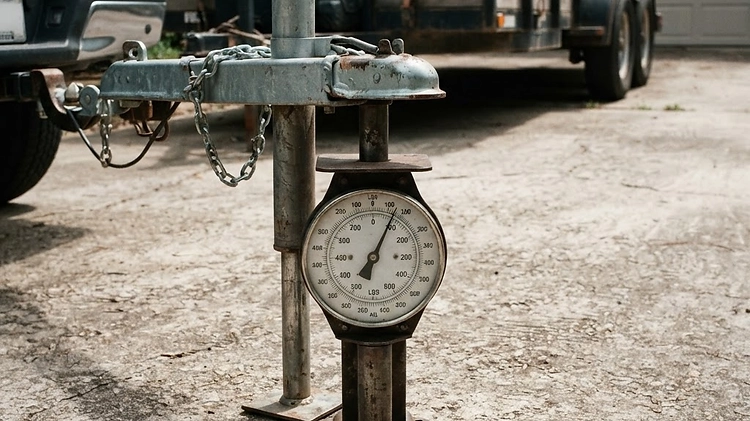
There are three primary ways to measure tongue weight:
- Commercial Truck Scales: Pull your fully loaded rig onto a certified scale (like a CAT scale). Weigh the tow vehicle with the trailer attached (but trailer axles off the scale), then weigh the tow vehicle alone. The difference is your tongue weight.
- Tongue Weight Scales: Purpose-built scales, such as those from Sherline, can be placed directly under the trailer jack to give you an instant reading.
- Smart Hitches: Modern weight-distribution hitches and advanced tow vehicle systems (like Ford's Smart Hitch) can measure and display tongue weight in real-time.
Remember that tongue weight counts against your tow vehicle's payload capacity. If you are unsure how this math works, review our guide on trailer GVWR vs. payload capacity and how trailer accessories reduce payload.
Step-by-Step: How to Adjust Trailer Tongue Weight by Shifting Cargo
If your tongue weight falls outside the 10-15% range, you must adjust the position of your cargo. Here is the step-by-step process for dialing in the perfect balance.
1. Start with the 60/40 Rule
The golden rule of trailer loading is to place 60% of your cargo weight in the front half of the trailer (ahead of the axles) and 40% in the rear half. This naturally biases the weight toward the tongue without overloading it. If you are loading utility trailers, this is your starting point.
2. Move Heavy Items in Small Increments
Because vehicle weight is dense, moving a car or a skid steer just a few inches forward or backward can drastically change the tongue weight. If your tongue weight is too heavy (e.g., 18%), move the heaviest item backward by 6 to 12 inches and remeasure. If it is too light (e.g., 7%), move the load forward.
3. Center the Load Laterally
While adjusting front-to-back weight, do not neglect side-to-side balance. Uneven lateral loading can cause tire blowouts and suspension damage. Keep heavy items centered over the trailer's longitudinal axis. For more details, read our guide on side-to-side trailer weight distribution.
4. Secure the Load Immediately
Once you have achieved the correct tongue weight, tie everything down securely. A perfectly balanced load is useless if it shifts during transit. Use heavy-duty ratchet straps or chains rated for the cargo's weight.
How Tongue Weight Impacts Your Tow Vehicle's Payload Capacity
One of the most common towing mistakes is confusing towing capacity with payload capacity. Your truck might be rated to tow 15,000 pounds, but if that trailer generates 1,500 pounds of tongue weight, that entire 1,500 pounds is subtracted from your truck's payload capacity.


If your truck's payload capacity is 2,000 pounds, a 1,500-pound tongue weight leaves you with only 500 pounds for passengers, tools, and fuel. Exceeding payload capacity is illegal and dangerous. Always determine your true trailer tow limit by factoring in tongue weight. We highly recommend following the 80/20 towing rule to leave a safety margin, and understanding the trailer payload math before purchasing a new setup.
Bottom Line
Adjusting your trailer tongue weight is not an optional step—it is a fundamental requirement for safe towing. By utilizing the 60/40 loading rule, measuring your weights accurately, and shifting cargo in small increments, you can eliminate trailer sway and protect your tow vehicle's suspension.
Whether you are hauling equipment through Houston, TX or moving materials across the country, Prime Trail Trailers has the right equipment for the job. Browse our selection of equipment trailers or check out specific models like the 2027 PJ T6 7x20 Gooseneck Gravity Tilt Equipment Trailer and the 2026 Wil-Ro Utility Truck Bed in our shop inventory.
FAQ
Have Questions? We're Here to Help
Still unsure which trailer fits your needs, or need specs, pricing or delivery advice? The Prime Trail Trailers team is ready to answer your questions and help you find the right rig.
Prime Trail Trailers
Prime Trail Trailers is a family-owned trailer dealer in Markle, Indiana, stocking utility, dump, enclosed, equipment, car hauler and gooseneck trailers with nationwide delivery. This guide is based on what our customers ask us most and the trailers we sell every day.
More about Prime Trail Trailers