
How to Determine Your True Trailer Tow Limit: Weight Transfer & Payload Math
Learn how to accurately calculate your trailer tow limit by understanding weight transfer, GCWR, and tow vehicle payload capacity in this comprehensive 2026 guide.
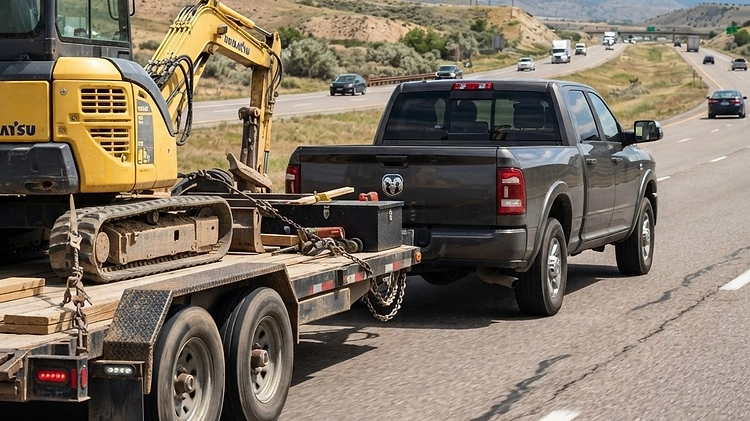
Quick Summary
Learn how to accurately calculate your trailer tow limit by understanding weight transfer, GCWR, and tow vehicle payload capacity in this comprehensive 2026 guide.
Towing a trailer might seem as simple as hitching up and hitting the road, but safely hauling heavy loads requires precise math. Understanding your true trailer tow limit is the difference between a smooth haul and a dangerous, costly accident on the highway. This comprehensive guide breaks down the critical calculations, weight transfer dynamics, and modern tools you need to determine exactly how much your vehicle can safely tow.
The Core Math: GTW, GCWR, and Payload Capacity
Before you load a single piece of cargo, you must understand the foundational weight ratings established by your vehicle's manufacturer. The Gross Trailer Weight (GTW) is the total weight of your fully loaded trailer, while the Gross Combined Weight Rating (GCWR) is the absolute maximum allowable weight of your tow vehicle and trailer combined, including all passengers, cargo, and fluids.
Many drivers mistakenly believe that if their truck has a "10,000-pound towing capacity," they can simply hook up a 10,000-pound trailer. However, this ignores the critical role of payload capacity. Every pound of passengers, tools, and luggage inside your tow vehicle subtracts from your available towing capacity. For a deeper dive into how these ratings interact, review our guide on Trailer GVWR vs. GAWR: Understanding Axle Ratings and Safe Towing Limits.

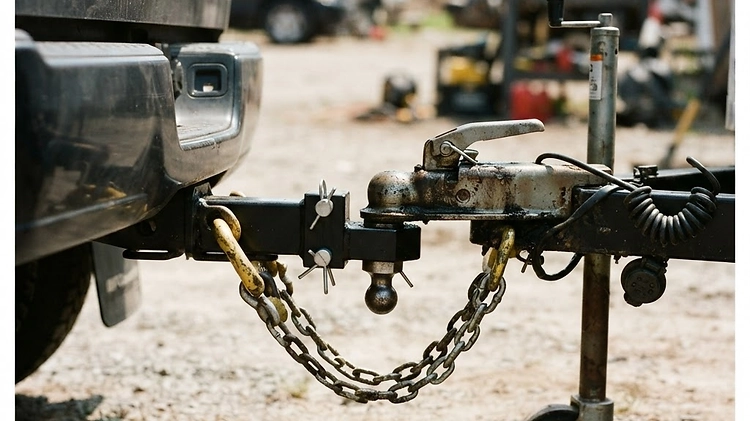
How Weight Transfer Affects Your Tow Vehicle
When you hitch a trailer to your vehicle, a significant portion of the trailer's weight is transferred directly to the tow vehicle's suspension. This is known as tongue weight (for bumper pull trailers) or pin weight (for gooseneck and fifth-wheel trailers). Typically, proper tongue weight should be 10% to 15% of the total loaded trailer weight to prevent dangerous trailer sway.
This transferred weight counts directly against your tow vehicle's payload capacity. For example, if you are towing an 8,000-pound trailer with a 12% tongue weight, 960 pounds is transferred to your truck's rear axle. If your truck's total payload capacity is 1,500 pounds, you only have 540 pounds left for passengers and cargo. This dynamic is exactly why many trucks max out their payload long before they reach their maximum towing capacity. Learn more about this phenomenon in our article on The Payload Bottleneck: Why Your Truck Can't Tow Its Maximum Rating in 2026.
Modern Tools for Calculating Tow Limits
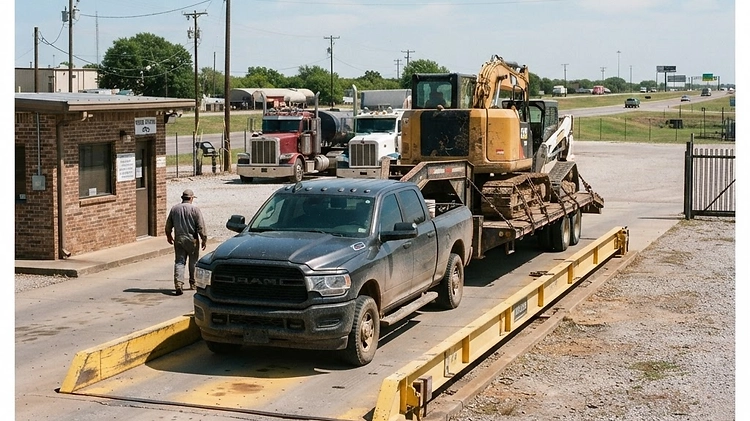
Gone are the days of guessing your trailer's weight. Today, haulers have access to highly accurate tools to measure their exact load. The most reliable method remains visiting a certified CAT scale. By weighing your truck and trailer together, and then weighing the truck alone, you can calculate your exact gross combined weight and tongue weight. For step-by-step instructions, see How to Weigh a Trailer at a Public Scale: Calculate True Payload.
Additionally, modern technology offers app-based solutions like the BetterWeigh mobile towing scale, which plugs into your vehicle's OBD-II diagnostic port. These devices use your vehicle's sensors to calculate real-time gross combined weight, tongue weight, and weight distribution directly on your smartphone, making it easier than ever to stay within safe limits.

Step-by-Step: Determining Your True Tow Limit
To calculate your exact towing limit for a specific trip, follow this simple formula:
- Find your vehicle's GCWR and Payload Capacity on the driver's side door jamb sticker.
- Calculate the total weight of all passengers, cargo, and aftermarket accessories inside the tow vehicle. (Read How Trailer Accessories and Upgrades Reduce Your True Payload Capacity for more details).
- Subtract the passenger and cargo weight from your vehicle's Payload Capacity. The remaining number is your maximum allowable tongue weight.
- Divide that maximum tongue weight by 0.15 (assuming a conservative 15% tongue weight ratio). This gives you the maximum loaded trailer weight your vehicle can handle without exceeding its payload capacity.
- Finally, ensure that the combined weight of the loaded truck and this calculated trailer weight does not exceed the GCWR.
Common Towing Limit Mistakes to Avoid
One of the most dangerous myths in towing is the "visual check." Assuming a trailer is safe to tow simply because the truck isn't squatting excessively is a recipe for disaster, especially with modern suspension systems that can mask heavy loads. Always rely on hard numbers and published ratings.
Another common error is ignoring the weight of the trailer itself (curb weight). When calculating how much cargo you can load into a trailer, you must subtract the trailer's empty weight from its GVWR. For a comprehensive breakdown, check out Trailer GVWR vs. Payload Capacity: Why Curb Weight Dictates Your True Hauling Limit. Furthermore, ensure your tires are rated for the load; our guide on ST vs. LT Trailer Tires: Which Is Safest for Heavy Towing in 2026? provides essential safety insights.

Equipment and Trailer Matching
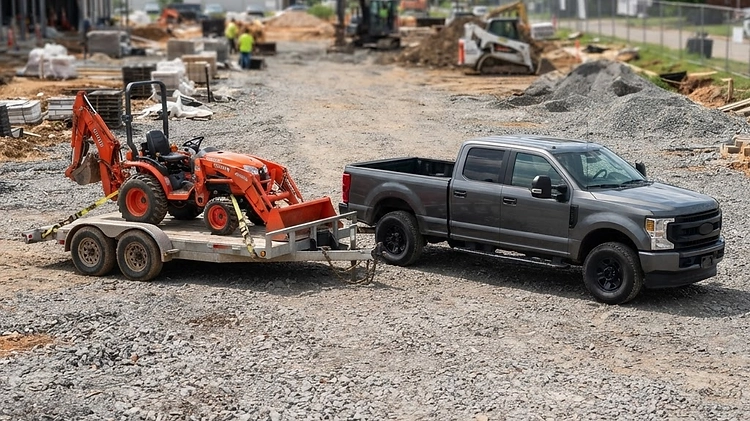
Matching the right trailer to your tow vehicle is crucial for safety and efficiency. If you are hauling heavy machinery in trailers for sale in Texas, a heavy-duty gooseneck might be required to properly distribute the pin weight over the truck's rear axle. Conversely, for lighter loads around Houston, TX, a standard bumper pull utility trailer may suffice.
When browsing our equipment trailers or utility trailers, always cross-reference the trailer's GVWR with your vehicle's calculated limits. For example, the 2026 Iron Bull Trailers 7x20 TRB 10K Gravity Tilt Equipment Trailer offers robust capacity, but requires a tow vehicle with sufficient payload to handle its tongue weight. Similarly, the 2026 PJ Trailers L6 8.5X16 10k Deckover is an excellent choice for wide loads, provided your truck's GCWR can accommodate the total mass.
Bottom Line
Determining your true trailer tow limit requires more than just glancing at a brochure's maximum towing capacity. By factoring in weight transfer, payload limits, and GCWR, you ensure a safe, compliant, and stress-free hauling experience. For more expert advice, visit our comprehensive guides hub or explore our full shop inventory to find the perfect trailer engineered for your specific towing capabilities.
FAQ
Have Questions? We're Here to Help
Still unsure which trailer fits your needs, or need specs, pricing or delivery advice? The Prime Trail Trailers team is ready to answer your questions and help you find the right rig.
Prime Trail Trailers
Prime Trail Trailers is a family-owned trailer dealer in Markle, Indiana, stocking utility, dump, enclosed, equipment, car hauler and gooseneck trailers with nationwide delivery. This guide is based on what our customers ask us most and the trailers we sell every day.
More about Prime Trail Trailers