
Trailer GVWR vs. GAWR: Understanding Axle Ratings and Safe Towing Limits
Learn the critical differences between trailer GVWR and GAWR, how to calculate safe axle loads, and why understanding these ratings prevents dangerous overloading.
Quick Summary
Learn the critical differences between trailer GVWR and GAWR, how to calculate safe axle loads, and why understanding these ratings prevents dangerous overloading.
Understanding the difference between Gross Vehicle Weight Rating (GVWR) and Gross Axle Weight Rating (GAWR) is essential for safe and legal towing. While many trailer owners focus solely on the total payload capacity, ignoring individual axle limits can lead to blown tires, bent axles, and severe accidents. This guide breaks down how these ratings work together and how to ensure your trailer is loaded safely.
What is Trailer GVWR?
The Gross Vehicle Weight Rating (GVWR) is the absolute maximum weight your trailer is engineered to handle safely. This number includes the empty weight of the trailer itself (curb weight) plus the maximum payload it can carry. For example, if you have a 14,000 lb GVWR dump trailer that weighs 4,000 lbs empty, your maximum payload is 10,000 lbs.
Exceeding the GVWR puts immense stress on the trailer's frame, suspension, and braking system. It also creates significant legal liabilities if you are involved in an accident or pulled over for a DOT inspection. Always check the manufacturer's VIN sticker, usually located on the front driver's side of the trailer, to confirm your exact GVWR.


What is Trailer GAWR?
The Gross Axle Weight Rating (GAWR) is the maximum weight that a single axle can safely support. If your trailer has multiple axles, each axle will have its own GAWR. For instance, a tandem axle trailer might have two 7,000 lb axles, giving a combined axle capacity of 14,000 lbs.
However, the combined GAWR does not always equal the GVWR. In many cases, the GVWR is slightly higher than the combined axle ratings because a portion of the trailer's weight (typically 10-15% for bumper pull trailers and 20-25% for goosenecks) is transferred to the tow vehicle via the tongue weight. Understanding this relationship is crucial for proper load distribution.
How GVWR and GAWR Work Together
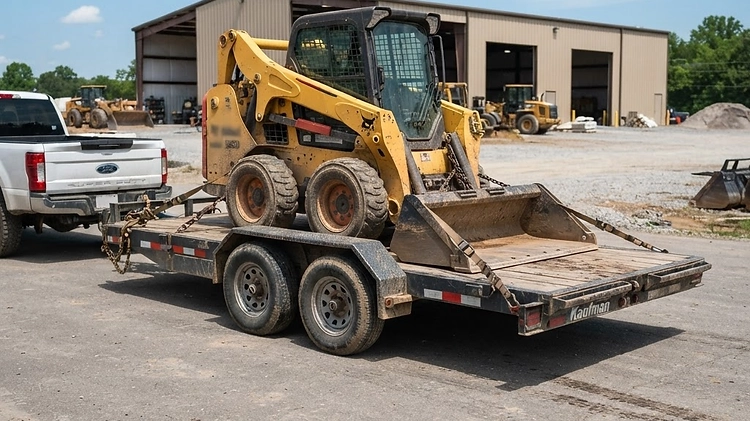
To tow safely, you must respect both the GVWR and the GAWR. You could be under your total GVWR but still overload a single axle if your cargo is not distributed correctly. For example, if you load a heavy skid steer too far to the rear of an equipment trailer, you might exceed the rear axle's GAWR while remaining under the total GVWR.
Proper weight distribution is key. The load should be centered side-to-side and positioned so that the tongue weight falls within the recommended percentage. This ensures that the weight is shared evenly across all axles and the tow vehicle, preventing premature wear on tires and suspension components.


Calculating Safe Payload and Axle Loads
To determine your safe payload and ensure you aren't exceeding your GAWR, follow these steps:
- Find the Curb Weight: Weigh your empty trailer at a public scale.
- Calculate Max Payload: Subtract the curb weight from the GVWR.
- Check Tongue Weight: Ensure 10-15% of the loaded trailer weight is resting on the hitch (for bumper pulls).
- Verify Axle Weights: Weigh the loaded trailer again, this time with only the trailer axles on the scale, to ensure the weight does not exceed the combined GAWR.
Using a public CAT scale is the most accurate way to verify these numbers. Guessing the weight of your cargo or relying on manufacturer estimates can lead to dangerous overloading.
The Dangers of Exceeding Weight Ratings
Ignoring GVWR and GAWR can have catastrophic consequences. Overloaded axles are a leading cause of trailer tire blowouts, which can easily cause a loss of control at highway speeds. It also accelerates wear on wheel bearings, leaf springs, and brakes.
From a legal standpoint, towing over your rated capacity can result in hefty fines, especially for commercial haulers subject to DOT regulations. Furthermore, if an accident occurs while overloaded, your insurance company may deny the claim, leaving you personally liable for damages.


Bottom Line
Understanding and respecting your trailer's GVWR and GAWR is non-negotiable for safe towing. Always verify your weights at a scale, distribute your load evenly, and never exceed the manufacturer's ratings. If you need a trailer with a higher capacity, explore our selection of heavy-duty equipment trailers or gooseneck trailers designed to handle demanding loads safely. For more information on safe towing practices, visit our guides hub.
FAQ
Have Questions? We're Here to Help
Still unsure which trailer fits your needs, or need specs, pricing or delivery advice? The Prime Trail Trailers team is ready to answer your questions and help you find the right rig.
Prime Trail Trailers
Prime Trail Trailers is a family-owned trailer dealer in Markle, Indiana, stocking utility, dump, enclosed, equipment, car hauler and gooseneck trailers with nationwide delivery. This guide is based on what our customers ask us most and the trailers we sell every day.
More about Prime Trail Trailers