
Trailer Cargo Volume vs. Weight: How Material Density Affects Payload Capacity
Understand the critical difference between trailer cargo volume and material weight to maximize your payload capacity without exceeding your GVWR.
Quick Summary
Understand the critical difference between trailer cargo volume and material weight to maximize your payload capacity without exceeding your GVWR.
Many trailer owners make a critical mistake when loading their equipment: they confuse available space with available payload capacity. Just because a load physically fits inside your trailer does not mean your trailer is rated to carry it. Understanding the relationship between cargo volume and material density is essential for safe, legal hauling. Whether you are hauling mulch in a dump trailer or transporting heavy equipment, calculating your true cargo capacity requires more than just a tape measure.
The Core Formula: GVWR Minus Tare Equals Payload
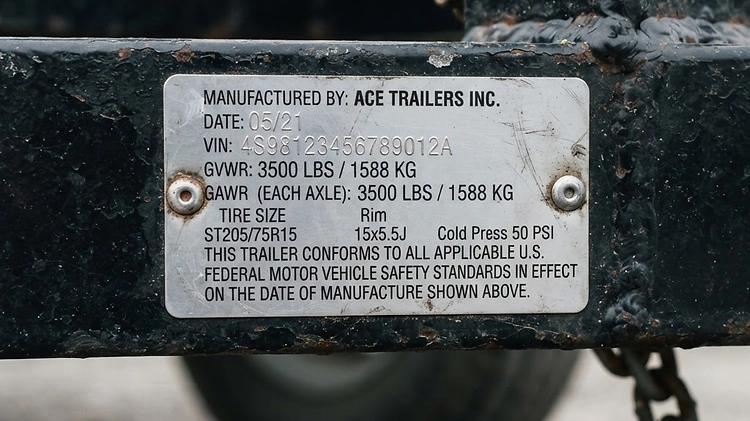
Before calculating material density, you must establish your trailer's baseline cargo capacity. The Gross Vehicle Weight Rating (GVWR) is the absolute maximum your trailer can weigh when fully loaded. To find your true payload capacity, you must subtract the trailer's empty weight (tare weight or curb weight) from the GVWR. For example, if you purchase a dump trailer with a 14,000 lb GVWR and an empty weight of 4,200 lbs, your maximum payload is 9,800 lbs. However, this number assumes a completely stock trailer. If you add a spare tire, a heavy-duty tarp system, or upgraded hydraulic batteries, those accessories eat directly into your available cargo capacity. Always weigh your trailer at a certified scale to determine its true tare weight before loading.

Cargo Weight vs. Volume: The Density Trap
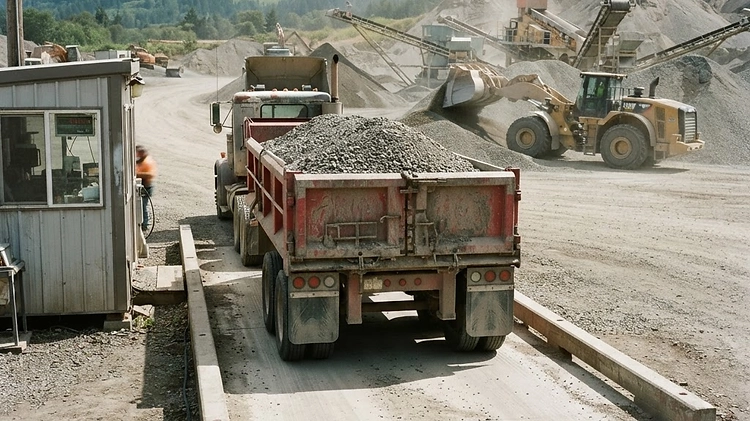
The most common overloading scenario occurs when hauling bulk materials like dirt, gravel, or mulch. A trailer's cubic yard capacity (volume) rarely aligns perfectly with its weight capacity (payload). For instance, a 16-yard roll-off bin like the Horizon EDZ 16 Yard Roll Off Dumpster has massive volume, but filling it to the brim with wet topsoil will instantly overload the trailer's axles.
Consider these common material weights per cubic yard:
- Dry Mulch: 400 - 800 lbs
- Dry Topsoil: 2,000 - 2,200 lbs
- Wet Topsoil: 2,700 - 3,000 lbs
- Gravel: 2,400 - 2,900 lbs
If your trailer has a 9,800 lb payload capacity, you can safely haul over 12 cubic yards of dry mulch. However, if you switch to wet topsoil, that same trailer can only legally carry about 3.5 cubic yards. Filling the trailer based on volume rather than weight is a guaranteed way to cause catastrophic suspension failure or a blowout.
How Trailer Options and Upgrades Eat Into Cargo Capacity
When shopping at our shop inventory hub, it is tempting to add every available upgrade. While thicker steel decks, drive-over fenders, and hydraulic jacks improve durability and ease of use, they add significant tare weight. For example, upgrading from a standard wood deck to a solid steel deck on a deckover trailer can add hundreds of pounds to the empty weight. If you are hauling heavy machinery like a skid steer, that lost payload capacity could be the difference between a legal load and an overloaded axle. Always factor in the weight of chains, binders, toolboxes, and ramps when calculating your final cargo capacity.


The Tow Vehicle Factor: GCWR and Payload Bottlenecks
Your trailer's cargo capacity does not exist in a vacuum; it is heavily dependent on your tow vehicle's ratings. Even if your trailer is loaded perfectly within its GVWR, you must ensure the combined weight of the truck and trailer does not exceed the Gross Combined Weight Rating (GCWR). Furthermore, the tongue weight of the trailer (typically 10-15% of the loaded weight for bumper pulls, and 20-25% for goosenecks) transfers directly to your truck's payload capacity. If you are hauling in demanding environments, such as oilfield hotshot routes with trailers for sale in Texas or construction sites near Houston, DOT officers will check both the trailer's axle ratings and the truck's payload limits. For more details on how these ratings interact, review our guide on How to Read Manufacturer Towing Guides.
Real-World Examples: Calculating Cargo Capacity
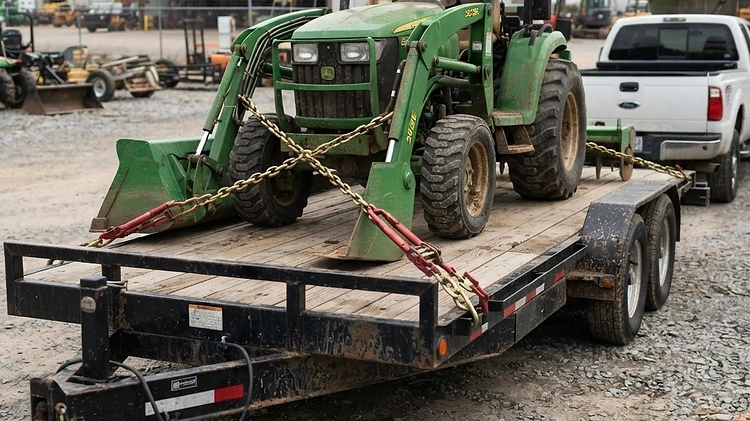
Let's look at a practical example using the 2026 PJ Trailers L6 8.5X16 10k Deckover. With a 9,990 lb GVWR and an estimated empty weight of 3,200 lbs, the theoretical payload is 6,790 lbs. If you load a 6,000 lb tractor, you have 790 lbs of capacity remaining. However, if you add 300 lbs of chains and binders, and a 200 lb front-end loader attachment, you are now left with just 290 lbs of margin. This highlights why precision is critical. For a deeper dive into material weights, check out our Dump Trailer Payload Capacity Guide and our Enclosed Trailer Weight Guide.

Bottom Line
Maximizing your trailer's utility requires a strict adherence to weight ratings rather than visual volume. Always calculate your true payload by subtracting your exact tare weight from your GVWR, and never assume that a trailer can be filled to the brim with dense materials. By understanding the density of your cargo and the limits of your equipment, you ensure safer towing and a longer lifespan for your trailer. Ready to find a trailer with the perfect payload capacity for your needs? Explore our complete lineup of heavy-duty trailers at the Prime Trail Trailers Guides Hub or browse our current inventory today.
FAQ
Have Questions? We're Here to Help
Still unsure which trailer fits your needs, or need specs, pricing or delivery advice? The Prime Trail Trailers team is ready to answer your questions and help you find the right rig.
Prime Trail Trailers
Prime Trail Trailers is a family-owned trailer dealer in Markle, Indiana, stocking utility, dump, enclosed, equipment, car hauler and gooseneck trailers with nationwide delivery. This guide is based on what our customers ask us most and the trailers we sell every day.
More about Prime Trail Trailers