
De-Rating Trailer GVWR: The 2026 Guide to Non-CDL Towing and Payload Limits
Learn how de-rating your trailer's GVWR can help you avoid CDL requirements, and how it impacts your legal payload capacity and towing setup in 2026.

Quick Summary
Learn how de-rating your trailer's GVWR can help you avoid CDL requirements, and how it impacts your legal payload capacity and towing setup in 2026.
Navigating commercial towing regulations can be a minefield, especially when you are trying to operate without a Commercial Driver's License (CDL). One of the most common strategies for hotshot truckers and commercial haulers is "de-rating" a trailer's Gross Vehicle Weight Rating (GVWR). But what exactly does this mean for your legal payload capacity, and how do you do it correctly?
In this comprehensive guide, we will break down the math behind trailer de-rating, the federal GCWR thresholds that dictate CDL requirements, and how lowering your trailer's official weight rating impacts your day-to-day hauling capabilities. Whether you are pulling a flatbed in Texas or an equipment hauler in the Midwest, understanding these limits is critical for staying compliant and safe.
What Does It Mean to De-Rate a Trailer's GVWR?
Every trailer rolls out of the factory with a Gross Vehicle Weight Rating (GVWR) stamped on its VIN plate. This number represents the absolute maximum weight the trailer can legally weigh when fully loaded (the weight of the trailer itself plus the cargo).

De-rating a trailer means having the manufacturer officially assign a lower GVWR to the trailer than its axles are technically capable of handling. For example, a trailer equipped with two 7,000-pound axles has a natural GVWR of 14,000 pounds. However, a buyer can request that the manufacturer de-rate the trailer and issue a VIN sticker that states the GVWR is only 9,990 pounds. The physical components—the frame, axles, and brakes—remain exactly the same heavy-duty parts, but the legal limit is reduced on paper.
The 26,001-Pound Rule: Why Non-CDL Drivers De-Rate Trailers
The primary reason buyers de-rate their trailers is to avoid the federal requirement for a Class A Commercial Driver's License (CDL). According to the FMCSA, a CDL is required if your Gross Combined Weight Rating (GCWR)—the GVWR of your tow vehicle plus the GVWR of your trailer—is 26,001 pounds or more, provided the trailer's GVWR is over 10,000 pounds.
If you are driving a one-ton truck like an F-350 with a GVWR of 11,500 pounds, and you hook up a standard 14,000-pound equipment trailer, your GCWR is 25,500 pounds. You are under the limit and do not need a CDL. However, if you upgrade to an F-450 with a 14,000-pound GVWR and pull that same 14,000-pound trailer, your GCWR hits 28,000 pounds. You now need a CDL.
To avoid this, many hotshot operators looking for trailers for sale in Texas will buy a heavy-duty trailer but have it de-rated to 9,990 pounds. Because the trailer's GVWR is under 10,001 pounds, the 26,001-pound GCWR rule does not trigger the Class A CDL requirement in the same way, keeping them legal for non-CDL hotshotting.
How De-Rating Affects Your Legal Payload Capacity
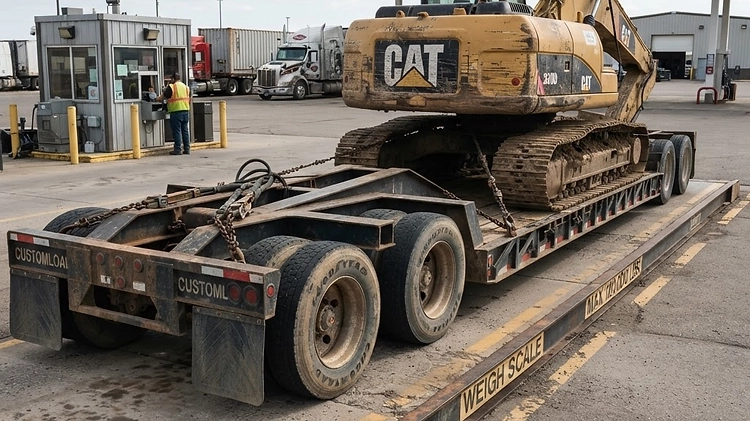
While de-rating keeps the DOT off your back regarding licensing, it severely impacts your legal payload capacity. Payload capacity is calculated by subtracting the trailer's empty curb weight from its GVWR.

Let's look at the math:
- Standard 14K Trailer: GVWR (14,000 lbs) - Curb Weight (4,000 lbs) = 10,000 lbs of Payload
- De-Rated 14K Trailer: GVWR (9,990 lbs) - Curb Weight (4,000 lbs) = 5,990 lbs of Payload
Even though the trailer's axles can physically handle 10,000 pounds of cargo, loading it past 5,990 pounds makes you illegally overweight based on your new VIN sticker. If you are pulled over and weighed, you will be ticketed for exceeding your registered GVWR. For more on this math, check out our Trailer Payload Math Explained guide.
Factory De-Rating vs. Aftermarket Re-VINing
It is crucial to understand that you cannot simply print a new sticker and slap it on your trailer. De-rating must be done officially by the manufacturer at the time of purchase, or through a certified upfitter who has the legal authority to alter the vehicle's certification.
When you order hotshot trailers or equipment trailers from a reputable dealer, you can specify the de-rated GVWR on the build sheet. The manufacturer will then issue the Certificate of Origin and the VIN plate with the requested 9,990 lb (or similar) rating.
Common Trailer Types That Get De-Rated
De-rating is most common in the commercial hauling space. You will frequently see this practice applied to:
- Hotshot Flatbeds: Operators using a 2026 Horizon FTZ 8.5x40 16k Gooseneck HotShot Trailer NonCDL often rely on factory de-rating to stay compliant.
- Heavy Equipment Haulers: Landscapers and contractors pulling skid steers often de-rate trailers like the 2026 Iron Bull Trailers 7x20 TRB 10K Gravity Tilt Equipment Trailer to avoid CDL requirements for their crew.
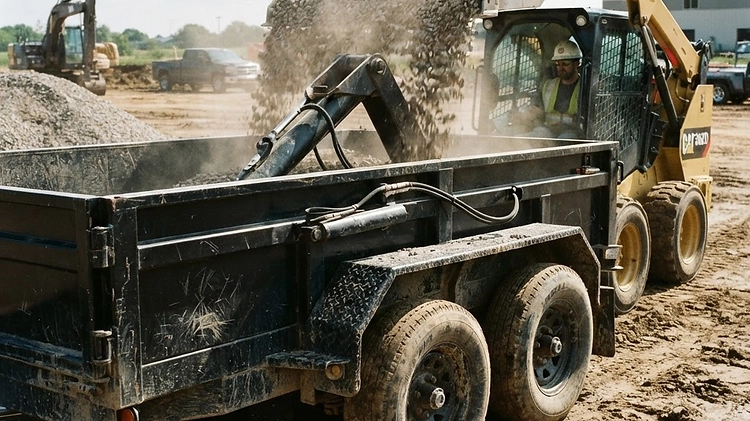
- Dump Trailers: High-capacity dump trailers are frequently de-rated for residential contractors who don't hold commercial licenses.

Key Specifications to Check Before De-Rating
Before you decide to de-rate, you must evaluate your entire towing setup. Check your tow vehicle's door sticker for its GVWR and payload limits. Read our guide on How to Read Manufacturer Towing Guides to ensure you understand your truck's true capabilities.
Additionally, remember that your trailer's Gross Axle Weight Rating (GAWR) will still reflect the physical capacity of the axles (e.g., two 7,000 lb axles), but the overarching GVWR will be the legal bottleneck. For more details on axle ratings, review our Interstate Trailer Weight Limits breakdown.
Bottom Line
De-rating a trailer's GVWR is a powerful tool for non-CDL operators, allowing you to utilize heavy-duty, durable trailers without crossing the 26,001-pound GCWR threshold. However, it requires a strict sacrifice in legal payload capacity. Always run the numbers on your truck's GVWR, your trailer's curb weight, and your heaviest expected cargo before making a decision.
Ready to find the perfect compliant setup for your business? Browse our full inventory at the Prime Trail Trailers Shop or explore our comprehensive Guides Hub for more expert towing advice. If you are operating in the South, check out our delivery options for trailers for sale in Houston, TX.
FAQ
Have Questions? We're Here to Help
Still unsure which trailer fits your needs, or need specs, pricing or delivery advice? The Prime Trail Trailers team is ready to answer your questions and help you find the right rig.
Prime Trail Trailers
Prime Trail Trailers is a family-owned trailer dealer in Markle, Indiana, stocking utility, dump, enclosed, equipment, car hauler and gooseneck trailers with nationwide delivery. This guide is based on what our customers ask us most and the trailers we sell every day.
More about Prime Trail Trailers