
The 80/20 Towing Rule: Why You Should Never Max Out Your Truck's Towing Capacity
Learn why towing at 100% of your truck's advertised capacity is dangerous, and how the 80/20 towing rule protects your vehicle, trailer, and cargo.

Quick Summary
Learn why towing at 100% of your truck's advertised capacity is dangerous, and how the 80/20 towing rule protects your vehicle, trailer, and cargo.
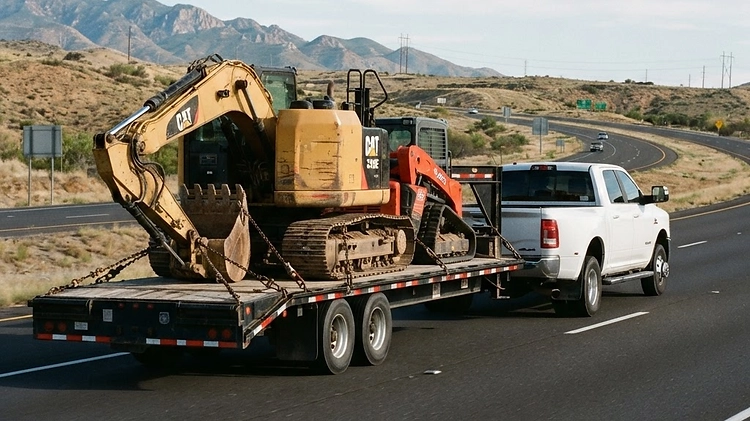
When you buy a truck with an advertised towing capacity of 10,000 pounds, it is tempting to assume you can safely hitch up a 10,000-pound trailer and hit the highway. However, real-world towing dynamics, payload bottlenecks, and safety margins dictate a much more conservative approach. The 80/20 towing rule is a critical guideline used by seasoned haulers to ensure safety, reduce vehicle wear, and maintain control under adverse conditions. This comprehensive guide breaks down why you should never tow at maximum capacity and how to calculate your true safe hauling limit.\n\n## What is the 80/20 Towing Rule?\n\nThe 80/20 towing rule is a widely accepted industry standard that recommends never towing more than 80% of your vehicle's maximum rated towing capacity. The remaining 20% serves as a safety buffer. For example, if your truck is rated to tow 10,000 pounds, your maximum loaded trailer weight should not exceed 8,000 pounds.\n\n

\n\nThis buffer is not just a suggestion; it is a practical necessity. Advertised towing capacities are calculated under ideal conditions: flat roads, perfect weather, a single 150-pound driver, and no additional cargo in the truck. In the real world, you are hauling tools, passengers, and navigating steep grades or high winds. By adhering to the 80/20 rule, you ensure your tow vehicle has the reserve power and braking authority needed for emergency maneuvers. For more foundational knowledge, visit our comprehensive trailer guides hub.\n\n## Why Your Advertised Towing Capacity is a Myth\n\nTruck manufacturers use the SAE J2807 standard to determine tow ratings, but these tests do not account for the specific way you use your truck. The most common limiting factor is not the towing capacity itself, but the payload capacity. Every pound of tongue weight from your trailer presses down on your truck's rear axle, consuming payload.\n\nIf you have a family of four and a bed full of gear, you may run out of payload capacity long before you reach your maximum towing limit. This is known as the payload bottleneck. To understand this dynamic in depth, read our guide on The Payload Bottleneck: Why Your Truck Can't Tow Its Maximum Rating. Furthermore, adding aftermarket bumpers, toolboxes, or larger tires reduces your available payload. Learn more about How Trailer Accessories and Upgrades Reduce Your True Payload Capacity.\n\n## The Hidden Dangers of Towing at 100% Capacity\n\nPushing your truck to its absolute limit introduces severe mechanical and safety risks. When you operate at 100% capacity, your engine and transmission run hotter, accelerating wear and increasing the risk of failure on steep inclines. Braking distances increase exponentially, making it difficult to stop safely in an emergency.\n\n


\n\nAdditionally, towing at maximum capacity makes your setup highly susceptible to trailer sway, especially in high winds or when passed by large semi-trucks. Proper weight distribution is critical, but even a perfectly balanced load can become unstable if the tow vehicle is maxed out. For a deeper dive into weight transfer, check out How to Determine Your True Trailer Tow Limit: Weight Transfer & Payload Math. If you are hauling heavy machinery, such as on our equipment trailers, this safety margin becomes even more critical.\n\n## Key Specifications: Decoding Your Truck's Door Sticker\n\nTo apply the 80/20 rule correctly, you must understand the acronyms on your truck's driver-side door jamb sticker. These numbers are the legal and mechanical limits for your specific VIN.\n\n* GVWR (Gross Vehicle Weight Rating): The maximum allowable weight of the fully loaded tow vehicle, including passengers, cargo, and tongue weight. See our Trailer GVWR vs. Payload Capacity Guide.\n* GCWR (Gross Combined Weight Rating): The maximum allowable weight of the tow vehicle and the loaded trailer combined. Read our GCWR vs. GVWR Towing Math Guide.\n* GAWR (Gross Axle Weight Rating): The maximum weight a single axle can safely carry. Learn more in our Trailer GVWR vs. GAWR Guide.\n* Payload Capacity: The total weight the truck can carry in the cab and bed, including the trailer's tongue weight.\n\n## How to Calculate Your True 80% Safe Towing Limit\n\nCalculating your safe towing limit requires basic math. First, determine your truck's GCWR and its actual curb weight (weighed at a scale with your typical passengers and cargo). Subtract the loaded truck weight from the GCWR to find your true maximum towing capacity. Then, multiply that number by 0.80 to find your 80% safe limit.\n\n

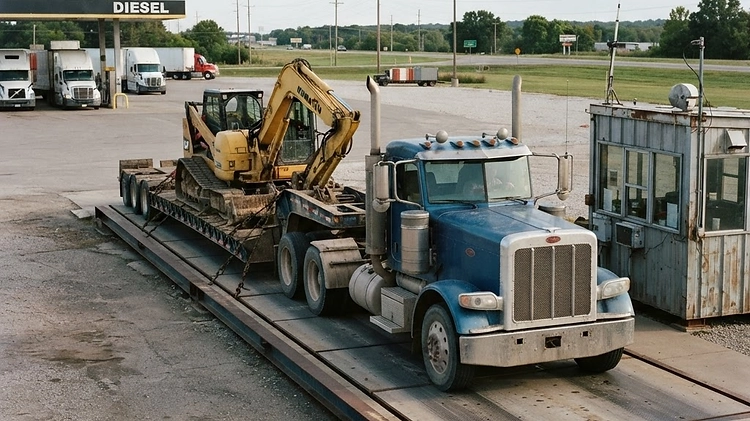
\n\nFor example, if your GCWR is 15,000 lbs and your loaded truck weighs 6,000 lbs, your max tow capacity is 9,000 lbs. Applying the 80/20 rule (9,000 x 0.80), your safe trailer weight is 7,200 lbs. For a step-by-step breakdown of these calculations, review our Trailer Payload Math Explained Guide. If you are unsure about trailer dimensions, our guide on What Size Trailer Do I Need? can help you match the right trailer to your vehicle.\n\n## Real-World Examples: Applying the Rule to Popular Trailers\n\nWhether you are looking for trailers for sale in Texas for oilfield work or hauling construction gear in Denver, CO, the 80/20 rule applies universally. Consider a heavy-duty setup using gooseneck trailers. Goosenecks transfer about 20-25% of their weight to the truck's rear axle. If you are towing the 2027 MAXX-D YDX 8.5x32 22.5K Gooseneck, the pin weight alone could exceed 4,500 lbs, instantly maxing out the payload of most 3/4-ton trucks, even if the towing capacity says otherwise.\n\nSimilarly, if you are hauling a skid steer on the 2026 Iron Bull 7x20 10K Gravity Tilt Equipment Trailer, you must factor in the weight of the trailer itself plus the machine. If the combined weight is 8,500 lbs, you need a truck with a true towing capacity of at least 10,625 lbs to stay within the 80% safety margin. For more on axle configurations, see our Spread Axle vs. Closed Tandem Guide.\n\n## Bottom Line\n\nThe 80/20 towing rule is your best defense against premature vehicle wear, dangerous sway, and catastrophic accidents. By leaving a 20% safety margin, you ensure your truck has the capability to handle unexpected challenges on the road. Always verify your numbers against your truck's door sticker, and never rely solely on the advertised towing capacity in a brochure. Ready to find a trailer that perfectly matches your tow vehicle? Browse our complete inventory in the Prime Trail Trailers Shop today.
FAQ
Have Questions? We're Here to Help
Still unsure which trailer fits your needs, or need specs, pricing or delivery advice? The Prime Trail Trailers team is ready to answer your questions and help you find the right rig.
Prime Trail Trailers
Prime Trail Trailers is a family-owned trailer dealer in Markle, Indiana, stocking utility, dump, enclosed, equipment, car hauler and gooseneck trailers with nationwide delivery. This guide is based on what our customers ask us most and the trailers we sell every day.
More about Prime Trail Trailers