
Spread Axle vs. Closed Tandem Trailers: Weight Distribution and Legal Axle Limits
Understand the critical differences between spread axle and closed tandem trailers, including weight distribution dynamics, legal axle limits, and payload optimization.
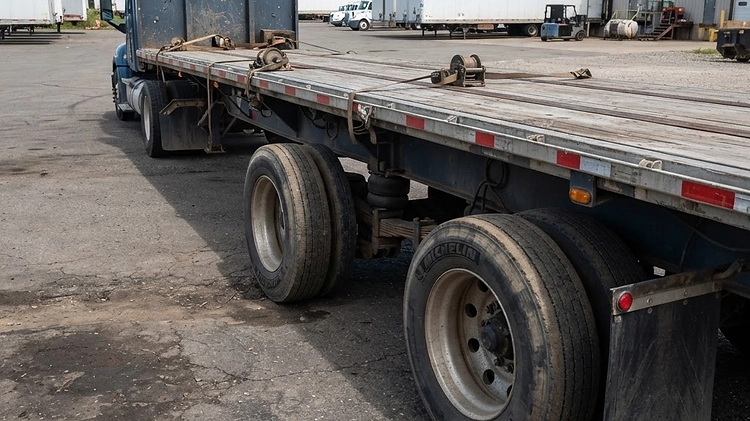
Quick Summary
Understand the critical differences between spread axle and closed tandem trailers, including weight distribution dynamics, legal axle limits, and payload optimization.
Maximizing your payload without risking a DOT violation requires a deep understanding of how your trailer's axle configuration affects weight distribution. Whether you are hauling heavy equipment across state lines or managing a regional hotshot operation, the choice between a spread axle and a closed tandem setup dictates how you must load your freight.
In this comprehensive guide, we will break down the weight distribution dynamics, legal axle limits, and operational pros and cons of spread axle versus closed tandem trailers so you can make an informed decision for your hauling business. For more foundational towing knowledge, visit our towing and capacity guides hub.
Understanding Trailer Axle Configurations
The distance between your trailer's axles plays a massive role in how weight is transferred to the road surface. The Federal Bridge Gross Weight Formula dictates that the allowable weight on any group of axles is determined by the number of axles and the distance between them. This is why axle spacing is a critical specification on flatbed trailers and deckover trailers.

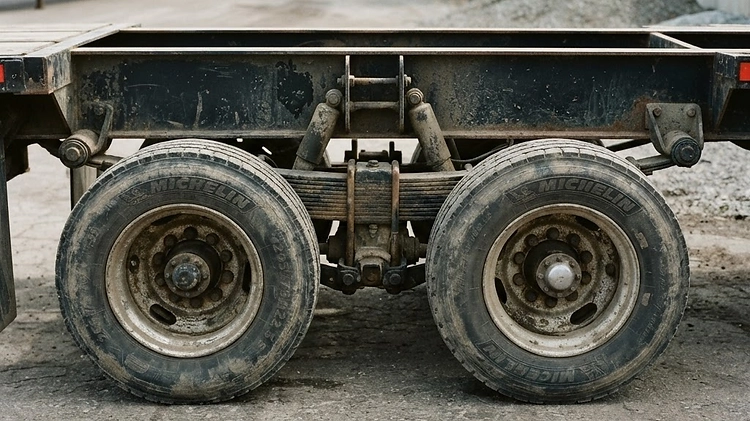
Closed Tandem Axles
In a closed tandem configuration, the two trailer axles are positioned close together, typically with a spacing of 49 to 54 inches from the center of the front axle to the center of the rear axle. Because the axles are grouped tightly, they are treated as a single tandem axle group under federal weight regulations.
Spread Axles
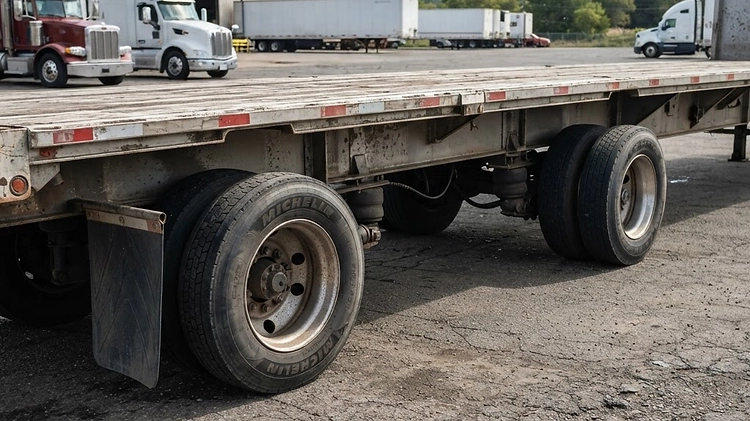
In a spread axle configuration, the two trailer axles are separated by a much larger distance, most commonly 10 feet (120 inches) or more. Because of this wide spacing, the Federal Bridge Formula treats each axle as an independent single axle rather than a tandem group, which significantly alters the legal weight limits.
Legal Axle Weight Limits: The Federal Bridge Formula
When hauling commercial freight, you must comply with federal and state axle weight limits. Understanding how these limits apply to your specific axle configuration is essential for avoiding overweight fines and ensuring safe transport. For a deeper dive into axle ratings, review our guide on Trailer Axle Weight Ratings (GAWR) Explained.
Closed Tandem Weight Limits
Under federal regulations, a closed tandem axle group (axles spaced between 40 and 96 inches apart) is legally limited to a maximum of 34,000 pounds combined. This means that the total weight resting on the two trailer axles cannot exceed 34,000 pounds, regardless of the individual axle ratings.
Spread Axle Weight Limits
Because spread axles are spaced 10 feet or more apart, they are legally considered two separate single axles. Federal law allows up to 20,000 pounds on a single axle. Therefore, a spread axle trailer can legally carry up to 20,000 pounds on the front trailer axle and 20,000 pounds on the rear trailer axle, for a combined total of 40,000 pounds. This 6,000-pound advantage over closed tandems is a primary reason why many heavy haulers prefer spread axle configurations.
Weight Distribution Dynamics: Spread Axle vs. Closed Tandem
How you load your trailer depends entirely on your axle setup. Improper weight distribution can lead to overloaded axles, poor handling, and excessive wear on your tow vehicle. For a comprehensive look at balancing your load, check out our Trailer Axle Weight Distribution Guide.


Loading a Closed Tandem Trailer
With a closed tandem trailer, the 34,000-pound limit means you must be highly precise with your load placement. The center of gravity of your freight must be carefully positioned to ensure that neither the trailer's tandem group nor the tow vehicle's drive axles are overloaded. If a heavy coil or piece of machinery is placed too far forward, it will overload the drive axles. If placed too far back, it will overload the trailer's tandem group.
Loading a Spread Axle Trailer
A spread axle trailer is much more forgiving when it comes to load placement. Because you have a 40,000-pound allowance across the trailer axles, you have a larger "sweet spot" for positioning heavy freight. You can place a heavy load further back on the trailer without exceeding the legal limits, which takes weight off the tow vehicle's drive axles. This flexibility is especially valuable for hotshot drivers operating in regions like Texas; if you are looking for trailers for sale in Texas, a spread axle setup can simplify your load planning.
Pros and Cons of Closed Tandem Trailers
While spread axles offer weight advantages, closed tandem trailers have their own distinct benefits, particularly when it comes to maneuverability and tire wear.
Pros:
- Maneuverability: Closed tandems have a shorter effective wheelbase, making them much easier to back up and maneuver in tight spaces, such as urban job sites or crowded truck stops.
- Tire Wear: Because the axles are close together, they pivot easily during turns. This minimizes "tire scrub" (the dragging of tires sideways across the pavement), resulting in significantly longer tire life.
- Toll Costs: In some states, toll roads charge based on axle spacing, and closed tandems may incur lower fees.
Cons:
- Lower Axle Weight Limit: The 34,000-pound limit restricts how much weight you can place on the rear of the trailer.
- Strict Load Placement: You must be highly accurate when balancing the load to avoid overloading the drive or trailer axles.
Pros and Cons of Spread Axle Trailers
Spread axle trailers are the go-to choice for many flatbed and step-deck operators, but they come with operational trade-offs.

Pros:
- Higher Axle Weight Limit: The 40,000-pound combined limit allows for heavier payloads and more flexible load placement.
- Stability: The wider stance of the axles provides a smoother ride and greater stability, especially when hauling top-heavy loads.
- Forgiving Load Distribution: It is much easier to balance a load and stay within legal axle limits.
Cons:
- Tire Scrub: During tight turns, the wide spacing causes the tires (especially the front axle tires) to drag sideways across the pavement. This severe tire scrub dramatically accelerates tire wear and can even damage suspension components over time.
- Maneuverability: The longer effective wheelbase makes spread axle trailers harder to maneuver in tight quarters.
- Curb Weight: Spread axle setups often require a heavier trailer frame to support the wide axle span, which can slightly reduce your overall payload capacity. Learn more about how curb weight affects your hauling limits in our guide on Trailer GVWR vs. Payload Capacity.
How to Calculate Your True Payload Capacity
Regardless of whether you choose a spread axle or a closed tandem, you must always calculate your true payload capacity based on your trailer's Gross Vehicle Weight Rating (GVWR), Gross Axle Weight Rating (GAWR), and curb weight.
To determine your maximum payload, subtract the trailer's empty curb weight from its GVWR. However, you must also ensure that the loaded weight does not exceed the combined GAWR of the axles. For a detailed breakdown of this math, read our Trailer Payload Math Explained guide.
If you are hauling in the Southeast, such as looking for trailers for sale in Florida, ensuring your setup meets both federal and state-specific bridge laws is crucial for compliance.
Bottom Line
Choosing between a spread axle and a closed tandem trailer comes down to your specific hauling needs. If you prioritize maneuverability and lower tire maintenance costs, a closed tandem is likely the better choice. However, if you need maximum payload flexibility and the ability to legally carry heavier weights on the trailer axles, a spread axle configuration is the superior option.
Ready to upgrade your hauling capabilities? Browse our extensive inventory of commercial-grade trailers, including the 2026 PJ Trailers L6 8.5X24 10k Deckover and the heavy-duty 2026 Horizon FTZ 8.5x40 16k Gooseneck HotShot Trailer. Visit our shop inventory hub to find the perfect trailer for your business today.
Shop Related Trailers
FAQ
Have Questions? We're Here to Help
Still unsure which trailer fits your needs, or need specs, pricing or delivery advice? The Prime Trail Trailers team is ready to answer your questions and help you find the right rig.
Prime Trail Trailers
Prime Trail Trailers is a family-owned trailer dealer in Markle, Indiana, stocking utility, dump, enclosed, equipment, car hauler and gooseneck trailers with nationwide delivery. This guide is based on what our customers ask us most and the trailers we sell every day.
More about Prime Trail Trailers