
Trailer Axle Diameter and Weight Capacity Guide: How to Identify Your Axle Rating
Learn how to determine your trailer's axle weight capacity by measuring its diameter. Use our axle diameter chart to calculate your true payload limits safely.
Quick Summary
Learn how to determine your trailer's axle weight capacity by measuring its diameter. Use our axle diameter chart to calculate your true payload limits safely.
Understanding your trailer's true weight capacity is the foundation of safe towing, and that capacity is directly dictated by your axles. Whether you are hauling heavy machinery on an equipment trailer or moving landscaping gear, exceeding your axle's structural limits can lead to catastrophic failure, blown tires, and severe accidents. But what happens when you buy a used trailer and the manufacturer's data plate is faded, missing, or illegible?
Fortunately, you can reliably estimate your trailer's Gross Axle Weight Rating (GAWR) by measuring the physical diameter of the axle tube. This guide will walk you through how to measure your trailer axle, how to use our axle diameter-to-capacity chart, and how to calculate your safe payload limits so you can tow with confidence.
Why Trailer Axle Diameter Matters for Payload Capacity
The main factor that determines a utility trailer’s weight limit is the load rating of its axle. Trailer axles are engineered and rated based on their diameter and wall thickness, which dictate their overall structural strength. The thicker the axle tube, the more weight it can safely carry without bending or breaking under dynamic loads.

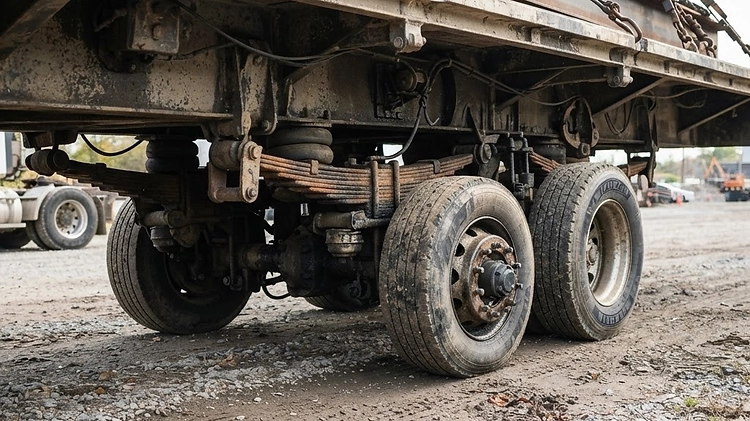
When you load a trailer, the full weight of the cargo and the trailer frame itself (minus the tongue weight supported by the tow vehicle) rests entirely on the axles. If you attempt to haul a load that exceeds the axle's capacity, or if you load the weight in an extremely unbalanced way, you run the risk of the axle bowing, snapping, or causing a catastrophic blowout at highway speeds. Knowing your axle's capacity is critical before you browse utility trailers or load up for a job.
For more context on how axle ratings fit into your overall towing math, review our guide on Trailer GVWR vs. GAWR: Understanding Axle Ratings and Safe Towing Limits.
How to Find Your Trailer's Axle Weight Rating (GAWR)
Before crawling under your trailer with a tape measure, you should always try to find the official manufacturer ratings. The most accurate way to determine your trailer's axle capacity is to locate the trailer's data plate or VIN sticker.
This plate is usually attached to the trailer’s tongue, the front driver-side frame rail, or inside the gooseneck neck. On this plate, you will find an entry labeled "GAWR" (Gross Axle Weight Rating). This number represents the maximum distributed weight that a single axle can support. If your trailer has multiple axles, the GAWR listed is typically per axle.
If the data plate is missing—a common issue with older or custom-built trailers—you can look for an identification tag welded or riveted directly to the center of the axle tube itself. Axle manufacturers like Dexter or Lippert often stamp the weight rating and serial number directly onto the axle. If both the trailer VIN plate and the axle tag are gone, measuring the axle diameter is your best fallback method.
Trailer Axle Diameter to Weight Capacity Chart
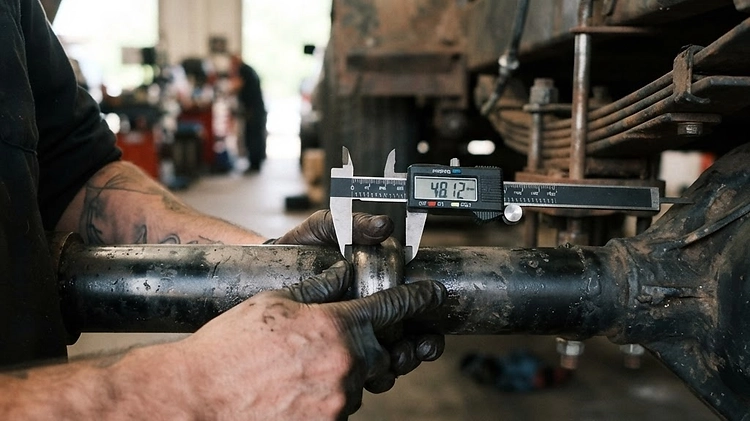
If you need to estimate your axle's capacity, you can measure the outside diameter of the main axle tube. Use a set of digital calipers for the most accurate reading, or wrap a flexible measuring tape around the circumference and divide by 3.14 (pi) to get the diameter.

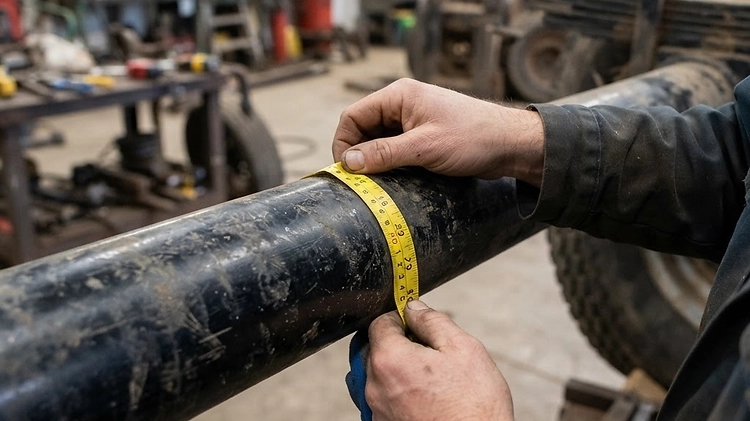
Once you have the diameter measurement, you can reasonably estimate the load capacity of the axle using standard industry sizing. Below is a quick reference chart for common tubular trailer axles:
| Axle Tube Diameter | Estimated Weight Capacity (Per Axle) | Common Trailer Applications | | :--- | :--- | :--- | | 1.50 inches | Up to 1,000 lbs | Small utility trailers, jet ski trailers | | 1.75 inches | Up to 2,000 lbs | Light-duty cargo trailers, single-axle utility | | 2.375 inches | Up to 3,500 lbs | Standard tandem-axle utility, landscape trailers | | 3.00 inches | Up to 6,000 lbs | Car haulers, medium equipment trailers | | 3.50 inches | Up to 8,000 lbs | Heavy-duty dump trailers, large enclosed trailers | | 4.00 inches | Up to 9,000 lbs | Commercial flatbeds, heavy equipment haulers | | 5.00 inches | Up to 10,000+ lbs | Dual-tandem goosenecks, heavy commercial trailers |
Note: These capacities are estimates based on standard axle wall thicknesses. Always err on the side of caution and consult a professional if you are unsure. For heavy-duty applications, consider upgrading to robust options like the 2027 PJ T6 7x20 Gooseneck Gravity Tilt Equipment Trailer.
Single vs. Tandem Axle Capacities: Doing the Math
It is important to remember that the capacities listed above are per axle. To determine the total axle capacity of your trailer, you must multiply the per-axle load capacity by the number of axles your trailer has.
For example, if you have a tandem-axle trailer equipped with two 2.375-inch diameter axles, each axle is rated for 3,500 lbs.
- 3,500 lbs + 3,500 lbs = 7,000 lbs combined axle rating.
However, combined axle capacity alone does not equal your payload capacity. To calculate your true payload, you must subtract the empty weight of the trailer from the total capacity. Furthermore, part of a properly loaded trailer's weight is supported vertically by the tow vehicle through the hitch. A correctly distributed bumper-pull load transfers approximately 10 to 15 percent of the total weight to the tongue.
For a deep dive into calculating your true hauling limits, check out our guide on Trailer Payload Math Explained: How to Calculate True Carrying Capacity from GVWR and Curb Weight.
Signs of an Overloaded or Failing Trailer Axle
Even if you know your axle's capacity, poor weight distribution or accidental overloading can cause severe damage. It is crucial to inspect your axles regularly, especially if you frequently haul heavy loads across states or operate equipment trailers in demanding environments like construction sites in Chicago, IL.


Watch for these common signs of axle stress or failure:
- Negative Camber (Bowing): Trailer axles are manufactured with a slight upward bow in the center (positive camber). When loaded, the axle should flatten out. If your axle is bowing downward in the center, it is permanently bent from overloading and must be replaced.
- Uneven Tire Wear: Excessive wear on the inside tread of your trailer tires often indicates a bent axle or worn suspension components.
- Dog Tracking: If your trailer pulls to one side or doesn't track straight behind your tow vehicle, the axles may be misaligned or damaged.
- Excessive Heat: After towing, carefully feel the wheel hubs. If they are too hot to touch, you may have overloaded bearings or failing brakes, which can quickly destroy an axle spindle.
If you are outfitting a new work truck to handle heavy loads, ensure your bed is up to the task with options like the 2026 Wil-Ro Utility Truck Bed.
Bottom Line
Knowing how much weight your utility trailer can handle is non-negotiable for safe towing. By locating your GAWR on the VIN plate or measuring your trailer's axle diameter, you can accurately determine your load limits and prevent dangerous equipment failures on the highway. Always remember to factor in the empty weight of your trailer and ensure proper weight distribution to keep your axles, tires, and tow vehicle in top condition.
If you are looking for a trailer with guaranteed capacity for your toughest jobs, explore our complete inventory of heavy-duty trailers at the Prime Trail Trailers Shop. Whether you need a light-duty utility trailer or a massive dual-tandem gooseneck, we have the right equipment to keep you hauling safely. For local buyers, check out our selection of trailers for sale in Indiana.
FAQ
Have Questions? We're Here to Help
Still unsure which trailer fits your needs, or need specs, pricing or delivery advice? The Prime Trail Trailers team is ready to answer your questions and help you find the right rig.
Prime Trail Trailers
Prime Trail Trailers is a family-owned trailer dealer in Markle, Indiana, stocking utility, dump, enclosed, equipment, car hauler and gooseneck trailers with nationwide delivery. This guide is based on what our customers ask us most and the trailers we sell every day.
More about Prime Trail Trailers