
How to Safely Load a Flatbed Trailer: Weight Distribution & Axle Limits
Learn how to safely load a flatbed or deckover trailer with proper weight distribution, balance techniques, and FMCSA axle limit compliance for 2026.

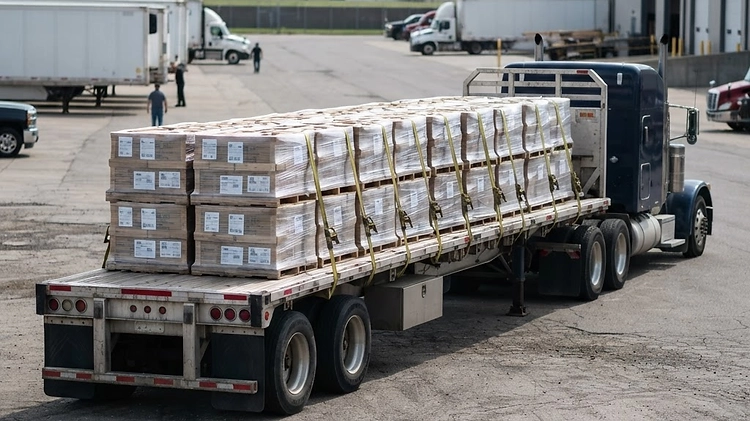
Loading a flatbed trailer might look straightforward, but doing it safely requires a deep understanding of weight distribution, center of gravity, and axle limits. Unlike enclosed trailers, flatbeds and deckovers lack walls to contain shifting cargo, making proper loading and balancing the most critical steps before you ever touch a tie-down strap. Whether you are hauling palletized freight, lumber, or steel coils, mastering flatbed weight distribution ensures a stable tow, prevents catastrophic trailer sway, and keeps you compliant with FMCSA regulations.
The Physics of Flatbed Trailer Weight Distribution
The fundamental rule of loading any trailer is the 60/40 principle: approximately 60% of the cargo weight should be positioned forward of the trailer axles, with 40% behind them. This ensures proper tongue weight (or pin weight for goosenecks), which is essential for maintaining steering control and preventing the dangerous pendulum effect known as trailer sway.

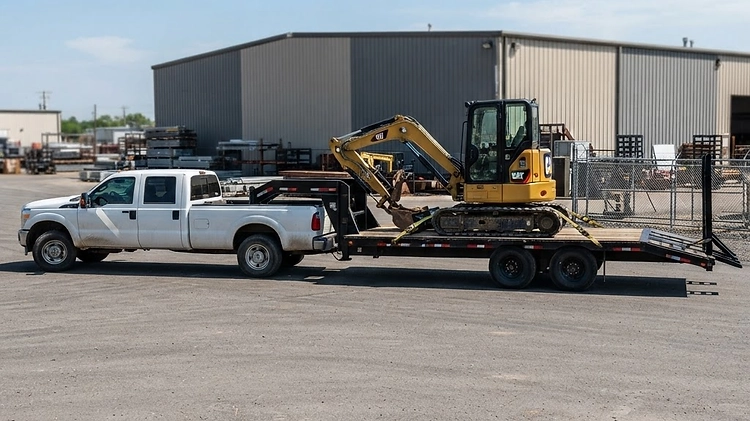
When loading a flatbed, you must also consider the lateral (side-to-side) balance. Cargo must be centered perfectly along the longitudinal axis of the trailer. Even a slight offset of heavy materials like steel plates or concrete blocks can overload one side of the suspension, leading to uneven tire wear, blown bearings, and a severe rollover risk on highway curves. For a deeper dive into how improper loading affects handling, review our guide on the physics of trailer sway and cargo loading.
Pre-Loading Inspection and Deck Preparation
Before any cargo touches the deck of your flatbed trailers, a thorough pre-loading inspection is mandatory. A clean, structurally sound deck is the foundation of safe hauling.
- Clear Debris: Sweep the deck completely. Small rocks, ice, or oil spills can drastically reduce the friction between the cargo and the deck, increasing the likelihood of forward shifting during hard braking.
- Inspect the Decking: Check wood planks for rot, cracks, or missing screws. For steel or aluminum decks, look for cracked welds or warped crossmembers.
- Check Securement Points: Inspect all stake pockets, rub rails, D-rings, and sliding winch tracks. A compromised tie-down point renders your securement efforts useless.
How to Balance Different Types of Flatbed Cargo
Not all cargo behaves the same way. Pipes roll, lumber shifts, and machinery has awkward center-of-gravity spots. Understanding how to position specific freight on deckover trailers is crucial for safety.

Palletized Goods and Lumber
When loading uniform pallets or bunks of lumber, start from the front bulkhead (if equipped) and work your way back, keeping the load centered. If you have an odd number of pallets, place the heaviest pallets over the axles and distribute the lighter ones toward the front and rear to maintain the 60/40 split. Always ensure the load is tight against itself to prevent internal shifting.
Long Cargo (Pipes and Steel Beams)
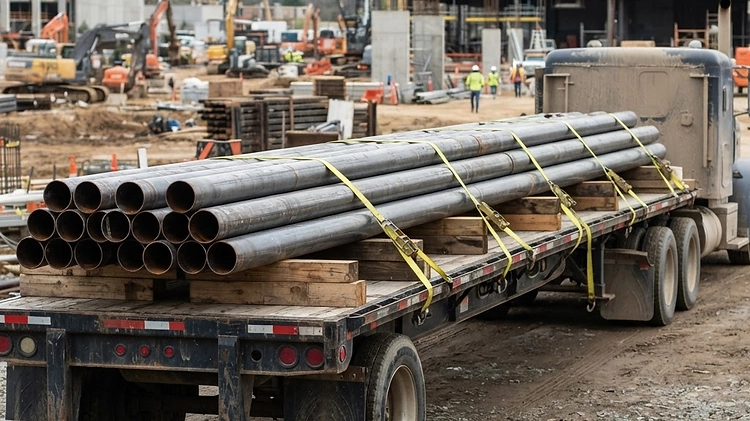
Long, rigid cargo must be supported evenly across the deck. Use dunnage (wood blocks) to elevate the cargo slightly, allowing space for lifting straps and preventing the cargo from resting directly on the deck, which can cause damage. Ensure the center of gravity of the entire bundle is positioned slightly forward of the axles.
Concentrated Loads (Coils and Heavy Machinery)
Concentrated loads exert massive pressure on a small area of the deck. These must be placed directly over the trailer's structural main beams, never just on the outer decking. For heavy, dense items, you must calculate your towing capacity vs. payload capacity to ensure you aren't overloading the trailer's GVWR.
FMCSA Axle Weight Limits and Legal Compliance
Proper loading isn't just about physics; it's about the law. The Federal Motor Carrier Safety Administration (FMCSA) strictly enforces axle weight limits to protect highway infrastructure.
For commercial haulers, the federal bridge formula dictates the maximum allowable weight based on the number of axles and the distance between them. Generally, a single axle is limited to 20,000 lbs, and a tandem axle group is limited to 34,000 lbs. If you load too much weight at the front of the flatbed, you risk overloading your tow vehicle's drive axles. If you load too far back, you overload the trailer axles.
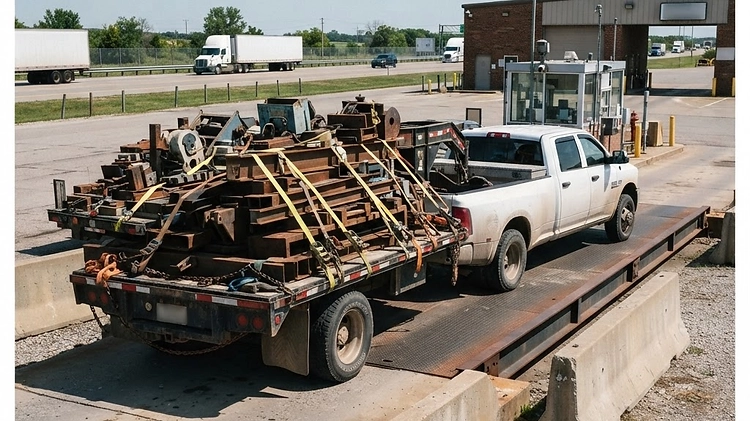
To ensure compliance, always scale your load at a certified weigh station before hitting the highway. If you are running a hotshot setup, understanding the difference between bumper pull vs. gooseneck trailers is vital, as goosenecks transfer weight directly over the truck's rear axle, allowing for heavier, more stable loads.
Key Specifications: Flatbed vs. Deckover Trailers
When choosing the right open trailer for your hauling needs, understanding the structural differences is key to safe loading.
| Feature | Standard Flatbed (Equipment Style) | Deckover Trailer | | :--- | :--- | :--- | | Deck Height | Lower (typically 18-24 inches) | Higher (typically 32-36 inches) | | Width | Restricted by fenders (usually 82-83 inches) | Full width (up to 102 inches) | | Center of Gravity | Lower, better for tall, heavy items | Higher, requires careful cornering | | Best For | Skid steers, tall machinery, vehicles | Wide pallets, lumber, wide equipment |

If you are hauling heavy loads across state lines, such as delivering trailers for sale in Texas or running freight through Houston, TX, having the right trailer configuration and a properly calibrated trailer brake controller is non-negotiable for safety.
Bottom Line
Safely loading a flatbed trailer is a skill that requires patience, planning, and a strict adherence to weight distribution principles. By mastering the 60/40 rule, centering your cargo laterally, and respecting FMCSA axle limits, you protect your equipment, your cargo, and everyone else on the road. Before your next haul, make sure you know how to measure trailer tongue weight accurately.
Ready to upgrade your hauling capabilities? Explore our extensive inventory of heavy-duty open trailers, including the 2025 Double-A 22′ Deck Over Trailer and the 2025 Double-A 24′ Gooseneck Deckover at the Prime Trail Trailers shop. For more expert advice, visit our guides hub.
Shop Related Trailers
FAQ
Have Questions? We're Here to Help
Still unsure which trailer fits your needs, or need specs, pricing or delivery advice? The Prime Trail Trailers team is ready to answer your questions and help you find the right rig.