
Trailer Brake Controller Setup & Tuning Guide: Proportional vs. Time-Delayed Systems
Master trailer brake controller setup, wiring, and on-road gain tuning. Learn how proportional and time-delayed controllers stop heavy loads safely.
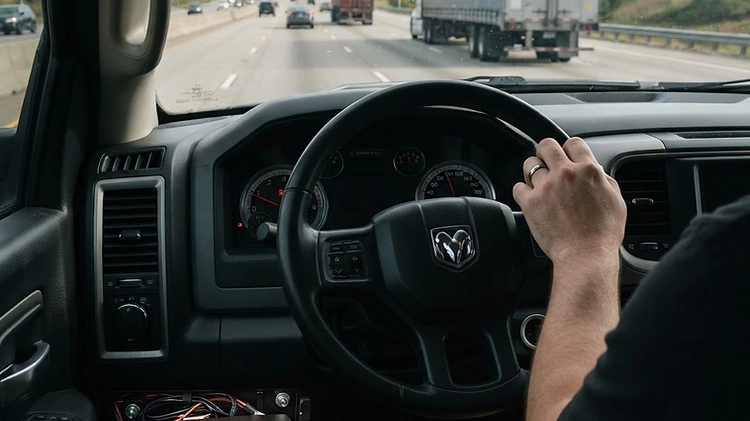
Quick Summary
Master trailer brake controller setup, wiring, and on-road gain tuning. Learn how proportional and time-delayed controllers stop heavy loads safely.
Towing heavy cargo without synchronized trailer braking places catastrophic strain on your tow vehicle's powertrain and hydraulic calipers. A properly installed, dialed-in electric trailer brake controller ensures that the trailer stops itself, stabilizing your rig across emergency stops, mountain descents, and sudden highway slowdowns. Whether hauling skid steers on commercial equipment trailers or pulling a tandem-axle dump bed filled with wet gravel, mastering brake controller configuration is non-negotiable for safe towing.
In this comprehensive setup and tuning manual, we demystify the mechanical physics of electric trailer brakes, compare proportional versus time-delayed systems, outline proper wiring and mounting practices, and give you a repeatable, step-by-step road calibration procedure to dial in your brake gain.
How Electric Trailer Brake Controllers Work
Modern utility, equipment, and commercial haulers rely primarily on electrically actuated drum or disc brakes. Inside each brake hub, an electromagnetic actuator sits adjacent to a mechanical lever connected to curved brake shoes. When your truck sends an electrical current through the 7-way round trailer connector, the magnet energizes, sticks against the spinning armature face of the drum, and pivots the actuating arm. That mechanical leverage drives the shoes outward against the friction surface of the brake drum, creating stopping power.

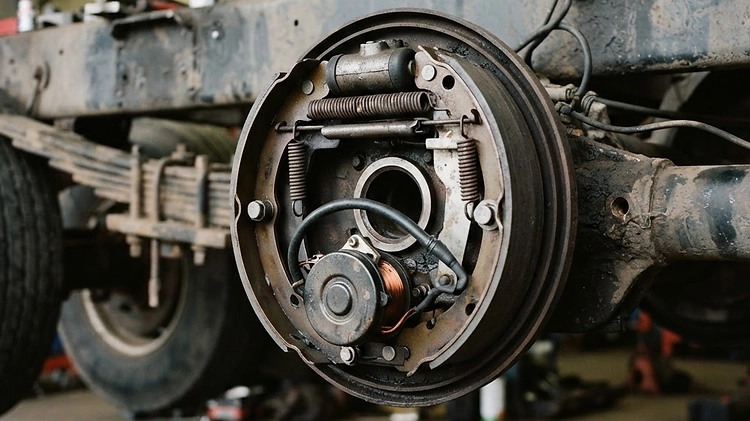
A trailer brake controller is an in-cab command center that modulates how much voltage (amperage) travels down the brake feed wire (typically blue on standard RV 7-way harness plugs). Without an active controller, tapping your truck's brake pedal does not engage the trailer's electric brakes at all. The controller allows you to adjust the base electrical output (gain), adjust response aggressiveness (boost or sensitivity), and activate the trailer brakes manually to arrest trailer sway before it causes a jackknife.
For a deeper look into the legal compliance requirements governing electric trailer brakes across state lines and gross trailer weight classes, explore our Federal DOT trailer regulations compliance guide.
Proportional vs. Time-Delayed Controllers: Which Is Best?
Choosing the right brake controller architecture is the foundation of towing stability. Aftermarket and factory-integrated brake controllers fall into two distinct engineering categories: proportional (inertia-based) controllers and time-delayed (timer-based) controllers.
Proportional (Inertia-Based) Brake Controllers
Proportional controllers utilize internal solid-state accelerometers to sense the deceleration rate of the tow vehicle. When you rest your foot lightly on the brake pedal while cruising to a stop sign, the internal sensor registers subtle inertia and sends low voltage to the trailer hubs. Conversely, when you slam on your brakes during an interstate emergency, the accelerometer detects rapid forward pitch and immediately sends maximum programmed voltage to the trailer brakes.
- Smooth Operation: Stopping matches the tow vehicle in real time with zero jerking or bucking.
- Reduced Component Wear: Prevents premature lockup and flat-spotting of expensive trailer tires.
- Dynamic Control: Adjusts braking force on uphill and downhill grades automatically.
Time-Delayed Brake Controllers
Time-delayed units operate on a predetermined power ramp curve. When the controller detects a signal from your truck's brake switch, it sends an initial burst of voltage, then gradually ramps up to the set maximum gain over several seconds, regardless of how hard or softly you hit the pedal.
- Lower Initial Cost: Budget-friendly option for light-duty personal utility hauling.
- Position Agnostic: Can be mounted at virtually any angle or orientation inside the cab.
- Jerky Stopping Dynamics: Can feel aggressive during gentle city stops and sluggish during panic maneuvers.
| Feature | Proportional (Inertia-Based) | Time-Delayed (Ramp-Based) | | :--- | :--- | :--- | | Sensor Technology | Internal 3-axis accelerometer | Internal electronic timer circuit | | Response Time | Instantaneous proportional output | Fixed delay ramping to set gain | | Towing Feel | Smooth, unified vehicle-trailer stop | Can surge or push during initial pedal press | | Best Use Case | Commercial hauling, equipment, and dump trailers | Light utility, seasonal, or occasional local towing | | Mounting Requirements | Must be aligned parallel to direction of travel | Can be mounted at any angle/pitch | | Tire & Brake Wear | Minimal; brakes engage in proportion to load | Higher risk of lockup or excessive wear |
For rigorous hauling applications—such as pulling an aggressive 16ft deckover dump trailer or hauling multi-ton machinery on heavy-duty equipment trailers—a proportional brake controller is the undisputed standard.
Wiring Configurations and In-Cab Mounting Rules
Most modern pickup trucks and full-size SUVs come equipped with factory-installed integrated brake controllers (ITBCs) or under-dash plug-and-play wiring harnesses. If your vehicle requires an aftermarket controller installation, you must understand the standard 4-wire color-coding convention.

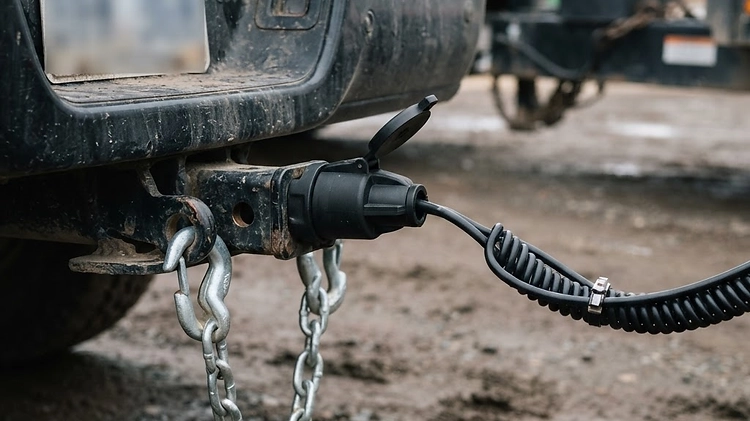
Standard Brake Controller Color Code
- Black (12V Positive Battery Power): Supplies operating current to the controller; must run through a 20A or 30A auto-reset circuit breaker directly to the positive battery terminal.
- White (Ground): Connected directly to the vehicle chassis or negative battery post to prevent floating ground faults.
- Red (Stoplight Trigger Wire): Taps into the cold side of the vehicle’s brake light switch (energizes only when the brake pedal is depressed).
- Blue (Trailer Brake Output Feed): Delivers modulated voltage to Pin 2 of the 7-way round blade trailer receptacle.
Mounting Geometry
If you install an inertia-based controller, internal sensors must align with the vehicle's direction of travel. Mounting the unit crooked or sideways introduces sensor bias, causing the brakes to either grab excessively during mild stops or fail to actuate during emergency braking. Most proportional controllers tolerate vertical tilt between -20 and 70 degrees, but they must point straight forward down the center line of the chassis. Always mount the unit within quick reach of the driver's right hand to allow immediate access to the manual override lever.
Reliable stopping begins with a balanced platform. Review our comprehensive pillar manual on towing capacity vs. payload capacity to verify that your tongue weight and axle weights sit well within the engineered envelope of your truck and trailer.
Step-by-Step Road Calibration and Gain Tuning
Never pull a loaded trailer onto high-speed highways without first tuning your brake gain. The optimal gain setting delivers maximum stopping force right below the threshold of trailer tire lockup.


Step 1: Perform the Static Pre-Trip Check
Before moving, hook up your trailer's safety chains, breakaway cable, and 7-way electrical umbilical cord. With the tow vehicle running, check the display on your brake controller. A solid numerical reading or icon indicates successful continuity with the trailer's brake magnets. If the controller flashes an error code (such as "OL", "NC", or "SH"), inspect your trailer plug for corrosion or broken ground circuits before proceeding.
Step 2: Set the Initial Baseline Gain
Park your rig on a flat, dry, paved surface (such as an empty industrial parkway or wide parking lot). Using the gain adjustment buttons or rotary knob on the face of the controller, set the display to a baseline starting point—typically 5.0 on a 1-to-10 scale.
Step 3: Test with the Manual Slide Lever
Accelerate your truck and trailer in a straight line to approximately 20 to 25 mph. Take your foot off the gas pedal and, without touching the vehicle's brake pedal, firmly squeeze the manual slide lever on your brake controller to 100% actuation.
- If the trailer tires screech and lock up: Your gain setting is too high. Dial the gain down by 0.5 increments (e.g., from 5.0 to 4.5) and repeat the 25-mph manual stop until the trailer comes to a swift, authoritative stop without skidding.
- If the trailer coasts slowly or pushes the truck: Your gain setting is too low. Increase the gain setting in 0.5 increments until you achieve strong deceleration just short of wheel lockup.
Step 4: Fine-Tune with the Foot Pedal
Once the manual override stops the combination securely, perform several regular stops using only your vehicle’s brake pedal. Pay close attention to the feel of the cab. If the trailer jerks backward against your hitch receiver when stopping, reduce your controller's sensitivity or boost setting. If you feel the trailer pushing the rear of your truck forward into the intersection, increase the base gain or bump the boost level up one notch.
Remember that empty trailers require dramatically less gain than fully loaded rigs. If you pull an empty 7x14 tandem axle dump trailer to the quarry with a gain of 4.0, you must recalculate and increase the gain to 7.0 or higher before driving home loaded with five tons of stone.
Using Boost Settings and Manual Overrides
Advanced proportional brake controllers feature two essential driver tools: multi-stage boost settings and the manual override slide lever.
Understanding Boost Modes
Boost modifies the initial aggression curve of proportional braking. Rather than starting at zero voltage, boost injects an immediate 15% to 30% electrical jolt the split second you touch your brake pedal.
- Boost OFF / Level 1: Ideal for empty trailers or when the trailer weighs significantly less than the tow vehicle.
- Boost Level 2: Recommended when the trailer weight roughly equals the tow vehicle weight (e.g., pulling a loaded utility or mid-weight cargo trailer behind a half-ton pickup).
- Boost Level 3: Designed for heavy-duty commercial applications where the fully loaded trailer weighs more than the tow vehicle, such as hauling heavy commercial equipment or pulling large dump trailers.
The Manual Override: Your Front-Line Defense Against Trailer Sway
If wind gusts, rutted asphalt, or improper tongue weight cause your trailer to sway, tapping your truck's brake pedal can provoke an uncontrollable jackknife. The safest maneuver is to maintain a steady throttle on the tow vehicle while manually activating the trailer brake controller slide lever with your fingers. Applying the trailer brakes independently stretches out the tow combination like a taught rope, instantly pulling the trailer back into straight-line tracking behind the tow vehicle.
Troubleshooting Common Brake Controller Faults
Electrical faults are the leading cause of trailer brake failure. If your in-cab controller stops communicating with your trailer, follow this diagnostic sequence:
- "No Connection" or "NC" Code: Unplug the 7-way connector and inspect the contacts. Spray electrical contact cleaner onto the prongs and look inside the rear of the connector for loose wire terminations. Check that the trailer tongue ground screw has not corroded.
- Weak or Spongy Trailer Braking: If your controller is set to maximum gain (10.0) yet the trailer barely slows, test the output voltage at the rear bumper socket with a multimeter while holding the manual slide lever. If output measures 12+ volts, your trailer brake shoes likely need manual adjustment via their internal star wheels, or the brake linings may be glazed or worn.
- Premature Brake Lockup on One Axle: If one tire locks up while others roll smoothly, pull the hub and examine the brake assembly. An axle seal leaking grease onto brake friction shoes will cause aggressive grabbing, or a misadjusted brake shoe may be dragging on the drum surface.
For broader hydraulic, electrical, and chassis inspection procedures, review our dump trailer maintenance checklist. If you encounter hydraulic pump issues on dump beds alongside your brake maintenance, see our guide on why your dump trailer won't lift. For expert answers on all trailer types, consult the central Prime Trail Trailers guides hub.
The Bottom Line
A dialed-in trailer brake controller transforms stressful heavy hauling into a confident, controlled drive. Taking fifteen minutes to run through the 25-mph calibration protocol protects your truck's transmission and brakes, eliminates hazardous sway, and ensures compliance with highway safety laws across North America.
If you are outfitting a new work rig or looking to upgrade to a commercial-grade hauler, explore our extensive Prime Trail Trailers inventory or speak directly with our team in Markle, IN to find the perfect hauling setup for your workload.
Shop Related Trailers
FAQ
Have Questions? We're Here to Help
Still unsure which trailer fits your needs, or need specs, pricing or delivery advice? The Prime Trail Trailers team is ready to answer your questions and help you find the right rig.
Prime Trail Trailers
Prime Trail Trailers is a family-owned trailer dealer in Markle, Indiana, stocking utility, dump, enclosed, equipment, car hauler and gooseneck trailers with nationwide delivery. This guide is based on what our customers ask us most and the trailers we sell every day.
More about Prime Trail Trailers