
Federal Bridge Formula Explained: How Axle Spacing Dictates Commercial Trailer Payload
Learn how the Federal Bridge Formula impacts commercial trailer payload limits, axle spacing requirements, and legal gross vehicle weights for heavy hauling.

Quick Summary
Learn how the Federal Bridge Formula impacts commercial trailer payload limits, axle spacing requirements, and legal gross vehicle weights for heavy hauling.
Navigating commercial trailer weight limits requires more than just knowing your gross vehicle weight rating (GVWR). For heavy haulers, understanding the Federal Bridge Formula is critical to maximizing payload while remaining compliant with DOT regulations. This guide breaks down how axle spacing dictates your legal carrying capacity and how to optimize your trailer setup for the road.
What is the Federal Bridge Formula?
Enacted by Congress in 1975, the Federal Bridge Formula was designed to protect highway bridges from the concentrated stress of heavy commercial vehicles. Instead of just capping the total weight of a truck and trailer, the formula limits the weight-to-length ratio of a vehicle crossing a bridge. This means that the closer your axles are together, the less weight they are legally allowed to carry.
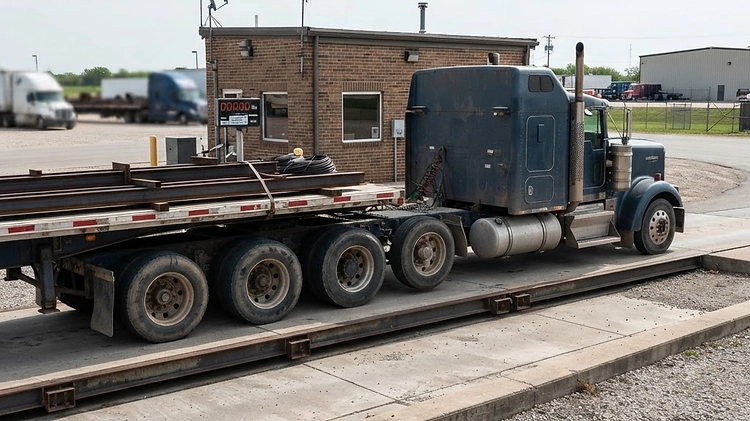
The formula is calculated as: W = 500 [LN/(N-1) + 12N + 36], where 'W' is the maximum weight in pounds, 'L' is the distance in feet between the outer axles of the group, and 'N' is the number of axles in that group. For commercial operators looking at flatbed trailers or hotshot trailers, this math dictates exactly how freight must be distributed.
How Axle Spacing Impacts Legal Weight Limits
Under federal law, the maximum gross vehicle weight (GVW) on the Interstate System is capped at 80,000 pounds. However, this weight must be properly distributed across the axles. A standard single axle is limited to 20,000 pounds, while a tandem axle (two axles spaced more than 40 inches but not more than 96 inches apart) is limited to 34,000 pounds.

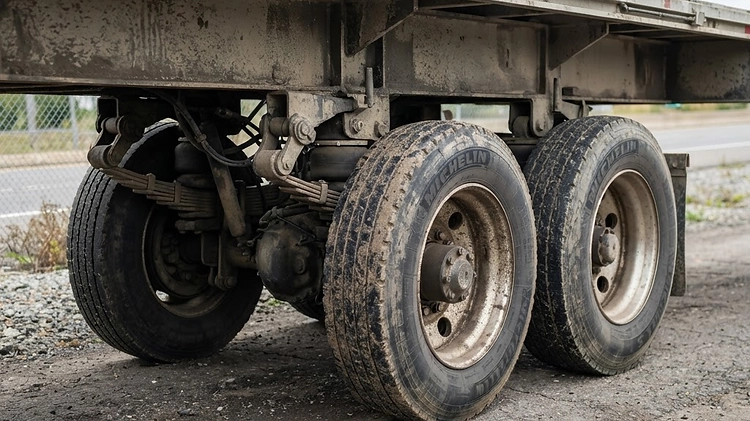
When you increase the distance between axles—such as with a spread-axle trailer setup—you can legally carry more weight on those specific axles, provided you don't exceed the 80,000-pound gross limit. This is why many operators hauling heavy equipment or dense materials prefer spread-axle configurations. If you are hauling in regions with strict enforcement, like trailers for sale in Texas, understanding these spacing rules is essential to avoid costly overweight fines.
Single, Tandem, and Tridem Axle Regulations
Different trailer configurations offer varying payload capacities based on the Bridge Formula. For example, a standard 53-foot flatbed trailer with a closed-tandem setup typically handles a freight weight of 45,000 to 48,000 pounds. The weight is usually distributed with 12,000 pounds on the steer axle, 34,000 pounds on the drive axles, and 34,000 pounds on the trailer tandem axles.

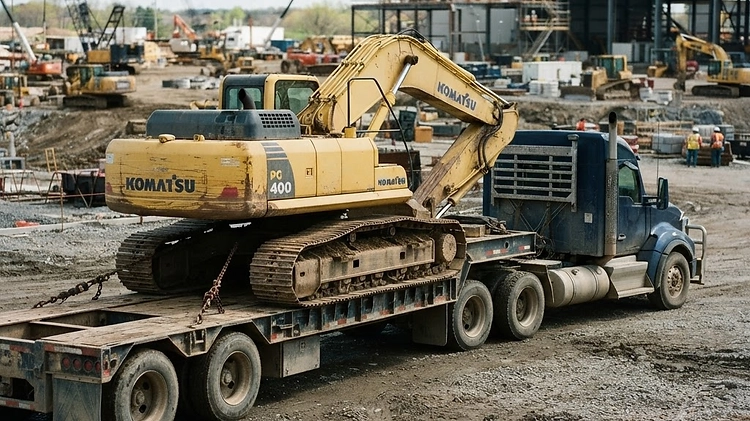
Adding a third axle (tridem) or a fourth axle (quad) changes the calculation. In states like Texas, a tridem axle group can legally carry up to 60,000 pounds, while a quad axle group can handle up to 50,000 pounds, depending on the specific spacing and state-level permits. Whether you are running a 2026 BEDBOSS Dually ArmorBed Flatbed Truck Bed or a 2026 Wil-Ro United HotShot Truck Bed, ensuring your tow vehicle and trailer axles are properly spaced is the key to maximizing your legal payload.
State vs. Federal Weight Enforcement
While the Federal Bridge Formula applies to the National Network and Interstate System, individual states often have their own specific regulations and permitting processes for non-interstate roads. For instance, operators running routes through Houston, TX must comply with both federal interstate limits and Texas Department of Motor Vehicles (TxDMV) size and weight limits when off the interstate.
Always check local regulations, as some states allow higher gross weights with specialized permits, while others strictly enforce the federal 80,000-pound cap regardless of the road type. For more comprehensive information on towing compliance, visit our guides hub.
Bottom Line
Mastering the Federal Bridge Formula is non-negotiable for commercial haulers looking to maximize payload safely and legally. By understanding how axle spacing impacts your allowable weight, you can choose the right trailer configuration for your specific freight needs. Ready to upgrade your hauling setup? Explore our full inventory at the Prime Trail Trailers Shop to find the perfect heavy-duty trailer for your business.
FAQ
Have Questions? We're Here to Help
Still unsure which trailer fits your needs, or need specs, pricing or delivery advice? The Prime Trail Trailers team is ready to answer your questions and help you find the right rig.
Prime Trail Trailers
Prime Trail Trailers is a family-owned trailer dealer in Markle, Indiana, stocking utility, dump, enclosed, equipment, car hauler and gooseneck trailers with nationwide delivery. This guide is based on what our customers ask us most and the trailers we sell every day.
More about Prime Trail Trailers