
Federal DOT Trailer Regulations: FMCSA Compliance, Brake Laws & Weight Rules
A complete DOT trailer compliance guide covering FMCSA regulations, 10,001+ lb thresholds, breakaway brake laws, lighting, and roadside inspection readiness.
Quick Summary
A complete DOT trailer compliance guide covering FMCSA regulations, 10,001+ lb thresholds, breakaway brake laws, lighting, and roadside inspection readiness.
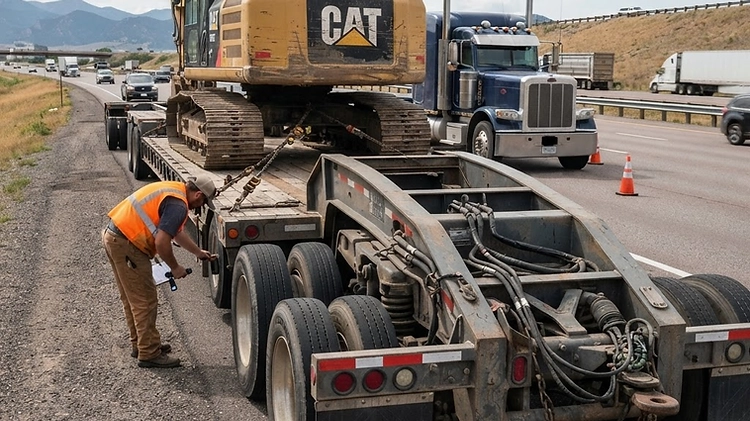
Operating a commercial trailer demands a clear, unflinching understanding of Department of Transportation (DOT) and Federal Motor Carrier Safety Administration (FMCSA) safety statutes. Whether hotshot hauling across state borders, pulling landscaping crews, or running skid steers to municipal job sites, falling out of compliance leads directly to costly out-of-service orders, severe roadside fines, and crippling CSA safety rating hits.
Navigating federal regulations requires dissecting the key thresholds where private hauling transitions into DOT-regulated commerce, mastering secondary breakaway braking rules, ensuring proper conspicuity tape installation, and structuring your rig to pass Level 1 roadside safety audits. For an expansive overview of trailer mechanics and safe towing setups, explore our core collection of in-depth towing and trailer guides.
The Critical Thresholds: GVWR, GCWR, and Commercial Status
Many independent contractors and fleet operators assume DOT oversight only applies to Class 8 semi-trucks. Under FMCSA Title 49 CFR § 390.5, a vehicle combination is legally classified as a Commercial Motor Vehicle (CMV) if it is utilized in furtherance of a commercial business and crosses either of two primary thresholds: operating at a Gross Vehicle Weight Rating (GVWR) or Gross Combination Weight Rating (GCWR) of 10,001 pounds or more, or transporting hazardous materials requiring placarding.

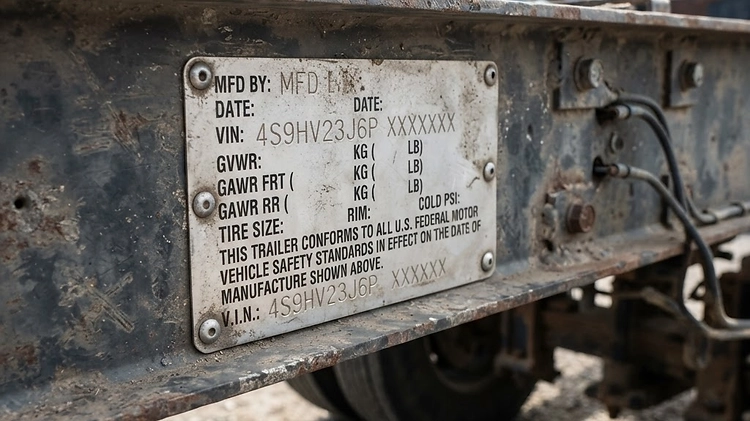
Understanding the exact mechanical distinction between your vehicle's raw weight limits and your cargo allowance is essential before hitching up; review our breakdown on towing capacity vs payload capacity to prevent dangerous structural overload. Once your combination vehicle rating exceeds 10,000 pounds in interstate commerce, your operation falls under federal jurisdiction. This mandates an active USDOT number, compliant medical examiner cards for drivers, annual equipment inspections, and strict adherence to hours-of-service (HOS) rules.
Crossing the 26,001-pound mark triggers Commercial Driver's License (CDL) requirements. Under standard federal definitions, a Class A CDL is mandatory when the combination GCWR exceeds 26,000 pounds and the towed unit has a GVWR of more than 10,000 pounds. Choosing whether to spec a heavy-duty platform like the Double-A 16ft tri-axle gooseneck dump trailer (rated at 23,000 lbs GVW) or down-rating equipment to stay non-CDL is one of the most critical commercial equipment decisions you can make.
| Operational Threshold | Regulatory Agency / Rule | Key Requirements Triggered | | :--- | :--- | :--- | | 10,001+ lbs GVWR/GCWR (Commerce) | FMCSA 49 CFR § 390.5 | USDOT Number, DOT Medical Card, Annual Vehicle Inspection, Logbooks/ELD | | 26,001+ lbs GCWR (Trailer > 10K lbs) | FMCSA 49 CFR § 383.91 | Class A Commercial Driver's License (CDL), Clearinghouse Registration, Drug Testing | | 3,000+ lbs Trailer GVWR | Federal / State Brake Codes | Independent service brakes on all wheels, emergency breakaway system | | Over 80 Inches Wide | 49 CFR § 393.11 / FMVSS 108 | Clearance lamps, identification lights (3-bar cluster), retroreflective conspicuity tape |
Brake Regulations and Breakaway System Compliance (49 CFR § 393.40 – 393.52)
Federal regulations leave no room for error regarding commercial stopping capabilities. Under 49 CFR § 393.42, all commercial trailers operated interstate must be equipped with service brakes acting on all wheels, engineered to decelerate the vehicle combination within established distance limits. While some states permit unbraked trailers under 3,000 pounds for private, agricultural, or localized utility use, commercial cross-border operations routinely enforce active electric, hydraulic, or air brakes on every hub.

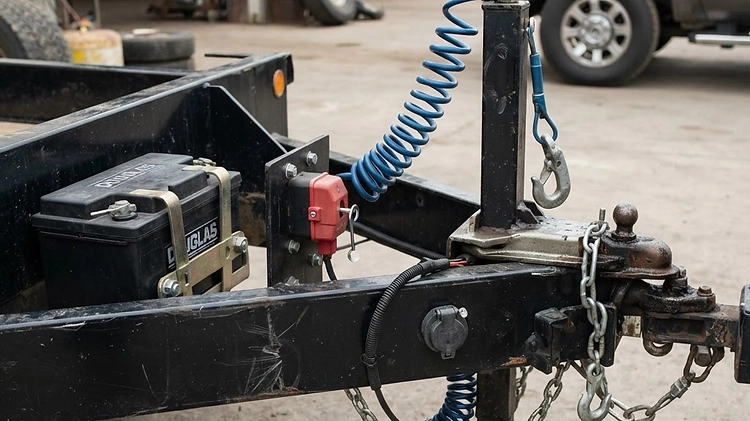
Equally important is the automatic emergency braking mandate governed by 49 CFR § 393.43. Every trailer equipped with electric or surge brakes must carry a dedicated breakaway system designed to engage instantly if the trailer decouples from the tow vehicle. Crucially, federal safety statutes require the onboard breakaway battery and actuator to hold the trailer's service brakes locked for a minimum of 15 consecutive minutes after disconnection.
- Breakaway Battery Maintenance: Weak or dead 12V breakaway batteries are among the most frequent citations issued during CVSA roadside inspections. Install trickle chargers or inspect cold cranking voltage monthly.
- Independent Tether Cables: The steel breakaway pull-pin cable must never be wrapped around the hitch ball or intertwined with safety chains. It must attach directly to an independent structural eyelet on the tow vehicle frame.
- Safe Coupling Interfaces: Heavy-duty haulers utilizing severe-duty drop receivers—such as the Gen-Y Hitch adjustable drop hitches—must ensure that pintle, ball, or clevis pins are safety-locked with heavy linchpins, eliminating hitch separation risks.
When troubleshooting complex power draw or battery health issues that could compromise brake voltage, our guide explaining why your dump trailer won't lift details battery testing workflows that apply directly to auxiliary electrical systems.
Lighting, Reflective Conspicuity, and FMVSS 108 Standards
Visibility requirements for trailers are dictated by Federal Motor Vehicle Safety Standard No. 108 (FMVSS 108), codified in 49 CFR § 393.11. These mandates scale sharply depending on whether your trailer is wider or narrower than 80 inches. Because nearly all commercial deckover trailers and heavy equipment trailers exceed the 80-inch mark, operators must maintain rigorous lighting configurations.


Trailers exceeding 80 inches in width and 10,000 pounds GVWR must display alternating red-and-white retroreflective sheeting (DOT-C2 tape) along specific zones of the chassis:
- Chassis Sides: Conspicuity sheeting must run horizontally along at least 50% of the overall trailer side length, spaced evenly at roughly bed-height level.
- Rear Lower Deck: A continuous strip of red-and-white retroreflective tape must span the entire lower rear horizontal crossmember, bumper, or underride guard.
- Upper Rear Header (Enclosed Models): Enclosed cargo units must display two inverted L-shaped white reflective markers in the top corners to indicate overall height and cargo perimeter to trailing drivers.
- Three-Light Center Marker Cluster: Centered at the rear top or deck perimeter, the three red identification clearance lights are strictly mandatory to signal a heavy or wide commercial profile.
Loose wiring, broken amber side-marker lenses, or faded, peeling conspicuity tape provide roadside safety inspectors with instant probable cause to pull your rig into a secondary inspection bay. Perform daily walk-arounds to verify all LEDs illuminate cleanly upon cycling headlamps and hazard flashers.
Structural Cargo Securement Protocols (49 CFR § 393.100 – 393.136)
Improperly secured cargo represents one of the leading causes of highway rollover catastrophes and DOT citations. FMCSA Standard 49 CFR § 393.102 mandates that all tiedown assemblies, winches, D-rings, and transport chains combine to deliver an aggregate Working Load Limit (WLL) equal to at least 50% of the total weight of the cargo being transported.
Furthermore, securement systems must successfully resist extreme operational forces: 0.8g deceleration forward, 0.5g acceleration rearward, and 0.5g lateral acceleration when cornering. Heavy machinery, such as mini-excavators or track loaders carried on flatbed trailers or tilt trailers, requires a minimum of four independent, direct-tiedown connections (Grade 70 transport chain or rated synthetic straps) pinned directly to the equipment's designated structural tie points, alongside separate securement of hydraulic buckets, booms, and accessory implements.
Bulk cargo hauled in dump units must also comply with federal containment standards. Aggregates, demolition trash, or loose brush transported in high-capacity platforms like the Double-A 7x14 tandem axle dump trailer must be tarped with an unbroken, rated fabric mesh or vinyl retention cover to prevent highway debris discharge. To ensure your rig's dimensions and loading style match your material requirements, review our detailed guide on what size dump trailer do I need.
Preparing for CVSA Roadside Inspections: A Commercial Driver's Checklist
Commercial Vehicle Safety Alliance (CVSA) roadside inspections evaluate both human operator qualifications and physical mechanical integrity. During an unannounced Level 1 inspection, state troopers or DOT officers examine steering, suspension components, safety chains, tongue welds, and brake pushrod stroke. Incorporating an established protocol into your pre-trip routine is the most reliable method to maintain a clean record.
- Inspect Coupling and Safety Chains: Ensure coupler locking pins are engaged and safety chains match or exceed the trailer's GVWR. Safety chains must cross beneath the coupler to form a cradle that prevents tongue drop during accidental decoupling.
- Verify Tire Load Indices and Pressures: Commercial tires must never exhibit exposed cords, sidewall bulges, or tread depth below 2/32-inch on trailer axles (4/32-inch on steer axles). Ensure tire cold psi matches the sidewall specification for full payload delivery.
- Review Welds and Tongue Architecture: Routinely inspect A-frame tongues and gooseneck risers for hairline fatigue fractures. Keep your equipment field-ready by incorporating our comprehensive dump trailer maintenance checklist into your fleet maintenance regimen.
- Verify In-Cab Documentation: Always carry your active registration, valid proof of insurance, annual DOT inspection decal documentation, and medical certification inside the tow vehicle cab.
Bottom Line: Building a Safe, DOT-Compliant Fleet
Achieving and maintaining federal DOT compliance protects your business against costly roadside downtime, elevated insurance premiums, and devastating legal liabilities. From calculating gross combination weight ratings to testing 15-minute breakaway actuators and upgrading transport chains, treating regulatory safety as an everyday standard ensures your commercial fleet remains dependable and profitable.
If you need rugged commercial equipment built strictly to federal safety standards, explore our massive stock across our complete commercial trailer inventory or consult our knowledgeable team to configure your next work-ready hauler at Prime Trail Trailers.
Shop Related Trailers
FAQ
Have Questions? We're Here to Help
Still unsure which trailer fits your needs, or need specs, pricing or delivery advice? The Prime Trail Trailers team is ready to answer your questions and help you find the right rig.
Prime Trail Trailers
Prime Trail Trailers is a family-owned trailer dealer in Markle, Indiana, stocking utility, dump, enclosed, equipment, car hauler and gooseneck trailers with nationwide delivery. This guide is based on what our customers ask us most and the trailers we sell every day.
More about Prime Trail Trailers