
Flatbed Trailer Load Securement Guide: 2026 DOT Tie-Down Rules
Master flatbed trailer load securement with our 2026 guide to DOT tie-down rules, FMCSA compliance, and best practices for straps, chains, and WLL.
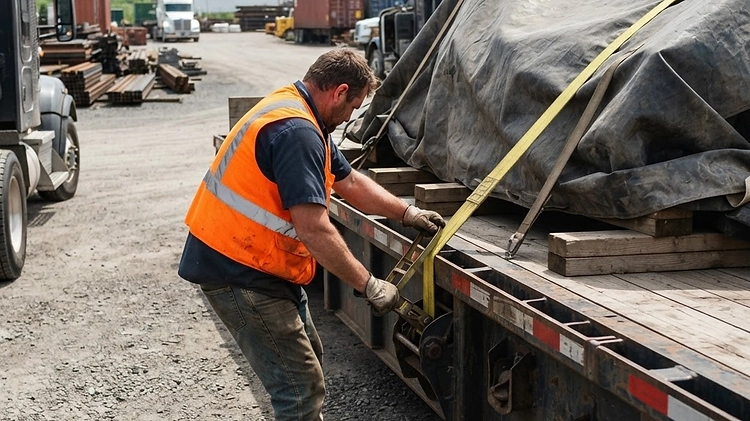
Securing a load on a flatbed trailer is one of the most critical skills for any commercial driver or owner-operator. Improper load securement can lead to catastrophic accidents, damaged cargo, and hefty fines from the Department of Transportation (DOT). Whether you are hauling construction materials across Texas or delivering heavy machinery to a job site in Houston, understanding the latest federal regulations is non-negotiable.
In this comprehensive guide, we will break down the 2026 DOT tie-down rules, FMCSA cargo securement standards, and the best practices for keeping your freight locked down safely. By mastering these techniques, you can protect your equipment, your cargo, and everyone else on the road.
Understanding FMCSA and DOT Load Securement Regulations
The Federal Motor Carrier Safety Administration (FMCSA) outlines strict cargo securement rules under 49 CFR Part 393. These regulations apply to all commercial motor vehicles, including trucks, truck tractors, and semitrailers. The primary goal is to prevent cargo from shifting, falling, or leaking during transit.
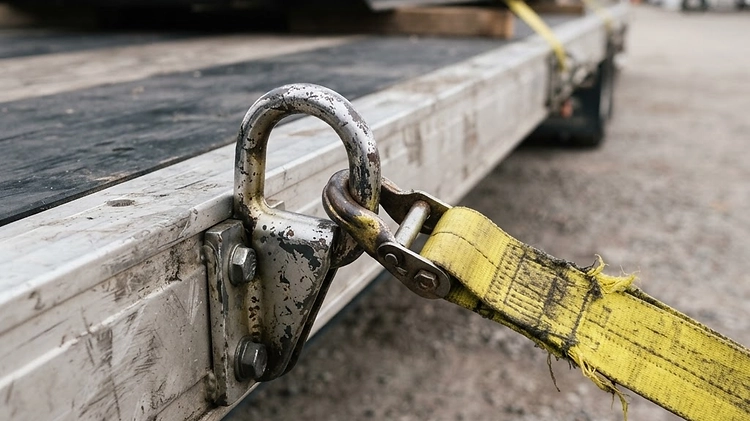
According to the FMCSA, the securement system must be capable of withstanding specific forces: 0.8 g deceleration in the forward direction, 0.5 g acceleration in the rearward direction, and 0.5 g acceleration in a lateral direction. This means your tie-downs, whether straps or chains, must be rated to handle these dynamic forces. For a deeper dive into federal rules, check out our guide on Federal DOT Trailer Regulations: FMCSA Compliance, Brake Laws & Weight Rules.
Types of Flatbed Tie-Downs: Straps, Chains, and Binders
Choosing the right equipment is the first step in proper flatbed load securement. The type of cargo you are hauling will dictate whether you need synthetic web straps, steel chains, or a combination of both.
Tarps and Straps
Synthetic straps are commonly used for securing palletized goods, lumber, and other materials that might be damaged by steel chains. These straps are typically hooked to the trailer's rub rail or D-rings and tightened using a winch. A standard 4-inch strap can often support a Working Load Limit (WLL) of around 5,500 lbs. Edge protectors are mandatory if a tie-down is at risk of abrasion where it touches the cargo.
Chains and Binders
For heavy loads like steel coils, concrete pipe, or farm equipment, chains and binders are the standard. Grade 70 transport chains are highly recommended for their strength and durability. When using chains, you must use appropriate binders (ratchet or lever style) to remove all slack. If you are hauling heavy machinery, you might also want to review our DOT Tie-Down Requirements for Heavy Equipment: 2026 Load Securement Guide.
How Many Tie-Downs Do You Need?
The number of tie-downs required depends on the length and weight of the cargo. The FMCSA has specific formulas to ensure adequate restraint.

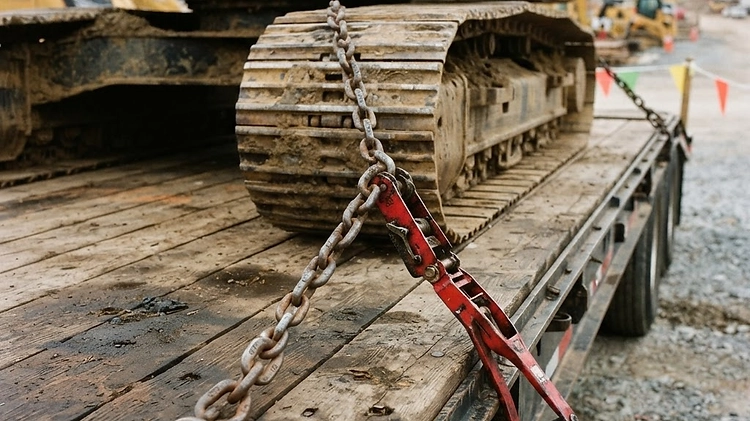
As a general rule, you need one tie-down for articles 5 feet or less in length and 1,100 lbs or less in weight. If the article is longer than 5 feet but less than 10 feet, you need two tie-downs. For articles longer than 10 feet, you must add one tie-down for every additional 10 feet or fraction thereof. Furthermore, for every 10,000 pounds of cargo weight, you need at least four direct tie-downs and tightening devices.
Working Load Limit (WLL) and Weight Distribution
The Working Load Limit (WLL) is the maximum load that a securement device can safely handle. The aggregate WLL of all tie-downs used to secure an article must be at least 50% of the weight of the cargo.
Proper weight distribution is just as important as the tie-downs themselves. You must ensure that the weight is evenly distributed across the trailer's axles to maintain stability and comply with legal weight limits. If you are using a flatbed trailer or a deckover trailer, understanding your axle ratings is crucial. For more on this, read our Hotshot Trailer Weight Distribution and Sizing Guide: CDL vs. Non-CDL.
Best Practices for Securing Specific Cargo
Different types of freight require specific securement methods under FMCSA rules.


- Concrete Pipe: Concrete pipe transported on flatbed trailers must be bundled tightly together into a single rigid article with no tendency to roll, or secured with specialized blocking and transverse tie-downs.
- Wheeled or Tracked Vehicles: Vehicles over 10,000 pounds require four direct anchor tie-downs and tightening devices. Booms must be lowered and properly secured.
- Rolling Cargo: Articles that are likely to roll require chocks, wedges, or a cradle to prevent movement.
For those looking to upgrade their hauling capabilities, consider the 2026 BEDBOSS Dually ArmorBed Flatbed Truck Bed 8'6" L x 97" 30K Gooseneck or the 2026 PJ Trailers L6 8.5X16 10k Deckover Straight Deck Pull Out Ramps for robust tie-down points and superior deck strength.
Pre-Trip Inspection for Flatbed Trailers
Before hitting the road, a thorough pre-trip inspection is mandatory. Check the condition of your trailer, the deck, the D-rings, and all securement equipment. Look for cuts, frays, or abrasions on straps, and inspect chains for stretched or cracked links. Ensure that the load hasn't shifted during the initial loading process. For more insights on commercial operations, explore The Rise of IoT Tracking Systems in Commercial Trailers: What You Need to Know and How to Start Hot Shot Trucking: 2026 Guide to Trailers, Costs & Requirements.
Bottom Line
Proper flatbed load securement is a combination of having the right equipment, understanding FMCSA regulations, and applying diligent safety practices. By calculating your WLL correctly and using the appropriate number of tie-downs, you can ensure a safe and compliant haul every time.
Ready to upgrade your hauling setup? Visit our guides hub for more expert advice, or browse our complete inventory at the Prime Trail Trailers shop to find the perfect flatbed or deckover trailer for your commercial needs. If you are considering enclosed options for different freight, check out our Enclosed Trailers for Last-Mile Delivery: 2026 Commercial Buying Guide.
Shop Related Trailers
FAQ
Have Questions? We're Here to Help
Still unsure which trailer fits your needs, or need specs, pricing or delivery advice? The Prime Trail Trailers team is ready to answer your questions and help you find the right rig.