
DOT Tie-Down Requirements for Heavy Equipment: 2026 Load Securement Guide
Master FMCSA and DOT tie-down requirements for heavy equipment. Learn the 4-point rule, Working Load Limits (WLL), and how to avoid costly inspection fines.

Quick Summary
Master FMCSA and DOT tie-down requirements for heavy equipment. Learn the 4-point rule, Working Load Limits (WLL), and how to avoid costly inspection fines.
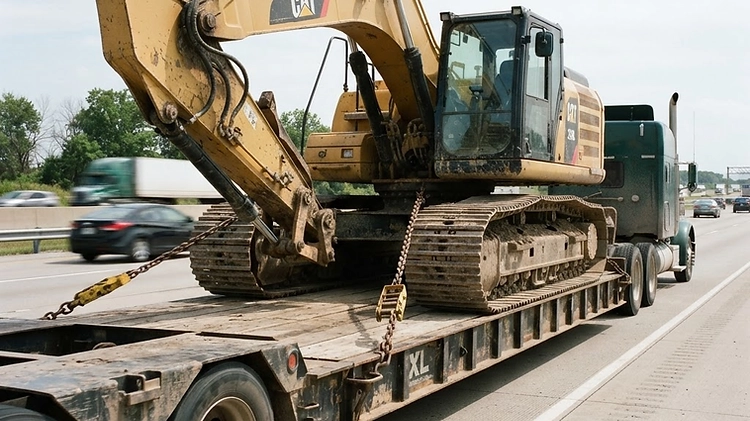
Transporting heavy machinery is one of the most high-stakes operations in the commercial hauling industry. Whether you are moving a skid steer across town or hauling a massive excavator across state lines, strict adherence to Federal Motor Carrier Safety Administration (FMCSA) and Department of Transportation (DOT) regulations is non-negotiable. Failing to properly secure your load not only puts the public at risk but also exposes your business to severe fines, out-of-service violations, and catastrophic liability.
In this comprehensive guide, we will break down the exact DOT tie-down requirements for heavy equipment, how to calculate Working Load Limits (WLL), and the best practices for keeping your cargo locked down tight. By mastering these load securement rules, you can ensure your fleet remains compliant and safe on every haul.
Understanding FMCSA Cargo Securement Rules for Heavy Equipment
The FMCSA has specific, stringent rules for securing heavy equipment, which generally applies to any machinery weighing 10,000 pounds or more. According to FMCSA 49 CFR §393.130, heavy vehicles, equipment, and machinery must be secured using a minimum of four independent tie-downs.

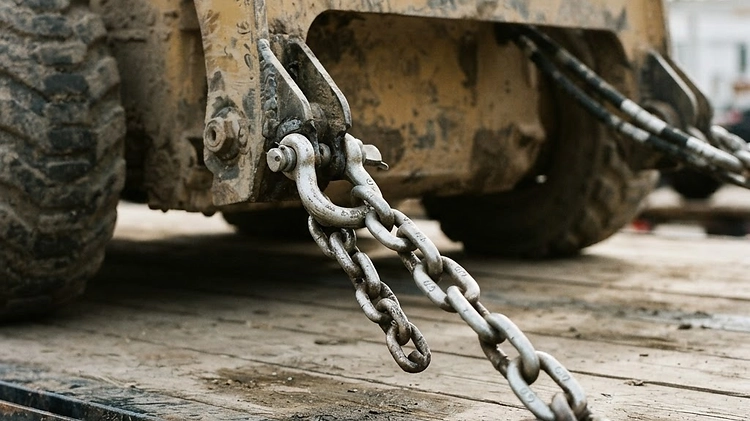
This "four-corner rule" mandates that you must attach a separate tie-down to each of the equipment's four designated anchor points. If the equipment lacks designated anchor points, you must secure it at the front and rear on both the left and right sides. Furthermore, any accessory or attachment—such as a backhoe bucket, excavator boom, or hydraulic hammer—must be completely lowered to the deck and secured with its own independent tie-down. For a deeper dive into federal compliance, review our guide on Federal DOT Trailer Regulations: FMCSA Compliance, Brake Laws & Weight Rules.
Working Load Limits (WLL) and Aggregate Capacity
Simply throwing four chains over a tractor isn't enough; the strength of those chains matters. The DOT requires that the aggregate Working Load Limit (WLL) of all your tie-downs must equal at least 50% of the total weight of the cargo being secured.
For example, if you are hauling a 12,000-pound skid steer on one of our heavy-duty equipment trailers, the combined WLL of your tie-downs must be at least 6,000 pounds. It is critical to remember that the WLL of a securement system is only as strong as its weakest component. If you use a Grade 70 chain rated for 6,600 lbs but attach it to a D-ring rated for only 4,000 lbs, the DOT will calculate that tie-down's WLL at 4,000 lbs.
Choosing the Right Tie-Down Equipment: Chains vs. Straps
When it comes to heavy equipment, chains are the undisputed king of load securement. While synthetic straps are excellent for palletized goods or lumber, the sharp edges and immense weight of construction machinery require the durability of steel.

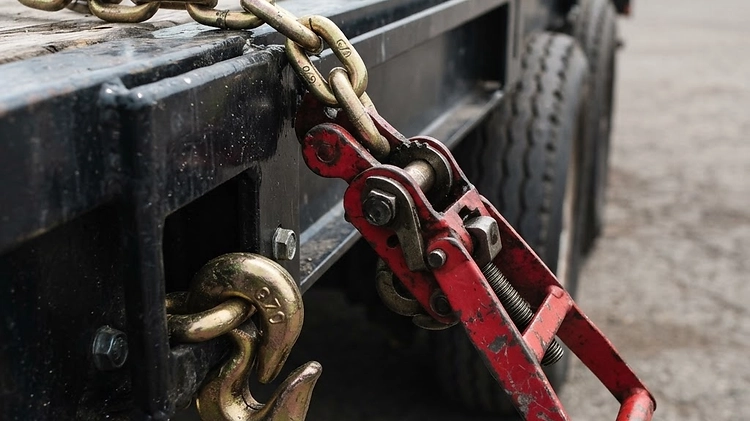
For heavy hauling, Grade 70 transport chains (often recognizable by their gold chromate finish) are the industry standard. They offer a high strength-to-weight ratio and resist abrasion. When securing these chains, always use proper load binders. Ratchet binders are highly recommended over lever binders, as they provide precise tensioning and eliminate the risk of the binder snapping back and causing injury. If you are setting up a new rig, ensure your towing vehicle is equipped with a heavy-duty hitch, such as the Gen-Y Hitch Adjustable Drop Hitches, to handle the immense tongue weight.
Step-by-Step Guide to Securing Heavy Machinery
Proper securement starts before the equipment even drives onto the trailer. Follow these steps to ensure compliance and safety:
- Inspect the Trailer: Ensure the deck is clean and free of debris, oil, or ice that could reduce friction. Check your trailer's anchor points for cracks or wear.
- Position for Weight Distribution: Drive the equipment onto the trailer, centering it side-to-side. Position it front-to-back so that approximately 10-15% of the total weight rests on the trailer tongue. If you are using a 24' Deck Over Hydraulic Tilt Deck, ensure the tilt mechanism is fully locked before securing.
- Apply the Parking Brake: Once positioned, engage the equipment's parking brake and lower all hydraulic attachments to the deck.
- Attach the Four Corners: Connect your four independent chains to the equipment's designated anchor points, angling them outward and downward to the trailer's D-rings or rub rails.
- Tension the Binders: Use ratchet binders to tighten the chains evenly. Ensure there is no slack, but avoid over-tensioning to the point of damaging the equipment's suspension.
For those operating in high-demand construction markets, such as contractors looking for trailers for sale in Texas or specifically Houston trailer delivery, mastering these steps is essential for daily operations.
Common DOT Inspection Failures and How to Avoid Them
DOT inspectors are highly trained to spot securement violations. Some of the most common reasons drivers are placed out-of-service include:
- Unmarked Tie-Downs: If a chain or strap does not have a visible WLL rating, inspectors will assign it the lowest possible default rating, which almost guarantees you will fail the 50% aggregate WLL rule.
- Damaged Chains: Chains with stretched, gouged, or welded links must be removed from service immediately.
- Missing Attachment Securement: Forgetting to throw a separate chain over a lowered excavator bucket is a guaranteed citation.

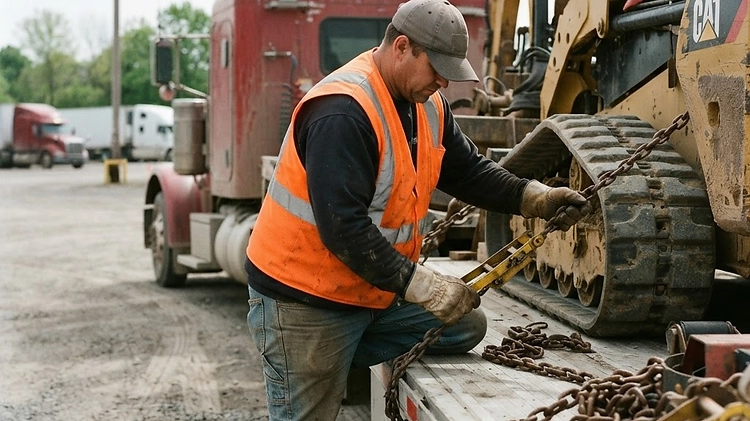
Staying compliant requires vigilance and regular equipment audits. If you are managing a fleet, consider implementing digital tracking and maintenance logs. You can learn more about modern fleet management in our guide on The Rise of IoT Tracking Systems in Commercial Trailers.
Best Trailers for Heavy Equipment Hauling
Having the right tie-downs is useless if your trailer isn't built for the job. For heavy machinery, flatbed trailers and deckover models provide the necessary width and structural integrity. If you are hauling a mix of equipment and palletized goods, you might also explore Enclosed Trailers for Last-Mile Delivery for smaller, weather-sensitive machinery.
For those entering the commercial transport sector, understanding the nuances of equipment hauling is just as important as knowing How to Start Hot Shot Trucking. Always ensure your trailer's Gross Vehicle Weight Rating (GVWR) exceeds the combined weight of the trailer and the cargo.
Bottom Line
Securing heavy equipment according to DOT and FMCSA regulations is a fundamental responsibility for any commercial hauler. By understanding the four-corner rule, calculating your Working Load Limits accurately, and using high-quality Grade 70 chains, you protect your cargo, your business, and the driving public.
Ready to upgrade your hauling capabilities? Explore our complete guides hub for more expert advice, or browse our extensive shop inventory to find the perfect heavy-duty trailer for your next big job.
Shop Related Trailers
FAQ
Have Questions? We're Here to Help
Still unsure which trailer fits your needs, or need specs, pricing or delivery advice? The Prime Trail Trailers team is ready to answer your questions and help you find the right rig.
Prime Trail Trailers
Prime Trail Trailers is a family-owned trailer dealer in Markle, Indiana, stocking utility, dump, enclosed, equipment, car hauler and gooseneck trailers with nationwide delivery. This guide is based on what our customers ask us most and the trailers we sell every day.
More about Prime Trail Trailers