
What Size Livestock Trailer Do I Need? Sizing & Head Count Guide
Learn how to choose the right size livestock trailer for your herd. Discover how to calculate head capacity, floor space, and payload limits for safe hauling.
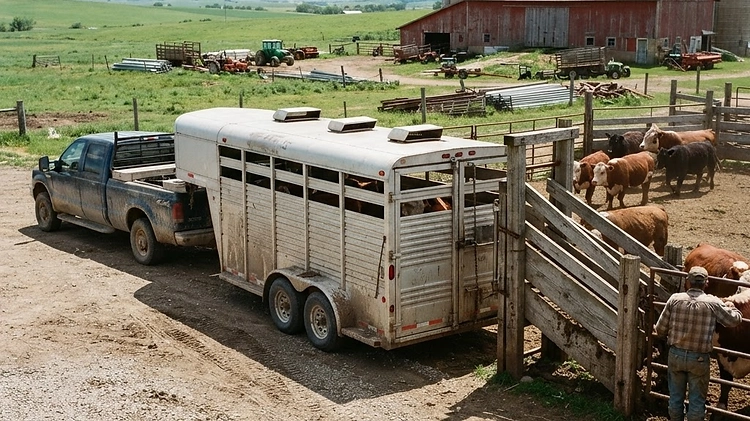
Choosing the right livestock trailer size is one of the most critical decisions a farmer or rancher can make. Whether you are hauling a few calves to the local vet or moving a large herd across state lines, matching your trailer's dimensions and payload capacity to your livestock ensures safe, stress-free transport.
Understanding Livestock Trailer Dimensions and GVWR
Before you can determine how many animals you can haul, you must understand your trailer's Gross Vehicle Weight Rating (GVWR) and available payload. The GVWR is the absolute maximum weight the trailer can safely weigh when fully loaded.


To find your true payload capacity, you must subtract the empty weight of the trailer from the GVWR. For example, if you are looking at trailers for sale in Texas and find a gooseneck with a 14,000-pound GVWR that weighs 4,500 pounds empty, your maximum payload is 9,500 pounds. This payload must account for the animals, divider gates, rubber mats, and any feed or tack stored in the nose. Never choose a trailer based on head count alone without first verifying that your truck and trailer can legally and safely handle the gross weight. For more details on sizing, check out our guides hub and our related article on What Size Equipment Trailer Do I Need? Skid Steer Guide.
Bumper Pull vs. Gooseneck Livestock Trailers
The choice between a bumper pull and a gooseneck trailer heavily influences the size and capacity you can safely tow.

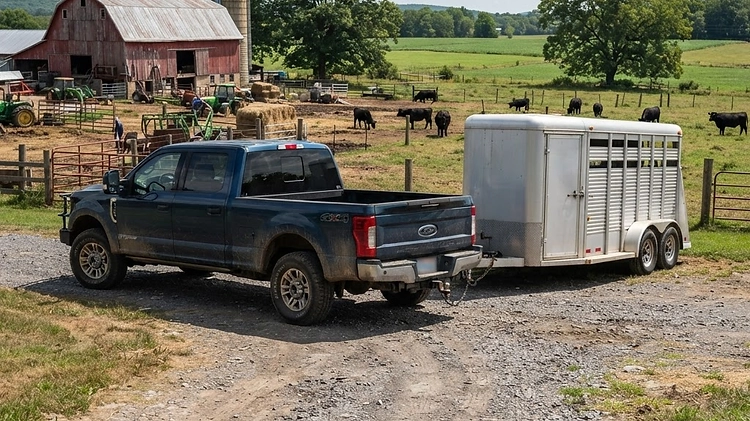
Bumper pull stock trailers are typically shorter, ranging from 10 to 16 feet in length. They are highly maneuverable, making them ideal for small operations, tight farm gates, and hauling small livestock like sheep, goats, or a single horse. A great example of a compact option is the 2027 WW AA 5X12. On the other hand, gooseneck trailers, which often range from 16 to 32 feet or more, provide superior stability and weight distribution for heavy loads. If you are hauling multiple mature cattle, a gooseneck is almost always the better choice due to its higher GVWR and reduced sway. You can explore our full inventory of gooseneck trailers to see the size differences firsthand.
Calculating Head Capacity for Cattle and Horses
Determining how many animals will fit in your trailer requires calculating the available floor space and matching it to the size of your livestock.

As a general rule of thumb, a mature 1,200-pound cow requires approximately 12 to 14 square feet of floor space. A standard livestock trailer is usually 6 feet 8 inches wide. In a 20-foot trailer, you have roughly 133 square feet of floor space, which comfortably fits about 9 to 10 mature cows, provided you do not exceed the trailer's payload capacity. For horses, you must also consider height; most horse trailers require an interior height of at least 7 feet. When hauling in regions with strict agricultural transport laws, such as looking for trailers for sale in Indiana, always ensure your stocking density complies with local animal welfare and DOT regulations. For more sizing comparisons, read What Size Landscape Trailer Do I Need? 2026 Sizing & Capacity Guide and What Size Dump Trailer Do I Need? Sizing, Payload & Capacity Guide.
The Importance of Compartments and Divider Gates
Size isn't just about total length; it's also about how that space is divided.
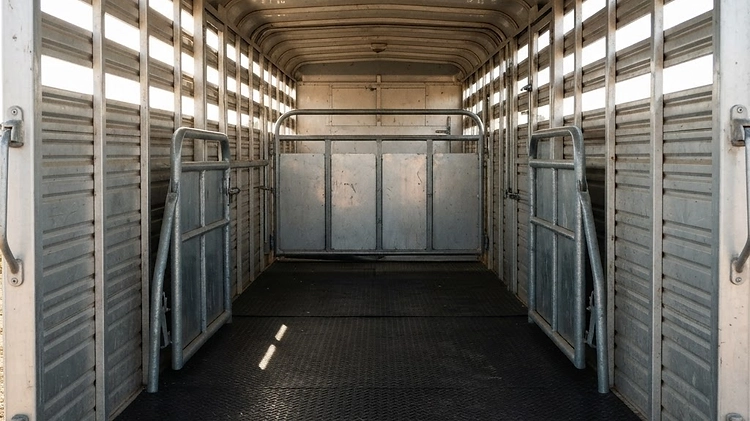
Divider gates are essential for managing weight distribution and keeping animals safe during transit. A long, open trailer allows livestock to shift during sudden stops or sharp turns, which can lead to a dangerous loss of control or animal injury. By dividing a 24-foot trailer into two or three compartments, you can keep the heaviest animals positioned slightly forward of the axles, adhering to proper weight distribution principles. This is especially important when hauling mixed loads, such as separating calves from mature bulls. For a deeper dive into loading techniques, review our guide on How to Safely Load and Tow a Livestock Trailer: Weight Distribution & Capacity Guide.
Key Specifications to Look For in a Stock Trailer
When sizing your trailer, pay close attention to the structural specifications that support the load.
Look for heavy-duty axles, such as dual 7,000-pound or 10,000-pound torsion axles, which provide a smoother ride for the animals. Flooring is another critical component; while treated wood is standard, many haulers prefer aluminum or composite floors covered with rubber mats for better traction and easier sanitation. Ventilation is also paramount—ensure the trailer has adequate side slats or punch-hole patterns to maintain airflow, especially during hot summer hauls. If you need a robust, ready-to-work option, consider the 2026 Big Bend 6'8"X22' W/ 2' TACK, which offers excellent space and durability.
Bottom Line
Selecting the right size livestock trailer requires balancing your truck's towing capacity, the trailer's GVWR, and the physical floor space needed for your specific animals. Never compromise on size or safety when transporting live cargo. Ready to find the perfect fit for your farm? Browse our complete selection of livestock trailers or visit our shop to see our latest inventory.
Shop Related Trailers
FAQ
Have Questions? We're Here to Help
Still unsure which trailer fits your needs, or need specs, pricing or delivery advice? The Prime Trail Trailers team is ready to answer your questions and help you find the right rig.