
What Size Equipment Trailer Do I Need? Skid Steer Guide
A comprehensive sizing guide for equipment trailers, covering deck lengths, GVWR, and payload capacities for hauling skid steers and mini excavators safely.
Quick Summary
A comprehensive sizing guide for equipment trailers, covering deck lengths, GVWR, and payload capacities for hauling skid steers and mini excavators safely.
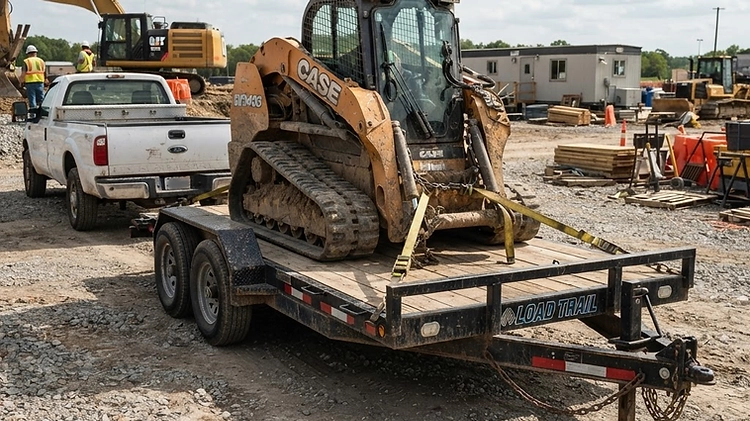
Selecting the right equipment trailer for your skid steer, compact track loader, or mini excavator is not as simple as matching the weight of the machine to the Gross Vehicle Weight Rating (GVWR) of the trailer. If you under-size your deck, you won't have room to balance the load or carry essential attachments, and if you miscalculate payload, you risk blown tires, bent axles, and catastrophic highway failure. This comprehensive guide breaks down exactly how to size an equipment trailer for heavy machinery, ensuring your rig remains compliant, safe, and efficient on the jobsite.
Understanding Skid Steer Weights and Trailer Payload Capacity
The most common mistake buyers make when sizing a trailer for heavy equipment is confusing GVWR with actual payload capacity. Your trailer's GVWR is the absolute maximum the trailer can weigh when fully loaded, including the weight of the trailer itself.
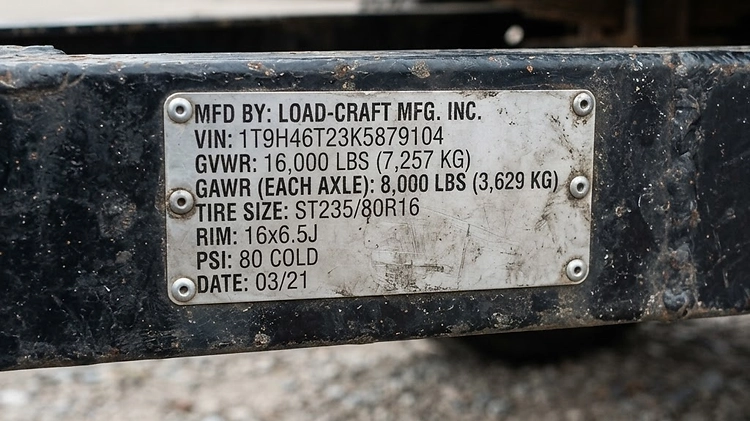
To determine how much machine you can safely haul, you must calculate the true payload capacity. You do this by subtracting the trailer's empty weight (tare weight) from its GVWR. For example, a typical 14,000-lb GVWR equipment trailer weighs roughly 3,500 lbs empty. That leaves a true payload capacity of 10,500 lbs.
When calculating the weight of your equipment, you must account for the machine's operating weight—not just the shipping weight. A standard wheeled skid steer might have a shipping weight of 7,000 lbs, but once you add fuel, an operator, a bucket, and perhaps a set of pallet forks, that operating weight quickly climbs past 8,500 lbs. If you run a compact track loader (CTL), expect an even heavier footprint; mid-sized CTLs routinely weigh between 9,500 and 11,500 lbs.
Before browsing equipment trailers, weigh your specific machine with its heaviest attachment full of fuel. If your total equipment weight is 10,000 lbs, you are brushing right up against the absolute limit of a standard 14K trailer, meaning a 16K or 20K GVWR trailer is the safer, more durable choice for long-term commercial hauling.
Equipment Trailer Deck Lengths: How Much Space Do You Really Need?
While a skid steer itself might only be 11 to 12 feet long (including the bucket), buying a 12-foot or 14-foot equipment trailer is a common rookie mistake that severely limits your hauling versatility.

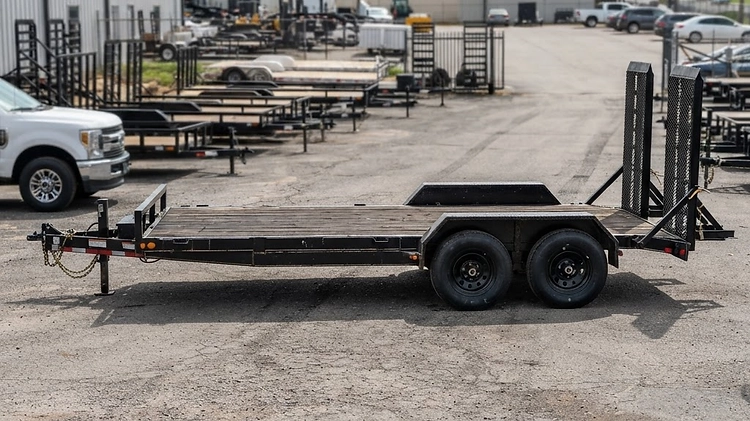
Proper weight distribution dictates that 10% to 15% of your total trailer weight must rest on the tow vehicle's hitch to prevent dangerous trailer sway. To achieve this, you need the physical space to move the machine forward or backward over the trailer axles. If your deck is exactly the length of your machine, you have zero room to adjust the load to achieve the correct tongue weight.
Furthermore, equipment operators rarely haul just a machine. You will frequently need to transport additional attachments like trenchers, augers, hydraulic breakers, or simply a spare bucket.
- 16-Foot Decks: The bare minimum for a standard skid steer. Provides enough room to balance the machine, but leaves no extra deck space for attachments.
- 18-Foot Decks: The industry sweet spot. Allows for perfect load positioning and leaves 3 to 4 feet of deck space at the front for a secondary attachment.
- 20 to 22-Foot Decks: Ideal for larger track loaders, mini excavators, or contractors who routinely carry multiple attachments.
If you find yourself frequently hauling long materials or oversized attachments, check out our What Size Landscape Trailer Do I Need? 2026 Sizing & Capacity Guide for insights on balancing lighter, bulkier loads, or explore our What Size Dump Trailer Do I Need? Sizing, Payload & Capacity Guide if you are moving material rather than machinery.
Axle Configurations and GVWR for Heavy Equipment
The foundation of any heavy-duty equipment trailer lies in its axles and suspension system. For skid steers and mini excavators, single-axle trailers are out of the question. You will be looking exclusively at tandem-axle or tri-axle configurations.

Here is how standard axle ratings translate to equipment hauling:
- Two 7,000-lb Axles (14,000 lbs GVWR): The standard workhorse. Good for hauling wheeled skid steers and smaller mini excavators. True payload is generally around 10,000 to 10,500 lbs.
- Two 8,000-lb Axles (16,000 lbs GVWR): A significant step up, usually featuring heavier-duty suspension components, massive 17.5-inch commercial tires, and thicker frames. Essential for hauling compact track loaders. True payload is roughly 12,000 lbs.
- Two 10,000-lb Axles or Tri-Axle 7Ks (20,000 to 21,000 lbs GVWR): Designed for heavy commercial hauling. If you are moving large excavators or full-sized backhoes, this is where you start.
Be aware that towing any combination where the truck and trailer GVWR combined exceeds 26,000 lbs may require a Commercial Driver's License (CDL), depending on your state. If you are operating a commercial fleet out of hubs like Chicago, IL or checking out trailers for sale in Texas, verify your local CDL regulations before sizing up to a 20K trailer.
For an in-depth look at how your truck's limits interact with these trailer weights, read our guide on Towing Capacity vs. Payload Capacity: The Complete Hauling & Sizing Guide.
Ramps vs. Tilt Decks: Loading Skid Steers Safely
How you get the equipment onto the trailer is just as important as how the trailer supports the weight. When sizing your trailer, you must choose between traditional ramps and a tilt deck.
Traditional stand-up ramps or slide-in ramps are cost-effective and keep the trailer weight down. Stand-up "knee" ramps offer the added benefit of supporting the rear of the trailer during loading, preventing the tow vehicle's rear suspension from sagging violently when a 10,000-lb machine hits the back edge of the deck.
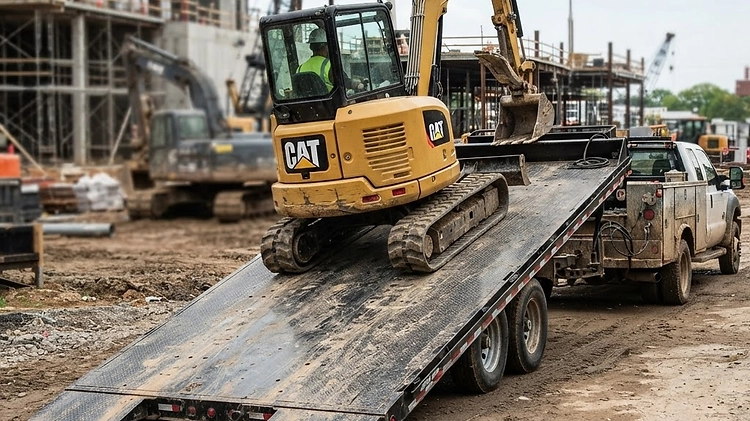
However, loading a metal-tracked excavator or wet rubber tracks on steep steel ramps can be incredibly dangerous due to a lack of traction. This is where tilt trailers shine. A gravity or hydraulic tilt deck eliminates the steep loading angle and the physical labor of lifting heavy steel ramps. If you routinely load and unload multiple times a day, a model like the 2025 Double-A 22' Deck Over Hydraulic Tilt Deck is a premium upgrade that significantly improves jobsite safety and efficiency.
Deckover vs. Fender Equipment Trailers
Equipment trailers come in two primary styles: traditional fender equipment trailers (where the deck sits low between the wheels) and deckover trailers (where the deck sits higher up, above the wheels).
Fender Equipment Trailers:
- Pros: Lower center of gravity for safer highway towing; shallower load angle making it easier to drive equipment up the ramps.
- Cons: The deck width is limited to roughly 82 to 83 inches between the fenders. If you have a wide-track skid steer or an oversized bucket, it might not fit between the wheel wells.
Deckover Trailers:
- Pros: Offers a full 102-inch maximum legal deck width. You never have to worry about clearing fenders with wide tracks or attachments.
- Cons: The deck sits substantially higher (often 32 to 36 inches off the ground), which raises the center of gravity and requires much longer ramps to achieve a safe loading angle.
Whichever style you choose, ensuring your tow vehicle is matched with the right drop hitch is crucial for keeping the trailer level. A level trailer distributes weight evenly across both axles. Browse our high-capacity Gen-Y Hitch Adjustable Drop Hitches to guarantee a perfect, level tow.
Proper Weight Distribution and Tie-Downs
Once you have the right size trailer, securing the load legally and safely is your next priority. A heavy machine placed too far forward will overload your truck's rear axle and lift the front steering tires. A machine placed too far back will induce violent, uncontrollable trailer sway.
The general rule is to center the engine (the heaviest part of the skid steer or excavator) directly over the trailer's axles, then adjust slightly forward to achieve that perfect 10-15% tongue weight.
When it comes to securing the machine, the Federal Motor Carrier Safety Administration (FMCSA) has strict rules. Heavy equipment requires a minimum of four independent tie-down points using Grade 70 transport chain and heavy-duty binders, plus a separate tie-down for any attachments (like the bucket). Never use nylon straps to secure heavy track equipment. For a complete breakdown of legal securement, read our DOT Tie-Down Requirements for Heavy Equipment: 2026 Load Securement Guide.
Key Specifications to Look For:
- Frame Construction: 6-inch channel minimum for 14K trailers; 8-inch I-beam or massive channel for 16K+ trailers.
- Crossmember Spacing: 16-inch on-center crossmembers are mandatory for heavy point-loads like excavator tracks. Do not accept 24-inch spacing.
- Deck Material: Treated pine is standard, but rough oak or white wood is vastly superior for the abuse of steel-tracked machinery.
- D-Rings: Look for heavy-duty, welded 5/8-inch D-rings rated for at least 10,000 lbs each.
Frequently Asked Questions (FAQ)
What size trailer do I need for a 7,000 lb skid steer? A 14,000 lb GVWR equipment trailer with at least a 16-foot deck is ideal for a 7,000 lb skid steer. This provides roughly 10,500 lbs of payload capacity, giving you a safe buffer for attachments and fuel.
Will a skid steer fit on an 82-inch wide trailer? Most standard and medium-frame skid steers fit comfortably on an 82-inch wide deck between the fenders. However, large-frame track loaders or machines with oversized, high-capacity buckets may require a 102-inch deckover trailer.
Do I need a CDL to tow a 14K equipment trailer? You only need a CDL if the combined Gross Vehicle Weight Rating (GVWR) of your tow vehicle and your trailer exceeds 26,000 lbs, provided the trailer itself is rated over 10,000 lbs. If your truck has a GVWR of 11,000 lbs and the trailer is 14,000 lbs, the total is 25,000 lbs, which generally does not require a CDL for non-commercial personal use. Always verify with your local DOT.
Is a tilt trailer better than ramps for a mini excavator? Yes. Mini excavators and track loaders have high centers of gravity and tracks that can slip easily on steep metal ramps. A hydraulic tilt trailer provides a low, gradual loading angle that makes loading these specific machines much safer.
Can I haul a skid steer on a utility trailer? No. Standard utility trailers generally max out at 7,000 or 10,000 lbs GVWR and feature lighter frames, thinner decks, and inadequate suspension for the intense, concentrated point-weight of a skid steer. You must use a purpose-built equipment trailer.
Bottom Line
Sizing your equipment trailer correctly means calculating your machine's true operating weight, ensuring you have enough payload capacity, and selecting a deck length that accommodates both your attachments and proper weight distribution. Whether you need a heavy-duty 14K fender trailer for a wheeled skid steer or a 24-foot 20K deckover for a large track loader, investing in the right specs upfront guarantees safety, legal compliance, and a longer lifespan for your rig.
Ready to upgrade your hauling capabilities? Visit the Prime Trail Trailers guides hub for more expert advice, or explore our complete, heavy-duty inventory in the Prime Trail Trailers Shop today.
Shop Related Trailers
FAQ
Have Questions? We're Here to Help
Still unsure which trailer fits your needs, or need specs, pricing or delivery advice? The Prime Trail Trailers team is ready to answer your questions and help you find the right rig.
Prime Trail Trailers
Prime Trail Trailers is a family-owned trailer dealer in Markle, Indiana, stocking utility, dump, enclosed, equipment, car hauler and gooseneck trailers with nationwide delivery. This guide is based on what our customers ask us most and the trailers we sell every day.
More about Prime Trail Trailers