
What Size Car Hauler Do I Need? 2026 Length & Width Guide
Choosing the right size car hauler is critical for safety and balance. Learn how to match trailer length, width, and capacity to your specific vehicle.
Quick Summary
Choosing the right size car hauler is critical for safety and balance. Learn how to match trailer length, width, and capacity to your specific vehicle.
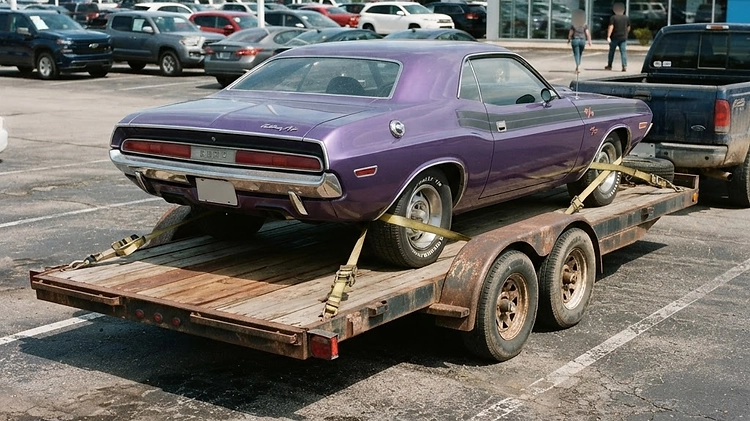
When investing in a car hauler, getting the dimensions right is the difference between a smooth, safe tow and a dangerous, unbalanced load. Whether you are transporting a classic car to a show, moving a heavy off-road rig, or hauling multiple vehicles for a business, understanding exactly what size car hauler you need requires more than just measuring your car's bumpers. You must factor in wheelbase, track width, tie-down space, and payload capacity to build a safe towing setup.
This comprehensive 2026 guide will help you determine the exact length, width, and weight capacity required for your specific hauling needs, ensuring you choose the perfect trailer for your vehicle.
Understanding Car Hauler Widths
Width is often the most critical dimension when sizing a car hauler, especially for modern trucks, wide-body sports cars, or off-road vehicles with oversized tires.
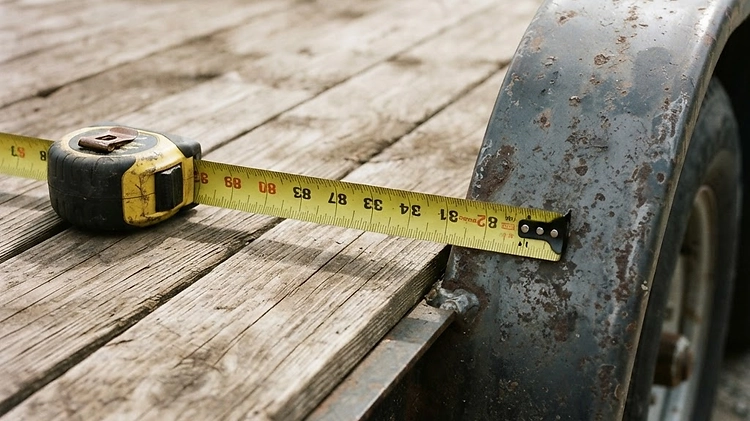
Most standard open car haulers are built with fenders that sit above the deck. The critical measurement here is the deck width between the fenders.
Standard 82-Inch to 84-Inch Decks
Most standard open car haulers offer between 82 and 84 inches of usable deck space between the fenders. This is perfectly adequate for standard sedans, classic cars, and mid-size SUVs. However, if you are hauling a modern full-size pickup truck (like an F-250) or a custom track car with a wide stance, you may find this width too restrictive, risking tire rub against the trailer fenders.
102-Inch Wide Deckovers and Drive-Over Fenders
If you need maximum width, look for trailers with a total width of 102 inches (the maximum legal width on standard US highways). You have two primary options here:
- Drive-Over Fenders: The trailer remains low to the ground for a good center of gravity, but the fenders are heavily reinforced so you can simply drive wider tires directly over them.
- Deckover Trailers: The deck is built entirely above the wheels, providing a completely flat surface that spans the full 102 inches. This is ideal for extremely wide vehicles or farm equipment, though it raises the deck height and creates a steeper loading angle.
For more details on standard width regulations, check out our guide on Trailer Width Codes Explained: 80, 96, and 102-Inch Dimensions.
Choosing the Right Trailer Length
The length of your car hauler determines not only if the vehicle will fit, but whether you can balance the load properly to maintain the correct tongue weight (usually 10-15% of the total loaded weight).
16-Foot to 18-Foot Car Haulers
A 16-foot or 18-foot trailer is the most common size for weekend enthusiasts hauling compact cars, classic muscle cars, or lightweight track vehicles.
- Best for: Vehicles with wheelbases under 115 inches and overall lengths under 15 feet.
- Limitations: If you try to load a longer vehicle on a 16-foot deck, you may not be able to position it far enough forward to achieve proper tongue weight, leading to dangerous trailer sway.
20-Foot to 22-Foot Car Haulers
A 20-foot to 22-foot deck is widely considered the sweet spot for maximum versatility. This length accommodates full-size pickup trucks, heavy SUVs, and long-wheelbase luxury vehicles.
- Best for: Full-size trucks (e.g., Ford F-150/F-250, Chevy Silverado), large SUVs, and providing extra room on the deck for mounting a tool box, winch, or spare tires.
- Advantage: The extra deck space allows you to shift the vehicle forward or backward easily to dial in the perfect weight distribution.
If you need heavy-duty capacity in this size range, consider exploring specialized car haulers or robust tilt options like the 2027 PJ Trailers T6 7x22 20k Gravity Tilt Deck.
24-Foot and Longer Trailers
Trailers measuring 24 feet or more are typically reserved for hauling incredibly long crew-cab dually trucks, moving two small vehicles simultaneously, or enclosed racing trailers that need interior workspace.
Open vs. Enclosed Car Hauler Sizing
Sizing an open trailer is very different from sizing an enclosed trailer.

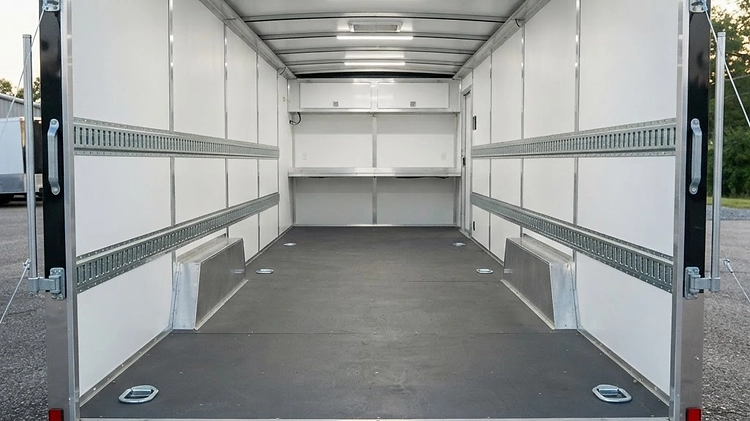
With an open trailer, your vehicle's bumpers can technically overhang the front or rear of the deck slightly (though the tires must be securely on the deck and the load balanced). With enclosed trailers, you are constrained by four walls.
When buying an enclosed car hauler, you must account for tie-down clearance. You need a minimum of 2 feet of space in the front and 2 feet in the rear to comfortably access the D-rings and operate your ratchet straps. Therefore, if your car is 16 feet long, you need an absolute minimum of a 20-foot enclosed trailer.
For a deeper dive into enclosed sizing, read our What Size Enclosed Trailer Do I Need? 2026 Dimensions Guide.
Weight Capacity and Axle Ratings
Size isn't just about physical dimensions; it’s also about how much mass the trailer can legally and safely support. You must look at the trailer's Gross Vehicle Weight Rating (GVWR) and calculate the true payload capacity.
Standard 7,000 lb GVWR
A standard lightweight car hauler will feature two 3,500 lb axles, giving it a 7,000 lb GVWR. If the trailer itself weighs 2,000 lbs (curb weight), your maximum payload is 5,000 lbs. This is fine for a Honda Civic or a classic Mustang, but it will be dangerously overloaded if you try to haul a modern 6,500 lb pickup truck.
Heavy-Duty 10,000+ lb GVWR
For modern trucks, heavy electric vehicles (EVs), or armored SUVs, you will need a trailer with at least twin 5,200 lb axles (10,400 lb GVWR) or twin 7,000 lb axles (14,000 lb GVWR).
If you are hauling extremely heavy commercial vehicles, you might opt for heavy-duty setups like the 2027 Horizon HET 8.5x20 Gravity Tilt Equipment Trailer 21K GVWR. Be sure to cross-reference your needs with our guide on What Size Equipment Trailer Do I Need? if you plan to haul heavy machinery alongside vehicles.
Key Specifications to Measure Before Buying
Before browsing inventory or visiting our guides hub, grab a tape measure and document the following on your specific vehicle:
- Overall Length: Measure from the absolute front bumper to the furthest rear protrusion.
- Wheelbase: The distance from the center of the front wheel to the center of the rear wheel. This dictates where the weight will rest on the trailer deck.
- Track Width: Measure from the outside of the driver’s side tire to the outside of the passenger’s side tire. Ensure this is at least 2 inches narrower than the trailer's width between fenders.
- Vehicle Curb Weight: Check your owner's manual or driver-side door jamb.
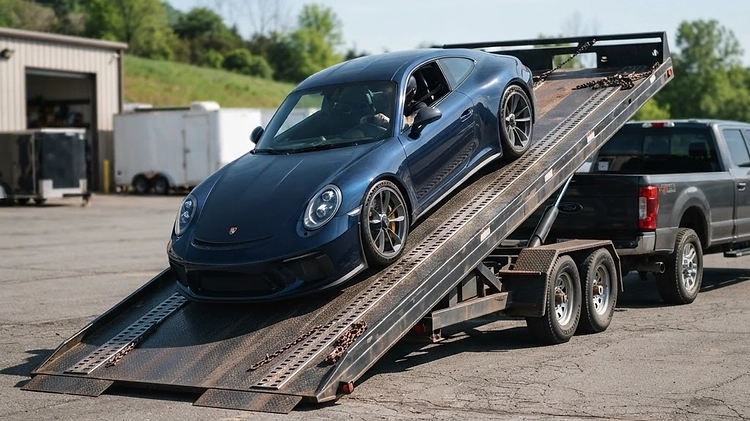
- Ground Clearance: If you have a low-slung sports car, a standard ramp setup might cause the vehicle to high-center. You may need extra-long ramps, a dovetail rear, or a tilt deck trailer.

Regional Considerations
If you are running commercial hotshot routes or delivering vehicles cross-country, remember that state regulations apply. If you are browsing trailers for sale in California or navigating tight routes in Los Angeles, CA, maximizing length might hinder your maneuverability in dense urban environments. Always consult local DOT laws regarding maximum overall vehicle-and-trailer lengths.
Bottom Line
Choosing the right size car hauler ensures you can load your vehicle safely, balance it correctly over the axles, and tow it without dangerous sway. For most standard cars and mid-size SUVs, an 18-foot open trailer with a 7,000 lb GVWR is sufficient. However, if you plan to haul full-size trucks, want the versatility to haul multiple types of vehicles, or are looking into enclosed options, stepping up to a 20-foot or 22-foot deck with a 10,000+ lb GVWR is the smartest investment.
Ready to find the perfect fit? Browse our extensive inventory in the Prime Trail Trailers shop or contact our expert team to help match your specific vehicle to the ideal hauler today.
FAQ
Have Questions? We're Here to Help
Still unsure which trailer fits your needs, or need specs, pricing or delivery advice? The Prime Trail Trailers team is ready to answer your questions and help you find the right rig.
Prime Trail Trailers
Prime Trail Trailers is a family-owned trailer dealer in Markle, Indiana, stocking utility, dump, enclosed, equipment, car hauler and gooseneck trailers with nationwide delivery. This guide is based on what our customers ask us most and the trailers we sell every day.
More about Prime Trail Trailers