
What Size Enclosed Trailer Do I Need? 2026 Dimensions Guide
Choosing the right size enclosed trailer is critical for safety and utility. Learn how to match enclosed trailer dimensions and payload to your specific hauling needs.
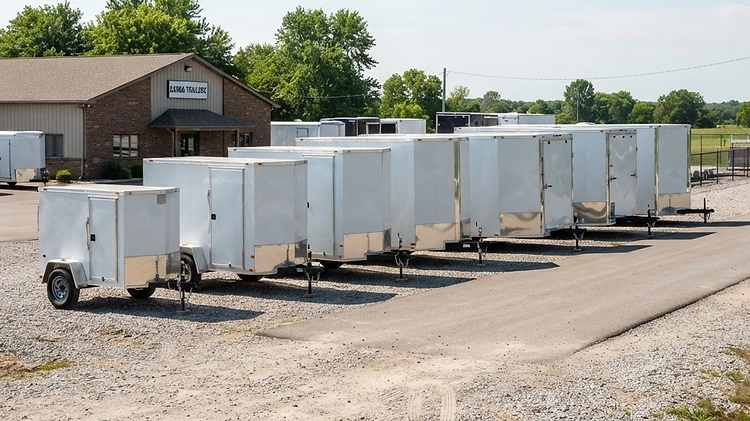
Quick Summary
Choosing the right size enclosed trailer is critical for safety and utility. Learn how to match enclosed trailer dimensions and payload to your specific hauling needs.
Investing in an enclosed trailer is one of the best ways to protect your cargo, vehicles, or equipment from weather and theft. However, buying a trailer that is too small limits your capabilities, while buying one that is too large wastes fuel and towing capacity. To maximize your investment, you must accurately match the trailer's interior dimensions, payload capacity, and ramp door clearance to your specific load.
In this comprehensive 2026 sizing guide, we will break down the exact dimensions of the most popular enclosed trailers on the market. Whether you are hauling a long-travel side-by-side (UTV), a classic car, or a full contractor setup, you will learn exactly how to calculate your space requirements to find the perfect fit for your towing vehicle.
Understanding Enclosed Trailer Sizing Basics
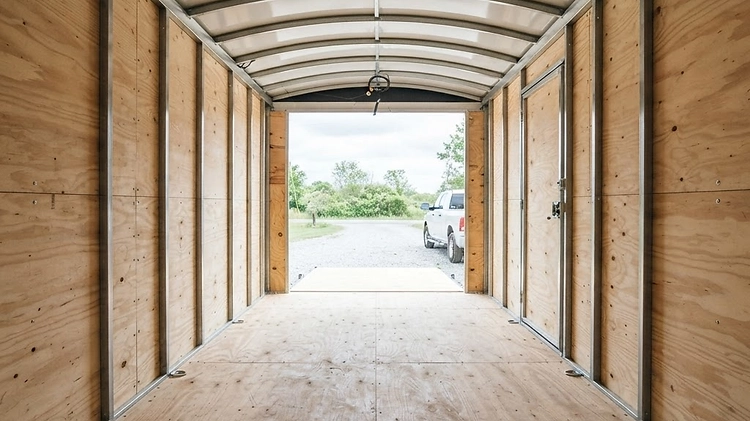
Before choosing a specific size, it's crucial to understand how enclosed trailers are measured. The nominal size you see listed (e.g., 6x12 or 8.5x24) generally refers to the exterior box dimensions, not the exact usable interior space.
- Width: The stated width (5', 6', 7', 8', or 8.5') is the exterior width of the box. A 6-foot wide trailer will have an interior width closer to 5'9". If you step up to an 8.5-foot wide trailer (commonly known as a wide-body or car hauler), the wheels are placed under the box, and you will have interior wheel wells to contend with. If width is a primary concern for open hauling, you might also compare sizes in our Standard Flatbed and Deckover Trailer Dimensions Guide.
- Length: The stated length applies to the rectangular box. If you choose a V-nose trailer, you typically gain an extra 1.5 to 2 feet of space in the nose, which is excellent for aerodynamics and extra storage, but it shouldn't be relied upon for primary vehicle length sizing.
- Interior Height: Standard interior height for small cargo trailers is often 5'6" to 6'0". However, many manufacturers offer 6'6", 7'0", and even 7'6" ceiling options. If you are using the trailer for a mobile business or need to stand inside, always upgrade the height. For legal road height constraints, reference our Maximum Trailer Height Limits and Bridge Clearance Guide.
- Door Opening: The rear door opening is always smaller than the interior dimensions. The ramp spring assist mechanism at the top and the door frame on the sides can shave off 2 to 6 inches of clearance. Always measure the exact door opening if you are hauling a tall vehicle.
For a broader look at sizing across all trailer types, be sure to read our foundational What Size Trailer Do I Need? 2026 Dimensions & Capacity Guide.
Single Axle vs. Tandem Axle Sizing

Enclosed trailers up to 12 feet long typically come with a single axle. Once you hit 14 feet and longer, tandem axles become the standard. Sizing isn't just about square footage; it's about payload.
Single Axle Cargo Trailers (4x6 to 6x12)
- Standard GVWR: 2,990 lbs to 3,500 lbs
- Average Payload Capacity: 1,500 lbs to 2,200 lbs
- Best For: Lightweight moving, small landscaping equipment, a single motorcycle, or extra luggage.
- Pros: Easy to maneuver, lightweight, can often be towed by SUVs or mid-size trucks. No trailer brakes required in most states.
Tandem Axle Cargo Trailers (7x14 to 8.5x32)
- Standard GVWR: 7,000 lbs, 9,990 lbs, or 14,000 lbs
- Average Payload Capacity: 4,000 lbs to 10,000+ lbs
- Best For: Side-by-sides, passenger cars, heavy contractor tools, and mobile businesses.
- Pros: Much higher payload, better stability at highway speeds, equipped with brakes for safer stopping. If you are comparing heavy-duty hauling options, you might also look at our What Size Dump Trailer Do I Need? and What Size Equipment Trailer Do I Need? guides.
Sizing for a UTV or Side-by-Side
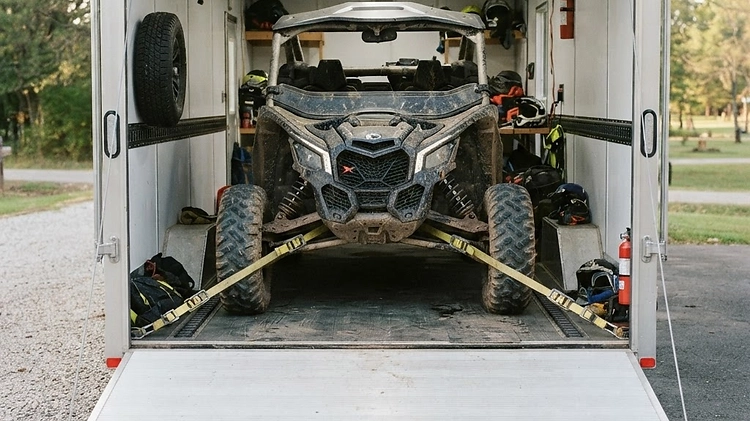
Modern side-by-sides have grown significantly in recent years. A 4-seat Polaris RZR or Can-Am Maverick X3 can easily exceed 13 feet in length and 72 inches in width.
- Width: A 7-foot wide trailer is the bare minimum for a standard 64-inch wide UTV, leaving a few inches on either side. For a 72-inch wide UTV, you must use an 8.5-foot wide trailer.
- Length: For a 2-seat UTV, a 14-foot length is comfortable. For a 4-seat UTV, you need at least a 16-foot length to allow room for tie-downs and gear.
- Height: Many modern UTVs are 70 to 76 inches tall. A standard 6-foot interior height trailer often has a rear door opening of just 68 inches. You will likely need to order a trailer with a minimum 7-foot interior height to clear the roll cage.
If you prefer hauling ATVs or UTVs on an open deck, check out our What Size Utility Trailer Do I Need? or browse our utility trailers for sale in Texas to see standard open sizes.
Sizing for Cars and Vehicles

When hauling a car, you need what is classified as an enclosed car hauler. These are universally 8.5 feet wide to accommodate full-size vehicles while leaving room to open the vehicle doors (often aided by a side escape door on the trailer).
- Small to Mid-Size Cars (Mustangs, Camaros, Sedans): A 20-foot enclosed trailer is the standard starting point. It gives you 15-16 feet for the car and a few feet at the front and rear for tying down the axles.
- Large Trucks, SUVs, or Heavy Duty Hauling: A 24-foot trailer is heavily recommended. This provides ample room for tying down securely and distributing the tongue weight properly.
For hauling wide vehicles on an open platform, a deckover might be a better choice. You can view options like the 2026 PJ Trailers L6 8.5X16 10k Deckover in our shop, or read our guide on Maximum Legal Trailer Width and Length Limits to stay compliant on the highway.
Enclosed Trailers for Contractors and Cargo
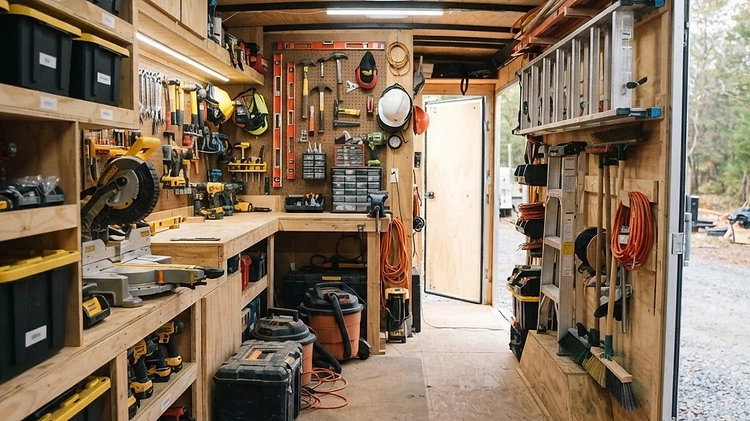
Contractors, electricians, and plumbers need trailers they can work out of.
- 7x14 and 7x16 Tandem Axles: These are the "sweet spot" for contractors. They are narrow enough to easily navigate residential streets in cities like Houston, TX or Miami, FL, but offer massive interior volume for custom shelving.
- V-Nose Priority: Contractors highly favor V-nose designs because the extra nose space is perfect for building custom tool cabinets or housing a generator.
- Payload Requirements: Keep in mind that heavy wood shelving and tools add up fast. Opt for 5,200 lb axles (10,400 lb GVWR) rather than standard 3,500 lb axles if you plan to carry dense materials like tile, lumber, or large spools of wire.
If your cargo needs skew toward raw landscaping materials, you may want to cross-reference our What Size Landscape Trailer Do I Need? for open alternatives.
Key Specifications to Look For When Sizing
When reviewing an enclosed trailer's spec sheet, always verify these three numbers:
- Rear Door Opening Height: This is the measurement from the floor to the lowest hanging part of the rear door frame/spring assist. If you have a 72-inch tall vehicle, a 71-inch opening means you are out of luck.
- Width Between Wheel Wells: On 8.5-foot wide trailers, the interior wheel wells intrude into the floor space. Verify that the distance between the wheel wells (usually around 81 to 83 inches) is wide enough for your vehicle's track width.
- Payload Capacity vs. Empty Weight: Subtract the trailer's empty weight from its GVWR to find the true payload. A heavy-duty enclosed trailer with thicker steel frames will have a higher empty weight, slightly reducing its available payload compared to an aluminum counterpart.
Mobile food businesses face unique sizing constraints due to commercial kitchen equipment. If you are building out a food trailer, explore our 8.5x20 Blackout BBQ Trailer or browse our kitchen trailers to see how space is utilized for heavy appliances.
Bottom Line
Sizing your enclosed trailer correctly upfront prevents costly mistakes down the line. A good rule of thumb is to measure your largest piece of cargo, add 2 feet to the length for tie-down access, and always verify the rear door height clearance. When in doubt, sizing up by 2 feet is usually worth the marginal increase in cost.
Ready to find the perfect enclosed trailer for your needs? Browse our complete inventory in our Shop, or explore more in-depth advice in our Trailer Guides Hub.
Shop Related Trailers
FAQ
Have Questions? We're Here to Help
Still unsure which trailer fits your needs, or need specs, pricing or delivery advice? The Prime Trail Trailers team is ready to answer your questions and help you find the right rig.
Prime Trail Trailers
Prime Trail Trailers is a family-owned trailer dealer in Markle, Indiana, stocking utility, dump, enclosed, equipment, car hauler and gooseneck trailers with nationwide delivery. This guide is based on what our customers ask us most and the trailers we sell every day.
More about Prime Trail Trailers