
Maximum Legal Trailer Width and Length Limits: 2026 DOT & State Regulations Guide
Navigate 2026 federal and state trailer dimension laws. Learn the maximum legal width, length, and height limits for commercial and personal hauling.

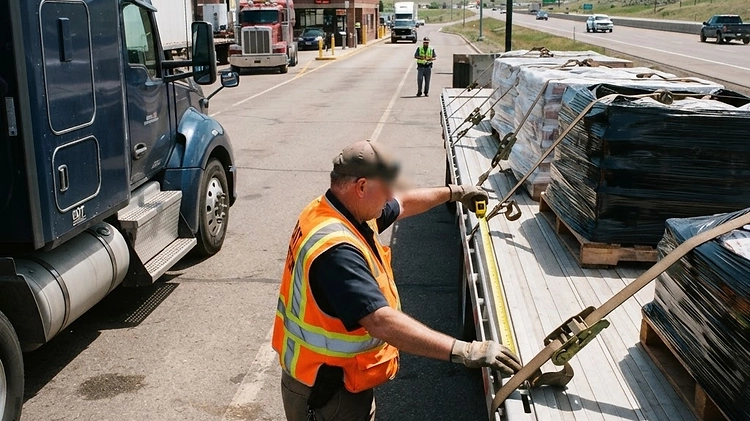
Navigating the complex web of federal and state trailer dimension laws is critical for anyone hauling freight, equipment, or personal cargo across state lines. Whether you are pulling a standard utility trailer or managing a commercial hotshot fleet, exceeding legal width, length, or height limits without the proper permits can result in severe fines, out-of-service violations, and compromised safety. This comprehensive guide breaks down the 2026 Department of Transportation (DOT) regulations and state-specific size limits so you can keep your loads compliant and on schedule.
Federal DOT Trailer Size Regulations
When operating on the National Network (which includes the Interstate Highway System and designated federal-aid highways), trailers are subject to federal size regulations established by the Federal Highway Administration (FHWA).


The industry standard for maximum legal trailer width on federal highways is 102 inches (8 feet, 6 inches). This measurement excludes safety equipment like mirrors, turn signals, and specialized tie-down hardware, provided they do not extend more than 3 inches beyond the side of the trailer. Older trailers manufactured before 1982 were often restricted to 96 inches, but modern commercial builds, including deckover trailers and dry vans, are optimized for the 102-inch standard to accommodate standard palletized freight side-by-side.
Federal length limits dictate that a standard semitrailer must be allowed a minimum length of 48 feet, with many states permitting up to 53 feet on the National Network without special permits. For non-commercial bumper pull and gooseneck setups, the federal government generally defers to state laws regarding overall combination length (truck plus trailer).
State-by-State Trailer Dimension Laws
While federal laws govern the National Network, individual states control the size limits on their state and local roadways. This creates a patchwork of regulations that haulers must navigate when planning multi-state routes. If you are looking for trailers for sale in Texas, for example, you must comply with Texas DOT regulations, which generally allow a maximum trailer width of 102 inches and a maximum combination length of 65 feet for standard non-commercial setups.

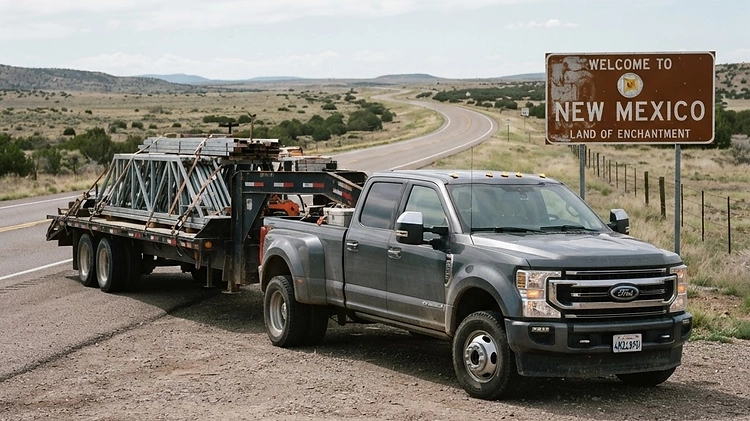
Here is a snapshot of how state regulations can vary:
- Alabama: Maximum trailer width is 102 inches. Maximum trailer length is 28 feet 6 inches for certain combinations, with an overall combination length limit of 57 feet on non-designated highways.
- Alaska: Maximum trailer width is 96 inches on standard roads, but 102 inches is permitted on designated highways. Overall combination length is capped at 65 feet.
- Montana: The overall length of two vehicles coupled together may not exceed 75 feet, including the load, making it more lenient for long hotshot combinations.
- Florida: When hauling construction equipment or looking for trailers for sale in Florida, the maximum width is 102 inches, and the maximum combination length is 65 feet.
Always consult the specific DOT website for every state on your route, as local restrictions, construction zones, and time-of-day travel bans can alter these baseline limits.
How to Measure Your Trailer's True Dimensions
Understanding your trailer's exact dimensions is the first step in compliance. Many buyers confuse outer dimensions with usable inner dimensions, which can lead to loading errors and legal issues.

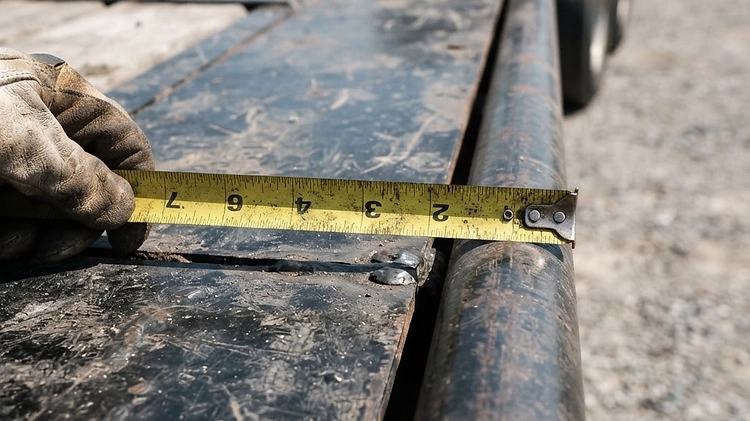
To determine your trailer's true width, measure the outer extremities of the trailer bed or box. For an enclosed trailer, a 102-inch outer width typically yields an interior width of 98 to 100 inches due to wall thickness and framing. When measuring a flatbed trailer, measure from the outside edge of the rub rail to the outside edge of the opposite rub rail.
Length should be measured from the foremost part of the cargo-carrying space to the rearmost part. Do not include the tongue or gooseneck hitch in the cargo bed length, but remember that the tongue is included when calculating the overall combination length of your truck and trailer. For more details on sizing, review our guide on What Size Trailer Do I Need? 2026 Dimensions & Capacity Guide.
Oversize Permits and Wide Load Requirements
If your cargo extends beyond the 102-inch width limit or exceeds state length and height maximums, you are legally hauling an oversize load. Moving any load wider than 102 inches requires a state-issued oversize permit for every state you travel through.
Permit requirements vary drastically by jurisdiction but generally include:
- Warning Devices: "Oversize Load" banners, safety flags on the widest points of the cargo, and amber flashing lights.
- Escort Vehicles: Depending on the width (often starting at 10 to 12 feet wide), you may be required to have front and/or rear pilot cars.
- Route and Time Restrictions: Oversize loads are frequently restricted from traveling at night, during major holidays, or through dense urban areas during rush hour.
Partnering with a dedicated permitting agency can save significant time and prevent costly delays at weigh stations. If you are hauling heavy equipment, ensure your trailer is rated for the weight and dimensions. For example, the 2026 PJ Trailers L6 8.5X24 10k Deckover offers a full 102-inch deck width, maximizing your legal footprint before requiring permits.
Choosing the Right Trailer Size for Legal Hauling
Selecting a trailer that maximizes your payload while remaining within legal dimensional limits is crucial for operational efficiency. For commercial hotshot drivers, maximizing deck space without triggering CDL or oversize requirements is a delicate balance.
When evaluating options like the 2026 Horizon FTZ 8.5x40 16k Gooseneck HotShot Trailer, you get a 40-foot length and 102-inch width, which fits perfectly within federal guidelines for commercial hauling while providing massive deck space. For a deeper dive into flatbed dimensions, check out our Standard Flatbed and Deckover Trailer Dimensions: 2026 Sizing & Legal Limits Guide.
Key Specifications to Verify Before Hauling
- Overall Combination Length (OCL): Truck bumper to trailer rear bumper.
- Outer Width: Must not exceed 102 inches (excluding approved safety devices).
- Overall Height: Typically capped at 13 feet 6 inches (14 feet in some western states).
- Gross Combined Weight Rating (GCWR): Ensure your load doesn't push you into overweight territory, which requires separate permits.
Bottom Line
Staying compliant with trailer dimension laws protects your cargo, your business, and other drivers on the road. By understanding the 102-inch federal width standard and researching state-specific length limits, you can spec the perfect trailer for your hauling needs without the headache of constant oversize permitting. Ready to find a compliant, heavy-duty hauler? Explore our complete inventory of trailers for sale or visit our guides hub for more expert towing advice.
FAQ
Have Questions? We're Here to Help
Still unsure which trailer fits your needs, or need specs, pricing or delivery advice? The Prime Trail Trailers team is ready to answer your questions and help you find the right rig.