
How to Find the Right Car Trailer for Sale
A low advertised price can hide a trailer that does not fit your car, truck or budget. Learn how to compare listings, inspect used units and confirm the full cost before you commit.
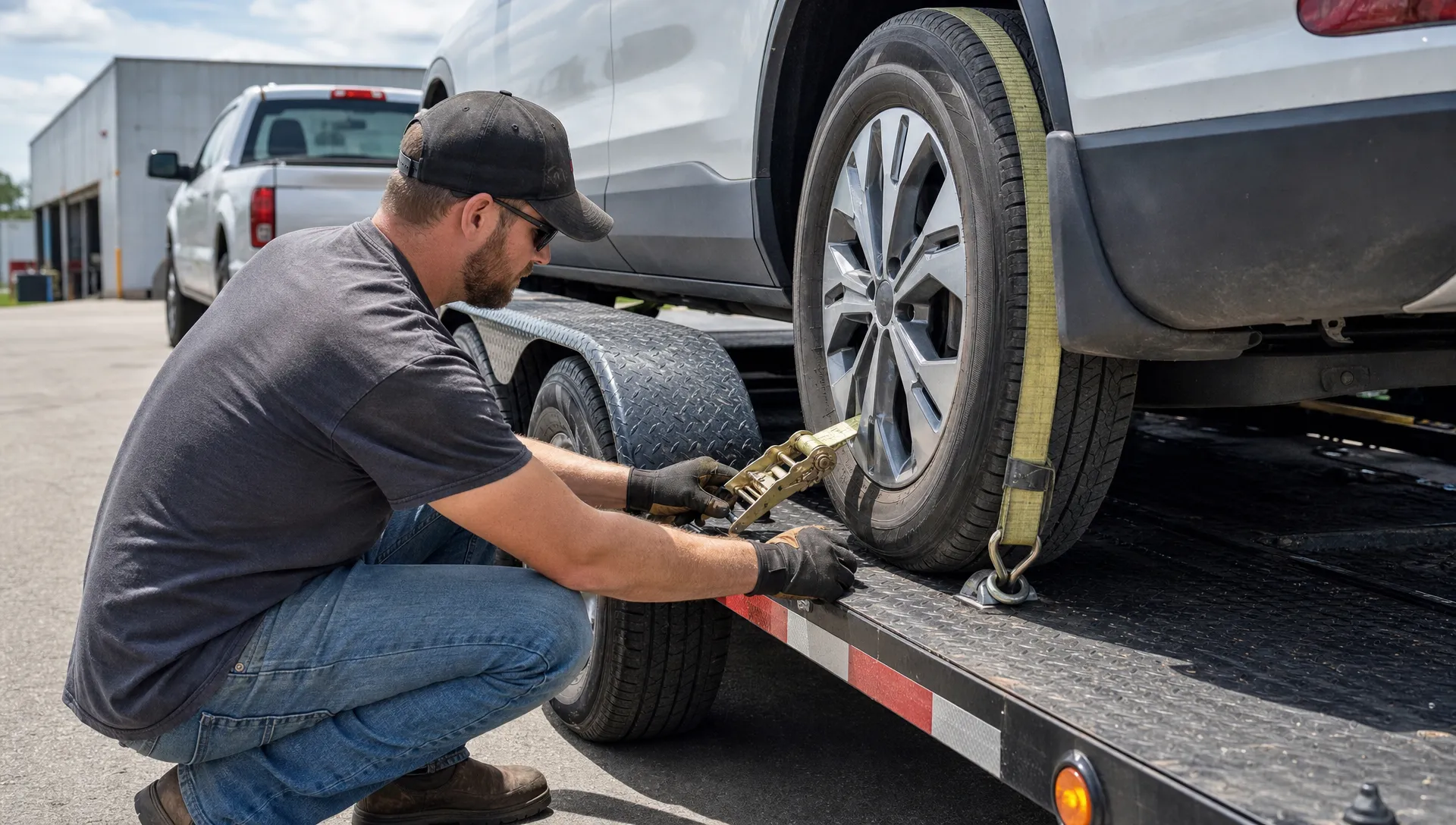
Finding the right car trailer for sale means checking more than deck length and the advertised price. The trailer must carry your vehicle safely, work with your tow vehicle and make loading practical. The listing also needs to give you enough information to verify exactly what you are buying, especially when comparing used units or arranging delivery from another state.
A useful shopping process separates three decisions: whether the trailer fits your hauling needs, whether its condition and documentation check out and whether the complete purchase cost makes sense. This guide focuses on turning online listings into a dependable shortlist, asking sellers the right questions and avoiding expensive surprises before you commit.
Define your needs before choosing a car trailer for sale
Start with a short buying brief. Record the vehicle you plan to transport, its actual hauling weight, overall dimensions and ground clearance. Include any tools, spare tires or other equipment that will travel on the trailer. If you transport different vehicles, plan around the heaviest and most difficult-to-load vehicle you realistically expect to carry.
Next, identify your truck’s towing limits for its exact configuration. A model’s maximum advertised towing capacity may not apply to your engine, axle ratio or equipment package. Trailer tongue weight also uses part of the truck’s available payload, along with passengers and cargo.
Keep these details beside you when evaluating a car trailer for sale, so attractive photos do not distract from an unsuitable setup. For a deeper fit check, use Prime Trail Trailers’ guide to matching a car hauler to your vehicle and tow vehicle.
Finally, decide how often you will haul, where you will park and whether the vehicle needs protection from weather or road debris. These details narrow the search before you start requesting quotes.
Verify the specifications behind each listing
A trailer described as “heavy-duty” or “ideal for cars” still needs documented ratings. Ask for the manufacturer’s specification sheet, a clear photo of the certification label and dimensions relevant to your vehicle. Confirm that the information applies to the exact unit being offered.
| Listing detail | What to verify | Why it matters | |----------------|----------------|----------------| | GVWR | Manufacturer’s maximum loaded trailer weight | Establishes the trailer’s overall weight limit | | Empty weight | Weight with installed options and equipment | Determines how much payload remains | | Usable deck dimensions | Clear loading area, including width between fenders where applicable | Confirms vehicle fit rather than nominal trailer size | | Axles, tires and brakes | Ratings, condition and installed brake equipment | Helps identify limitations or mismatched components | | Loading equipment | Ramp dimensions and ratings or tilt-system details | Determines whether loading is practical for your vehicle | | Tie-down points | Location, rating and condition | Supports a workable vehicle-securement plan |
When comparing a car trailer for sale, calculate payload from documented GVWR minus the trailer’s actual empty weight. Do not treat GVWR as cargo capacity or assume that adding axle ratings establishes the trailer’s rating.
Illustrative example: A trailer with a 7,000-pound GVWR and a 2,000-pound empty weight has a calculated 5,000-pound payload capacity. A 4,200-pound car plus 300 pounds of carried equipment would leave 500 pounds below that limit. You must still verify all other applicable ratings, loading requirements and tow-vehicle limits.
Choose the configuration around your loading routine
An open car hauler offers unobstructed access for positioning the vehicle and attaching tie-downs. An enclosed trailer provides protection from weather and road debris, but its walls change the loading process. Interior width, door clearance and space to exit the car matter as much as whether the vehicle physically fits inside.
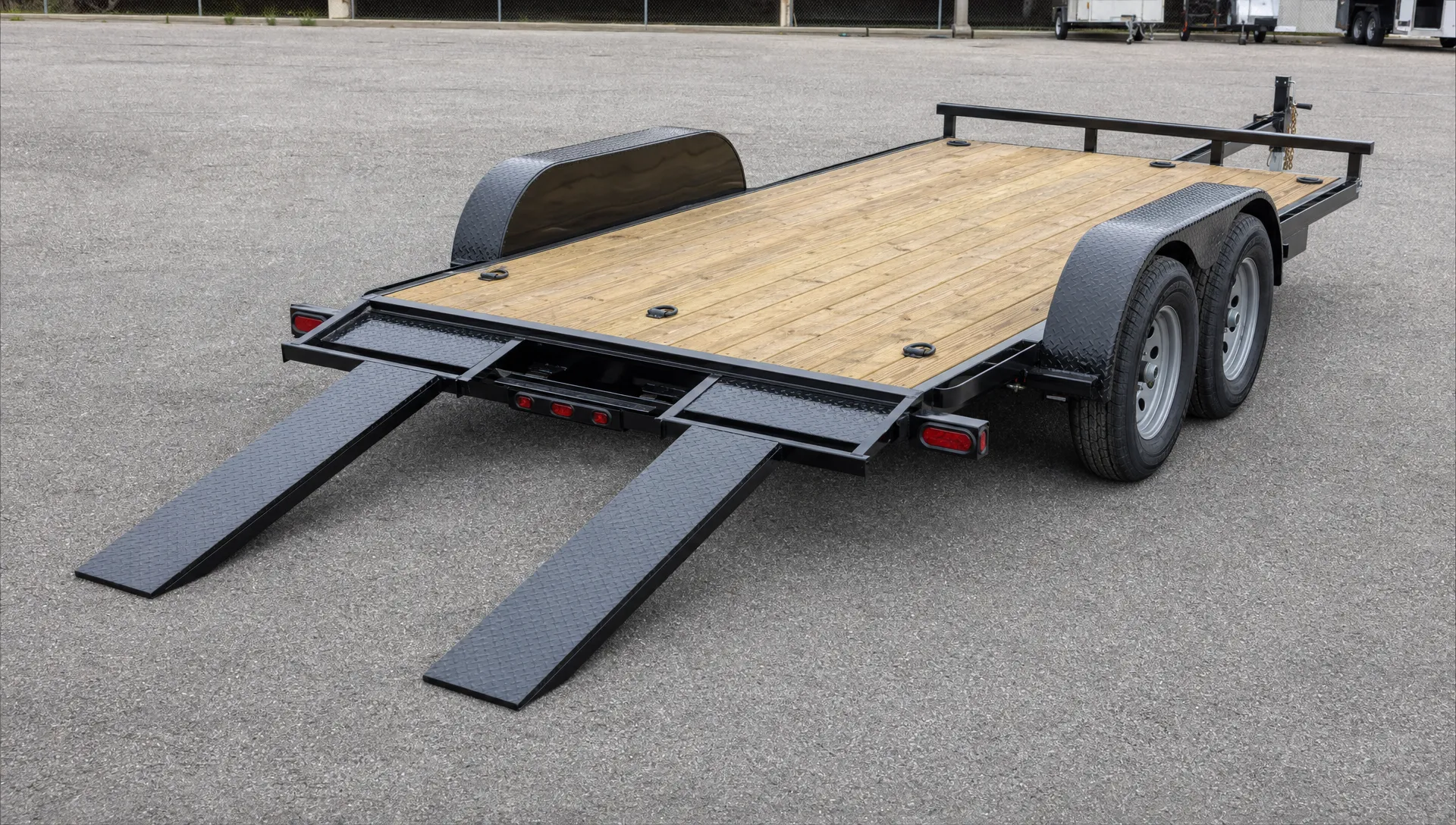
A tilt trailer can eliminate separate loading ramps, although its suitability depends on deck angle, vehicle clearance and the manufacturer’s loading procedure. A ramp-equipped trailer requires attention to ramp length, capacity and secure attachment. Neither design automatically guarantees clearance for a low front bumper or long wheelbase.
The best car trailer for sale for your situation is one you can load and secure consistently, not simply the model with the largest deck. Ask the seller to demonstrate the loading system and explain how the vehicle will reach its intended transport position.
If protection is a deciding factor, compare the trade-offs in choosing an enclosed car trailer. Also consider storage: a configuration that works on the road may still be difficult to maneuver through your driveway or park at your shop.
Compare the complete cost, not just the advertised price
Two similar-looking trailers may have different equipment packages and purchase costs. One quote may include loading ramps or a spare tire while another may not. Taxes, registration expenses and delivery can also change the amount you need to budget.
Request an itemized quote tied to a specific unit. Have the seller distinguish trailer equipment from accessories or towing equipment you must purchase separately. A brake controller, suitable hitch components or additional securement equipment may be necessary depending on your existing setup.
Use the same comparison categories for every seller:
- Trailer and included equipment: Identify the exact unit, installed options and any accessories included in the price.
- Taxes and transaction charges: Request a breakdown of applicable charges and clarify what you must handle separately.
- Pickup or delivery: Confirm the destination, cost, unloading arrangements and any access requirements.
- Ready-to-tow expenses: Account for required hitch equipment, brake-controller compatibility and vehicle tie-down equipment.
A lower-priced car trailer for sale may cost more overall if it needs tires, brake repairs or missing loading equipment before use. Conversely, paying more for equipment you will never need does not improve value.
Compare new and used trailers against the same hauling requirements. New condition does not replace a capacity check, and a used trailer is not automatically a bargain simply because its asking price is lower.
Inspect a used trailer before committing
Photos help you screen listings, but they cannot establish mechanical condition. Inspect a used trailer in person or arrange an independent inspection, particularly when the purchase involves long-distance delivery.
Look beyond paint and cosmetic wear
Examine the frame, crossmembers and tongue for cracks, distortion, significant corrosion or signs of previous repairs. Fresh paint can be ordinary maintenance, but ask what work was done and why. Check the deck for rot, damaged boards or compromised metal surfaces.
Pay attention to the components that affect loading and towing:
- Tires and wheels: Inspect tire size, load rating, age, damage and uneven wear, along with wheel condition.
- Running gear: Have axle alignment, suspension wear and wheel-bearing condition assessed by a qualified technician when needed.
- Brakes and electrical equipment: Verify brake operation, lights, wiring and the breakaway system where equipped.
- Coupler and safety equipment: Check the coupler, jack, safety chains and attachment points for damage or excessive wear.
- Ramps or tilt mechanism: Request a safe demonstration and inspect hinges, latches, attachment points and hydraulic components where present.
Before buying a used car trailer for sale, ask whether the seller has maintenance records or receipts for repairs. Missing records do not prove a problem, but they leave more condition questions for the inspection to resolve.
The National Highway Traffic Safety Administration’s tire guidance explains tire identification and maintenance considerations. Tread depth alone is not enough to judge whether an older trailer tire is suitable for continued service.
Turn findings into a purchase decision
Separate cosmetic issues from safety-critical repairs. Obtain realistic repair estimates before negotiating, then add those costs to your comparison. A trailer that needs substantial structural or running-gear work may be a poor choice when you need dependable transportation immediately.
Check the seller, VIN and ownership documents
Before sending payment, confirm who owns the trailer and who is authorized to sell it. Match the vehicle identification number on the trailer to the applicable ownership documents and purchase paperwork. Resolve missing, altered or inconsistent identifiers before proceeding.
For a dealer purchase, verify the business identity and obtain written information identifying the unit, equipment and agreed charges. For a private sale, confirm the seller’s ownership and investigate any lien or title concerns. Unusually urgent payment demands or refusal to provide basic documentation are reasons to pause.
A car trailer for sale with incomplete paperwork can create problems even when the trailer itself is sound. Trailer title and registration requirements vary by state, so check with your state motor vehicle agency before buying, especially for an out-of-state purchase or a trailer without a conventional title.
Business buyers should also consider how the trailer will be used. Commercial vehicle transport may involve additional registration, licensing, insurance or securement obligations depending on the operation. The Federal Motor Carrier Safety Administration’s cargo-securement rules are a useful starting point for operations subject to those requirements.
Confirm purchase terms and pickup or delivery details
Once a trailer passes your specification, condition and documentation checks, confirm the transaction terms in writing. Ask what is required to reserve the unit, whether any deposit is refundable and what happens if inspection reveals a material discrepancy. Do not assume one seller’s terms apply to another.
For delivery, provide the actual destination and ask about site access, unloading responsibilities and the process for reporting damage or discrepancies. Obtain the expected schedule directly from the seller rather than treating a general delivery statement as a guaranteed arrival date.
When arranging pickup of a car trailer for sale, confirm the coupler size, connector type and required towing equipment before traveling. Ask whether the trailer will be ready for a roadworthiness check and whether you need to bring your own securement equipment.
At handoff, compare the trailer with the written agreement. Check the VIN, installed equipment, visible condition and included accessories. Before towing, verify lights, brakes, hitch connections and tire pressures according to the relevant manufacturer instructions. If something does not match the agreement, resolve it before accepting the unit.
Frequently asked questions
Is a car trailer the same as a car hauler? Sellers often use these terms interchangeably for trailers intended to transport vehicles. The name alone does not establish capacity, loading suitability or securement provisions, so compare the actual specifications.
Should I buy a new or used trailer? A new trailer may reduce uncertainty about prior wear, while a used trailer may offer a lower purchase price. Compare documented condition, included equipment, required repairs and complete cost. Any warranty coverage should be confirmed in writing rather than assumed.
How can I compare listings when important specifications are missing? Ask the seller for the manufacturer’s ratings, usable dimensions and photos of the identification label. If you cannot verify that a car trailer for sale meets your load and towing requirements, keep it off your final shortlist until those questions are resolved.
Can I buy a trailer from another state? Yes, but confirm your home state’s title and registration requirements, applicable taxes and pickup or delivery arrangements before paying. Ask what documents the seller will provide and how any temporary transport requirements will be handled.
What should I send a dealer when requesting help? Provide your vehicle’s weight and dimensions, tow-vehicle configuration, loading-clearance concerns and intended use. Include your budget range and delivery location so the dealer can help compare suitable options and provide relevant pricing information.
Find a trailer that passes every check
Your final shortlist should contain trailers with verified capacity, practical loading arrangements, acceptable condition and clear purchase documentation. Compare the complete cost, then choose the unit that fits your work rather than the one with the most appealing advertisement.
Prime Trail Trailers offers new and used trailers, including car haulers, with sales assistance and nationwide delivery options. To find a car trailer for sale that matches your requirements, browse trailer options at Prime Trail Trailers and request current pricing, unit specifications and availability. Share your vehicle details and towing setup so the sales team can help you evaluate the right options.
Have Questions? We're Here to Help
Still unsure which trailer fits your needs, or need specs, pricing or delivery advice? The Prime Trail Trailers team is ready to answer your questions and help you find the right rig.