
Pickup Truck Trailers: Which Style Fits Your Hauling Needs?
The right trailer depends on what you haul and what your pickup can safely tow. Compare open, enclosed, dump and equipment options, then use practical weight and loading checks to narrow your purchase.
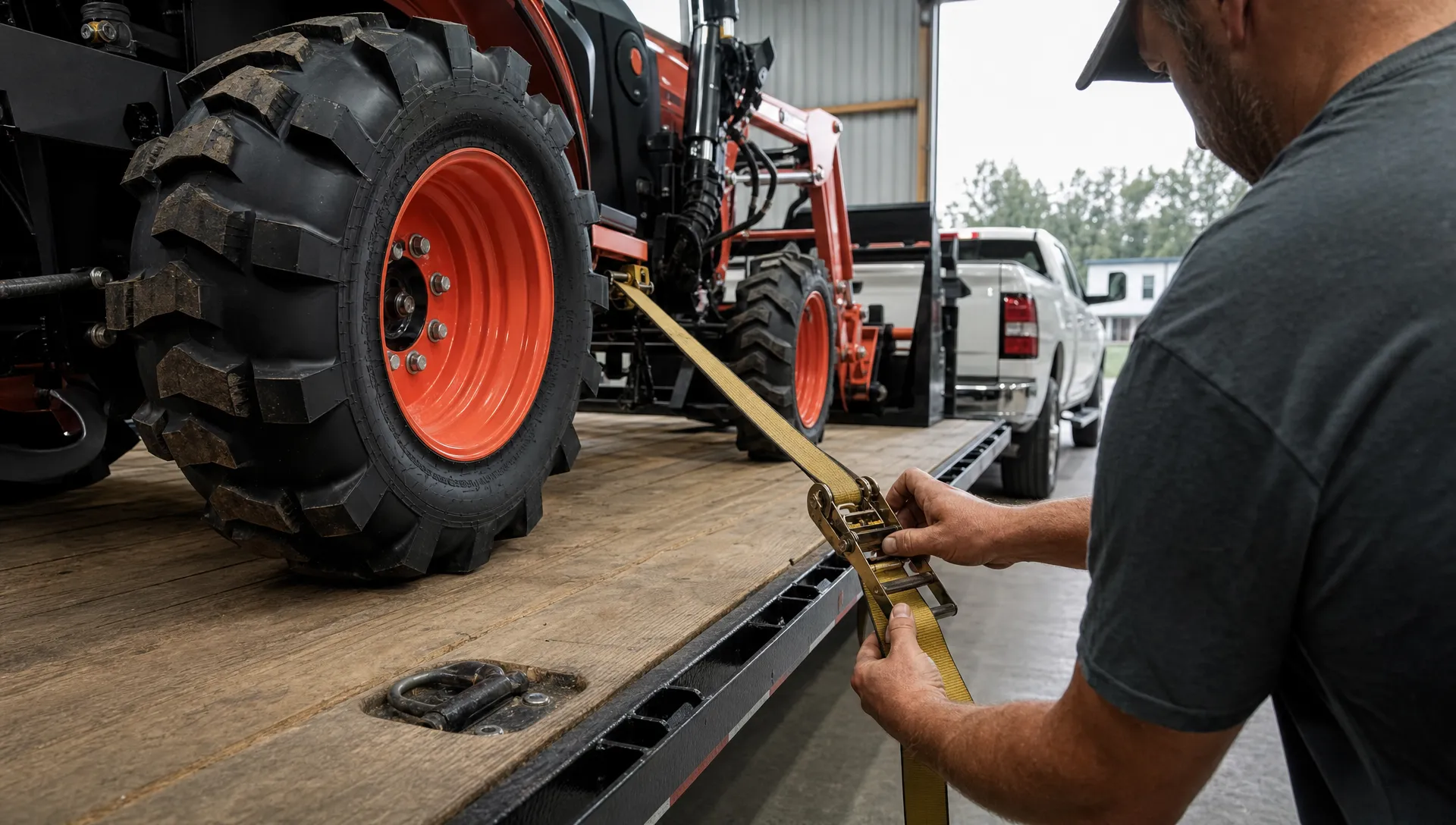
Choosing pickup truck trailers starts with two questions: what will you haul, and what can your specific truck safely handle? An open utility trailer may suit a landscaping crew, while a contractor carrying power tools may need enclosed storage. Moving gravel, transporting a skid steer and hauling a project car call for different designs.
The right purchase matches the load, loading method and daily working conditions without exceeding the truck’s ratings. Use this guide to compare trailer styles, check towing compatibility and narrow your options before requesting pricing.
Start with the job you need the trailer to do
Write down your heaviest realistic load, its dimensions and how frequently you will haul it. Include attachments, spare tires, tools and materials that travel with the main load. Then identify whether weather protection, powered unloading or low-angle equipment loading matters most.
| Trailer style | Best suited to | Main buying consideration | |---|---|---| | Open utility | Mowers, landscaping supplies and general hauling | Usable deck space, gate capacity and payload | | Enclosed cargo | Tools, furniture and weather-sensitive materials | Interior dimensions, door openings and loaded weight | | Dump | Dirt, gravel, mulch and job-site debris | Material weight, payload and unloading conditions | | Equipment or tilt | Tractors, compact equipment and machinery | Loading angle, deck strength and securement | | Car hauler | Cars, pickups and project vehicles | Vehicle weight, tire clearance and approach angle | | Flatbed or deckover | Bulky materials, pallets and wide equipment | Deck height, loading access and overall dimensions |
For pickup truck trailers, the deck or body style describes what you can carry, while the hitch configuration describes how the trailer connects to the truck. A gooseneck can have a flatbed, equipment deck or dump body, so those categories are not mutually exclusive.
Which pickup truck trailers fit your hauling needs?
Open utility trailers for everyday versatility
An open utility trailer is a practical starting point for lawn equipment, fence supplies, household projects and lighter commercial hauling. Open sides make it easier to inspect the load and access tie-down locations, although rails and gates vary by model.
Compare the usable deck dimensions rather than relying only on the advertised size. A mower may fit on the deck but leave too little room for additional equipment. Also check the gate’s rated capacity and whether its angle suits your machine.
The main trade-off is exposure. Rain, road spray and unsecured access make an open trailer less suitable for valuable tools or cargo that must stay dry.
Enclosed cargo trailers for protected transport
An enclosed trailer makes sense when weather protection and lockable storage matter. Contractors can transport tools and supplies together, while personal buyers can move furniture or recreational equipment under cover.
Compare interior height, usable floor space and the actual door opening. A tall appliance or machine can fit inside yet fail to clear the entrance. Ramp doors and swing doors also support different loading routines.
Enclosures add weight and aerodynamic resistance, which can affect towing performance. For a closer look at sizing and access, the guide to box trailer uses, sizes and features explains what to compare before buying.
Dump trailers for loose material and cleanup work
When comparing pickup truck trailers for gravel, soil or demolition debris, prioritize weight capacity over box volume. Dense material can reach the trailer’s limit before the bed looks full.
A dump trailer can reduce manual unloading, but its dimensions, dumping system and rear gate arrangement should match your work. Check the manufacturer’s instructions for load distribution and safe unloading conditions. Dump only on suitable firm, level ground with adequate overhead clearance.
One relevant option is the Double-A 7' X 12' Dump Trailer - Excel Series (14,000LBS GVW - 7K Axles). Its supplied listing identifies a 7-by-12-foot size, 14,000 lb GVW and 7K axles. The 14,000 lb figure is not a cargo-only payload rating. Confirm the unit’s GVWR and empty weight, then verify that your pickup and hitch can support the intended loaded weight.
Equipment and tilt trailers for machinery
Equipment trailers are built around machine transport, with deck layouts, ramps and securement provisions that should match the equipment being hauled. Consider the machine’s operating weight with attachments, not just its base weight.
Loading angle matters for equipment with low ground clearance. Ramp length, deck height and transition points can determine whether a machine loads cleanly or bottoms out.
For pickup truck trailers used to move equipment frequently, a tilt deck may offer a more convenient loading method than separate ramps. It still needs appropriate capacity, traction and loading geometry. Prime Trail Trailers’ guide to whether tilt trailers are worth it for equipment hauling helps weigh that choice against your loading routine.
Car haulers for vehicle transport
A car hauler should fit the vehicle’s weight, wheelbase, width and ground clearance. Check usable space between the fenders, not simply the trailer’s overall width. Door clearance also matters if the driver needs to exit after loading.
Low cars may need a shallower approach angle, while a non-running vehicle may require a suitable winch setup. Verify whether loading equipment is included or must be added.
Do not assume a trailer that carries a compact car can carry a full-size pickup. Compare the actual vehicle weight with available payload and leave room in the calculation for straps, tools and any other cargo.
Flatbeds and goosenecks for larger work loads
Flatbeds offer flexible access for pallets, building materials and equipment. A deckover places the deck above the wheels, providing an unobstructed loading surface but generally increasing deck height. That can make ramp loading more demanding.
A gooseneck connects to a compatible hitch in the pickup bed rather than a rear receiver. It can be useful for longer trailers and heavier hauling applications, provided the truck supports the required ratings and bed clearance.
A conventional trailer, often called a bumper-pull, usually connects through a rated receiver hitch. The term does not mean every trailer can safely attach directly to a truck’s bumper.
Check towing capacity before choosing a size
The safe choice among pickup truck trailers depends on the exact truck configuration, not its badge or an advertised maximum for the model lineup. Engine, axle ratio, cab, drivetrain and factory equipment can change the limits.
Use the truck’s documentation, vehicle labels and manufacturer towing information. Check the trailer identification plate and the ratings on the hitch, ball, coupler and other towing components as well.
Separate gross weight from payload
Trailer GVWR is the maximum permitted weight of the trailer and its load. Trailer payload is the cargo capacity remaining after accounting for the trailer’s empty weight and anything added to it.
For example, a trailer with a verified 14,000 lb GVWR and a 4,000 lb empty weight has a calculated 10,000 lb payload before added equipment or accessories. This is an illustrative calculation, not a specification for the Double-A model mentioned above.
Your pickup must support the actual loaded trailer weight, not just the empty trailer. Truck GVWR, axle ratings and gross combined weight rating also apply. Staying below one limit does not establish that the complete combination is safe.
Account for tongue weight and truck payload
A common limitation for pickup truck trailers is the truck’s remaining payload, even when its tow rating appears sufficient. Occupants, bed cargo, accessories and hitch equipment all use that capacity before trailer tongue weight is added.
For conventional trailers, CURT’s towing capacity guidance identifies a typical tongue-weight range of 10% to 15% of loaded trailer weight. Follow the truck and trailer manufacturers’ requirements for your combination. Gooseneck loading has different requirements.
Consider a truck with 1,800 lb of available payload. If occupants and cargo weigh 600 lb and hitch equipment weighs 100 lb, 1,100 lb remains for tongue weight. A 9,000 lb conventional trailer could place approximately 900 to 1,350 lb on the hitch within that typical range. The upper end would exceed the remaining payload.
Verify the finished setup on a suitable scale, including truck axle weights. A weight-distribution hitch does not increase the truck’s ratings and should only be used where approved.
Compare loading, access and daily working conditions
The most useful pickup truck trailers are not necessarily the largest ones your truck can tow. A trailer that fits your load but complicates every delivery, driveway entry or unloading task can become an expensive inconvenience.
Measure the space that actually matters
Check clear deck width, interior dimensions, door openings and usable length around installed equipment. Account for toolboxes, spare tires, fenders and other features that occupy space.
For machinery, verify ramp capacity and whether it is stated per ramp or for the pair. Compare the machine’s wheel or track spacing with the loading arrangement. Suitable tie-down points must be accessible after the load is positioned.
For materials, consider how you will load them. Forklift access may favor an open deck, while a ramp door may be more useful for wheeled equipment. Loose material usually calls for a different body than palletized supplies.
Consider the entire route
Storage space, job-site access and parking can determine whether a trailer works in practice. Measure gates and turning areas, and consider steep driveway transitions or uneven entrances.
An enclosed body needs vertical clearance. A gooseneck needs appropriate clearance between the trailer and pickup bed during turns and over uneven terrain. A raised dump body requires substantially more overhead space than the trailer in transport position.
Also check brakes, tires, lighting, breakaway equipment and electrical connections. If the trailer uses electric brakes, confirm that the truck has a compatible, correctly configured brake controller.
Compare new and used options on total value
When shopping for pickup truck trailers, compare purchase price alongside condition, equipment and suitability. A lower-priced trailer may cost more overall if it needs tires, brake repairs or loading equipment before it can do the job.
For a used trailer, inspect the frame, crossmembers, weld areas, flooring, coupler, wiring and tires. Check for structural distortion, significant corrosion or questionable repairs. Dumping or tilt mechanisms need inspection too. Ask for maintenance records when available and confirm that identification and ownership documents match the unit.
For either new or used options, request a written specification summary. Confirm these details before committing:
- Verified GVWR, empty weight and calculated payload for the specific unit.
- Usable dimensions, loading equipment and tie-down provisions.
- Hitch requirements, brakes, electrical connection and included equipment.
- Itemized pricing, documentation and delivery arrangements where applicable.
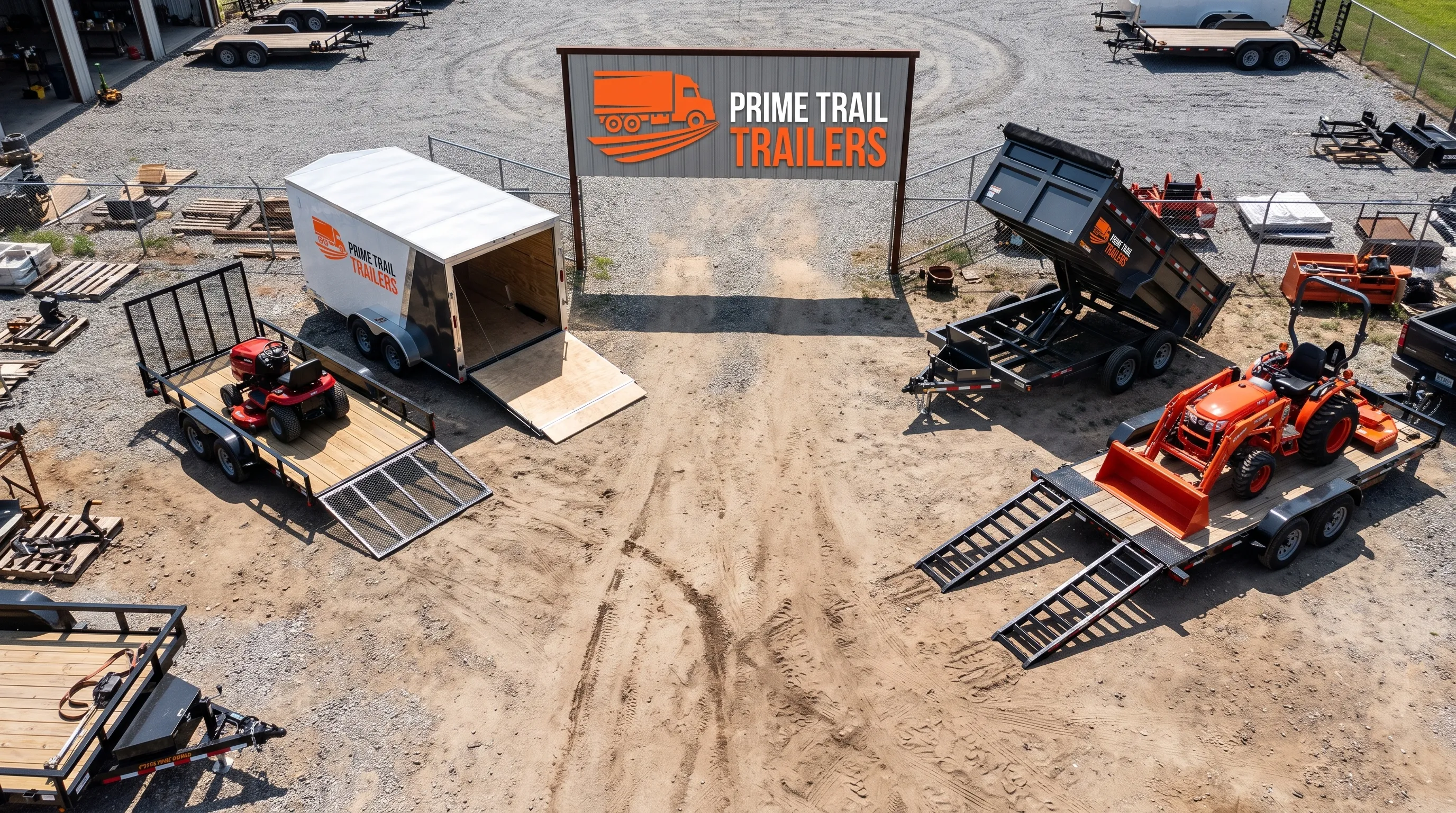
Prime Trail Trailers offers new and used trailers across multiple categories, along with sales assistance and nationwide delivery options. Request current pricing and unit-specific details rather than assuming every configuration includes the same equipment.
Frequently asked questions
Which pickup truck trailers are best for general-purpose hauling? An open utility trailer is often a practical choice for mowers, household projects and materials that can tolerate weather exposure. Choose an enclosed trailer when keeping cargo dry and providing lockable storage are higher priorities.
Can a half-ton pickup tow a dump trailer? It depends on the specific truck and the trailer’s actual loaded weight. Check towing capacity, available payload, axle ratings and hitch limits. A dump trailer’s box can hold more material by volume than your truck can safely tow by weight.
Is a gooseneck always better than a bumper-pull trailer? No. A gooseneck requires a compatible truck and bed-mounted hitch, and it uses some pickup-bed space. A receiver-connected trailer may be simpler for smaller loads or buyers who need the bed available for other cargo.
Do I need trailer brakes? Requirements depend on trailer weight, state law and the vehicle manufacturer’s instructions. Check the rules for every state where you plan to travel. Confirm brake-controller compatibility when the trailer has electric brakes.
Should I buy extra capacity for future loads? Additional capacity can be useful if the truck supports it. However, a heavier trailer also uses more towing capacity before cargo is added. Buy for realistic future work, not the largest rating available.
Find a trailer that fits your pickup and your work
Narrow pickup truck trailers by cargo type first, then verify loaded weight, truck payload, hitch compatibility and loading access. Those checks help prevent buying a trailer that looks suitable but cannot safely handle your intended job.
Browse available trailer categories at Prime Trail Trailers to compare your options. For help choosing a unit, provide the sales team with your truck configuration, typical load weight and required dimensions, then request current pricing and availability.
Have Questions? We're Here to Help
Still unsure which trailer fits your needs, or need specs, pricing or delivery advice? The Prime Trail Trailers team is ready to answer your questions and help you find the right rig.