
Is an Enclosed Car Trailer the Right Choice for Your Vehicle?
Protecting your car takes more than choosing a trailer with walls. Compare vehicle fit, loading clearance, towing limits and ownership costs to decide whether an enclosed hauler is worth the investment.
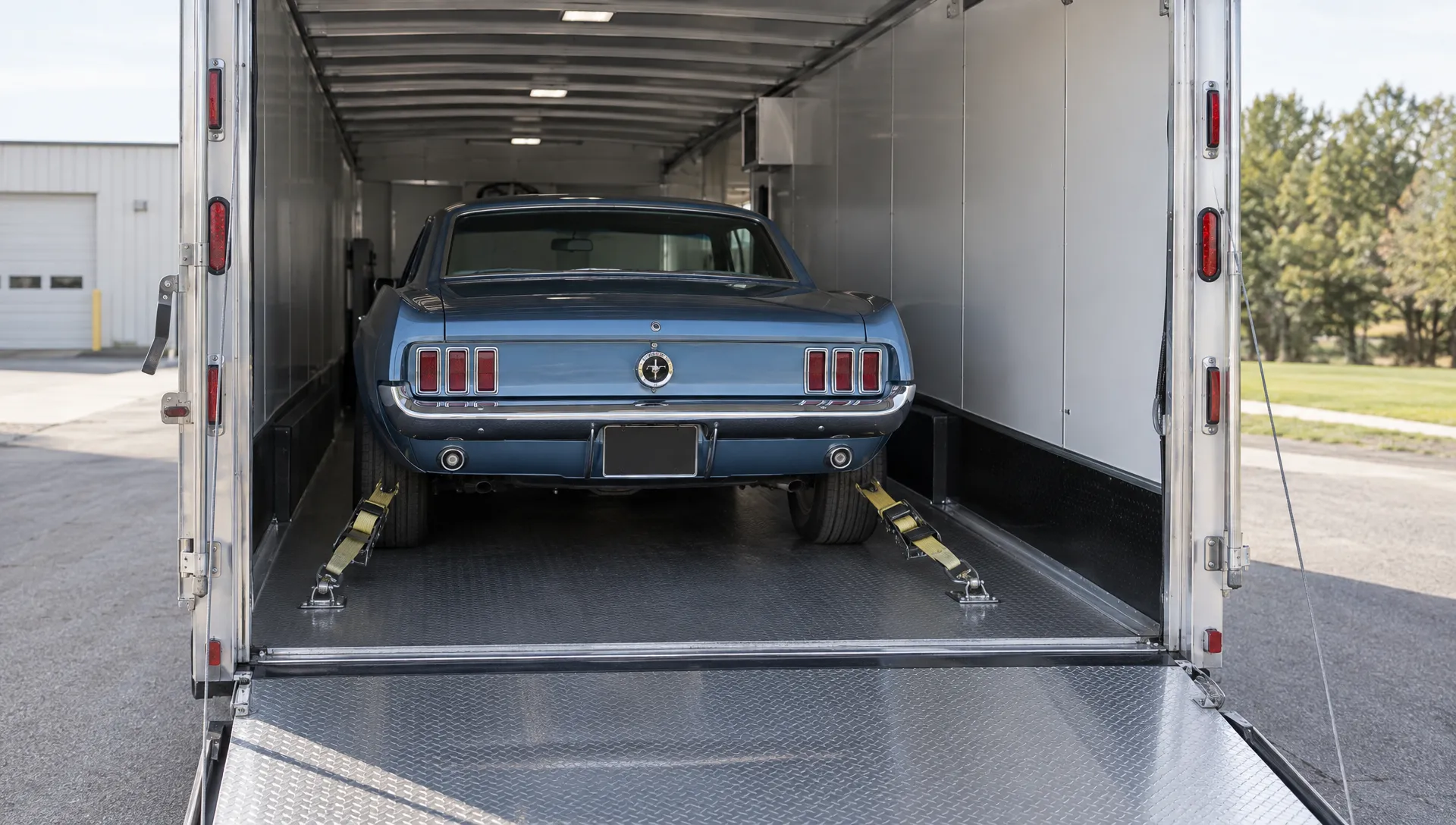
An enclosed car trailer is worth considering when protecting your vehicle from weather, road debris and unwanted attention matters enough to justify additional weight and expense. It can be a practical choice for a restored classic, race car or regularly transported vehicle. For occasional trips with an everyday car, an open hauler may accomplish the job with less cost and fewer towing demands.
The decision comes down to more than having walls and a roof. Your vehicle must fit, load without scraping and leave enough room for securement. Your truck must also handle the trailer’s actual loaded weight, not just its advertised empty weight.
When does an enclosed trailer make sense?
Start with the vehicle you transport, how frequently you move it and what exposure you want to avoid.
| Your hauling situation | What favors an enclosed trailer | What may favor an open hauler | |------------------------|--------------------------------|------------------------------| | Restored classic or collector car | Protection for paint, interior and loose accessories | Lower trailer weight for occasional local trips | | Race car with tools and spare parts | Covered transport for the car and supporting equipment | Simpler loading when covered workspace is unnecessary | | Everyday vehicle transported occasionally | Reduced exposure during travel | Lower purchase cost and easier access around the vehicle | | Frequent trips through changing weather | A barrier against rain, snow and road spray | Less trailer frontal area and generally lower empty weight | | Limited parking or modest tow capacity | Benefits only if the complete setup fits your limits | An open trailer may be easier to accommodate |
The strongest case for an enclosed car trailer is repeated transport of a vehicle whose condition, equipment or presentation you need to preserve. Enclosure also conceals the load from casual view, although locks and walls do not make a trailer theft-proof.
An enclosed body is not necessarily climate-controlled or dust-tight. Check seals, ventilation and storage conditions rather than assuming the vehicle will remain dry under every circumstance.
Check vehicle fit, not just advertised trailer size
Interior space and driver access
Nominal trailer dimensions are a starting point, not a fit guarantee. Wall construction, wheel wells, door framing and installed equipment can reduce usable space.
Measure your vehicle’s overall length, width and height in its transport configuration. Include mirrors, spoilers, roof accessories and anything that cannot be removed easily. Compare those measurements with the trailer’s clear rear opening and usable interior dimensions.
Then consider how you will get out of the car. A vehicle can fit between the walls while leaving too little room to open its door. Interior wheel wells can make that problem worse. An escape door may help, but only if its location and opening align with your vehicle’s door.
Before buying an enclosed car trailer, ask for measurements showing door-opening clearance with your specific vehicle positioned inside. Leave usable space for tie-down work rather than filling nearly every inch with the car.
Ramp angle and low-clearance vehicles
Low sports cars introduce a separate problem: loading geometry. The front bumper can contact the ramp before the tires reach it, or the underside can scrape where the ramp meets the trailer floor.
Ramp length, loading height and the transition at the top all affect clearance. Ground slope and tow-vehicle position can change the angle during loading, too.
Confirm the ramp’s rating and the manufacturer’s intended use. A rear ramp on a general cargo trailer is not automatically suitable for an automobile. The ramp, floor and supporting structure must handle the vehicle’s concentrated wheel loads.
Approved ramp extensions or a suitable beavertail design may improve clearance. Do not improvise extensions without verifying their capacity and how they attach.
Can your truck safely tow an enclosed car trailer?
Calculate the complete load
Gross vehicle weight rating, or GVWR, is the trailer manufacturer’s maximum permitted loaded weight. Available payload starts with GVWR minus the trailer’s actual empty weight as equipped.
Accessories matter. Cabinets, a winch, batteries and a spare tire can reduce the capacity available for your car. Tools and spare wheels carried during a trip also count toward the load.
Consider this hypothetical example, not a specification for any trailer in Prime Trail Trailers inventory:
| Weight item | Example weight | |-------------|----------------| | Trailer GVWR | 10,000 lb | | Actual empty trailer weight | 3,500 lb | | Available payload | 6,500 lb | | Vehicle weight | 4,000 lb | | Tools, spare wheels and other cargo | 800 lb | | Total loaded trailer weight | 8,300 lb |
In this example, the enclosed car trailer has 1,700 lb remaining below its GVWR. That does not establish that the truck can tow it, that each axle is within its rating or that the cargo is correctly distributed.
Use verified vehicle weight and weigh the loaded combination when practical. Brochure estimates can miss modifications, fluids and equipment.
Check the truck, hitch and axle limits
A truck’s maximum advertised tow rating may not apply to its specific engine, axle ratio, drivetrain and equipment. Consult the documentation for the exact vehicle.
Check towing capacity, gross combined weight rating, truck payload, rear axle rating and the ratings of the receiver, ball mount and hitch ball. Occupants, bed cargo and trailer tongue weight all consume truck payload.
For a conventional bumper-pull trailer, tongue weight often falls around 10% to 15% of loaded trailer weight, but follow the trailer and tow-vehicle manufacturers’ guidance. Do not apply that range automatically to a gooseneck setup.
An enclosed body also adds frontal area and wind exposure. A combination that stays within weight ratings still needs appropriate brakes, tires and towing equipment. Prime Trail Trailers’ trailer buyer’s guide provides a broader framework for comparing trailer ratings with hauling requirements.
Compare ownership costs, not just purchase price
An enclosed car trailer typically costs more than a comparable open hauler because it includes a body, roof, doors and additional structure. The purchase-price difference is only part of the comparison.
Consider fuel consumption, insurance, storage space and maintenance. Enclosed trailers add roof seams, wall joints and door seals to the components you inspect. Tires, brakes, bearings and lights still require attention, just as they do on an open trailer.
Body material alone does not settle the weight or value question. An aluminum trailer may offer weight advantages in a particular configuration, but compare actual empty weights and ratings rather than relying on the material label.
For occasional transport, compare ownership with renting an appropriate trailer or hiring a vehicle transporter. For frequent trips, owning the right trailer can reduce scheduling constraints and let you keep transport equipment organized.
Ask for a quote that identifies the trailer configuration, applicable fees and any delivery charges. Prime Trail Trailers offers nationwide delivery options, but the cost and arrangements should be confirmed for the specific unit and destination.
Choose features that solve your loading problems
The best-equipped enclosed car trailer is not necessarily the one with the longest accessory list. Prioritize features that make your particular vehicle easier to load, secure and unload.
- Vehicle-rated ramp and floor: Verify suitability for the car’s weight and wheel loads, not just general cargo capacity.
- Securement anchors: Confirm their ratings, placement and attachment to supporting structure.
- Escape door: Check alignment with the car door and clearance above the trailer’s wheel wells.
- Lighting and ventilation: Look for practical visibility during loading and ventilation appropriate to the trailer’s use.
- Winch provisions: If needed, verify the mounting structure, power supply and intended load rating rather than assuming a winch can attach anywhere.
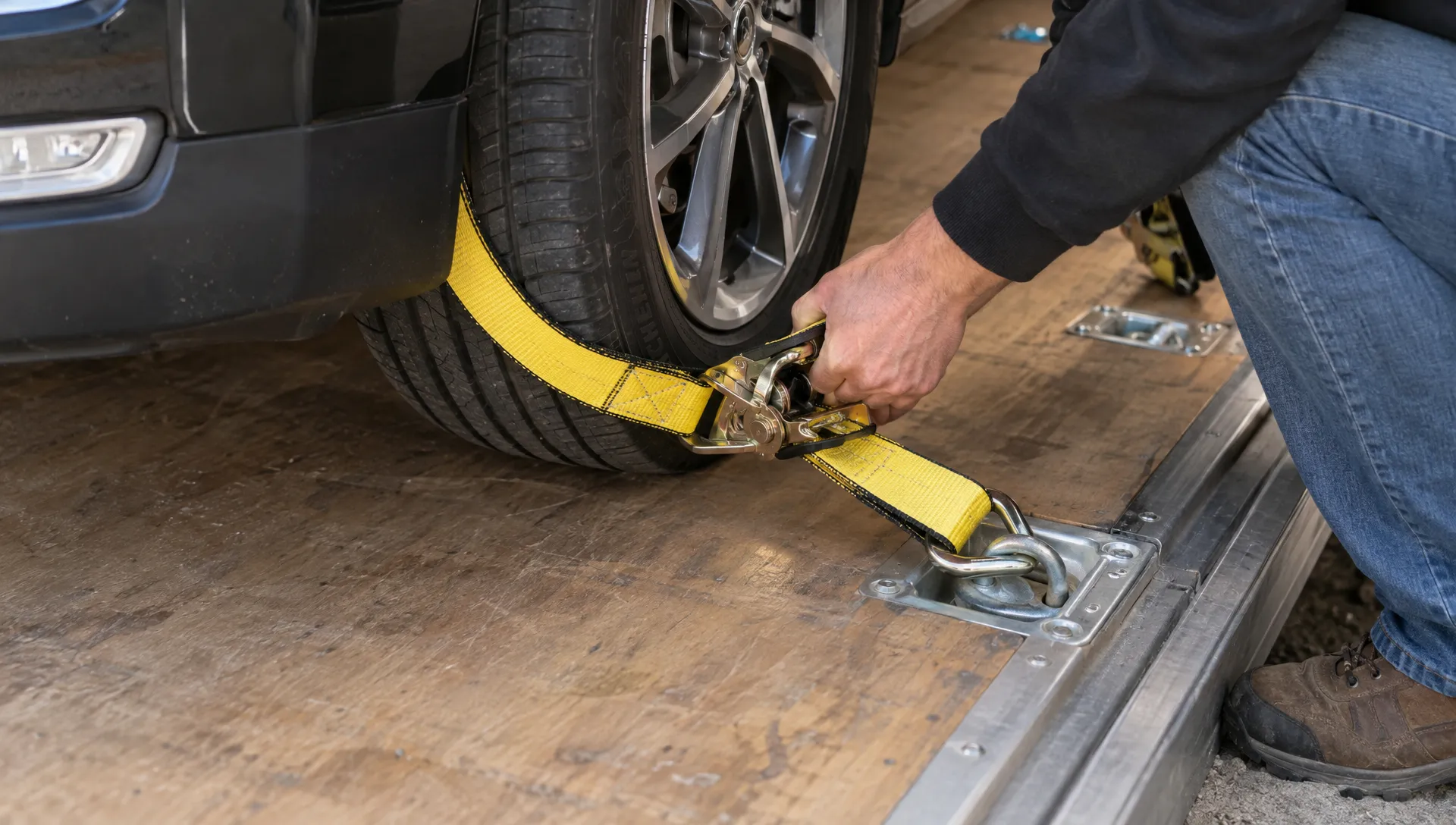
Secure the car using its manufacturer’s recommended transport points or an appropriate wheel-restraint system. Wall panels, interior cabinets and unverified floor rings are not substitutes for rated anchors. Follow the restraint manufacturer’s instructions and recheck securement during the trip.
If carrying tools or spare parts, give them their own securement plan. Enclosure prevents items from falling directly onto the road, but it does not prevent loose equipment from striking the car inside.
Never run a vehicle engine inside a closed trailer. Avoid lingering around exhaust during loading, and keep people out of the trailer while it is being towed.
What to inspect on a used trailer
A used enclosed car trailer may offer good value, but cosmetic condition does not establish structural condition. Look beyond exterior panels and a freshly cleaned floor.
Inspect roof seams, wall joints and door openings for leaks or repairs. Inside, check for staining, soft flooring and deterioration where moisture could collect. Examine the frame, ramp hinges and anchor mounting areas for corrosion, cracking or damage.
Verify that the identification plate is legible and that the VIN matches the ownership documents. Confirm the GVWR and axle information before calculating payload. If modifications have been made, ask how they affect weight and capacity.
Check tires for condition, appropriate load rating and age. The NHTSA tire safety guidance explains why tire condition and inflation deserve attention even when tread remains.
Have brakes, bearings and other running gear evaluated if their condition is uncertain. A lower asking price can lose its appeal when repairs are needed before the first loaded trip.
Turn a listing into a vehicle-specific comparison
When reviewing a listing, request the usable interior dimensions, clear rear opening, ramp rating, actual empty weight and securement details. Photos are helpful, but they rarely establish whether you can open your car door or clear the ramp transition.
The listed 8’6″ x 18′ Continental Cargo Auto-Plus car-hauler is one relevant comparison point at Prime Trail Trailers. Treat its nominal dimensions as a starting point and confirm current specifications, pricing and availability with the sales team.
Provide your vehicle’s measurements and weight, your truck’s configuration and the equipment you plan to carry. Also mention low ground clearance, loading without driving the car or limited parking space. Those details help narrow the options more effectively than asking for a particular length alone.
Frequently asked questions
Is an enclosed car trailer better than an open car hauler? It is better for reducing exposure to weather and road debris and for concealing the load. An open hauler can be a better choice when lower weight, easier vehicle access and lower ownership cost matter more. Neither is universally better.
What size trailer do I need for one car? Choose from measured usable space, not nominal length alone. Account for the vehicle, front and rear clearance, tie-down access and any tools or spare parts. Rear-door dimensions and room to exit the car can rule out a trailer even when its floor length is sufficient.
Can any enclosed cargo trailer carry a car? No. The payload, floor, ramp and securement system must be suitable for vehicle transport. A general cargo trailer may have enough interior space without having the necessary load ratings or structure.
Do I need a three-quarter-ton truck? Not automatically. The answer depends on the actual loaded trailer weight and the ratings of the exact truck and hitch setup. Some combinations may fit a properly equipped half-ton truck’s limits, while heavier setups require more capacity. Check every relevant rating rather than relying on the truck class.
Will an enclosed trailer prevent rust during storage? Not by itself. It limits direct weather exposure, but trapped moisture and condensation can still cause problems. Inspect for leaks, provide suitable ventilation and store the vehicle clean and dry.
Find a trailer that fits the whole hauling setup
Choose an enclosed car trailer when its protection and covered capacity justify the added cost, weight and storage demands. Before purchasing, confirm vehicle fit, loading clearance, rated payload and tow-vehicle compatibility.
Browse trailers at Prime Trail Trailers and contact the sales team with your vehicle measurements and towing details. Request current pricing, availability and delivery information so you can compare suitable options before committing.
Have Questions? We're Here to Help
Still unsure which trailer fits your needs, or need specs, pricing or delivery advice? The Prime Trail Trailers team is ready to answer your questions and help you find the right rig.