
Bumper Pull Trailer vs. Gooseneck: Which Should You Buy?
The right hitch depends on your truck’s limits, your typical load and how you work. Compare towing trade-offs, ownership costs and practical buying checks before choosing a trailer.
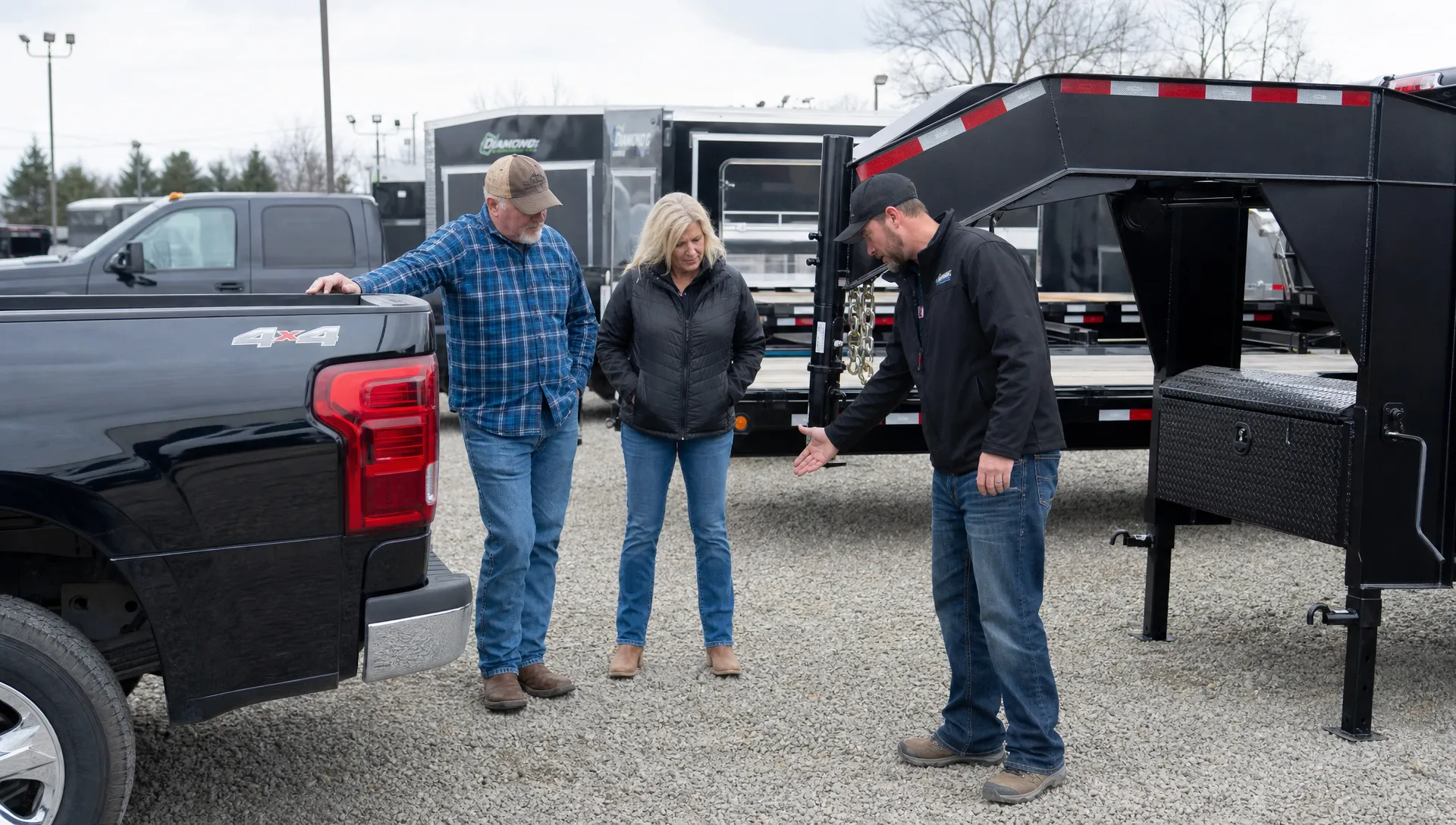
A bumper pull trailer is often the practical choice for hauling tools, landscaping equipment or a single vehicle without adding an in-bed hitch. A gooseneck deserves a closer look when you regularly move heavy machinery, need a larger deck or want a connection positioned over the truck’s rear axle.
Neither hitch type automatically gives you more usable payload. The right purchase depends on the loaded trailer, the tow vehicle’s ratings and how the setup fits your daily work. Here is how to compare them before committing to a trailer.
Bumper pull vs. gooseneck: quick comparison
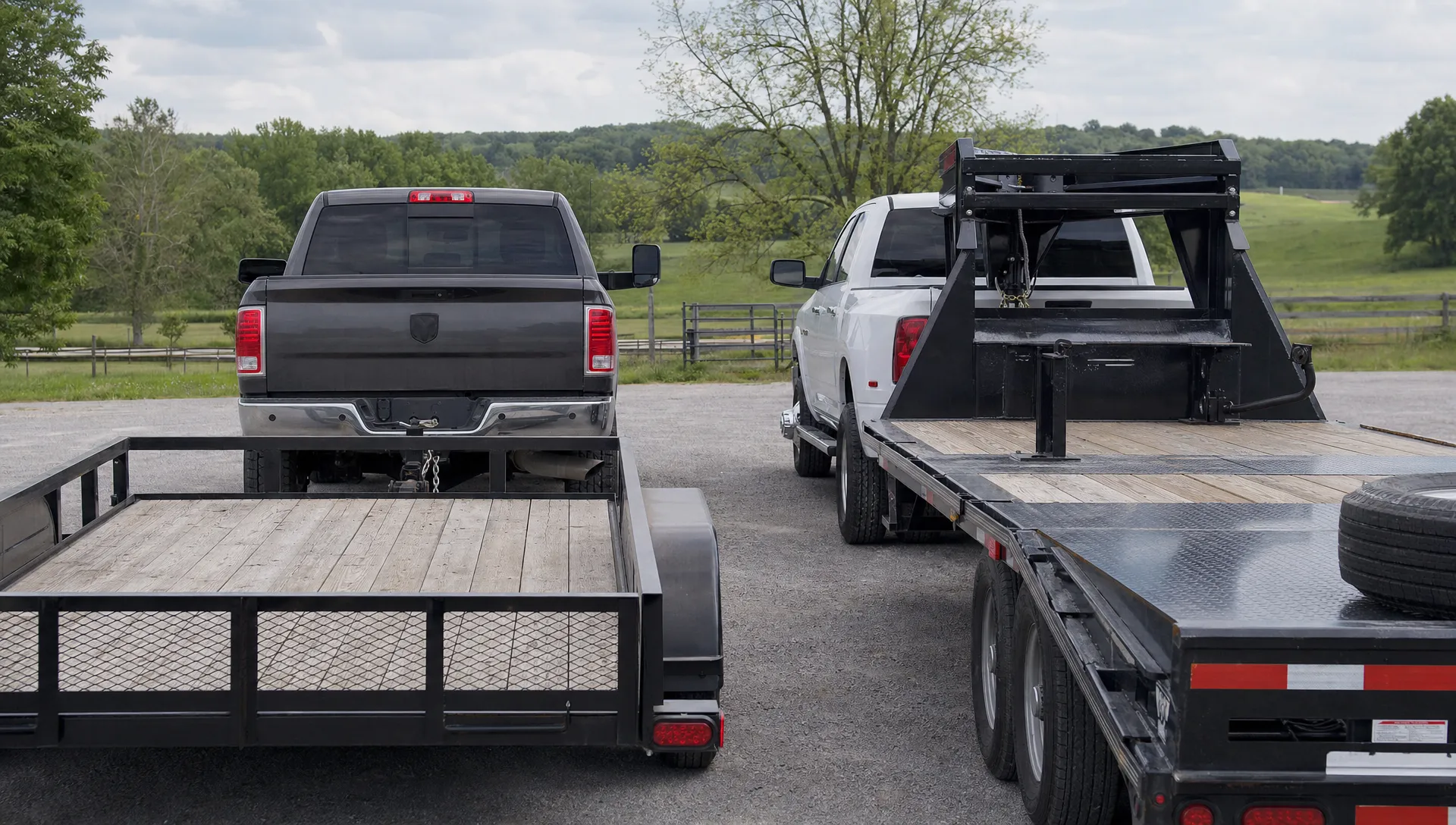
For buyers using a properly rated SUV, van or pickup, a receiver-hitch trailer usually offers greater vehicle flexibility. For businesses with a compatible pickup and recurring heavy loads, a gooseneck may be the better working setup.
| Buying factor | Bumper pull | Gooseneck | |---|---|---| | Connection | Coupler connects to a ball behind the vehicle | Coupler connects to a ball in the pickup bed | | Tow vehicle options | Properly rated pickups, SUVs and some vans | Compatible pickups with an approved in-bed hitch | | Truck bed access | Does not require an in-bed connection | Requires clearance around the hitch and trailer neck | | Common applications | Utility, enclosed cargo, dump and car-hauler trailers | Larger equipment, agricultural and heavy-hauling trailers | | Setup expense | Often lower if suitable towing equipment is already installed | May require an in-bed hitch installation | | Main capacity check | Vehicle, receiver, ball mount, hitch ball and trailer ratings | Vehicle, in-bed hitch, hitch ball and trailer ratings |
There is substantial overlap between applications. Compare individual trailer specifications rather than assuming every gooseneck outperforms every receiver-hitch model.
How the hitch changes your towing setup
When a bumper pull trailer makes more sense
Despite the name, a bumper pull trailer normally connects to a rated receiver hitch, not directly to the vehicle’s bumper. Its rear-mounted connection makes it useful for buyers who want to preserve truck bed space or tow with more than one compatible vehicle.
That flexibility matters for a landscaping company sharing a trailer between trucks or a homeowner towing with a properly equipped SUV. Each vehicle still needs its own capacity and equipment checks. A trailer that works behind one pickup may exceed another vehicle’s tongue-weight or towing limits.
What a gooseneck changes
A gooseneck connects inside the pickup bed at the location specified by the hitch and vehicle manufacturers, typically over or slightly ahead of the rear axle. This changes how the hitch load acts on the truck compared with a connection behind the rear bumper.
The arrangement can provide a more stable towing feel with an appropriate heavy-load setup. It also creates additional fit checks: bed length, cab clearance, bed-rail clearance and compatibility with toolboxes or other accessories.
A gooseneck hitch does not increase the truck’s published payload, axle ratings or towing capacity. Those limits remain controlling.
Match the trailer to your actual work
Tools, landscaping equipment and protected cargo
For mowers, jobsite tools and materials, a bumper pull trailer can offer the space you need without dedicating the pickup bed to a hitch. Choose an open utility layout when access matters most or an enclosed body when weather protection and keeping cargo out of view are priorities.
For example, the Universal Trailers 7' X 14' Continental Cargo - ALL ALUMINUM - Ramp Door combines all-aluminum enclosed construction with a ramp door. It is worth evaluating for protected tool or equipment transport. Confirm the specific unit’s hitch configuration, GVWR, empty weight, usable dimensions and ramp rating before matching it to your vehicle and cargo.
The advertised trailer size alone does not establish whether a mower, machine or vehicle will fit through the opening.
Heavy machinery and recurring equipment moves
A gooseneck becomes more compelling when the load requires a larger equipment platform and your pickup can support the resulting hitch weight. Contractors moving machinery regularly should evaluate deck length, loading angle, tie-down locations and how the equipment’s position affects weight distribution.
One larger machine is not necessarily easier to accommodate than several smaller pieces. Attachments, buckets, fuel and support equipment all contribute to the load. Prime Trail Trailers’ guide to choosing a gooseneck equipment trailer for heavy loads covers those equipment-specific checks in more detail.
Farm hauling and vehicle transport
Farmers should compare the heaviest realistic load, not just the most common one. Hay, implements and machinery can require very different deck layouts and securement arrangements.
For vehicle transport, consider the vehicle’s actual weight, ground clearance and width alongside the trailer’s usable dimensions. A larger hitch configuration cannot compensate for ramps that are too steep or a deck that does not fit the load.
Check the truck’s limits before comparing prices
A bumper pull trailer is only a suitable purchase when its loaded weight and tongue load fit the entire towing system. The same principle applies to a gooseneck, with particular attention to the pickup’s available payload and rear axle capacity.
Start with the exact vehicle’s owner’s manual, certification label and payload label. A model-line advertisement showing maximum towing capacity may describe a different engine, axle ratio, cab or equipment package.
Calculate trailer payload and total load
Trailer payload is GVWR minus the trailer’s empty weight. Use the actual empty weight for the configured unit when available because installed options can change it.
For illustration, a trailer rated at 14,000 pounds GVWR with a 4,000-pound empty weight has 10,000 pounds of theoretical payload. Add a 9,000-pound machine and 1,200 pounds of attachments, and the trailer would exceed its GVWR by 200 pounds. These are example numbers, not specifications for a Prime Trail Trailers listing.
The truck must also remain within its applicable tow rating, GVWR, axle ratings and gross combination weight rating (GCWR). Accessories and supplies carried in the truck count too.
If you are comparing open-deck options, the bumper-pull flatbed capacity and towing guide explains how trailer capacity and tow-vehicle limits work together.
Compare tongue weight with gooseneck hitch weight
For initial planning, many conventional trailers use approximately 10% to 15% of loaded trailer weight on the hitch. Gooseneck setups commonly place a larger share on the truck, often around 15% to 25%. Follow the vehicle and trailer manufacturers’ requirements rather than treating these ranges as loading instructions.
Consider an illustrative 10,000-pound loaded trailer:
| Assumed hitch load | Weight carried at the truck’s hitch | |---|---| | 12% tongue weight | 1,200 pounds | | 20% gooseneck hitch weight | 2,000 pounds |
The comparison shows why a gooseneck can use more truck payload even when total trailer weight is unchanged. A bumper pull trailer also consumes substantial payload once passengers, tools and other truck cargo are included.
Weigh the loaded combination and check individual axle loads. A rear-mounted hitch can increase the rear axle load by more than the tongue weight alone because of leverage.
Evaluate braking and stability separately
A trailer’s brakes, tires and load placement matter with either hitch style. Confirm that the truck has the appropriate brake controller when required and that the trailer’s braking and breakaway systems are functional.
A weight-distribution hitch may help an approved conventional setup redistribute axle loads, but it does not increase component ratings. Use one only when permitted by the vehicle, receiver and trailer manufacturers.
If a bumper pull trailer sways, do not assume upgrading to a gooseneck is the only solution. Check loading, tongue weight, tires, hitch setup and speed before continuing to tow. A gooseneck also requires correct loading and conservative driving for conditions.
Compare ownership cost and daily convenience
Look beyond the trailer’s purchase price
Compare complete, ready-to-work setups rather than trailer prices alone. Depending on what your truck already has, costs may include hitch installation, a suitable ball mount, a brake controller, wiring work or approved weight-distribution equipment.
A bumper pull trailer can be the lower-cost option when your vehicle already has the correct towing equipment and the trailer meets your needs. A gooseneck may justify additional setup expense when its deck layout and truck connection better support frequent heavy hauling.
For used trailers, inspect the frame, coupler, axles, tires, brakes, wiring and loading equipment. Wear and deferred repairs can outweigh a lower asking price. Neither hitch type eliminates routine maintenance costs.
Account for parking, bed use and turning clearance
Measure your storage space and think through your normal destinations. A trailer that fits the equipment but complicates access to residential driveways or crowded jobsites may be a poor operational choice.
Goosenecks can offer useful maneuverability, but sharp turns can create cab contact risks, particularly with short-bed pickups. Verify clearance for the specific truck and trailer rather than relying on a general claim about turning radius.
Receiver-hitch trailers leave the bed free of an in-bed coupling, which can matter when you carry materials or use a bed cap. Both designs require practice backing, turning and allowing for trailer tracking.
What to confirm before requesting a quote
Before shopping for a bumper pull trailer or gooseneck, prepare a short description of your load and tow vehicle. That gives the sales team a practical basis for recommending suitable units instead of starting with deck length alone.
- Load details: Heaviest expected cargo, attachments, supplies and overall dimensions.
- Vehicle details: Year, model, configuration and the ratings from the vehicle’s labels and manual.
- Working requirements: Open or enclosed body, loading method, tie-down needs and typical trip length.
- Trailer specifications: GVWR, empty weight, usable deck or interior dimensions and hitch requirements.
- Purchase condition: New or used, with any necessary inspection or repair considerations.
- Delivery planning: Delivery options and costs for your location, confirmed before purchase.
Ask for specifications on the particular unit you are considering. Do not assume two trailers with the same advertised length have identical capacity, equipment or loading access.
Commercial operators should also review licensing, registration and operating requirements. Hitch style alone does not determine whether a CDL is required. Combination ratings, actual weights, vehicle use and applicable exemptions matter; the FMCSA’s commercial driver’s license guidance is a useful federal starting point, alongside your state licensing agency.
Frequently asked questions
Is a gooseneck always better for heavy loads? No. It can be a strong choice for heavy equipment hauling, but only when the truck, hitch and trailer are properly matched. A high-rated trailer does not make an overloaded pickup acceptable.
Can an SUV tow a bumper pull trailer? Yes, when the exact SUV is rated and equipped for the trailer’s loaded weight and tongue weight. Check payload, receiver limits, braking requirements and the vehicle manufacturer’s instructions. Do not rely on tow rating alone.
Does a gooseneck increase my truck’s towing capacity? No. Some trucks have different published ratings for conventional and gooseneck towing, but installing a hitch does not create a higher rating. Use the specifications for your exact truck and approved towing configuration.
Which type is better for occasional use? A receiver-hitch setup is often more convenient when loads fit its ratings and you want to retain truck bed flexibility. Occasional use does not reduce the need for correct brakes, tires, loading and hitch equipment.
Should I buy new or used? Compare condition, specifications and total setup cost. A used unit can be suitable if its structure and safety systems are sound. A new unit should still be checked for compatibility with your vehicle and intended load.
Choose the setup that fits your truck and workload
Choose a bumper pull trailer when it meets your load requirements, works with your tow vehicle and preserves the flexibility you need. Choose a gooseneck when your hauling requirements benefit from its configuration and your pickup has sufficient capacity and clearance.
Browse available trailers at Prime Trail Trailers to compare new and used options. Share your tow vehicle details, heaviest load and preferred loading method with the sales team, then request current pricing, availability and delivery options for suitable units.
Have Questions? We're Here to Help
Still unsure which trailer fits your needs, or need specs, pricing or delivery advice? The Prime Trail Trailers team is ready to answer your questions and help you find the right rig.