
How to Choose a Gooseneck Equipment Trailer for Heavy Loads
Choosing a heavy-duty trailer starts with more than deck length. Learn how to evaluate GVWR, payload, axles, loading setup and tow vehicle limits before buying a gooseneck equipment trailer.
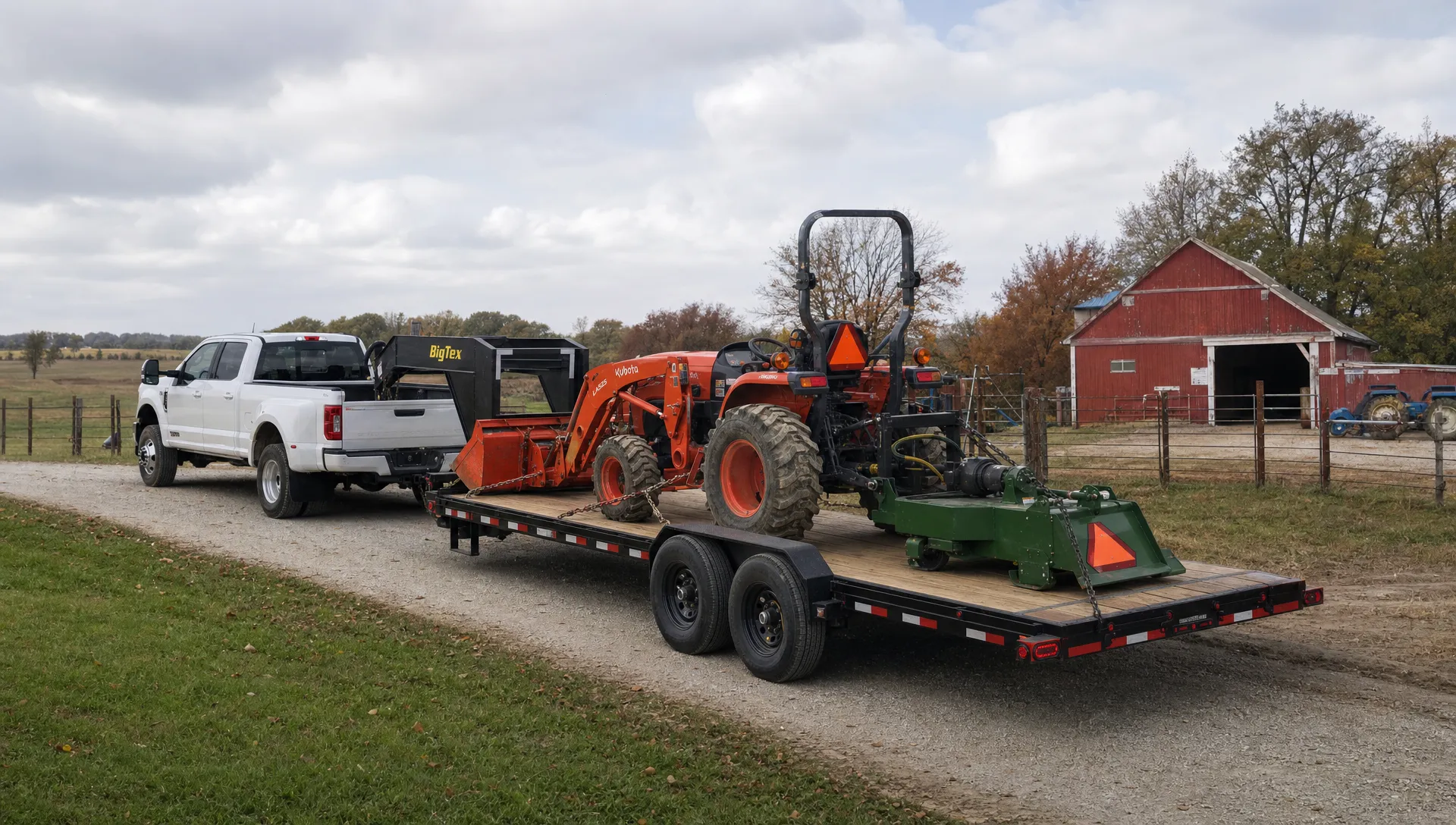
A gooseneck equipment trailer is often the right choice when your work regularly involves heavy machinery, long haul distances or loads that feel unstable behind a standard bumper-pull trailer. Contractors, farmers, landscapers and equipment owners usually look at gooseneck trailers because they need more usable deck space, stronger payload options and better towing control with a properly matched truck.
The key is not simply buying the biggest trailer you can find. Heavy loads punish weak assumptions. You need to match the trailer's GVWR, payload, deck length, axle setup, loading angle and hitch requirements to the equipment you actually haul. The right setup protects your truck, your machines, your schedule and everyone sharing the road with you.
When a Gooseneck Equipment Trailer Makes Sense
A gooseneck hitch connects inside the bed of a pickup rather than behind the rear bumper. That hitch position places more of the trailer connection over the truck's rear axle, which can improve stability, reduce sway and help with turning control when the trailer is properly loaded.
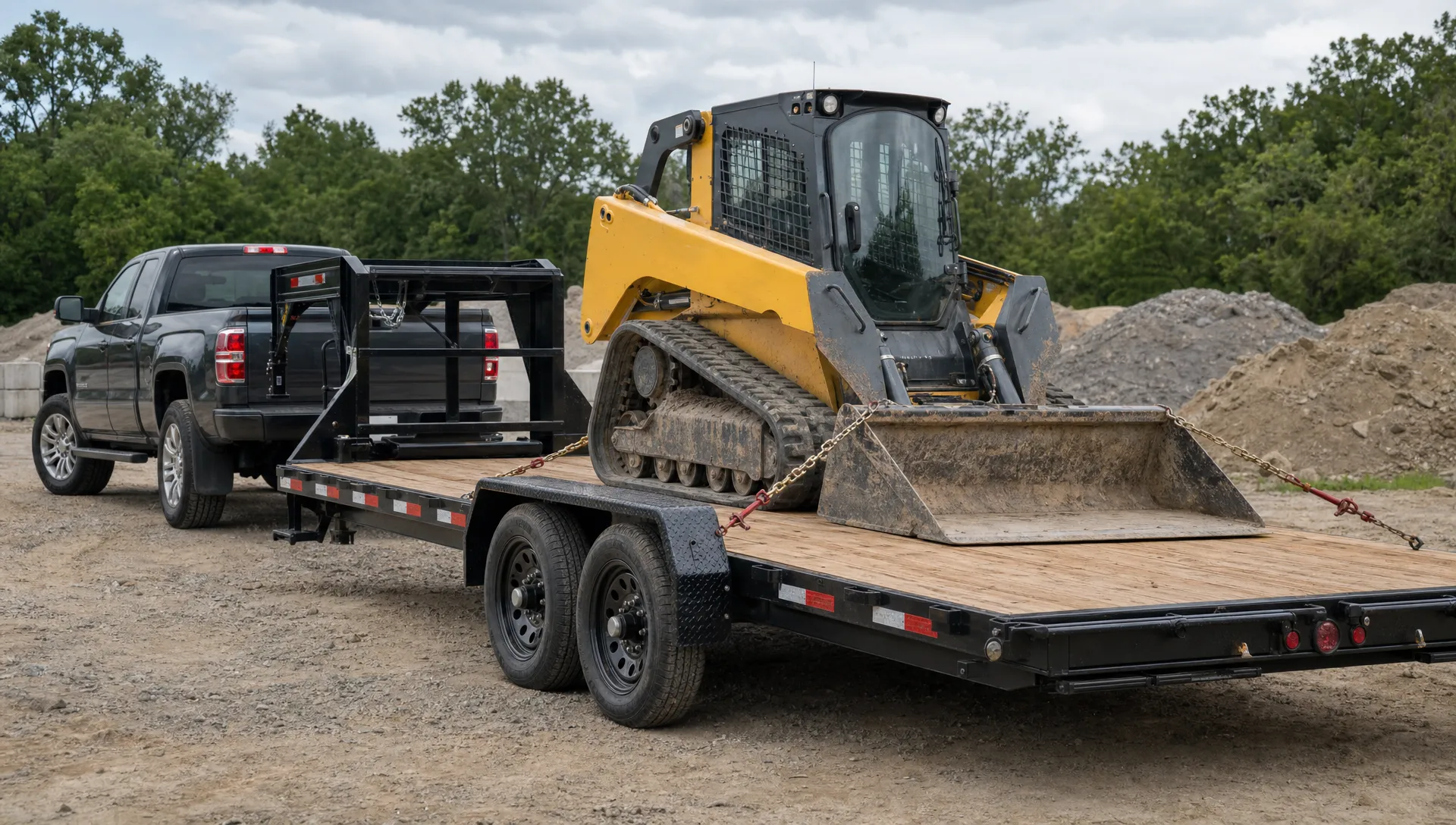
This setup makes the most sense when you routinely move skid steers, compact tractors, mini excavators, attachments, pallets, building materials or farm equipment. It is also a strong fit for buyers who tow in windy areas, travel highway miles or need more deck length than many bumper-pull equipment trailers offer.
Common signs that you should compare gooseneck options include:
- Your equipment plus attachments pushes the limits of a bumper-pull trailer.
- You need a longer deck for multiple machines, implements or materials.
- Your work involves frequent highway towing or uneven jobsite access.
- You want better load distribution with a heavy-duty pickup designed for gooseneck towing.
A gooseneck is not automatically the right answer for every buyer. If your main need is hauling hand tools, boxed materials or weather-sensitive cargo, an enclosed cargo trailer may be more practical than an open deck.
Start With GVWR, Payload and Tow Vehicle Limits
A gooseneck equipment trailer should be chosen by payload first, then by deck layout and convenience features. GVWR, or gross vehicle weight rating, is the maximum loaded weight the trailer is rated for. Payload is what the trailer can carry after subtracting the trailer's own empty weight.
That distinction matters because a 12,000 lb machine cannot safely ride on a trailer just because the trailer looks large enough. The machine, attachments, buckets, fuel, toolboxes, chains, binders and spare parts all count toward the loaded weight.
Use this quick reference when comparing specs:
| Term | What it means | Why buyers should care | |------|---------------|------------------------| | GVWR | Maximum rated loaded trailer weight | Sets the upper limit for the trailer and load combined | | Empty weight | Trailer weight without cargo | Reduces the usable payload available for equipment | | Payload | Weight the trailer can carry | Must exceed your real-world load with a safety margin | | GCWR | Combined rating for truck, trailer and cargo | Helps confirm whether your tow vehicle is properly matched | | Tongue or pin weight | Weight transferred to the tow vehicle | Affects truck payload, suspension and control |
Before you shop by price alone, check your truck owner's manual, door sticker and hitch rating. The Prime Trail Trailers buyer's guide is also a useful starting point if you want a broader framework for matching trailer type, capacity and hauling needs.
Choose Deck Length, Width and Configuration Around Your Equipment
The deck on a gooseneck equipment trailer should fit the machine you haul most often, with enough extra room for attachments and safe tie-down angles. A deck that is barely long enough may work in a parking lot, then create problems when you add a bucket, forks, mower deck or second implement.
Deckover trailers place the deck above the wheels, creating a wider, rectangular loading surface. That is useful for pallets, wide attachments and mixed freight, but it also creates a higher loading height. Lower deck designs can be easier for some machines to climb, but they may not provide the same full-width deck space.
| Typical deck length range | Common use case | What to verify before buying | |---------------------------|-----------------|------------------------------| | 20 to 24 ft | Compact tractors, skid steers, one machine with attachments | Machine length, attachment storage and tie-down clearance | | 25 to 30 ft | Larger equipment, mixed jobsite loads or longer implements | Payload rating, ramp setup and truck capability | | 30 ft plus | Multiple machines, agricultural equipment or commercial hauling | Turning space, route access, licensing needs and loaded balance |
Do not size the trailer only for your current machine if you expect your business to grow. A landscaper adding a compact track loader or a farmer upgrading implements may outgrow a marginal trailer quickly.
Match Axles, Brakes, Tires and Suspension to Real Work
A heavy-duty gooseneck equipment trailer often uses tandem dual axles or tri-axle configurations to support higher capacities and improve load handling. The right axle setup depends on the trailer's rating, your payload requirements, how often you tow and the type of roads you use.
Tires deserve the same attention as axles. Trailer tires must be rated for the loaded weight, inflated properly and inspected for age, sidewall damage and uneven wear. A tire failure under a loaded equipment trailer is more than an inconvenience. It can damage the trailer, delay a job and create a serious roadside hazard.
Brakes are another major buying point. Heavy trailers need a braking system that matches the trailer's rating and tow vehicle setup. Always confirm brake type, controller compatibility and local requirements before purchasing, especially if the trailer will be used commercially or across state lines.
If you are comparing high-capacity deckover options, the 26' Double-A Tandem Dually Gooseneck is an example of the kind of trailer buyers often review when they need a serious equipment-hauling platform with a 25,000 lb GVWR.
Think Through Loading, Ramps and Approach Angle
Loading is where many buyers discover whether the trailer they chose is pleasant to use or frustrating every week. A gooseneck equipment trailer may be rated for the weight, but if the ramp angle is too steep for your machine, the setup can still slow you down or create risk.
Consider the ground clearance of the equipment you haul. Skid steers, compact tractors and rubber-track machines may load differently from scissor lifts, low-clearance vehicles or machines with long overhangs. Ramp length, beavertail design and deck height all affect how smoothly equipment transitions onto the trailer.
A hydraulic beavertail can be useful when reducing manual ramp handling or improving loading convenience is a priority. For buyers comparing that style, the 32' Double-A Tandem Dually Gooseneck with Hydraulic Beavertail is a relevant option to review because the hydraulic beavertail is built into the listing's configuration.
Also think about where you load. A trailer that works well on flat pavement may behave differently on a muddy jobsite, gravel lane or sloped farm entrance. If you operate in rough conditions, loading convenience is not a luxury. It is part of daily productivity.
Build Quality Details That Pay Off Over Years
Frame construction, crossmember spacing, flooring, tie-down locations and wiring quality have a direct effect on long-term value. A trailer used every day by a contractor or farmer sees vibration, weather, heavy point loads and repeated loading cycles. Small construction details can become big ownership differences.
Look closely at the deck material, stake pockets, rub rail, jack rating, coupler design and safety chain setup. Check whether tie-down points are placed where you can secure the actual machines you haul, not just where they look good in photos.
A few inspection points are worth slowing down for:
- Straight frame rails and clean welds with no obvious cracking or poor alignment.
- Deck boards or steel decking appropriate for the type of equipment being loaded.
- Protected wiring, visible lighting and a plug style that matches your tow vehicle.
- Accessible grease points, serviceable components and quality tires.
- Practical storage for chains, binders and jobsite tools if the trailer offers it.
Buying for build quality does not always mean buying the most expensive unit. It means comparing the details that affect uptime, safety and resale value.
Safety and Compliance Should Shape the Purchase
A gooseneck equipment trailer used for heavy loads must be matched with safe loading habits. Good trailer selection helps, but the operator still needs correct weight balance, functioning brakes, proper lighting and rated securement gear.
The National Highway Traffic Safety Administration recommends checking tow vehicle ratings, tires, lights, safety chains and brakes before towing. For commercial carriers, the Federal Motor Carrier Safety Administration cargo securement rules explain requirements for preventing cargo from shifting, tipping or falling during transport.
Load balance is especially important with gooseneck trailers. Too much weight forward can overload the truck's rear axle and suspension. Too much weight behind the axles can reduce stability. Your loaded trailer should sit level, and your truck should remain within its payload, axle and combined weight ratings.
Use chains, binders, straps and attachment points rated for the load. Secure attachments separately when required, and recheck binders after the first few miles. A machine that was tight in the yard can settle after road vibration.
Avoid Overbuying and Underbuying
With a gooseneck equipment trailer, the best choice is the smallest properly rated trailer that handles your real work without strain. Underbuying creates safety and downtime problems. Overbuying can add unnecessary cost, weight, tire expense and maneuvering challenges.
| Buying mistake | Why it causes problems | Better approach | |----------------|------------------------|-----------------| | Shopping only by deck length | A long trailer may still lack payload | Compare GVWR, empty weight and real cargo weight | | Ignoring truck limits | The trailer may exceed tow vehicle ratings | Check truck payload, tow rating and GCWR first | | Choosing ramps without testing fit | Equipment may drag, slip or load poorly | Match ramp style to machine clearance and jobsite conditions | | Forgetting future use | A growing business may outgrow the trailer quickly | Leave sensible room for attachments and planned equipment upgrades | | Overlooking securement | Poor tie-down layout slows loading and increases risk | Confirm usable anchor points before purchase |
New trailers can be attractive when you want known condition, current configurations and a clean starting point. Used trailers can also be a smart buy when the condition, title, ratings and maintenance history check out. Either way, specifications matter more than assumptions.
Compare Trailer Options by Job Type
Different buyers prioritize different trailer features. A roofer may need deck space for materials and equipment, a landscaper may need fast loading for compact machines and attachments, and a ranch may need strength for agricultural equipment on rural roads.
| Buyer type | Common hauling need | Features to compare closely | |------------|---------------------|-----------------------------| | General contractor | Skid steer, lumber, jobsite tools and attachments | Payload, deck length, tie-downs and ramp setup | | Landscaper | Compact track loader, mower, pallets and implements | Loading angle, deck width, daily usability and storage | | Farmer or rancher | Tractor, hay equipment, implements and supplies | Axle setup, tires, suspension and rural road durability | | Equipment owner | Mini excavator, attachments and support gear | Payload margin, deck strength and securement layout | | Vehicle or mixed-load hauler | Machines, vehicles or rolling stock | Beavertail design, deck length and approach angle |
Not every load belongs on an open gooseneck deck. If your heavy equipment rides on a gooseneck but your tools, compressors, supplies or boxed cargo need weather protection, a compact enclosed trailer may be the better companion unit. For that use case, the Universal Trailers 6' X 10' Continental Cargo - V-Series w/ Ramp Door offers an enclosed 6' x 10' cargo setup with a ramp door for protected general hauling.
The goal is to match each trailer to its job. Heavy machines need rated equipment trailers. Smaller protected cargo may be better served by an enclosed cargo trailer. Many commercial buyers eventually use both.
New vs Used Gooseneck Trailer Considerations
A new gooseneck equipment trailer may appeal to buyers who want a current model, clean condition and the ability to compare specifications without wondering how the trailer was used before. This can be especially valuable for businesses that depend on the trailer every day and cannot afford hidden issues.
A used trailer can be a practical option if it has been maintained well and still meets your load requirements. Inspect the frame, coupler, jacks, axles, tires, brakes, wiring, decking and title paperwork. Uneven tire wear, cracked welds, soft decking or questionable modifications should slow the purchase down.
Prime Trail Trailers offers new and used trailer options, sales assistance and online inventory so buyers can compare configurations before making a decision. Availability changes, so it is worth checking current listings or requesting help if you are trying to match a specific machine.
Frequently Asked Questions
What size gooseneck trailer do I need for heavy equipment? Start with the loaded weight of your machine, attachments, fuel and securement gear, then compare that number with trailer payload and GVWR. Deck length should allow room for safe load balance and tie-down angles, not just the machine's overall length.
Is a gooseneck better than a bumper-pull trailer for heavy loads? For many heavy equipment applications, yes. A gooseneck connection can provide better stability and weight distribution when paired with the correct truck. Bumper-pull trailers can still be appropriate for lighter equipment, smaller loads and buyers without a gooseneck-capable truck.
How much payload margin should I leave? Avoid buying a trailer that barely meets your current load weight. A practical margin helps account for attachments, tools, fuel, mud, future equipment changes and scale variation. The exact margin depends on the truck, trailer and type of load.
Do I need a dually truck for a gooseneck equipment trailer? Not always, but many heavy gooseneck setups require a truck with enough payload, rear axle capacity and towing capacity to handle the loaded trailer safely. Check your truck's ratings before choosing the trailer.
What should I inspect before buying a used equipment trailer? Check the VIN and title, frame condition, coupler, jack, axles, suspension, brakes, tires, lights, wiring, decking and tie-down points. If the trailer has been modified, confirm the work was done properly and does not compromise safety or ratings.
Get Help Choosing the Right Trailer
Choosing a trailer for heavy loads is a specs-first decision. The right trailer should fit your equipment, match your truck, load safely and support the way you work every week.
Prime Trail Trailers helps buyers compare utility, cargo, dump, equipment, car hauler, flatbed and gooseneck trailers for commercial, agricultural and personal hauling needs. If you are narrowing down a gooseneck equipment trailer, browse available inventory at Prime Trail Trailers or contact the team for help comparing sizes, capacities and current availability.
Have Questions? We're Here to Help
Still unsure which trailer fits your needs, or need specs, pricing or delivery advice? The Prime Trail Trailers team is ready to answer your questions and help you find the right rig.