
Equipment Trailers for Sale: Find the Right Capacity and Deck
Choosing an equipment trailer starts with payload, deck design and towing fit. This guide helps contractors, landscapers and farmers compare capacities, ramp styles, trailer types and buying considerations before contacting a dealer.
Quick Summary
Choosing an equipment trailer starts with payload, deck design and towing fit. This guide helps contractors, landscapers and farmers compare capacities, ramp styles, trailer types and buying considerations before contacting a dealer.
Shopping for equipment trailers for sale is not just about finding a deck long enough for a skid steer or tractor. The right trailer has to match your real payload, loading method, tow vehicle, jobsite conditions and the type of equipment you move most often. Contractors, landscapers, farmers and owner-operators can save time and avoid expensive mismatches by comparing capacity and deck design before looking at individual units.
A trailer that is too small limits the work you can take on. A trailer that is larger than you need can cost more to buy, tow and maintain. The goal is to find a trailer that handles your heaviest realistic load with enough margin for attachments, fuel, chains and jobsite materials.
How to Compare Equipment Trailers for Sale by Capacity and Deck
The best comparison starts with two questions: how much weight will the trailer carry and how will that weight be loaded? Capacity tells you whether the trailer can legally and safely handle the load. Deck style affects how quickly you can load, how stable the equipment sits and how useful the trailer is for other hauling tasks.
For high-intent buyers, this matters because two trailers with the same overall length can perform very differently. A tandem axle bumper-pull trailer with ramps may be ideal for a compact tractor, while a tilt deck can make frequent skid steer loading easier. A gooseneck may offer better stability for heavier equipment, but it also requires the right truck setup.
Start With the Load, Not the Trailer
Before comparing brands, colors or add-ons, list the equipment you expect to haul. Include the machine, attachments, buckets, pallet forks, implements, fuel, spare tire, binders and any materials that may ride on the deck. Many buyers underestimate payload because they only consider the machine’s published operating weight.
When browsing equipment trailers for sale, compare payload capacity rather than only gross vehicle weight rating. GVWR is the maximum loaded trailer weight allowed by the manufacturer. Payload is the amount the trailer can carry after subtracting the trailer’s own empty weight.
| Term | What it means | Why buyers should care | |---|---|---| | GVWR | Maximum legal loaded trailer weight set by the manufacturer | Helps define the trailer’s total capacity class | | Empty weight | Weight of the trailer without cargo | Reduces available payload | | Payload capacity | GVWR minus empty trailer weight | Tells you how much equipment and material you can carry | | Tongue weight | Downward weight on the hitch or truck connection | Affects handling, hitch rating and tow vehicle limits |
A simple formula helps: payload capacity equals GVWR minus empty trailer weight. Always verify the manufacturer’s specification plate and the listed specs for the exact trailer you are considering.
Match capacity to the tow vehicle
Your truck matters as much as the trailer. Check the tow rating, gross combined weight rating, hitch rating, payload rating and brake controller requirements for your specific truck configuration. Engine, axle ratio, cab style and bed length can all affect towing capacity.
The National Highway Traffic Safety Administration recommends confirming that the tow vehicle, hitch, trailer and load are properly matched before towing. For commercial buyers, also confirm state and federal requirements that may apply to your combination weight, registration and driver qualification.
If you want a broader framework for evaluating GVWR, payload and towing fit, Prime Trail Trailers also provides a practical trailer buyer’s guide that walks through the major decision points.
Common Capacity Classes for Work Equipment
Most shoppers evaluating equipment trailers for sale are choosing between a few common capacity classes. Exact ratings vary by manufacturer and configuration, but the table below shows how buyers often think about trailer categories.
| Trailer capacity class | Common use cases | Buyer notes | |---|---|---| | 3,500 to 7,000 lb GVWR | UTVs, small mowers, compact tools and light landscaping equipment | Often easier to tow, but payload can be limited | | 7,000 to 10,000 lb GVWR | Zero-turn mowers, compact tractors, small skid steers and attachments | A common range for landscapers and light contractors | | 12,000 to 14,000 lb GVWR | Skid steers, compact excavators, material pallets and heavier implements | Requires careful tow vehicle matching and brake setup | | 14,000 to 25,000+ lb GVWR | Larger equipment, farm machinery, commercial hauling and multi-machine loads | Often associated with gooseneck or heavy-duty flatbed configurations |
For a landscaper hauling two mowers and handheld tools, a lower capacity tandem axle trailer may be practical. For a builder moving a skid steer, buckets and palletized materials, the extra payload of a heavier equipment trailer may be necessary. A farm operation may need deck length and load angle as much as raw capacity, especially when moving tractors with implements attached.
Build in a real-world safety margin
Buying exactly at the edge of your maximum load leaves little room for accessories or future work. A bucket, auger, breaker, mower attachment or extra pallet of material can push a trailer beyond its comfortable range.
A practical approach is to identify your heaviest expected load, then compare trailers that give you usable room above that number. Do not use margin as a reason to exceed published ratings. Use it to choose the correct class from the start.
Choosing the Right Deck for Your Work
Capacity gets the load legal. Deck design gets the load on, secured and unloaded efficiently. For buyers comparing equipment trailers for sale, the deck choice often determines whether the trailer feels like a daily work tool or a constant inconvenience.
Wood deck equipment trailers
Wood decks are common because they provide a practical surface for tracked machines, wheeled equipment and mixed cargo. They can offer good traction, are familiar to most crews and may be easier to repair section by section depending on construction.
Wood still needs inspection. Look for boards that are cracked, soft, oil-soaked or lifting around fasteners. If the trailer will sit outside, maintenance and drainage matter.
Steel deck equipment trailers
Steel decks are valued for durability, especially in harsh commercial environments. They can be a good fit for scrap, tracked equipment, demolition work and heavy wear applications. Steel can also be slippery when wet if the surface is smooth, so check tread pattern, coating and loading conditions.
Steel adds weight, which may reduce available payload compared with some wood deck configurations. That tradeoff can be worthwhile when the trailer’s use case is tough enough to justify it.
Tilt decks, dovetails and ramp systems
A tilt deck reduces the need to lift or handle heavy ramps. It can be especially useful for skid steers, compact loaders and crews that load several times per day. Dovetail and beavertail decks lower the loading angle at the rear, which helps with equipment that has limited ground clearance.
Ramp systems still have advantages. Stand-up ramps, slide-in ramps and spring-assisted ramps can be reliable, simple and cost-effective. The best option depends on the weight of your equipment, the ground clearance of your machines and how often you load during a normal workday.
Ramp, Axle and Tie-Down Details That Matter
A buyer can narrow equipment trailers for sale quickly by checking the components that affect daily use. Capacity and deck length are easy to compare online, but ramps, axles, brakes and tie-down points often decide whether the trailer works well in the field.
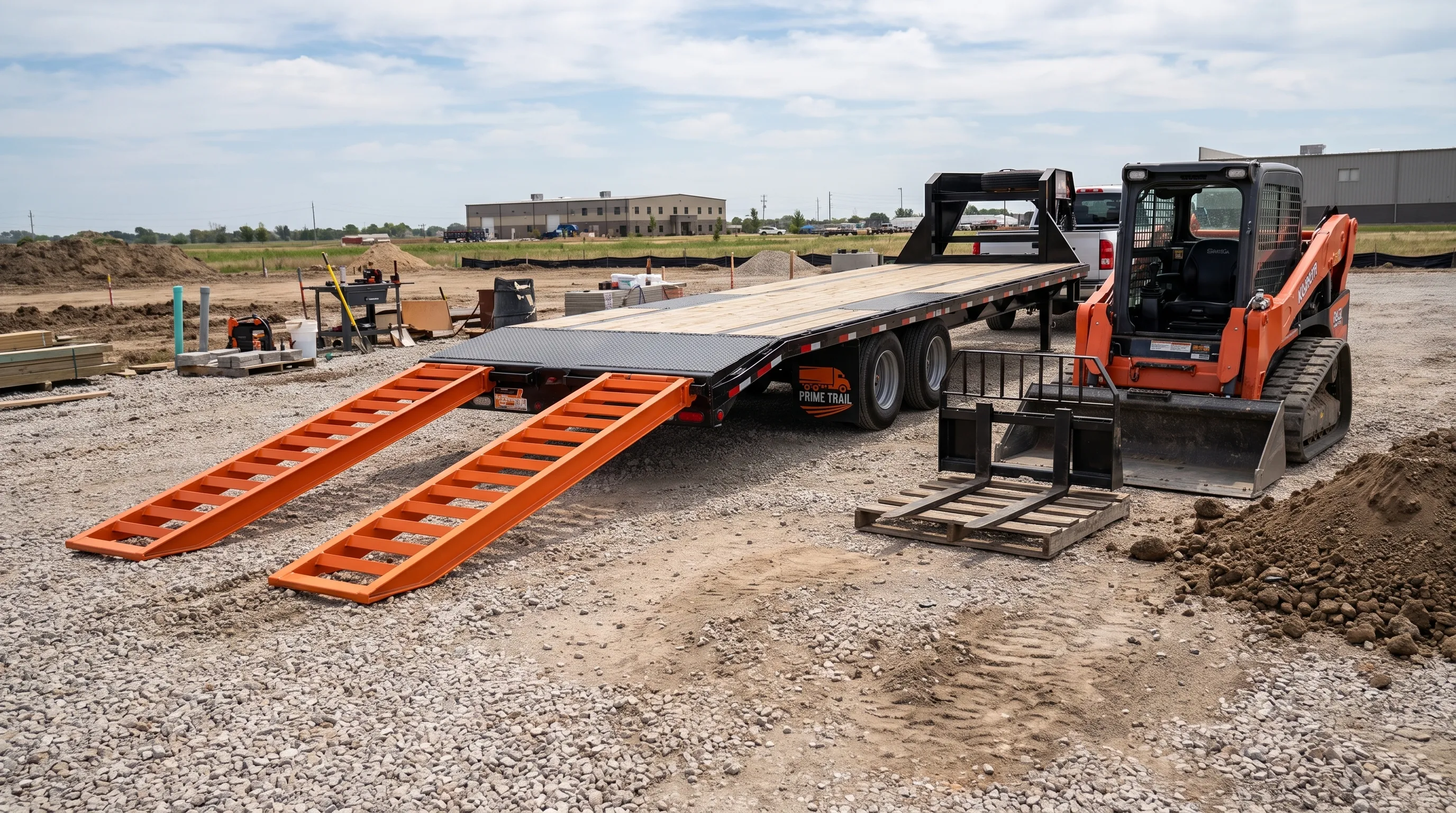
Ramps should be rated for the equipment being loaded, wide enough for the machine’s tires or tracks and easy for the crew to handle safely. Spring assist can reduce strain when ramps are raised and lowered many times per week. If you haul different machines, confirm that ramp spacing works for each one.
Axle configuration affects ride quality, stability and capacity. Tandem axles are common for equipment trailers because they distribute weight better than a single axle and provide more tire contact with the road. Heavier trailers may use upgraded axle packages, higher rated tires and larger brakes.
Tie-down points should line up with the equipment you actually haul. Look for stake pockets, rub rails, D-rings or other approved anchor points depending on the trailer design. For heavy equipment, cargo securement is not optional. Use chains, binders and working load limits appropriate for the machine and follow applicable rules for commercial transport.
Bumper Pull vs Gooseneck Equipment Trailers
Bumper-pull and gooseneck trailers can both be excellent choices. The right one depends on load weight, truck setup, turning needs and how often the trailer is used for commercial work.
| Feature | Bumper pull equipment trailer | Gooseneck equipment trailer | |---|---|---| | Connection point | Rear hitch receiver or pintle setup, depending on trailer | Ball or hitch system in the truck bed | | Typical buyer | Landscapers, small contractors, homeowners and light equipment operators | Contractors, farmers, haulers and heavier commercial users | | Maneuverability | Familiar setup, works with many properly rated trucks | Tracks well and can offer tighter turning characteristics | | Load stability | Good when properly loaded and matched | Often preferred for heavier loads due to weight placement | | Truck requirement | Requires correct hitch and tow rating | Requires compatible truck bed setup |
If you frequently haul heavier equipment or longer loads, a gooseneck may be worth considering. If you need flexibility across several tow vehicles, a bumper-pull trailer may be easier to integrate into your operation.
The main mistake is choosing based only on preference. Look at loaded weight, truck compatibility, bed access, turning space, storage area and the crew members who will tow it.
New vs Used Equipment Trailers
If you are comparing new and used equipment trailers for sale, think beyond purchase price. A used trailer can be a smart buy when the structure, axles, brakes, tires and deck are in good condition. A new trailer may make more sense when you need a specific configuration, want the latest build options or plan to use the trailer daily in revenue-producing work.
| Buying option | Potential advantages | What to inspect or confirm | |---|---|---| | New equipment trailer | Current configuration options, clean condition and easier spec matching | GVWR, payload, deck type, ramp setup and availability | | Used equipment trailer | Potential cost savings and faster fit for some budgets | Frame condition, axle wear, brakes, tires, lights, wiring and deck condition |
Used buyers should inspect welds, frame rails, crossmembers, coupler condition, breakaway system, lighting and tire age. Uneven tire wear may point to alignment, suspension or loading issues. Rust does not always make a trailer unusable, but structural corrosion deserves careful evaluation.
New buyers should still compare specifications closely. Similar-looking trailers can differ in axle rating, deck height, ramp rating, crossmember spacing and tie-down layout.
Before You Contact a Dealer About Equipment Trailers for Sale
Before asking about equipment trailers for sale, prepare a short list of your requirements. This helps a dealer recommend the right class of trailer instead of guessing based on general job type.
Have these details ready:
- Heaviest machine or vehicle you plan to haul
- Approximate weight of attachments and cargo
- Desired deck length and width
- Tow vehicle year, make, model and configuration
- Preferred bumper-pull, pintle or gooseneck setup
- Loading preference, such as ramps, dovetail or tilt deck
- Commercial, agricultural or personal-use application
- Delivery location if you need the trailer transported
You can also compare categories on the Prime Trail Trailers current trailer inventory page, including equipment, utility, dump, enclosed, car hauler and gooseneck options. Inventory changes, so requesting availability is the best way to confirm the right fit.
Frequently Asked Questions
What size equipment trailer do I need for a skid steer? Start with the skid steer’s operating weight, then add buckets, forks, attachments, fuel and securement gear. Many skid steer buyers look at tandem axle equipment trailers with enough payload above the total load, but the exact size depends on the machine and tow vehicle.
Is a 10,000 lb equipment trailer enough for a compact excavator? It depends on the excavator weight, trailer empty weight and attachments. A trailer with a 10,000 lb GVWR does not carry 10,000 lb of cargo because the trailer itself uses part of that rating. Check payload capacity before deciding.
What is the difference between an equipment trailer and a utility trailer? Equipment trailers are generally built for heavier machines and may include stronger frames, tandem axles, heavier ramps and more robust tie-down options. Utility trailers are often better for lighter cargo, lawn equipment and general hauling.
Is a tilt deck better than ramps? A tilt deck can be faster and easier when loading equipment frequently, especially machines with tracks or low clearance. Ramps can be simpler, familiar and cost-effective. The better choice depends on loading frequency, equipment type and budget.
Can Prime Trail Trailers help me compare trailer options? Yes. Prime Trail Trailers offers sales assistance and quote requests to help buyers compare trailer types, sizes and specifications based on their hauling needs.
Find the Right Equipment Trailer With Prime Trail Trailers
Ready to compare equipment trailers for sale with the right capacity, deck style and towing setup? Prime Trail Trailers helps contractors, landscapers, farmers, haulers and individual buyers evaluate new and used trailers for real-world hauling needs.
Browse available trailers online, compare specifications and contact Prime Trail Trailers for pricing or availability. If you are not sure which trailer class fits your equipment, request assistance before you buy so you can choose with confidence.
Have Questions? We're Here to Help
Still unsure which trailer fits your needs, or need specs, pricing or delivery advice? The Prime Trail Trailers team is ready to answer your questions and help you find the right rig.
Prime Trail Trailers
Prime Trail Trailers is a family-owned trailer dealer in Markle, Indiana, stocking utility, dump, enclosed, equipment, car hauler and gooseneck trailers with nationwide delivery. This guide is based on what our customers ask us most and the trailers we sell every day.
More about Prime Trail Trailers