
Food Trailer Plumbing & Water Systems: 2026 Compliance Guide
Learn how to design and maintain a compliant food trailer plumbing system, including fresh water tanks, gray water sizing, and health department requirements.
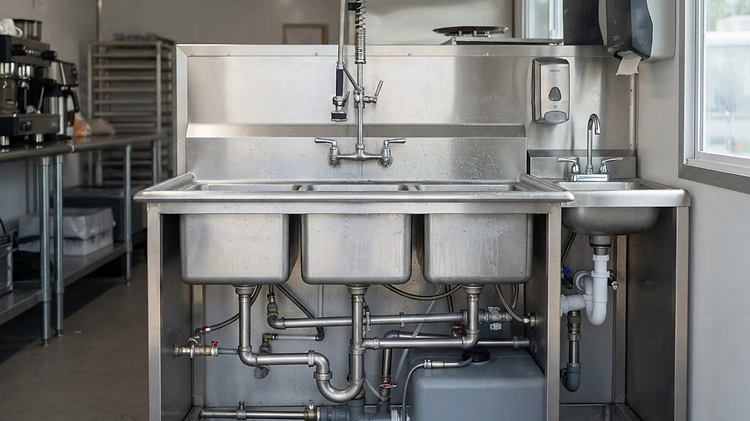
Designing a compliant plumbing system is one of the most critical steps in building or upgrading a food trailer. Without proper water flow, adequate tank sizing, and health department approval, your mobile kitchen cannot legally operate.
This guide covers everything you need to know about food trailer plumbing systems, from fresh water supply and gray water tank sizing to PEX piping and water heater requirements. Whether you are outfitting a new concession trailer or troubleshooting an existing setup, understanding these components ensures your mobile kitchen runs smoothly and passes inspection.
Fresh Water and Gray Water Tank Sizing
The foundation of any food trailer plumbing system is the water storage tanks. Health departments strictly regulate the size and ratio of fresh water to gray (waste) water tanks.
Fresh Water Tanks
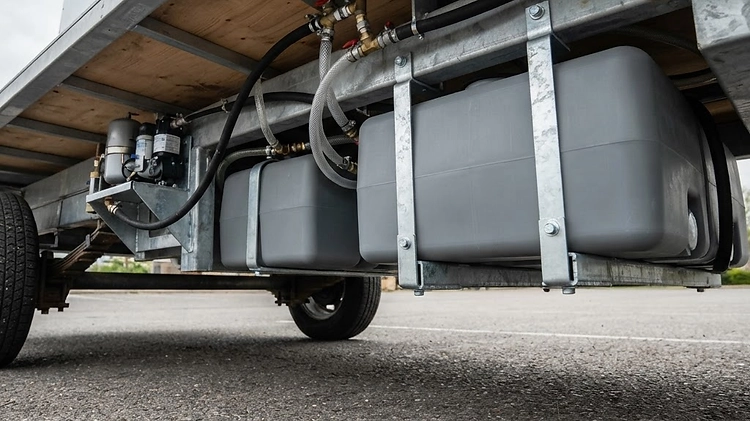
Your fresh water tank supplies potable water to your sinks and equipment. The required size depends on your menu, equipment, and local health codes. A minimum of 5 to 40 gallons is typical, but high-volume operations or those with specific equipment (like espresso machines) may require larger tanks. The tank must be made of food-grade materials and feature a secure, easily accessible fill port.
Gray Water Tanks
The golden rule of food trailer plumbing is that your gray water tank must be at least 15% to 50% larger than your fresh water tank (check local codes, as 15% is a common minimum). This ensures that all wastewater generated during operation can be safely contained without overflowing. Gray water tanks must have a sloped bottom or a drain valve located at the lowest point for complete emptying at an approved commissary or dump station.
Essential Sinks for Mobile Kitchens
Health departments require specific sink configurations to ensure food safety and proper sanitation.
The Three-Compartment Sink
A three-compartment sink is mandatory for washing, rinsing, and sanitizing utensils and equipment. The compartments must be large enough to submerge your largest piece of equipment. Each compartment must have hot and cold running water.
Handwashing Sink
A separate, dedicated handwashing sink is required in all food trailers. It must be easily accessible, equipped with hot and cold water, and stocked with soap and paper towels. It cannot be used for food prep or dishwashing.
Prep and Mop Sinks
Depending on your operation and commissary agreement, you may also need a food prep sink (with an indirect drain) and a mop sink. If your commissary provides these facilities, you might be exempt from having them on the trailer.
Piping, Pumps, and Water Heaters
The infrastructure connecting your tanks and sinks must be durable and capable of handling the demands of a mobile kitchen.

PEX Piping
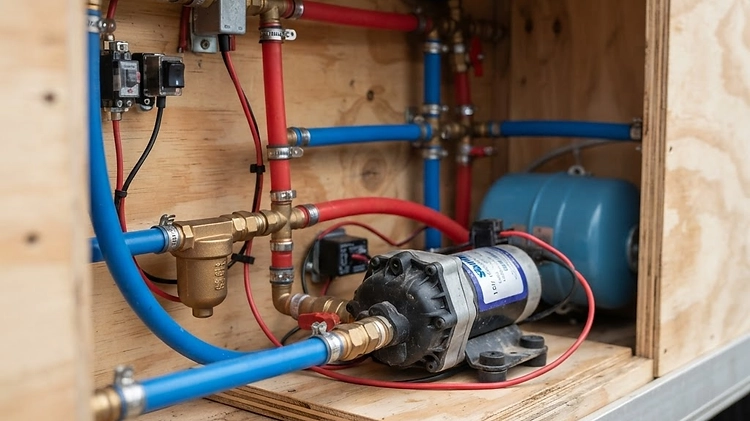
Cross-linked polyethylene (PEX) tubing is the industry standard for food trailer plumbing. It is flexible, resistant to freezing and bursting, and approved for potable water. Half-inch PEX is typically sufficient for most food trailer applications, providing adequate flow to all fixtures.
Water Pumps
A reliable 12-volt or 110-volt on-demand water pump is necessary to pressurize the system when drawing from the fresh water tank. Ensure the pump's flow rate (gallons per minute) matches your system's demands, especially if multiple sinks will be used simultaneously.
Water Heaters
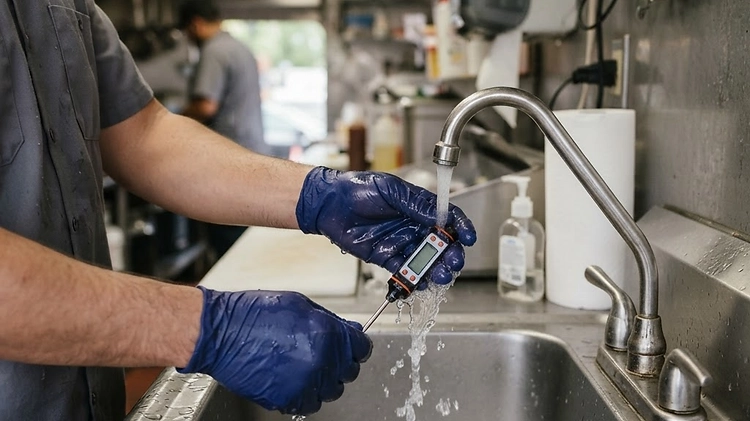
Hot water is non-negotiable. You must have a water heater capable of providing a continuous supply of hot water (usually at least 120°F) to all sinks. Tankless (on-demand) water heaters are popular in food trailers due to their space-saving design, but traditional tank heaters are also used. Ensure the heater is properly vented if it uses propane.
Health Department Compliance and Inspections
Before you can serve your first customer, your plumbing system must pass a health department inspection.

Plan Review
Most jurisdictions require a detailed plumbing diagram submitted during the plan review process. This diagram must show tank sizes, pipe routing, sink locations, and water heater specifications.
Commissary Agreements
Your plumbing system is tied to your commissary agreement. You must have an approved location to fill your fresh water tank with potable water and safely dispose of your gray water. Dumping gray water in storm drains or unapproved locations is strictly prohibited and can result in immediate permit suspension.
Bottom Line
A well-designed plumbing system is the lifeblood of a compliant and efficient food trailer. By understanding tank sizing rules, sink requirements, and proper piping materials, you can avoid costly delays and ensure your mobile kitchen is ready for service. For more information on outfitting your mobile kitchen, explore our kitchen trailers and concession trailer layout guide. If you are ready to upgrade, check out our 8.5x20 Blackout BBQ Trailer or browse our full shop inventory.
Shop Related Trailers
FAQ
Have Questions? We're Here to Help
Still unsure which trailer fits your needs, or need specs, pricing or delivery advice? The Prime Trail Trailers team is ready to answer your questions and help you find the right rig.