

Food Trailer Electrical Panel Sizing & Generator Power Guide
Learn how to properly size your food trailer's electrical panel, calculate total power loads, and choose the right generator for code compliance and safety.


Building a successful mobile kitchen starts with a reliable and safe power supply. Whether you are outfitting a custom build or upgrading an existing unit, understanding how to properly size your food trailer's electrical panel and select the right generator is critical for avoiding blown breakers, equipment damage, and failed health inspections.
In this comprehensive guide, we will walk you through the essential steps of calculating your electrical load, choosing between 30-amp and 50-amp service, and ensuring your setup meets national and local electrical codes. For more resources on building your mobile business, visit our trailer guides hub.
Understanding Food Trailer Electrical Code Compliance
Before you purchase a single wire or breaker, you must understand the regulatory landscape. Food trailers must adhere to the National Electrical Code (NEC) as well as specific local and state health department regulations.

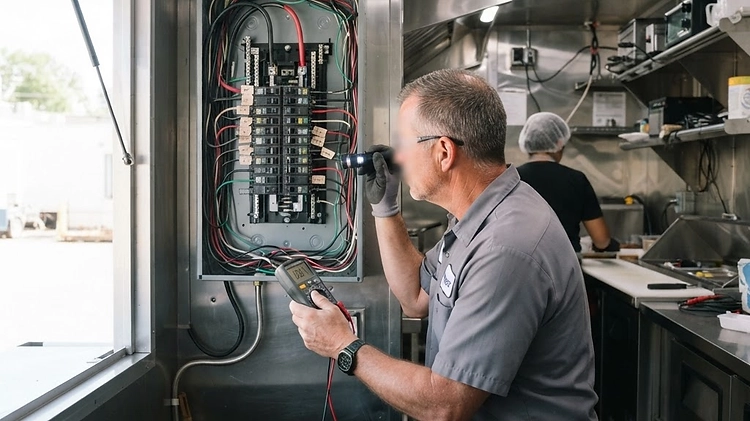
Inspectors will look for proper grounding, GFCI-protected outlets near water sources, and appropriately sized breakers for your commercial equipment. Failing to meet these standards can prevent you from obtaining your operating license. If you are operating in strict jurisdictions, such as trailers for sale in Texas, you may also need a licensed electrician to sign off on your panel installation. This ties directly into overall compliance, which you can read more about in our 2026 Food Trailer Licensing & Regulations Guide.
How to Calculate Your Mobile Kitchen's Total Electrical Load
The most critical step in sizing your electrical panel is calculating your total electrical load. This involves listing every piece of electrical equipment in your trailer and adding up their wattage requirements.

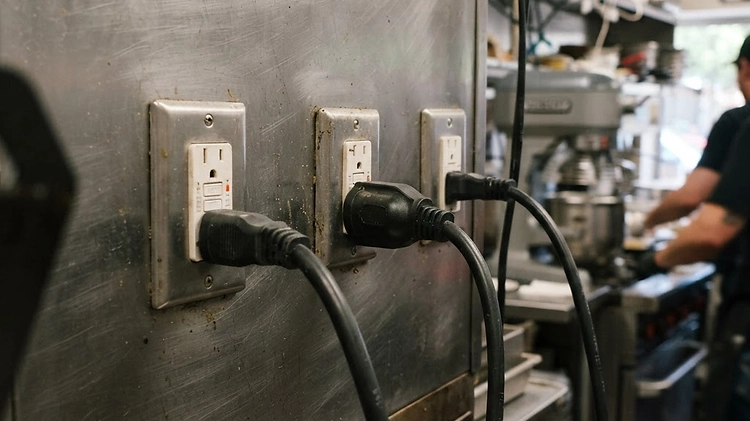
Start with your heavy hitters: refrigeration units, water heaters, air conditioners, and electric fryers or griddles. Don't forget to include smaller items like point-of-sale systems, interior lighting, and ventilation hoods. You can find detailed information on hood power requirements in our Food Trailer Fire Suppression Systems and Type 1 Hood Ventilation Guide. Once you have your total wattage, divide by the voltage (usually 120V or 240V) to determine your total amperage draw. Always add a 20% safety margin to prevent overloading.
Sizing the Electrical Panel: 30-Amp vs. 50-Amp Service
Most food trailers utilize either a 30-amp (120V) or a 50-amp (120/240V) electrical service panel.

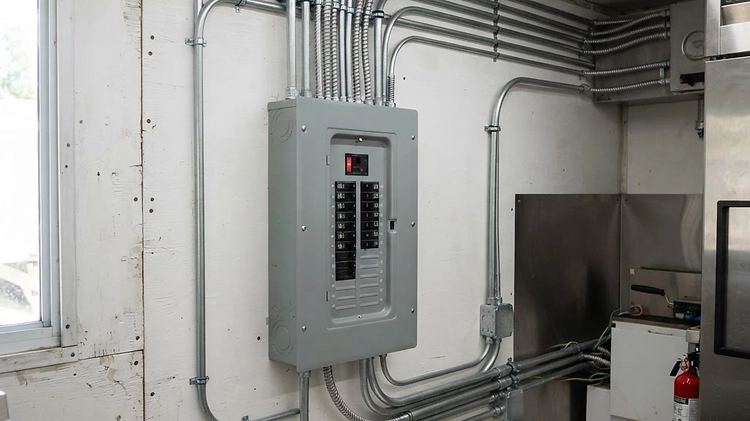
A 30-amp service provides a maximum of 3,600 watts, which is typically only sufficient for very small setups like coffee carts or trailers that rely primarily on propane for cooking. A 50-amp service, however, provides up to 12,000 watts of power. For a fully equipped mobile kitchen, such as the 2026 Empire Trailers FT27 77-inch Food Vending Trailer, a 50-amp panel is almost always required. For a broader look at utility planning, check out our Mobile Kitchen Trailer Utilities Guide: Electrical, Plumbing, and Ventilation Setup.
Choosing the Right Generator for Your Food Trailer
Your generator is the heart of your mobile operation. When selecting a generator, you must match its continuous running wattage to your calculated electrical load, not just its peak starting wattage.
Inverter generators are highly recommended for food trailers because they provide clean power that won't damage sensitive electronics like POS systems or digital appliance controls. They are also significantly quieter, which is crucial when operating at festivals or in urban areas like Houston, TX. Ensure your generator is securely mounted and properly ventilated, keeping it safely away from your fresh water and waste systems, as detailed in our Food Trailer Waste Water Tank Sizing & Health Department Compliance Guide.
Wiring Best Practices and Safety Equipment
When wiring your concession trailer, always use stranded copper wire rather than solid wire, as stranded wire can better withstand the constant vibration of travel.
Route all wiring through protective conduit, and ensure that your layout logically separates high-draw appliances onto their own dedicated circuits. Proper planning here is essential; you can learn more about optimizing your space in our Concession Trailer Layout and Equipment Planning Guide. Additionally, invest in a high-quality surge protector and a heavy-duty shore power cord for times when you can plug directly into grid power.
Bottom Line
Properly sizing your food trailer's electrical panel and generator is non-negotiable for a safe, compliant, and profitable mobile food business. By accurately calculating your load and investing in a robust 50-amp service and a reliable inverter generator, you set your business up for uninterrupted success.
Ready to find the perfect foundation for your mobile kitchen? Browse our complete inventory of kitchen trailers and enclosed trailers, or check out premium models like the 8.5x20 Blackout BBQ Trailer in our shop.
FAQ
Have Questions? We're Here to Help
Still unsure which trailer fits your needs, or need specs, pricing or delivery advice? The Prime Trail Trailers team is ready to answer your questions and help you find the right rig.