
Heavy Duty Enclosed Trailer Features for Demanding Jobs
A higher weight rating does not tell you whether a trailer can handle daily jobsite work. Learn how to compare frames, floors, ramps, brakes and usable payload before choosing an enclosed trailer for your equipment.
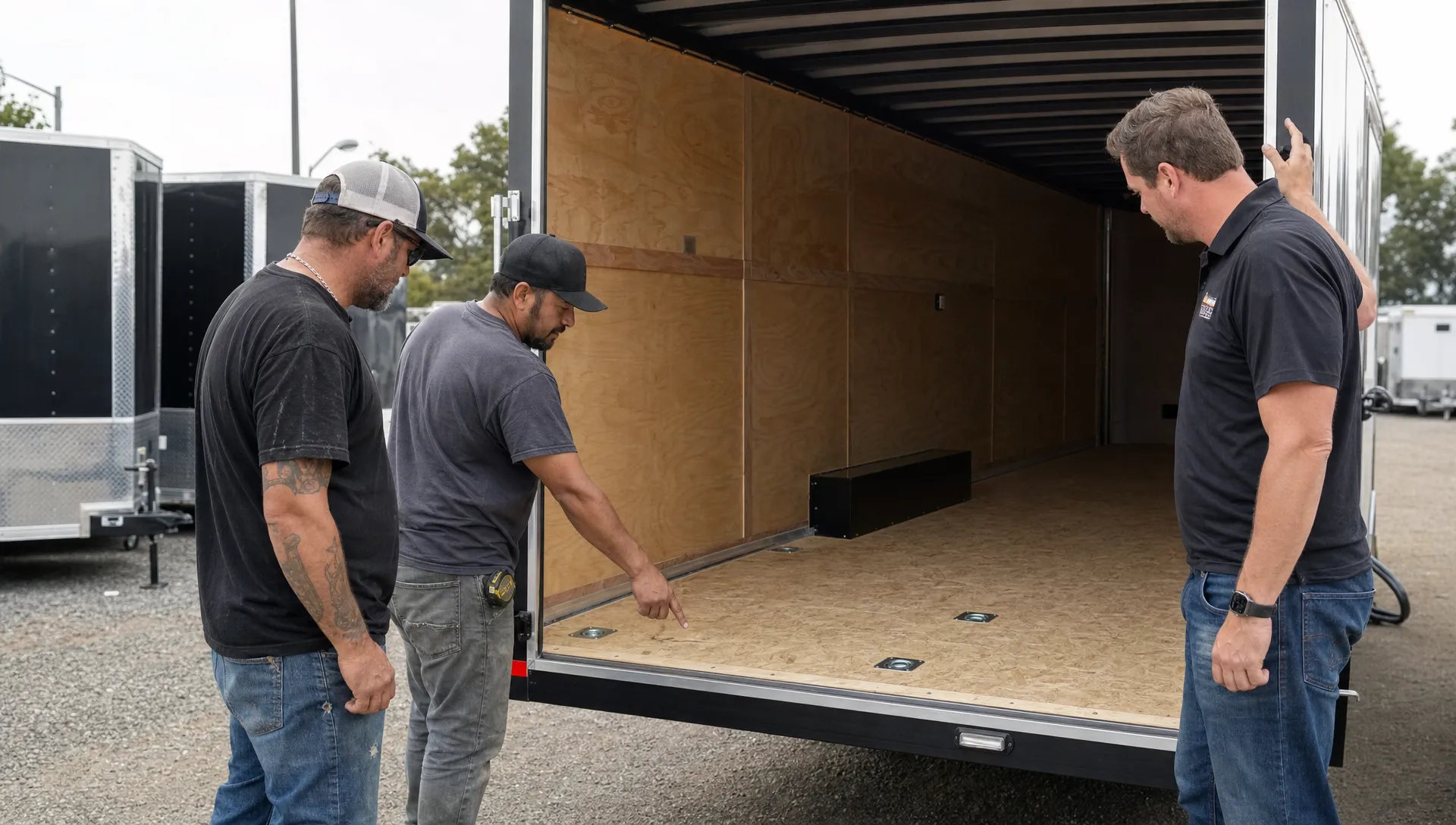
A heavy duty enclosed trailer needs more than a high weight rating and an enclosed body. For contractors, landscapers and equipment owners, the features that matter are the ones that support repeated loading, protect valuable tools and keep the trailer controllable at its actual working weight.
Before buying, compare the complete hauling system: usable payload, frame construction, floor support, loading access, running gear and tow-vehicle compatibility. A trailer can have enough room for your equipment but still lack the floor strength, ramp capacity or payload needed to carry it safely.
Separate Work-Ready Construction From Marketing
“Heavy duty” is a description, not a standardized capacity class. Two enclosed cargo trailers with similar dimensions can have different gross vehicle weight ratings, empty weights and loading limitations.
Start with the manufacturer's certification label and unit-specific specifications. Then ask how the trailer is built for your application. Transporting rolling tool cabinets places different demands on the floor than hauling a compact machine with concentrated wheel loads.
Steel thickness alone does not establish structural strength. Frame geometry, crossmember spacing, material grade and connection design also matter. Likewise, thicker exterior siding may improve dent resistance without increasing payload.
When comparing a heavy duty enclosed trailer, look for documented ratings rather than relying on appearance or a model name.
| Feature | What to verify | Why it matters on demanding jobs | |---|---|---| | Frame and crossmembers | Material, dimensions, spacing and intended loading | Supports cargo and concentrated loads | | Floor assembly | Decking material, thickness and underlying support | Helps determine suitability for wheeled equipment | | Rear loading system | Clear opening, ramp rating and approach angle | Determines whether equipment can enter safely | | Axles and brakes | Ratings, brake coverage and service requirements | Supports load carrying and controlled stopping | | Tie-down points | Working load limits and attachment method | Provides a reliable cargo restraint system | | Body and seals | Roof joints, door seals and hardware | Helps protect tools and materials from weather |
Payload Ratings for a heavy duty enclosed trailer
GVWR is the maximum permitted loaded weight of the trailer, not its cargo capacity. Payload is generally GVWR minus the trailer's empty weight, with installed equipment accounted for.
Shelving, spare tires, batteries, cabinets and workbenches all consume capacity. If an advertised empty weight describes a base model, it may not include the options installed on the unit you are considering.
Axle ratings are another check, but adding them together does not automatically establish trailer GVWR. Use the manufacturer's stated rating and verify that the tires, wheels, suspension and other components are appropriate for that rating.
A Practical Payload Calculation
Consider this hypothetical example, not the specifications of a particular trailer:
| Weight item | Example weight | |---|---:| | Trailer GVWR | 10,000 lb | | Empty trailer before planned upfits | 3,200 lb | | Shelving, cabinets and other added equipment | 600 lb | | Tools, machines and materials | 4,800 lb | | Total loaded trailer weight | 8,600 lb | | Remaining capacity below GVWR | 1,400 lb |
A heavy duty enclosed trailer with this loading plan would have 1,400 lb of remaining capacity, but that does not mean every additional load placement is acceptable. Axle loading, tongue weight, floor capacity and tire ratings still need checking.
Include supplies that vary by job, such as fasteners, spare parts and fuel carried in appropriate containers. Once the trailer is equipped, a scale measurement is more useful than an estimate. Check the loaded trailer, tow vehicle and axle loads against their respective ratings.
Frame and Floor Features That Support Repeated Loading
The floor should be evaluated as an assembly, not just a sheet of plywood. Decking thickness matters, but so does the distance between supports and how those supports connect to the main frame.
Ask the dealer or manufacturer whether the floor is suitable for your equipment's wheel loads. A machine that fits within total payload capacity can still place excessive pressure on a small area. Steel casters, narrow tires and parked equipment can create demanding point loads.
Tie-down installation deserves the same attention. A ring fastened only to decking may not provide the same capacity as an engineered attachment connected to structural members. Request the working load limit and approved installation details for the actual anchor system.
For a heavy duty enclosed trailer used on jobsites, also inspect exposed steel protection, underbody condition and access for maintenance. Road salt, mud and trapped moisture can shorten the life of otherwise suitable construction.
Do not assume an aluminum-bodied trailer has an aluminum frame, or that one material is automatically better. Compare the actual structure, weight and intended duty. For used units, cracked connections, significant corrosion or unexplained repairs warrant professional inspection before purchase.
Ramp Doors, Rear Openings and Equipment Clearance
A ramp door makes sense for rolling equipment, while barn doors may better suit pallet loading or frequent hand loading. Neither configuration makes a trailer heavy duty by itself.
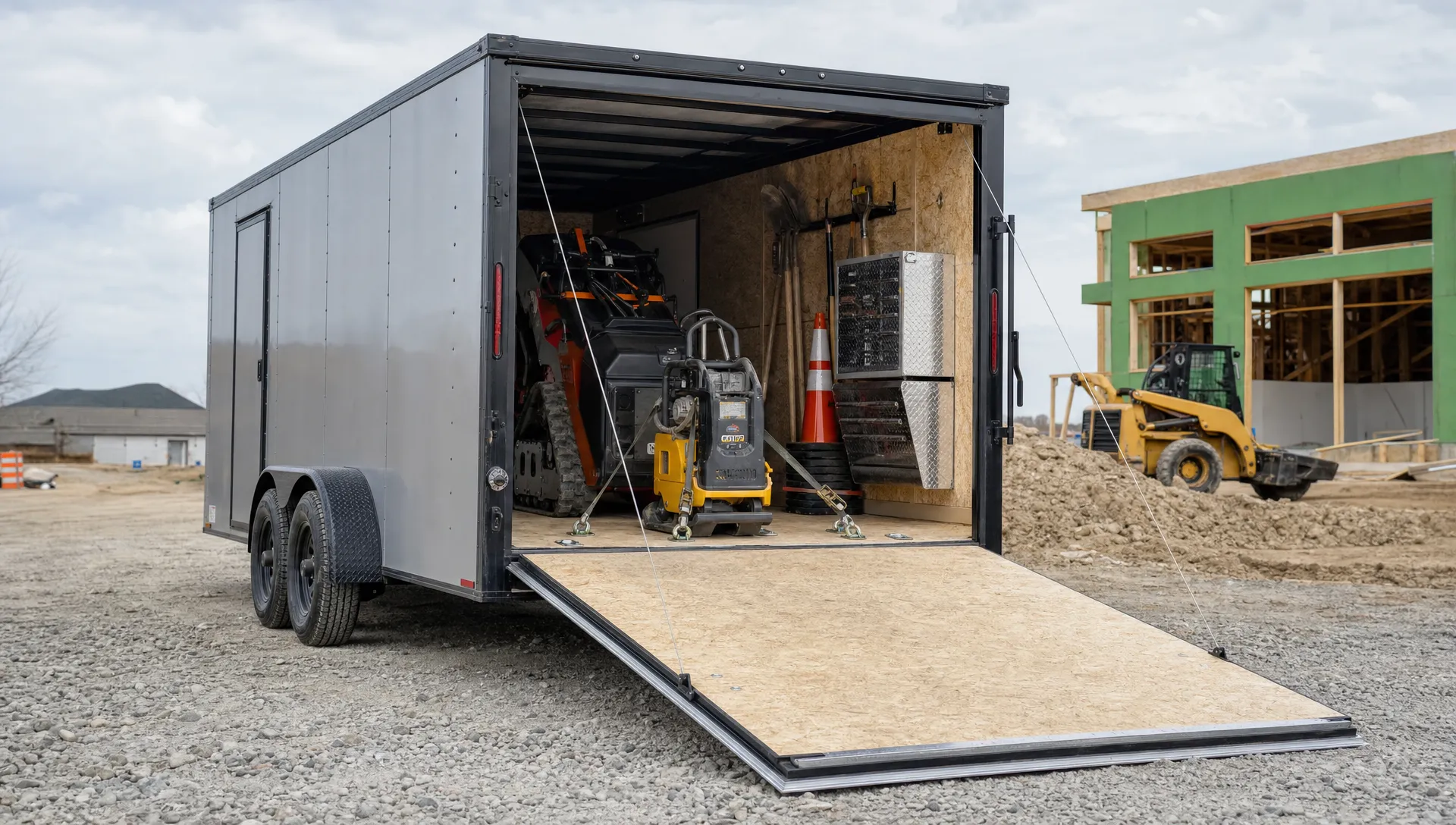
For a ramp-equipped trailer, confirm the ramp's rated capacity and the loading conditions covered by that rating. The trailer's payload rating is not the ramp rating. Ask whether limits apply to concentrated wheel loads and how the ramp must be supported during use.
Measure clear rear-door width and height, not just nominal trailer dimensions. Interior wheel wells, door framing and roof components can reduce usable space. Check equipment with handles, guards and attachments in their transport positions.
A beavertail can improve the loading transition, but it does not guarantee clearance for every machine. Wheelbase, ground clearance and the ramp angle determine whether equipment will scrape or hang up.
When shopping for a heavy duty enclosed trailer, the 8'6" x 20' Double-A Ruger Series listing offers a relevant configuration to examine: a ramp door, beavertail and 10,000 lb GVWR. Verify the unit's payload, clear opening and ramp rating against your equipment before deciding.
Axles, Tires and Brakes for Daily Commercial Use
Tandem axles can support higher-capacity configurations, but axle count alone does not establish suitability. Match the complete running gear to the expected loaded weight and operating conditions.
Check tire load ratings, specified inflation pressure, speed limits and condition. Tire pressure should follow the trailer manufacturer's placard and applicable tire guidance, not a guessed setting. The NHTSA tire safety guidance explains why pressure checks and regular inspections matter.
For electric brakes, verify which axles are equipped, whether the tow vehicle's controller is compatible and how the system is adjusted. Inspect the wiring, connector and breakaway equipment. A breakaway system is an emergency safeguard, not a substitute for functioning service brakes.
A heavy duty enclosed trailer should also have serviceable running gear. Ask about bearing maintenance, brake replacement parts and access to suspension components. These details affect downtime long after the purchase price is forgotten.
Lighting and wiring deserve inspection, too. Look for protected wire routing, secure connections and working clearance, turn, brake and license-plate lights. On used trailers, improvised electrical repairs can signal additional inspection work.
Match the Trailer to the Tow Vehicle
A truck's advertised maximum towing capacity is only one limit. Check the ratings for the specific vehicle configuration, including its GVWR, axle ratings, gross combined weight rating, receiver and hitch equipment.
Tongue weight uses tow-vehicle payload along with passengers, tools and other cargo. For many conventional bumper-pull trailers, manufacturer guidance calls for roughly 10% to 15% of loaded trailer weight on the hitch. Follow the instructions for your actual trailer and vehicle rather than treating that range as universal.
Use a compatible, correctly rated coupler, hitch ball and receiver. If considering a weight-distribution hitch, confirm that the vehicle, hitch and trailer manufacturers permit its use.
If your planned loads exceed a practical bumper-pull setup, review the benefits of a gooseneck enclosed trailer for heavier hauling. A different hitch arrangement still requires careful capacity checks and suitable truck equipment.
Weather Protection, Security and Cargo Restraint
A heavy duty enclosed trailer protects valuable equipment only when its enclosure and securement system are suited to the job. An enclosed body reduces exposure to rain and road debris, but it should not be assumed waterproof.
Inspect roof seams, door seals, hinges and penetrations for lights or vents. On a used trailer, staining, soft floor edges or swollen wall panels can indicate water intrusion. A fresh interior finish does not establish that the underlying structure is dry.
For security, compare door hardware, lock compatibility and whether tools remain visible when doors are opened. Coupler locks and wheel immobilizers can add deterrence, but no accessory makes a trailer theft-proof. Parking arrangements and equipment records matter as well.
Inside, use rated anchors and restraints appropriate for the cargo. Cabinets need secure attachment, and loose tools need containment. Walls and doors should not be treated as cargo restraints unless the manufacturer has designed them for that purpose.
For commercial operations subject to federal requirements, the FMCSA cargo-securement rules provide the relevant framework. Never operate engines or fuel-burning generators inside the trailer, even with doors open.
Compare New and Used Trailers by Working Cost
The lowest purchase price is not necessarily the lowest cost to put a trailer into service. Compare units equipped for the same work, then account for required upgrades and immediate repairs.
A new trailer may still need shelving, anchors or electrical equipment for your application. A used trailer may offer a suitable configuration, but inspect tires, brakes, bearings, seals and structural condition before assigning value to it.
When evaluating a used heavy duty enclosed trailer, compare the identification and certification labels with the seller's documentation. Ask about prior loads, water damage, modifications and repairs. Unrated homemade ramps or tie-down additions require particular caution.
For pricing comparisons, request an itemized quote covering the exact unit, installed options, applicable taxes and delivery charges. Confirm what is included rather than assuming similar advertisements describe equivalent trailers.
Prime Trail Trailers offers new and used trailers with nationwide delivery options. Ask the sales team about current availability and delivery arrangements for the specific unit you are considering, without relying on an older listing or assumed timeline.
Bring These Details to the Sales Conversation
A useful recommendation starts with your cargo, not just a requested trailer length. Bring equipment measurements and realistic loaded weights so the sales team can compare suitable configurations.
- Cargo weight: Include machines, tools, materials and planned interior equipment.
- Largest item: Provide overall dimensions, wheelbase, ground clearance and approximate wheel loads when available.
- Loading method: Specify whether you need a ramp, forklift access or hand-loading doors.
- Tow vehicle: Identify the truck configuration and verified towing, payload and hitch ratings.
- Work conditions: Explain typical mileage, jobsite surfaces, weather exposure and storage arrangements.
Before purchasing a heavy duty enclosed trailer, request confirmation of GVWR, empty weight, usable payload, floor suitability, ramp capacity and anchor ratings. If a specification is missing, resolve it before treating the trailer as suitable for your equipment.
Frequently Asked Questions
Does “heavy duty” guarantee a particular weight capacity? No. The term is not a standardized rating. Verify the manufacturer's GVWR, actual empty weight and component ratings for the specific unit.
Can I haul a compact machine if it weighs less than the trailer's payload capacity? Possibly, but payload is only one check. The floor, ramp, tie-downs, door opening and tow vehicle must also be suitable. Concentrated wheel loads can matter even when total cargo weight is acceptable.
Are tandem axles enough for demanding commercial work? Not by themselves. Axle ratings, tires, brakes, frame construction and cargo weight determine suitability. A tandem-axle trailer can still be overloaded or poorly matched to the truck.
What should I inspect first on a used enclosed trailer? Start with identification labels, frame condition, floor integrity, signs of leaks and evidence of repairs. Then inspect running gear, brakes, electrical equipment and loading hardware. Have questionable structural repairs assessed before buying.
Find a Trailer That Matches Your Actual Workload
The right heavy duty enclosed trailer combines adequate payload with a suitable floor, dependable loading access, rated securement points and running gear matched to daily use. Choose from documented specifications, not appearance alone.
Browse available trailers at Prime Trail Trailers and compare configurations against your equipment list. Contact the sales team for help checking specifications, requesting current pricing and discussing delivery options for a trailer that fits your hauling requirements.
Have Questions? We're Here to Help
Still unsure which trailer fits your needs, or need specs, pricing or delivery advice? The Prime Trail Trailers team is ready to answer your questions and help you find the right rig.