
How to Compare Utility Trailers for Sale Before You Buy
A low price means little if a trailer cannot carry your load or work with your truck. Learn how to compare capacity, usable space, loading equipment and complete quotes before you buy.
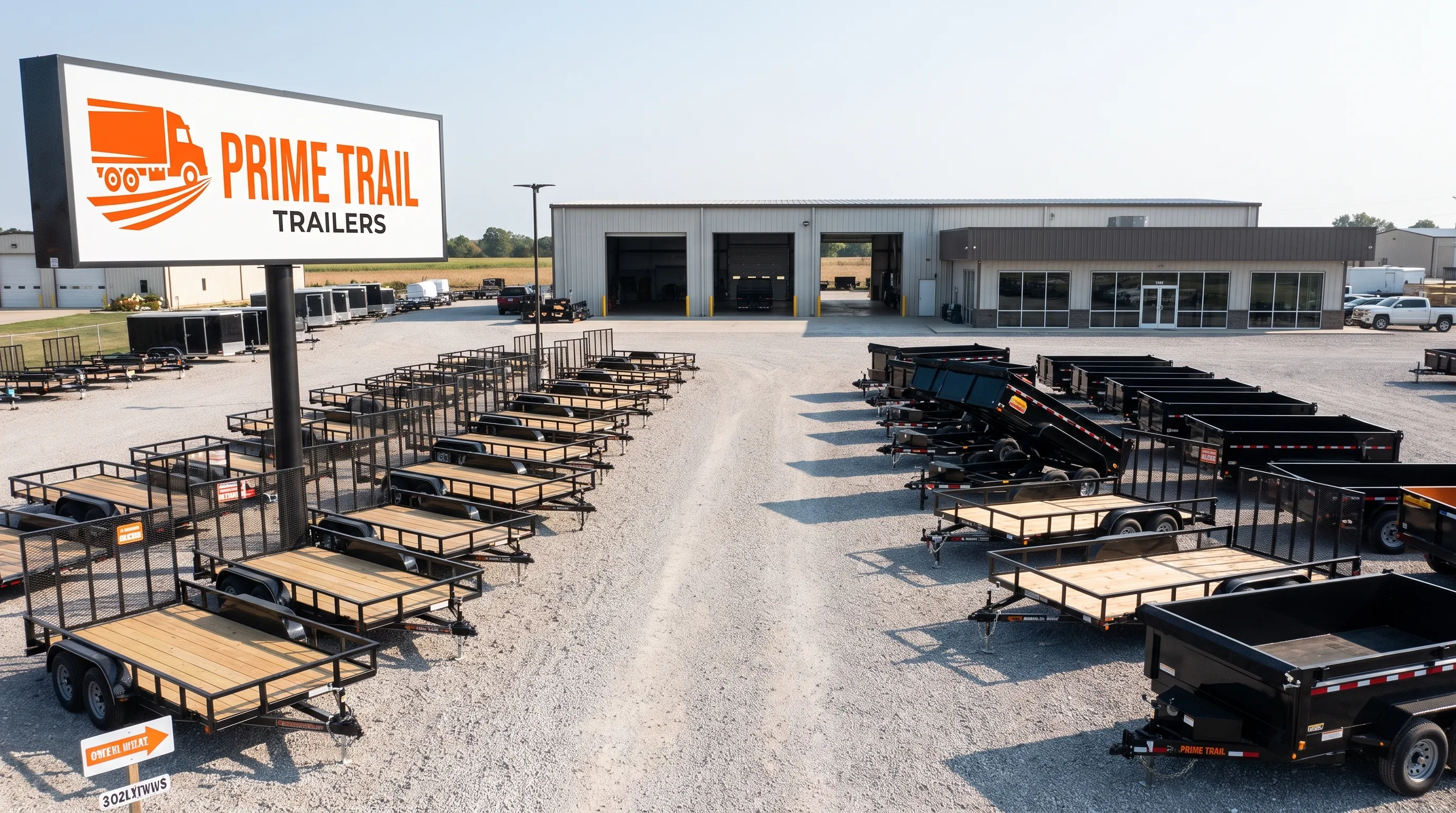
Two trailers can have similar dimensions and very different working capacities. When comparing utility trailers for sale, look beyond the advertised price to the payload, usable deck space, loading setup and compatibility with your tow vehicle. A lower purchase price does not help if the trailer cannot carry your equipment or needs costly changes before its first job.
This guide gives you a practical way to compare listings, identify missing specifications and request quotes that reflect the trailer you actually need.
Compare utility trailers for sale against the same job
Start with a written hauling requirement rather than a preferred trailer size. For a landscaping crew, that might include two mowers, handheld equipment, fuel containers and installed storage. For a contractor, it could mean tools and materials on normal days, with heavier equipment on occasional jobs.
Record the weight and dimensions of your heaviest realistic load. Include attachments, spare tires, racks and other items that will travel with it. Use equipment documentation or scale weights where possible instead of estimating from appearance.
Then give every seller the same requirements:
| Comparison item | Information to record | |---|---| | Cargo | Equipment, materials and accessories carried together | | Required payload | Combined weight of the planned cargo | | Usable space | Clear deck length and width, not just advertised size | | Loading method | Ramp, gate, forklift or manual loading | | Tow vehicle | Exact configuration and applicable ratings | | Operating conditions | Trip frequency, storage conditions and typical roads |
This makes utility trailers for sale easier to evaluate because each listing must meet the same job requirements. Decide which requirements are essential and which are conveniences. A suitable loading system is essential; a preferred paint color usually is not.
Separate GVWR, empty weight and payload
Calculate how much cargo the trailer can carry
Gross vehicle weight rating (GVWR) is the maximum permitted weight of the loaded trailer. It is not the amount of cargo you can put on the deck.
A useful starting calculation is:
GVWR minus actual empty trailer weight equals available payload.
For illustration, a trailer with a 7,000-pound GVWR and an actual empty weight of 2,000 pounds has 5,000 pounds of available payload. If permanently installed accessories add 300 pounds after that empty weight was recorded, the remaining cargo allowance drops to 4,700 pounds.
These figures are examples, not specifications for a Prime Trail Trailers listing. Confirm the rating and weight of the exact unit you are considering. Factory options and aftermarket additions can change its empty weight.
Also check component ratings. Axles, tires, wheels, the coupler and other load-bearing components must be suitable for the trailer's rated capacity. Adding together axle ratings does not establish the trailer's GVWR.
Confirm the tow vehicle can handle the loaded combination
Before choosing among utility trailers for sale, check your truck or SUV's owner's manual and vehicle labels. The advertised maximum towing capacity for a model line may not apply to your engine, drivetrain, cab configuration or installed equipment.
Compare the expected loaded trailer weight with the vehicle's trailer-weight limit and gross combined weight rating. Tongue weight also uses part of the tow vehicle's payload allowance, along with passengers, tools and cargo carried in the vehicle.
The receiver, ball mount, hitch ball and coupler have their own ratings. A higher-rated trailer does not increase those limits. For a conventional bumper-pull trailer, follow the trailer and tow-vehicle manufacturers' tongue-weight guidance rather than assuming one loading arrangement works for every trailer.
Compare usable dimensions, not just the size in the listing
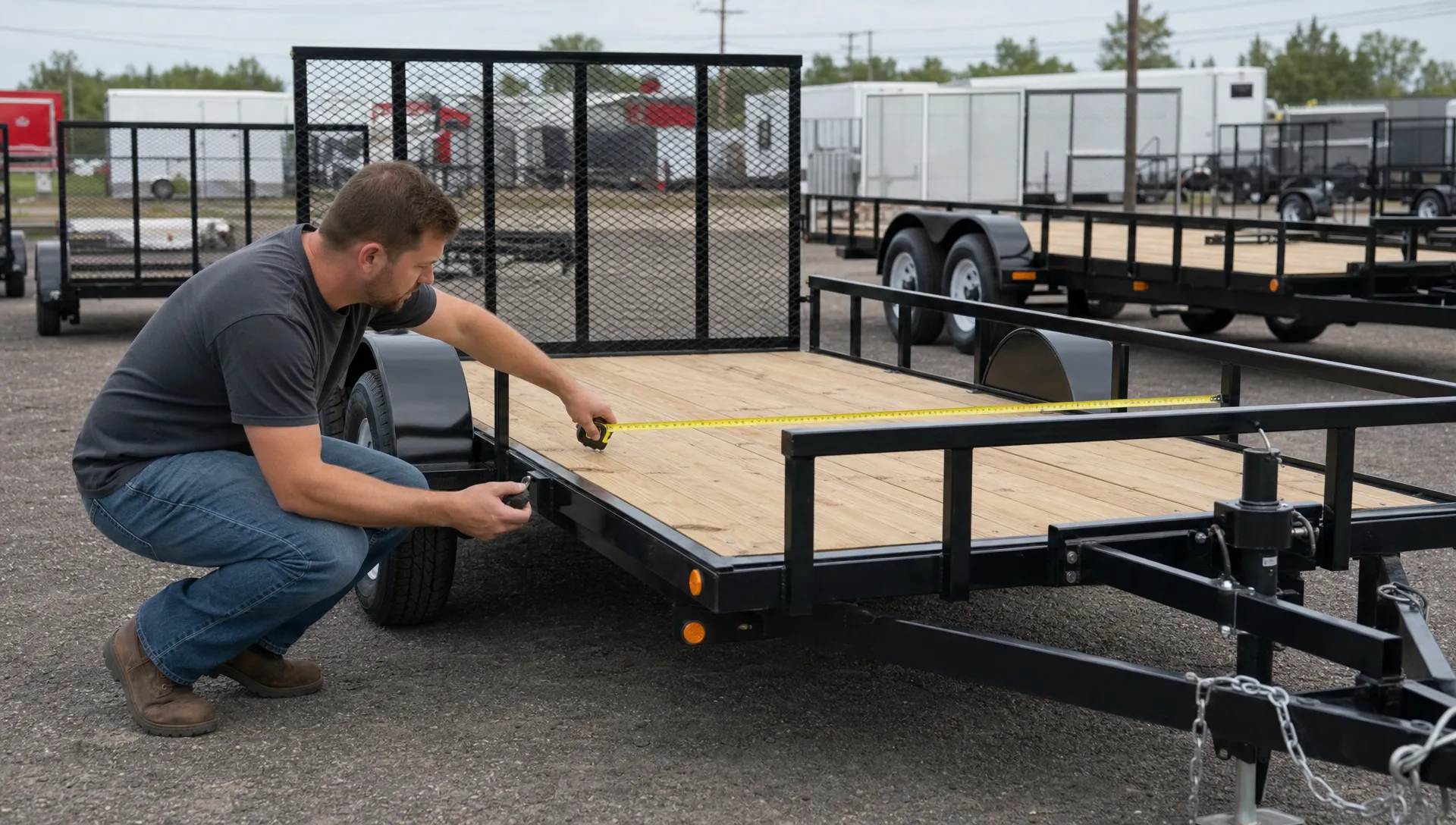
An advertised size such as 6 by 12 feet is a starting point, not proof that your equipment fits. Ask how the seller measures the trailer and whether that measurement describes usable deck space.
Check clear width between rails or fenders, unobstructed deck length and the opening available for loading. A mower can fit on the deck yet be difficult to load through a narrower gate. Equipment attachments can also extend beyond the machine's published dimensions.
When comparing utility trailers for sale, sketch the cargo arrangement before deciding that a longer deck solves the problem. The layout must leave room for securement while allowing the load to be positioned correctly for towing.
For regular equipment hauling, measure ground clearance and wheelbase as well. A machine may fit once loaded but scrape during the transition from the ground to the ramp or from the ramp to the deck.
Ask for measurements of the actual unit when clearance is close. Photos help explain the layout, but they cannot reliably establish dimensions. If possible, arrange a fit check with your equipment before committing to the purchase.
Look at construction as a complete system
Steel and aluminum trailers both deserve consideration, but material alone does not tell you which trailer is suitable. Compare rated capacity, frame design, deck support, corrosion protection and the condition of the finished assembly.
Look for information about crossmember spacing, decking, rail configuration and attachment points. A heavier trailer is not automatically stronger in the ways your work requires, and a lighter trailer is not automatically underbuilt.
For utility trailers for sale intended for daily commercial use, ask how the deck supports concentrated loads. Equipment wheels can place substantial weight on small areas, even when total cargo weight remains below the trailer's payload limit.
Tires should have an appropriate load rating and be maintained at the specified cold inflation pressure. The NHTSA tire safety guidance explains why inflation, load limits and tire condition matter. Check tire age and condition rather than relying only on tread depth.
Compare axle and suspension specifications without treating axle count as a capacity guarantee. A tandem-axle trailer may offer a different weight rating and towing behavior than a single-axle model, but the manufacturer's ratings and your application should drive the decision.
Check loading, securement and braking before purchase
A gate or ramp must be suitable for the equipment crossing it, not merely wide enough. Request its load rating and ask whether that rating applies to a distributed load or a particular wheel-loading arrangement.
Ramp length and deck height affect the approach angle. A folding gate may suit some lawn equipment, while a different ramp arrangement may be needed for low-clearance machines. Confirm that the loading setup works with your equipment's weight, wheel spacing and clearance.
Tie-down points also need scrutiny. Ask about their ratings, placement and attachment to the structure. Side rails should not be treated as rated securement points unless the manufacturer identifies them that way.
Brake requirements vary by state and application. Verify the rules for your intended operation, then confirm the trailer's brake equipment, electrical connector and compatibility with your tow vehicle's brake controller where required. Check breakaway equipment when fitted or required.
At this stage, narrow utility trailers for sale to units that meet all essential requirements. A trailer that needs a different loading system, additional rated tie-downs or towing upgrades should not be compared at its advertised price alone.
Decide whether an open utility trailer is the right category
An open utility trailer can be practical for equipment and materials that tolerate weather exposure. It provides direct access to the load and can simplify loading from the sides, depending on its rail configuration.
An enclosed trailer deserves a separate comparison when keeping tools out of sight, limiting weather exposure or transporting a vehicle inside an enclosure matters. It brings different considerations, including empty weight, interior clearance, door openings and the tow vehicle's limits.
For example, the Universal Trailers 8'6" X 16' Continental Cargo - V-Series w/ Ramp Door is an enclosed alternative with a ramp door and a listed empty weight of 2,800 pounds. Buyers considering it for equipment or tools should confirm usable interior dimensions, ramp capacity and available payload for the specific unit.
The Universal Trailers 8'6" X 18' Continental Cargo Auto-Plus Car-Hauler w/ Ramp, Finished Interior provides another comparison point for enclosed vehicle transport. Its supplied specifications list a ramp, finished interior and an empty weight of 3,510 pounds. Confirm vehicle fit, door clearance, securement provisions and the trailer's rated capacity before choosing it.
Neither model is an open utility trailer. They are relevant alternatives when your search for utility trailers for sale reveals that cargo protection or enclosed vehicle transport is an essential requirement. If you routinely move dense bulk material or heavy machinery, a dump or equipment trailer may warrant consideration instead.
Compare complete quotes, not advertised prices
Request an itemized quote for the exact trailer configuration. Make sure each quote identifies the unit, its specifications and the equipment included in the price.
Ask the seller to separate the trailer price from applicable taxes, title or registration charges, delivery costs and any optional equipment. Confirm which charges apply to your purchase rather than assuming every dealership handles them the same way.
For utility trailers for sale that otherwise meet your requirements, compare the cost of making each one ready for work. A lower-priced unit may require a spare tire, different ramps or additional securement hardware. Another may already include the equipment you need.
Use a short quote checklist:
- Exact unit: Confirm the model, configuration and VIN when available.
- Included equipment: Identify ramps, brakes, spare tire and other quoted items.
- Additional costs: Separate required charges from optional purchases.
- Delivery or pickup: Confirm arrangements, costs and timing in writing.
- Warranty terms: Request applicable written coverage without assuming it is included.
Prime Trail Trailers offers new and used trailers, sales assistance and nationwide delivery options. Request current pricing, availability and delivery details for the unit you are considering; do not treat general delivery options as a promise of a particular charge or arrival date.
Weigh new and used options without overlooking condition
A new trailer and a used trailer should satisfy the same capacity, fit and towing requirements. The difference is that a used unit also needs a condition-based cost assessment.
When comparing utility trailers for sale across new and used listings, separate the purchase price from near-term repairs. Tires, bearings, brakes, wiring, decking and damaged loading equipment can affect whether a used trailer is genuinely good value.
Ask for clear identification, ownership documentation and information about modifications. An added rack or replaced gate may affect empty weight, loading suitability or the usefulness of the original specifications.
For a detailed condition review, use Prime Trail Trailers' used utility trailer inspection checklist. Keep your final comparison focused on three outcomes: suitable for the job, suitable after clearly priced work or unsuitable. Do not let a low asking price turn a failed capacity or fit check into a compromise.
Frequently asked questions
What is the most important specification when comparing utility trailers for sale? Available payload is a critical starting point, but it cannot be considered alone. The trailer must also provide enough usable space, a suitable loading system and compatibility with the tow vehicle. Reject listings that fail any essential requirement.
Is a tandem-axle utility trailer always better than a single-axle trailer? No. Compare the actual GVWR, empty weight, brake equipment and intended use. A single-axle trailer may suit lighter hauling, while a tandem-axle model may meet different capacity needs. Axle count alone does not establish suitability.
How do I verify the trailer's loaded weight? Use a suitable scale and account for both the load carried by the trailer axles and the weight transferred through the hitch. A trailer-axle reading alone does not represent the trailer's total loaded weight. Use an appropriate weighing procedure for the combination.
Should I buy extra capacity for future work? Extra capacity can be useful when it matches a realistic future load. Check whether the larger trailer's empty weight, dimensions and loaded weight remain compatible with your current tow vehicle. Buying more capacity is not helpful if you cannot safely use it.
What should I send a dealer when requesting a recommendation? Provide your cargo weights and dimensions, loading method, tow-vehicle configuration, typical trip frequency and delivery location. Include equipment model numbers or photographs when they help explain fit requirements.
Find a trailer that meets your requirements
The strongest shortlist of utility trailers for sale is built from verified capacity, usable dimensions, safe loading and complete pricing. Resolve missing specifications before making a deposit or arranging pickup.
Browse the trailer categories at Prime Trail Trailers to explore options for your hauling needs. Request current pricing or availability and share your load requirements with the sales team for help choosing the right trailer.
Have Questions? We're Here to Help
Still unsure which trailer fits your needs, or need specs, pricing or delivery advice? The Prime Trail Trailers team is ready to answer your questions and help you find the right rig.