
How to Choose an Equipment Hauler for Your Crew and Load
The right trailer must carry the whole job, not just your biggest machine. Learn how to compare payload, deck space and loading systems while accounting for crew weight, attachments and the truck that will tow it.
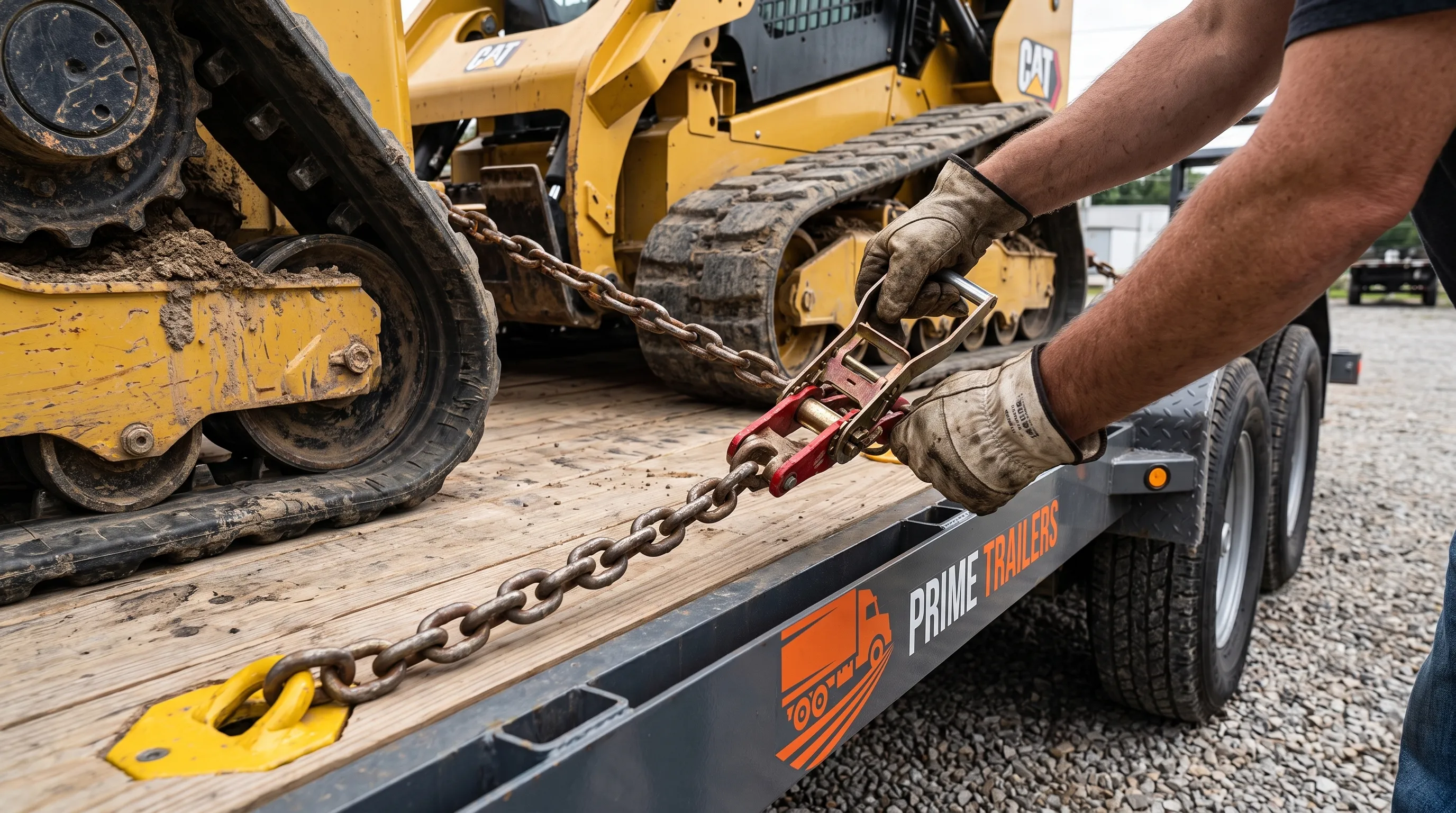
Choosing an equipment hauler starts with the load your crew actually takes to work: the machine, extra attachments, tools and supplies. A trailer that fits a skid steer by itself may fall short once you add forks, a second bucket and the gear needed for a full day. The truck also needs enough capacity for the trailer’s hitch load with your crew aboard.
The right choice balances usable payload, deck space, loading access and daily workflow. Here’s how to compare those factors before requesting pricing or committing to a trailer.
Start with a complete job-day load plan
Build your shopping requirements around your heaviest routine job, not the lightest trip you can imagine. Use the machine’s actual operating weight with its installed attachments and fluids. A brochure’s base weight may describe a different configuration.
Include everything that travels on the trailer:
- Primary equipment: Skid steer, compact track loader, mini excavator, tractor or other machinery in its transport configuration.
- Additional attachments: Buckets, forks, augers, trenchers and implements not already included in the machine weight.
- Support equipment: Plate compactors, generators, fuel containers and other job-specific items.
- Securement and storage: Chains, binders, removable toolboxes and supplies not included in the trailer’s empty weight.
- Materials: Pallets, fencing, landscaping supplies or other cargo carried alongside the equipment.
Record each item’s weight and transport dimensions. When reliable weights are unavailable, use a suitable scale rather than estimating from appearance.
Also identify what comes off first at the job site. If your crew needs the forks before unloading the machine, placing them behind the machine creates avoidable handling. An equipment hauler should accommodate both the load and the order in which your crew uses it.
Calculate equipment hauler payload, not just GVWR
Gross vehicle weight rating, or GVWR, is the maximum permitted weight of the trailer and its cargo together. It is not the amount of equipment you can load onto the deck.
Rated payload = trailer GVWR minus ready-to-haul empty weight. That empty weight should reflect the trailer’s actual configuration, including installed accessories. Confirm whether removable equipment has already been counted so you do not subtract it twice.
This hypothetical example shows the difference:
| Weight item | Example weight | |-------------|----------------| | Trailer GVWR | 14,000 lb | | Ready-to-haul empty trailer | 3,500 lb | | Calculated rated payload | 10,500 lb | | Machine in transport configuration | 8,200 lb | | Additional attachment | 650 lb | | Chains, tools and other cargo | 500 lb | | Total planned cargo | 9,350 lb | | Remaining payload | 1,150 lb |
These figures illustrate the calculation, not the specifications of a particular trailer. The remaining capacity is not permission to exceed axle, tire, deck or tow-vehicle limits.
An equipment hauler with a higher gross rating does not necessarily provide more usable payload if its empty weight is also substantially higher. Compare actual empty weights and certification-label ratings, then leave practical room for the additional cargo your business reasonably expects to carry.
If a listing uses “GVW,” ask the seller to confirm the manufacturer’s GVWR and the specific trailer’s ready-to-haul empty weight.
Match the trailer to the truck with your crew aboard
A pickup’s advertised maximum towing capacity is only one part of the decision. The usable limit depends on that truck’s engine, axle ratio, drivetrain, hitch equipment and other configuration details.
Check the owner’s manual, certification label and tire-and-loading information label. Your combination must stay within the truck’s GVWR, axle ratings, applicable trailer towing limit and gross combined weight rating, or GCWR. Hitch, ball, coupler and safety-chain ratings also matter.
Passengers and hitch load compete for truck payload. For example, a truck with 1,800 lb of payload capacity has only 1,050 lb remaining after 600 lb of occupants and 150 lb of tools, before accounting for other added equipment. The trailer’s tongue or pin weight must fit within the remaining capacity without overloading an axle.
For heavier combinations, compare hitch arrangements rather than assuming a gooseneck automatically solves a capacity problem. Prime Trail Trailers’ guide to choosing a gooseneck equipment trailer for heavy loads explains the relevant trade-offs.
Before buying an equipment hauler, confirm the expected loaded trailer weight and hitch load against the truck as your crew actually operates it. A scale check can reveal limits that a brochure comparison misses.
Choose deck space around the complete load
Nominal trailer length does not tell you whether every item fits safely. Measure usable deck length, clear width, any space between fenders and the footprint of attachments in their secured positions.
Consider where the machine must sit to achieve the manufacturer’s recommended load distribution. A layout that fits only with the machine pushed to the extreme rear may not provide acceptable tongue weight.
| Layout | Where it can help | What to verify | |--------|-------------------|----------------| | Deck between the wheels | Equipment that fits within the clear deck width | Fender clearance, deck height and attachment placement | | Deck-over trailer | Wide machinery, implements or mixed loads | Actual deck height, loading approach and usable width | | Tilt deck | Frequent equipment loading | Tilt capacity, operating procedure and fixed storage space, if present | | Dump trailer | Work involving bulk materials and compatible equipment | Interior dimensions, loading equipment and concentrated-load limits |
Leave access to rated tie-down points. Attachments should not block the crew from placing and tensioning securement correctly.
When a 24-foot deck-over deserves consideration
The Double-A 24' Heavy-Duty Deck Over Trailer is a relevant option to evaluate when your load plan calls for a 24-foot deck. Its listing identifies 15,400 lb GVW, which should not be treated as payload capacity.
Ask for the certification-label rating, actual empty weight, usable deck dimensions and loading specifications. Then map your machine and attachments onto the deck before deciding whether this equipment hauler provides the capacity and working space your crew needs.
Select a loading system your crew can use daily
Ramps and tilt mechanisms affect every loading cycle. Compare them against the machine’s operating weight, wheelbase or track contact length, ground clearance and manufacturer-approved loading procedures.
For ramps, confirm whether the stated capacity applies to an individual ramp or the pair. Check the allowed wheel or track spacing, required supports and how the ramps attach to the trailer. A combined ramp rating alone may not establish suitability for a machine with uneven weight distribution.
Deck height and ramp length determine the approach angle. Low-clearance machinery can contact the ramp-to-deck transition even when its weight is within the trailer’s capacity. Long attachments may also affect clearance during loading.
Tilt trailers can reduce separate ramp handling, but the mechanism and deck arrangement must match your load. Review whether a tilt trailer suits your equipment-hauling routine if your crew loads machinery several times a day.
Consider the operator as well as the machine. Verify the safe procedure for deploying ramps, controlling a tilt deck and securing everything for travel. An equipment hauler that saves loading time is useful only when your crew can operate it consistently and safely.
Request a loading demonstration when practical, using representative equipment and following the trailer and machine manufacturers’ instructions.
Decide whether a dump trailer fits the same workflow
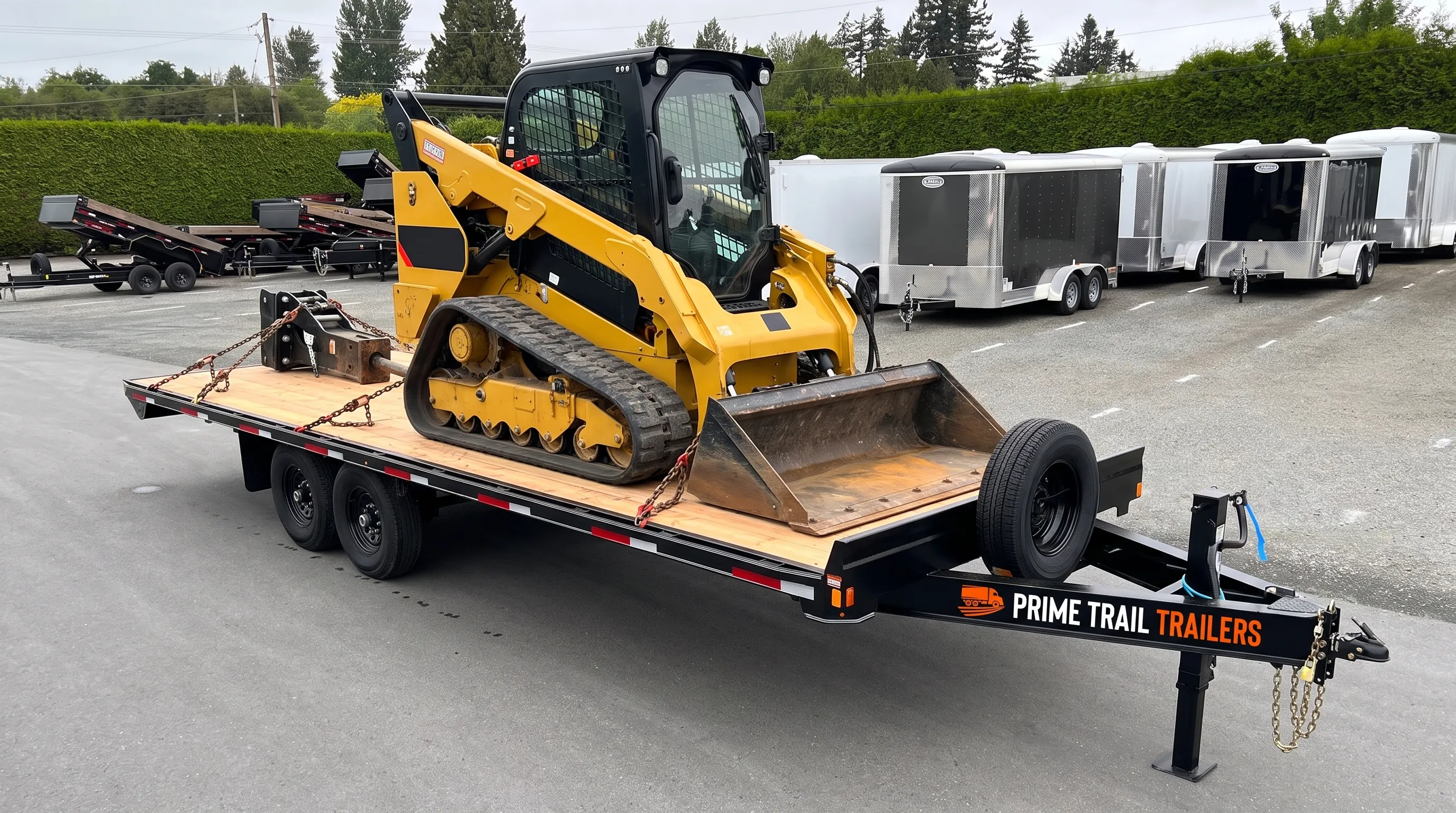
Some crews need to transport equipment to a site, haul aggregate during the job and remove debris afterward. A dump trailer may serve more of that workflow than a flat deck, provided the specific trailer is approved and equipped for the machinery involved.
The Double-A 7' X 12' Dump Trailer, Excel Series is worth comparing for mixed job-site hauling. Its listing identifies a 14,000 lb GVW, but that rating alone does not establish equipment payload or loading suitability.
Confirm the trailer’s actual empty weight, clear interior dimensions, floor loading limits, rated tie-down locations and loading provisions. Do not assume ramps are included or that a rear gate is rated to support a machine.
A dump body’s walls also change access. Your crew needs enough room to secure the machine without reaching around obstructed anchors or placing attachments where they interfere with the body’s operation.
Using a dump trailer as an equipment hauler makes sense when both tasks fit its verified capabilities. If the machine barely fits or leaves no workable attachment space, separate equipment and material-hauling trailers may be the better operational choice.
Verify securement, brakes and running gear
A deck large enough for the machine still needs suitable securement points. Ask for anchor ratings and locations, not simply the number of welded loops visible in a photo.
For covered commercial transportation, 49 CFR §393.130 generally requires wheeled or tracked equipment weighing 10,000 lb or more to be secured with at least four tiedowns. Accessory equipment, such as buckets, must be lowered and secured, and articulated equipment must be restrained against articulation during transit. Lighter equipment remains subject to applicable securement requirements.
The general federal cargo securement rule also requires an aggregate securement working load limit of at least half the cargo weight. The calculation depends on how tiedowns are attached, so counting chains alone does not establish compliance. Check applicable state requirements for your operation as well.
Check the components carrying and stopping the load
Confirm axle ratings, tire load ratings, wheels, suspension, brakes and the breakaway system. The tow vehicle’s brake controller must be compatible with the trailer’s braking system and adjusted according to the manufacturers’ instructions.
For an equipment hauler carrying concentrated machinery loads, also ask about the deck and frame’s suitability for that machine’s wheel or track contact pattern. Staying below GVWR does not establish that every loading position is acceptable.
Build a pre-trip inspection around coupler engagement, safety chains, tires, lights, brakes, ramps and securement. Recheck the load during travel at the intervals required for your operation.
Compare new and used trailers by condition and operating cost
Purchase price is only part of the cost. Loading time, maintenance, replacement components and downtime affect what the trailer costs your crew over a season.
A new trailer lets you evaluate a current configuration without inherited wear, but verify the specific build and included equipment. A used trailer can be a practical purchase when its condition, ratings and repair needs are clear.
Inspect used trailers for frame damage, questionable repairs, deck deterioration, worn ramp hinges, coupler wear and damaged wiring. Check tires, brakes, bearings and suspension components. Request a qualified inspection when structural condition or braking performance is uncertain.
Compare each equipment hauler on a ready-to-work basis: purchase price plus any necessary repairs, compatible loading equipment and securement. Include delivery charges when relevant, rather than comparing an incomplete listing price with a trailer that already has the equipment you need.
Finally, assess maneuverability. A longer deck can improve cargo organization but may make access harder at residential driveways, farm entrances and crowded job sites. Buy the space your documented load requires, not length for its own sake.
Request a quote around your actual hauling requirements
Give the sales team enough detail to recommend a configuration rather than guessing from a machine model name. Two machines with the same model designation can have different weights, attachments and transport dimensions.
Your request should include:
- Equipment details: Make, model, verified operating weight and transport dimensions.
- Complete cargo list: Additional attachments, tools and materials with their weights.
- Tow vehicle: Truck configuration, relevant ratings and existing hitch equipment.
- Crew arrangement: Typical passenger load and gear carried in the truck.
- Daily workflow: Loading frequency, site access and unloading order.
- Purchase requirements: New or used preference, budget and delivery destination if needed.
Ask the seller to identify which specifications are confirmed for the specific trailer and which still need verification. Request clarification about included ramps, securement equipment and any accessories shown in listing photos.
An equipment hauler quote is most useful when it connects a specific trailer to your load plan and truck limits. Keep the ratings, dimensions and included equipment together so you can compare alternatives without relying on memory.
Frequently asked questions
What size trailer do I need for a skid steer? Start with the skid steer’s actual operating weight, transport dimensions and additional attachments. Then verify usable payload, deck space, loading-system ratings and truck capacity. Machine model alone is not enough to select a trailer.
Does a 14,000 lb trailer rating mean I can carry 14,000 lb? No. GVWR includes the trailer itself. Subtract its actual ready-to-haul empty weight to calculate rated payload, then check all other component and towing limits.
Can a dump trailer carry a mini excavator? Potentially, if the specific trailer’s payload, floor loading limits, dimensions, loading provisions and securement points support it. Confirm suitability with the manufacturer or dealer before loading.
Should I choose ramps or a tilt deck? Compare loading frequency, machine clearance, operating procedures and storage needs. Either can work when properly rated and matched to your equipment; neither is automatically the better choice for every crew.
Find a trailer that fits the whole job
Choose an equipment hauler around your complete cargo list, crew-loaded truck and daily loading routine. Verified capacity matters more than an impressive gross rating, and a workable deck layout matters more than nominal length alone.
Browse available trailers at Prime Trail Trailers and request help comparing equipment, deck-over, tilt and dump trailer options. Share your machine weights, attachments, tow-vehicle details and delivery destination to request pricing and availability for a suitable configuration.
Have Questions? We're Here to Help
Still unsure which trailer fits your needs, or need specs, pricing or delivery advice? The Prime Trail Trailers team is ready to answer your questions and help you find the right rig.