
State-by-State Food Trailer Health Department Requirements: 2026 Regional Guide
Navigate the complex maze of state-specific health department regulations for food trailers in 2026, covering key rules in GA, FL, CA, NJ, NY, and PA.
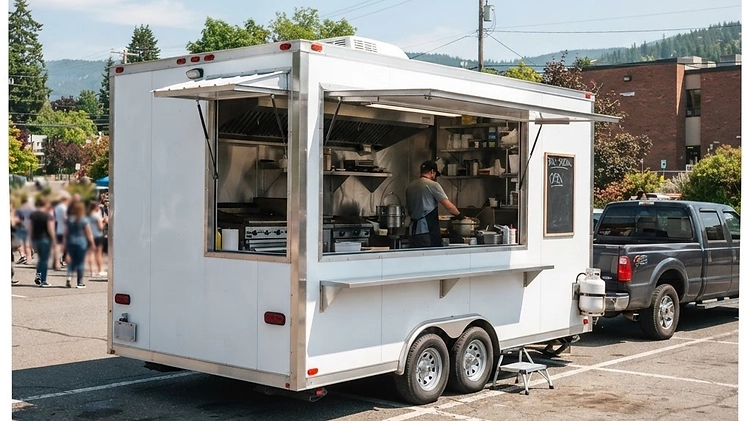
Navigating health department regulations is often the most daunting hurdle for new mobile food operators. While the FDA Food Code provides a national baseline, every state—and often every county—adds its own layer of specific requirements for mobile food units (MFUs). What passes inspection in Florida might get rejected in California, and the commissary rules in Georgia differ significantly from those in New York.
To build a compliant, profitable mobile kitchen, you must understand the specific environmental health codes of your operating region before you ever purchase a trailer or finalize a floor plan. This comprehensive 2026 guide breaks down the critical health department requirements across major U.S. regions, helping you design a compliant build and pass your initial inspections with confidence.
The Foundation: FDA Food Code vs. State Regulations
Before diving into state-specific nuances, it is crucial to understand how mobile food regulations are structured. Almost every state adopts a version of the FDA Food Code, which establishes the baseline for food safety, equipment standards, and sanitation.

However, state health departments and local environmental health agencies modify these rules to fit their jurisdictions. The universal baseline requirements you will find in almost every state include:
- NSF-Listed Equipment: All commercial cooking, refrigeration, and prep equipment must be certified by NSF International (or an equivalent like ETL Sanitation) to ensure it is easily cleanable and food-safe.
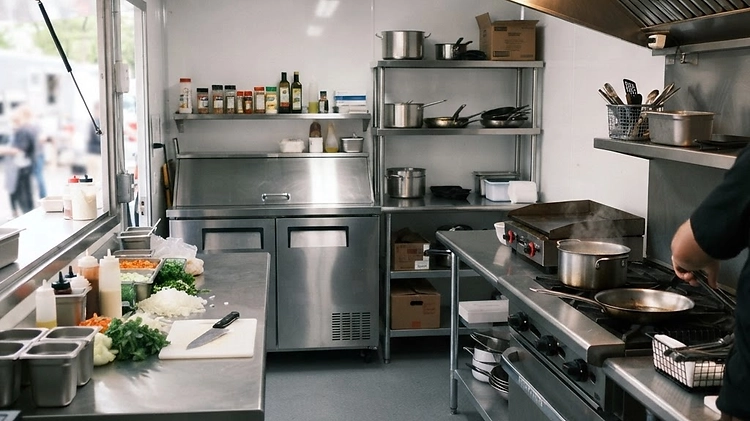
- Smooth, Cleanable Surfaces: Floors, walls, and ceilings must be smooth, non-absorbent, and easily cleanable. Diamond plate floors are often restricted to non-food prep areas, while FRP (Fiberglass Reinforced Plastic) or stainless steel is required for walls behind cook lines.
- Dedicated Handwashing Sink: A separate handwashing sink with hot and cold running water, soap, and paper towels is universally mandatory. It cannot be used for food prep or dishwashing.
- Three-Compartment Sink: Required for washing, rinsing, and sanitizing utensils, complete with dual drainboards.
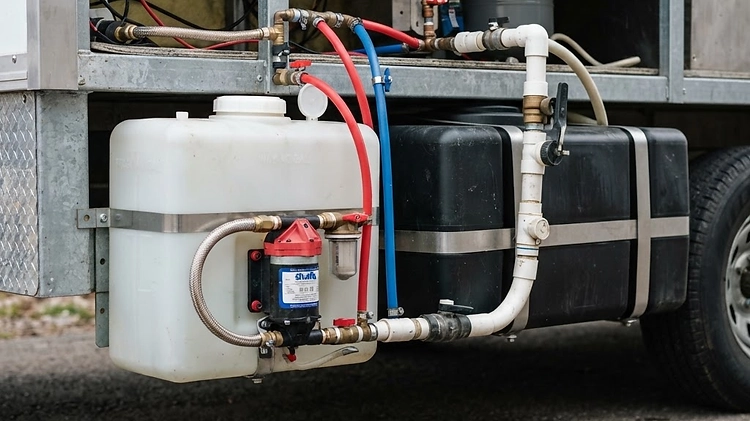
- Water Tank Ratios: The wastewater (gray water) tank must generally be at least 15% larger than the fresh water tank to prevent overflow.
While these form the foundation, the real complexity lies in how individual states handle commissary requirements, plan reviews, and permitting processes.
Southeast Region: Georgia and Florida Food Trailer Rules
The Southeast is a booming market for mobile food, driven by year-round favorable weather and expanding suburban event scenes. However, states like Georgia and Florida have distinct regulatory frameworks.
Georgia: DPH Rules and Base of Operations
In Georgia, mobile food service establishments are regulated by the Georgia Department of Public Health (DPH) and local county health departments. If you are looking at trailers for sale in Georgia, you must understand the state's strict "Base of Operation" rules.
- Permitting: When initiating a mobile food service establishment in Georgia, you are required to apply for permits for both your Base of Operation (commissary) and your unit/truck at the county health department.
- Mobility and Tracking: Georgia requires mobile units to report to their base of operations daily for cleaning, discharging waste, and restocking.
- County Reciprocity: Historically, operators had to get separate permits for every county. Recent legislative updates have streamlined this, allowing operators to operate across county lines more easily, provided they have their primary permit and notify the secondary counties.
For operators in major hubs like Atlanta, GA, ensuring your custom build meets Fulton or DeKalb county specifics is critical before finalizing your kitchen trailers purchase.
Florida: FDACS and DBPR Jurisdictions
Florida divides mobile food regulation between the Department of Business and Professional Regulation (DBPR) and the Florida Department of Agriculture and Consumer Services (FDACS), depending on what you serve.
- FDACS vs. DBPR: If you are selling pre-packaged foods or operating a mobile market, you fall under FDACS. If you are cooking and serving hot meals, you fall under DBPR.
- Application Timeline: For FDACS-regulated mobile food establishments, a food permit application must be submitted 21 days prior to opening.
- Commissary Exemptions: Florida is somewhat unique in that fully self-contained mobile food dispensing vehicles (MFDVs) with adequate on-board water, wastewater, and commercial equipment may sometimes be exempt from strict daily commissary visits, provided they have approved water and waste disposal sites. If you are browsing trailers for sale in Florida, verifying your self-contained status with DBPR can save you thousands in commissary fees.
Northeast Region: New Jersey, New York, and Pennsylvania
The Northeast presents a dense, highly regulated environment where local municipalities often have more power than state agencies.

Strict Commissary Agreements
In New Jersey, New York, and Pennsylvania, health inspectors rigorously enforce commissary requirements. These states generally require a licensed commissary for food prep, fresh water fill, and wastewater dumping unless the trailer is fully self-contained with approved on-board prep and storage.
A signed commissary agreement is almost always required at the time of your license application. Inspectors will reject builds that attempt to bypass proper commercial kitchen support without adequate on-board facilities. For a deep dive into setting this up, review our Food Trailer Commissary Agreements & Route Sheets: 2026 Guide.
Water Systems and Sinks
Northeast inspectors are notoriously strict about plumbing. The fresh-water tank must be food-safe, corrosion-resistant, enclosed from fill to outlet, and sloped to drain completely. The wastewater tank must strictly adhere to the 15% larger rule so it never fills first. Furthermore, inspectors will immediately fail builds that attempt to make one sink serve dual purposes (e.g., using a compartment of the 3-bay sink for handwashing). Proper plumbing design is essential, as detailed in our Food Trailer Plumbing & Water Systems: 2026 Compliance Guide.
West Coast: California Retail Food Code (CalCode)
California has some of the most stringent mobile food regulations in the country, governed by the California Retail Food Code (CalCode). If you are operating or buying trailers for sale in California, compliance requires meticulous planning.
HCD Certification and Local Environmental Health
Before a local county environmental health department (like Los Angeles or Alameda) will even look at your trailer, the vehicle itself must often bear an insignia from the California Department of Housing and Community Development (HCD). This ensures the electrical, plumbing, and structural components meet state safety standards.
- Plan Check: If your facility has never been issued an environmental health permit in California, or has been remodeled, you must submit detailed architectural plans for review and approval by the local department before construction begins.
- Food Safety Certification: CalCode mandates that at least one employee must be certified in food safety by passing an approved examination, and all other employees involved in food handling must obtain a California Food Handler Card.
Exhaust Hoods and Fire Safety
While the health department handles sanitation, the fire marshal handles the cook line. In California, any cook line producing grease-laden vapors (fryers, griddles, charbroilers) requires a Type 1 commercial exhaust hood with a UL 300 fire suppression system compliant with NFPA 96. The health inspector and fire marshal conduct separate inspections.
Universal Health Department Inspection Checklist for 2026
Regardless of whether you are operating a 8.5x20 Blackout BBQ Trailer in Texas or a 7x16TA Coast to Coast Concession Trailer in Ohio, your pre-inspection checklist should include:

- Handwashing Station: Dedicated sink, hot/cold water, soap dispenser, and paper towel dispenser installed.
- Warewashing: Three-compartment sink with dual drainboards, large enough to submerge your largest piece of equipment.
- Water Tanks: Fresh water tank filled from an approved source; wastewater tank at least 15% larger with a secure drain valve. (See our Food Trailer Waste Water Tank Sizing & Health Department Compliance Guide).
- Hot Water: Commercial water heater functioning and capable of sustaining 120°F at the sinks.
- Equipment Certifications: NSF/ETL labels clearly visible on all refrigeration and cooking equipment.
- Temperature Control: Visible, accurate thermometers in every cold-holding and hot-holding unit.
- Surfaces: All food-contact surfaces, walls, and ceilings are smooth, sealed, and easily cleanable.
- Pest Control: Screens or self-closing closures on all service windows.
- Power: Generator or shore power properly sized to run all equipment simultaneously without tripping breakers.
Bottom Line
Building a compliant food trailer requires working backward from your local health department's specific code. Never assume that a standard factory build will automatically pass inspection in your specific county. By understanding the regional nuances—from Georgia's base of operations rules to California's strict CalCode plan checks—you can avoid costly retrofits and launch your business on schedule.
If you are ready to design a mobile kitchen that meets your local health codes, explore our comprehensive guides hub for more resources, read up on How to Start a Concession Trailer Business: 2026 Startup Costs & Planning Guide, or browse our fully customizable inventory in the Prime Trail Trailers shop to find the perfect foundation for your culinary enterprise.
Shop Related Trailers
FAQ
Have Questions? We're Here to Help
Still unsure which trailer fits your needs, or need specs, pricing or delivery advice? The Prime Trail Trailers team is ready to answer your questions and help you find the right rig.