
Trailer Axle Alignment Procedure: How to Measure and Adjust Toe, Camber, and Thrust Angle
Learn the step-by-step trailer axle alignment procedure, including how to measure toe, camber, and thrust angle to prevent tire wear and dog tracking.
Quick Summary
Learn the step-by-step trailer axle alignment procedure, including how to measure toe, camber, and thrust angle to prevent tire wear and dog tracking.
Properly aligned trailer axles optimize fuel economy, improve driveability, and prevent excessive tire wear. While cars have complicated alignment specs because their wheels steer, trailer wheels do not steer, making alignment simpler in theory but easy to overlook in practice. A perfect alignment scenario has all trailer wheels parallel to one another and perpendicular to the centerline of the trailer. However, due to uncontrollable factors like curb strikes, potholes, and heavy loads, axles can shift or bend over time. This guide covers the complete trailer axle alignment procedure, including how to measure toe, camber, and thrust angle, and how to identify misalignment symptoms before they cause severe tire damage or dangerous trailer sway.
Understanding Trailer Axle Alignment Specs
Trailer axle alignment primarily requires measuring three geometrical factors: toe, camber, and tracking (also known as the thrust angle). On tandem-axle trailers, a fourth spec applies: the two axles must be parallel to each other.
- Toe: Whether the front of the wheels point inward or outward compared to the back. Trailers want zero toe, ideally measured in thousandths of an inch.
- Camber: The angle at which the wheels are aligned relative to the road surface. Most trailer axles have a slight upward bow in the middle, creating positive camber when unloaded. As the trailer is loaded, the axle flattens out, bringing the wheels into a neutral, flat position for optimal road contact.
- Thrust Angle (Tracking): The axles must sit perpendicular to the trailer's centerline. If they are skewed even slightly, the trailer "dog tracks," meaning the wheels don't follow the tow vehicle's path. Dog tracking is a major cause of sway at highway speeds.

Identifying Misalignment Symptoms
The most obvious indication of misalignment is irregular and accelerated tire wear. The signs are easy to misread because they often look like something else. Use this quick reference to match a symptom to the most likely cause:
- Feathered tread across the tire face: Excess toe-in or toe-out.
- One shoulder worn smooth, other intact: Camber too aggressive or bent axle spindle.
- Trailer pulls to one side or dog tracks: Thrust angle misalignment (axle not square to the tongue).
If you notice any of these symptoms, it's time to perform an alignment check. Ignoring these signs can lead to premature tire failure, decreased fuel efficiency, and unsafe towing conditions.
Tools Required for DIY Alignment Checks
You can perform a basic alignment check at home with tools you probably already have. For a more precise measurement, especially for thrust angle, specialized tools like a trammel bar are recommended.
- Heavy-duty jack and jack stands: Capable of safely supporting the trailer's weight.
- Long, rigid measuring tape: For measuring distances between axles and the kingpin/coupler.
- Straightedge: A good straight 2x4, a piece of steel/pipe, or extruded aluminum (about 8 feet long).
- Plumb bob: For transferring measurement points to the ground.
- Trammel bar (optional but recommended): For precise center-to-center axle measurements.
- Wrenches and torque wrench: For loosening and retorquing suspension fasteners.


Step-by-Step Trailer Axle Alignment Procedure
Before beginning any work, ensure the trailer is parked on a flat, level, and debris-free surface. The tires must be inflated to the manufacturer's specified pressure, as incorrect pressure can affect measurements. Secure the trailer by chocking the wheels on the opposite side of the axle you are adjusting.
1. Checking Axle Squareness (Thrust Angle)
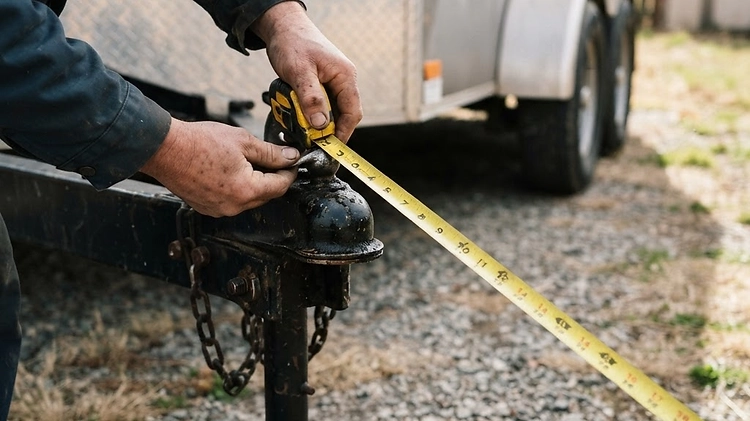
To ensure the axle is perpendicular to the trailer's centerline, measure the distance from the center of the coupler (or kingpin) to the center of the front axle spindle on both sides.
- Attach a string or use a measuring tape from the exact center of the coupler.
- Measure to the center of the front axle hub face or spindle on the driver's side (Measurement A).
- Repeat the measurement on the passenger side (Measurement B).
- Compare the two measurements. They should be identical (typically within a ± 0.1-degree tolerance or about 1/8-inch difference). If they differ, the axle is skewed and needs adjustment.
2. Checking Tandem Axle Parallelism
For multi-axle trailers, the axles must be parallel to each other.
- Measure the distance from the center of the front axle hub to the center of the rear axle hub on the driver's side (Measurement C).
- Repeat the measurement on the passenger side (Measurement D).
- Compare the two measurements. They should be identical. If not, the rear axle is not parallel to the front axle.
3. Checking Toe with a Straightedge
You can check for toe-in or toe-out using a long straightedge.
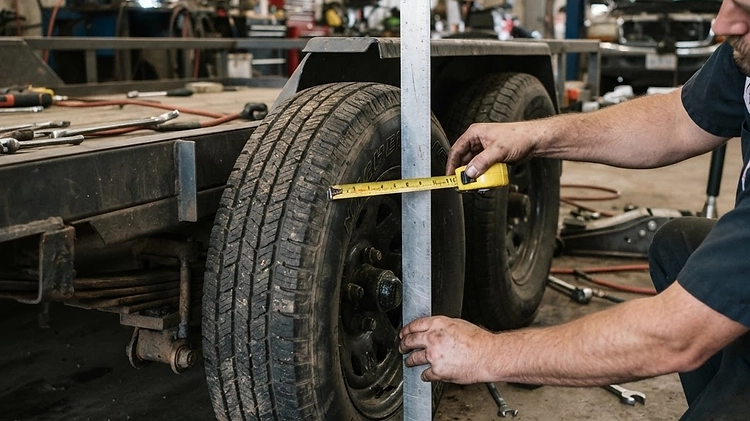
- Hold the straightedge up against the bulge of the tires horizontally, parallel to the ground.
- Measure from the straightedge to the trailer frame in front of the wheel.
- Measure from the straightedge to the frame behind the wheel.
- Both dimensions should be the same. A difference indicates a toe issue.

Adjusting the Alignment
If your measurements reveal misalignment, the adjustment method depends on your trailer's suspension type.
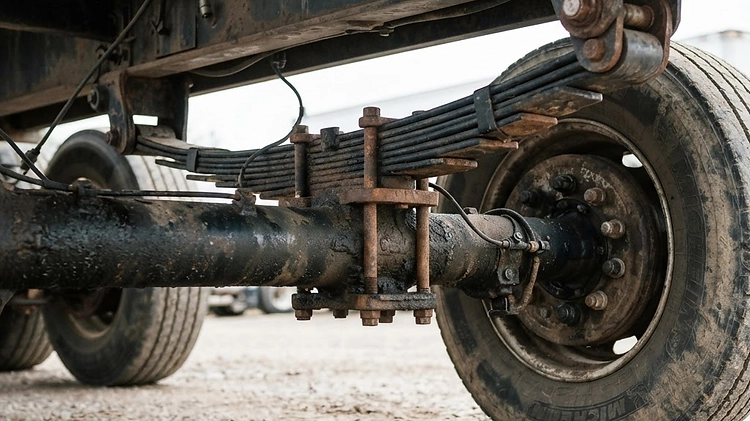
- Leaf Spring Suspensions: Shifted axles are common because they are frequently attached to the frame using U-bolts that can shift. Loosen the U-bolts slightly, tap the axle into the correct position using a dead-blow hammer, and retorque the U-bolts to the manufacturer's specifications.
- Torsion Axles: These are typically welded or bolted directly to the frame. If a torsion axle is out of alignment, it usually indicates a bent frame bracket or a bent axle tube, which may require professional repair or replacement.
- Adjustable Suspensions: Some commercial trailers use eccentric collars on the pivot connections. Rotating the collar clockwise moves the axle forward, while counterclockwise moves it rearward.
Bottom Line
Regularly checking your trailer axle alignment is a critical maintenance task that saves money on tires and ensures safe, stable towing. While basic toe and squareness checks can be done at home with a tape measure and straightedge, severe camber issues or bent spindles often require professional laser alignment or axle replacement. If you're experiencing persistent dog tracking or rapid tire wear, inspect your suspension components immediately. For more maintenance tips or to explore our inventory of reliable trailers, visit our Trailer Maintenance Guides or browse our Shop.
FAQ
Have Questions? We're Here to Help
Still unsure which trailer fits your needs, or need specs, pricing or delivery advice? The Prime Trail Trailers team is ready to answer your questions and help you find the right rig.
Prime Trail Trailers
Prime Trail Trailers is a family-owned trailer dealer in Markle, Indiana, stocking utility, dump, enclosed, equipment, car hauler and gooseneck trailers with nationwide delivery. This guide is based on what our customers ask us most and the trailers we sell every day.
More about Prime Trail Trailers