
Two Car Trailer Guide: Capacity, Length, and Loading Tips
A two car trailer can save time for dealers, racers and contractors, but only if the capacity, deck length and tow setup match the load. Use this guide to compare key specs and load safely before you buy.
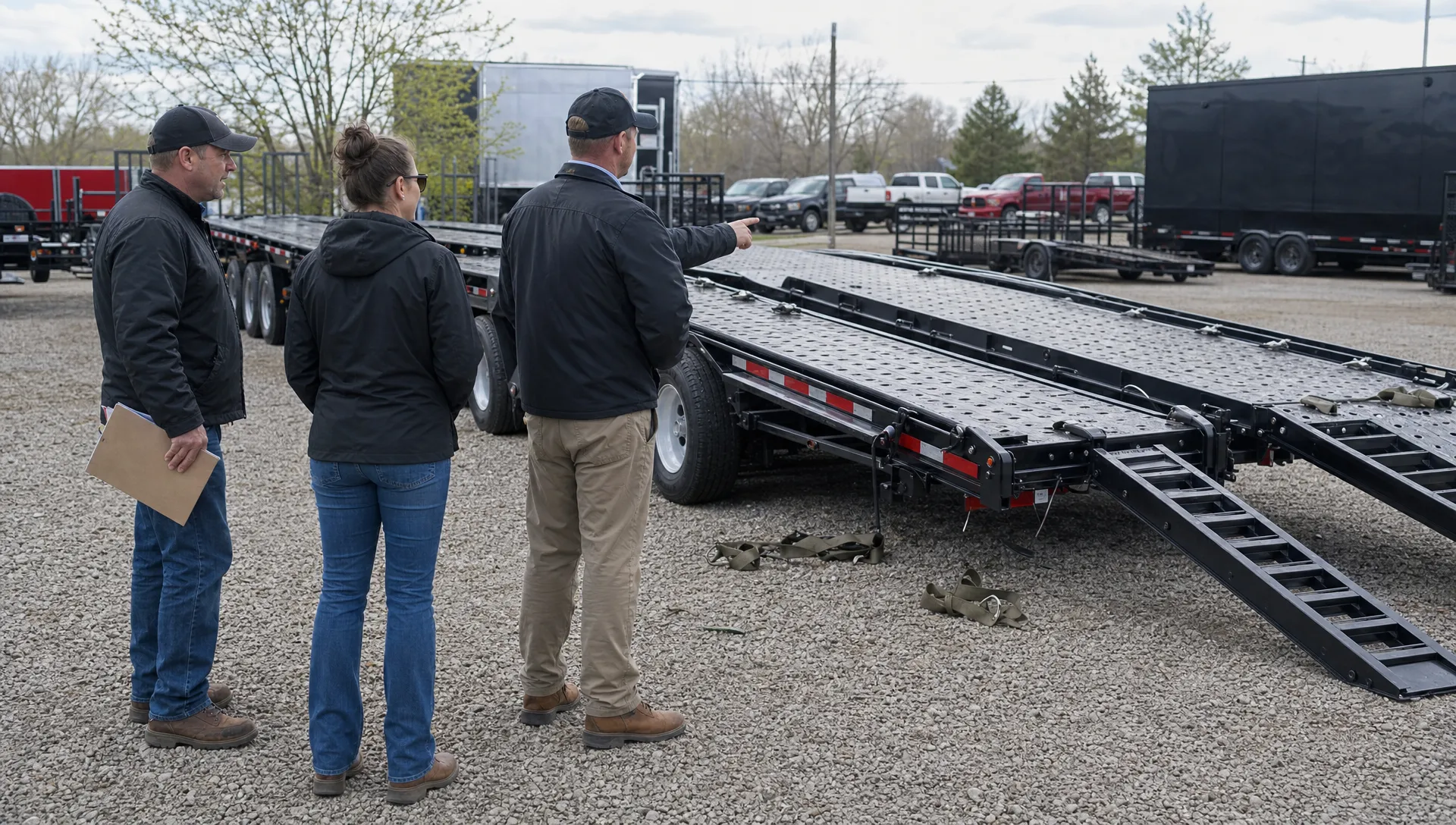
Quick Summary
A two car trailer can save time for dealers, racers and contractors, but only if the capacity, deck length and tow setup match the load. Use this guide to compare key specs and load safely before you buy.
A two car trailer can save serious time for dealers, racers, repair shops, farms and contractors that need to move more than one vehicle in a single trip. It also raises the stakes on capacity, deck length, tow vehicle setup and loading discipline, because small mistakes become expensive when two vehicles are sitting on the same trailer.
This guide walks through the practical decisions that matter before you buy: how to calculate usable payload, what trailer length fits two vehicles, how to load for balance and when a different trailer type may be the smarter purchase. Use it as a pre-shopping checklist before comparing car haulers and heavy-duty trailers for sale.
What Is a Two Car Trailer, and Who Is It For?
A two car trailer is a car hauler designed to carry two vehicles at once, usually on an open flat deck, a deckover platform, a gooseneck layout or a purpose-built enclosed configuration. It is not simply a longer utility trailer. Vehicle hauling requires the right axle ratings, brakes, tie-down points, ramp setup and deck dimensions.
This type of trailer makes sense when the extra length and capacity solve a real business problem. Used car dealers can move inventory more efficiently. Race teams can transport a race car and support vehicle. Repair shops can pick up multiple customer vehicles. Farmers and ranchers may move pickups, UTVs or equipment between properties.
For contractors, the decision depends on what you actually haul. If most trips involve tools, mowers, materials or compact equipment instead of vehicles, a utility, equipment or enclosed cargo trailer may be easier to tow, store and load.
Capacity: GVWR, Payload and Real Vehicle Weight
Choosing a two car trailer starts with payload, not advertised deck length. The key number is usable payload capacity, which is the trailer GVWR minus the trailer's empty weight. GVWR is the maximum loaded weight rating of the trailer. Empty weight is what the trailer weighs before vehicles, spare parts, fuel cans, winches, toolboxes or accessories are added.
The basic formula is simple:
Usable payload = trailer GVWR - empty trailer weight
The hard part is using real weights. Many shoppers estimate vehicle weight from memory, but curb weights vary by trim, engine, cab configuration, bed length, aftermarket accessories and fuel level. A half-ton pickup, a compact car and a UTV do not load the same way, even if they all physically fit on the deck.
| Load type | Common curb weight range | What to verify before buying | |-----------|--------------------------|------------------------------| | Compact car | About 2,600-3,400 lb | Combined length and low front clearance | | Midsize sedan | About 3,200-4,200 lb | Door clearance around fenders and strap access | | Crossover or small SUV | About 3,500-4,800 lb | Height, tire width and ramp angle | | Half-ton pickup | About 4,500-6,000 lb | Axle position, overall length and tongue weight | | Race car with spares | Varies widely | Actual scaled weight plus tools, tires and fuel |
Capacity details that matter beyond the headline number
The capacity question for a two car trailer does not end with GVWR. A trailer can look strong on paper but still be a poor match if one supporting component is underrated.
Check these items before committing:
- Axle ratings and the number of axles
- Tire load range and tire condition
- Brake type and brake condition on each axle
- Coupler, ball, pintle or gooseneck rating
- Safety chain rating and breakaway system
- Tie-down locations and their rated capacity
- Ramp rating, ramp width and approach angle
If you are buying for commercial use, build in a safety margin. Running a trailer at its limit every day is hard on tires, brakes, bearings and suspension parts. A little extra rated capacity can make daily hauling more predictable, especially when loads change from trip to trip.
Length and Layout: How Much Deck Do You Really Need?
For a two car trailer, deck length is the spec most buyers notice first, but usable deck space is what matters. You need room for both vehicles, space to position the load for proper tongue weight and enough access to secure each vehicle without crawling under bumpers or fighting fenders.
A 16 ft or 20 ft car hauler is usually a single-vehicle solution. Two-vehicle setups often move into much longer decks, especially when hauling trucks, SUVs or vehicles with long overhangs. Always compare the actual deck length, not just the model name.
| Approximate deck length | Best suited for | Watch out for | |-------------------------|-----------------|---------------| | 30-32 ft | Two compact vehicles or short race cars | Very limited room for adjustment | | 34-36 ft | Many car plus car or car plus small SUV combinations | Verify combined vehicle length before buying | | 38-40 ft | Longer vehicles, pickups or added front storage | Wider turns and more storage space required |
Deck width also matters. Fenders can limit door opening and tie-down access. Drive-over fenders can help with wider vehicles, but they may raise deck height. A dovetail can reduce ramp angle for low vehicles, while a flat deck may be better for certain equipment loads.
Open, enclosed, bumper pull or gooseneck?
Open car haulers are common because they are generally lighter, easier to inspect during stops and simpler to load from the sides. Enclosed two-vehicle trailers add weather protection and security, but they weigh more, catch more wind and require more tow vehicle capability.
Bumper pull setups can work for lighter combinations when the tow vehicle is properly rated. Gooseneck trailers are often preferred for heavier or longer hauling because the hitch point sits over the truck bed, which can improve stability and weight distribution. The tradeoff is that you need a compatible pickup and bed-mounted hitch.
Loading a Two Car Trailer Without Fighting Balance
Loading a two car trailer is a weight management job first and a parking job second. The goal is to place the vehicles so the trailer tracks straight, the tow vehicle remains stable and the hitch carries the correct tongue weight for the setup.
For many bumper pull trailers, tongue weight is commonly targeted around 10-15% of the loaded trailer weight. Gooseneck setups often use a higher percentage. Always follow the trailer manufacturer, hitch manufacturer and tow vehicle guidance for your exact combination.
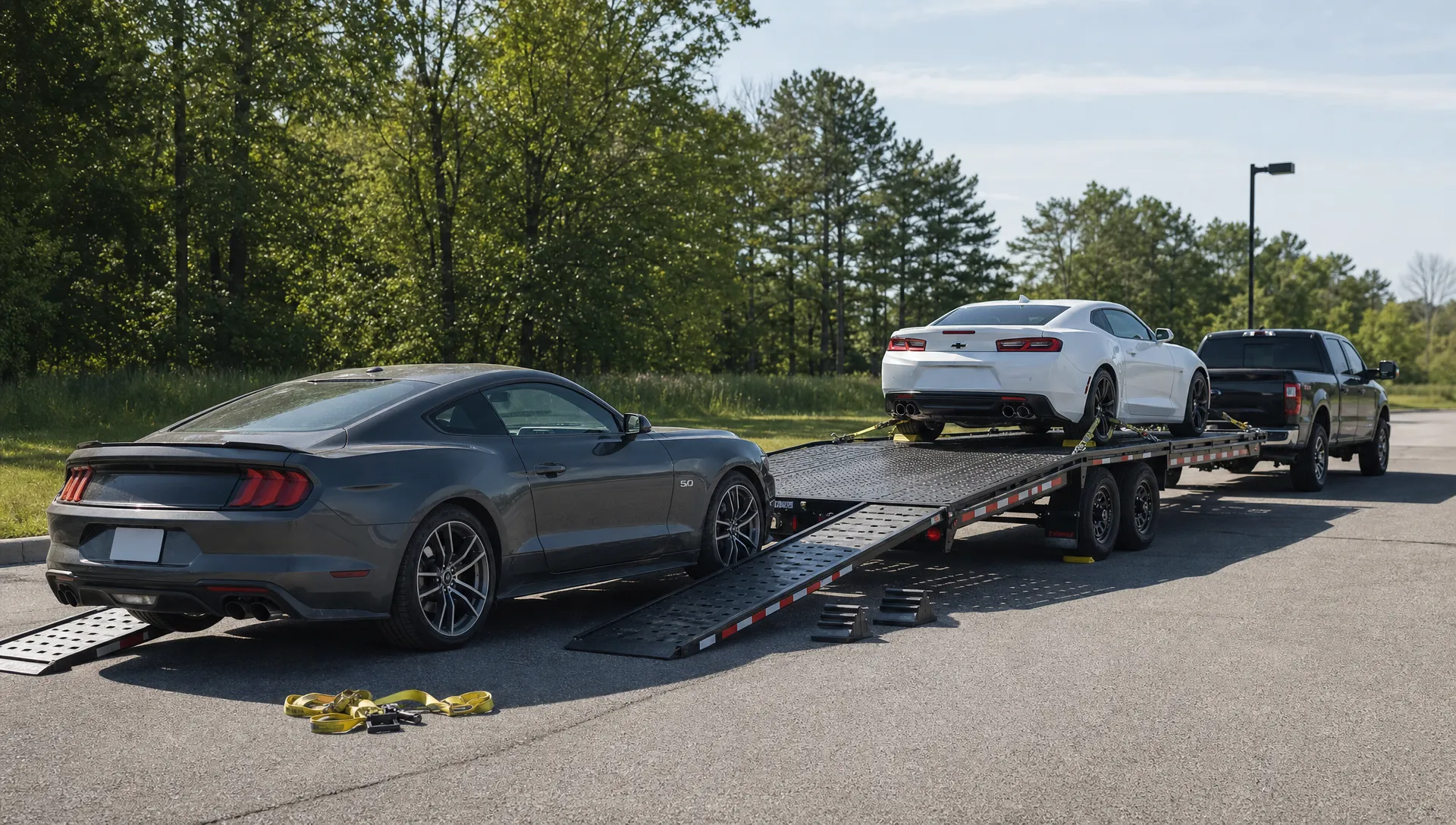
Start on level ground when possible. Inspect ramps, clear the deck, confirm that the breakaway battery is charged and chock wheels before loading. If one vehicle is much heavier than the other, its position will have a larger effect on tongue weight and axle loading.
| Loading step | Why it matters | |--------------|----------------| | Measure or confirm vehicle weights | Prevents overloading and poor balance | | Load the heavier vehicle deliberately | Helps control tongue weight and axle weight | | Keep vehicles centered left to right | Reduces sway and uneven tire loading | | Leave room for straps and wheel access | Makes securement safer and faster | | Recheck after a short distance | Straps can settle once the trailer moves |
Securement and tie-down basics
Professional haulers commonly use four-point securement or wheel straps for each vehicle. The right setup depends on the vehicle, trailer and tie-down points, but the goal is the same: each vehicle should remain stable during braking, turning and rough road movement.
Use straps, chains and hooks with appropriate working load limits. Do not rely on a parking brake, transmission park position or a winch line as the only form of securement. After the first few miles, stop in a safe location and retighten as needed. Repeat inspections during longer hauls, especially after rough pavement, fuel stops or weather changes.
Tow Vehicle, Hitch and Route Planning
A two car trailer often pushes the tow combination into a higher weight class than buyers expect. Before shopping, check the tow vehicle's maximum trailer weight rating, payload rating, gross combined weight rating, rear axle rating and hitch rating. The lowest-rated component controls the safe limit.
Payload rating is easy to overlook. The hitch load from the trailer counts against the truck's payload, along with passengers, fuel, toolboxes, bed equipment and cargo inside the cab or bed. A truck can have a high advertised tow rating and still run out of payload when a heavy trailer is attached.
Also consider commercial requirements. Depending on the state, trailer rating, combined GVWR and whether you are hauling for business, you may need specific registration, insurance, DOT compliance or a CDL. Rules vary, so confirm requirements with your state DMV, insurance provider and any applicable transportation authority.
Route planning matters too. Long car haulers need more space at fuel stations, job sites, auction yards and hotel lots. Watch turning radius, driveway breakover angle, low trees, tight gates and steep loading areas. If your company is moving products rather than vehicles on a regular schedule, it may be worth comparing in-house hauling with third-party logistics and transport support so your trailer fleet stays focused on equipment and vehicle work.
When a Smaller Trailer Is the Better Buy
A two car trailer is not the right purchase for every buyer who searches for car haulers. If you usually haul tools, boxed materials, parts, landscaping equipment or one compact machine, a smaller enclosed or utility trailer can be more practical. It may be easier to park, cheaper to operate and better suited to daily local jobs.
For example, the Universal Trailers 7' X 14' Continental Cargo - ALL ALUMINUM - Ramp Door is an enclosed cargo trailer described as lightweight, corrosion-resistant and built for hauling equipment, tools or vehicles with a ramp door for easier loading. That makes it a useful option for buyers who need protected cargo space rather than a full two-vehicle car hauler.
For smaller tool and equipment runs, the Universal Trailers 5' X 8' Continental Cargo - Rambler Series w/ Barn Doors, 6" Extra Height offers a compact enclosed setup with barn doors and 6 inch extra height for improved loading space. It is not a replacement for a car hauler, but it may be a better everyday trailer for tradespeople who do not need to move two vehicles.
If you are still deciding between trailer types, Prime Trail Trailers' Trailer Buyer's Guide explains how to evaluate GVWR, payload, tow vehicle limits, build quality and trailer category before you purchase.
Buying Checklist for a Two Car Trailer
Before you compare listings, write down the vehicles and loads you expect to haul most often. A clear load profile helps a dealer recommend the right length, axle package, hitch style and ramp setup instead of guessing from a general category name.
Use this checklist while shopping:
- Actual vehicle lengths, widths and curb weights
- Trailer GVWR, empty weight and usable payload
- Deck length, deck width and fender clearance
- Ramp length, ramp rating and approach angle
- Hitch type, hitch rating and tow vehicle compatibility
- Brake setup and brake controller requirements
- Tire load range and spare tire plan
- Tie-down point locations and rated capacity
- Storage space at home, shop or job site
- Registration, insurance and commercial-use requirements
A two car trailer should make your hauling operation easier, not create a new bottleneck. If the trailer is too short, too heavy for your truck or too awkward for your loading locations, it will cost time on every trip.
Prime Trail Trailers offers multiple trailer categories for commercial and personal hauling. You can compare available options through the site's trailer inventory and category pages, including utility, enclosed cargo, equipment, dump, car hauler, flatbed and gooseneck trailers.
Frequently Asked Questions
What size two car trailer do I need? Many two-vehicle open car haulers fall somewhere around a 34-40 ft deck, but the right size depends on the actual length and weight of the vehicles. Two compact cars need less room than a pickup and SUV combination.
Can a half-ton truck tow a two-vehicle car hauler? Sometimes, but do not assume it can. Check the truck's tow rating, payload rating, GCWR, rear axle rating and hitch rating against the fully loaded trailer weight. A larger pickup may be required for heavier combinations.
Is a gooseneck better than a bumper pull for hauling two cars? A gooseneck can provide better stability for heavier and longer loads when paired with a properly equipped truck. Bumper pull trailers can still be practical for lighter loads, but they require careful attention to tongue weight and hitch ratings.
Do I need an enclosed trailer for two vehicles? An enclosed trailer is useful when you need weather protection, added security or a cleaner presentation for valuable vehicles. The tradeoff is more weight, more wind resistance and usually more tow vehicle demand.
How should I position two vehicles on the trailer? Position the load to achieve the correct tongue weight, keep weight centered left to right and avoid overloading any axle or tire. Use a scale when possible, especially when hauling different vehicle combinations.
Compare Car Haulers and Trailer Options at Prime Trail Trailers
If you are comparing a two car trailer with equipment trailers, enclosed trailers or gooseneck trailers, Prime Trail Trailers can help you narrow the options based on what you haul, what you tow with and how often you use the trailer.
Browse available trailers at Prime Trail Trailers, compare specifications online or request help choosing the right trailer for your vehicle transport, construction, agricultural or personal hauling needs.
Have Questions? We're Here to Help
Still unsure which trailer fits your needs, or need specs, pricing or delivery advice? The Prime Trail Trailers team is ready to answer your questions and help you find the right rig.
Prime Trail Trailers
Prime Trail Trailers is a family-owned trailer dealer in Markle, Indiana, stocking utility, dump, enclosed, equipment, car hauler and gooseneck trailers with nationwide delivery. This guide is based on what our customers ask us most and the trailers we sell every day.
More about Prime Trail Trailers